
DigitalPurse card review: a virtual, crypto-funded card for users who want minimal paperwork
 Available in US
DigitalPurse is a virtual-only payment card that you fund with cryptocurrency and spend through Apple Pay, Google Pay or Samsung Pay at any contactless terminal. It runs on a technology platform rather than through a named bank issuer, and it sells both standard reloadable cards and more expensive “Non-KYC” cards that promise greater privacy. The catch is that almost nothing about pricing, country availability, or the card network is published upfront, so you have to download the app and start creating a card before you find out what it actually costs you.
Conditions are current as of October 28, 2026.

This review walks through what the card does, what it costs in practice, where it works and where it does not, and whether the alternatives do any of this better. The information below reflects the card’s public pages and the help center as of October 2026.
Verdict
DigitalPurse scores 5.8 out of 10. That puts it in the middle of the road for crypto-funded cards. It is genuinely useful if you want a quick, anonymous-style virtual card that you can top up with Bitcoin, Monero or a stablecoin and tap to pay within minutes. The privacy card option, the broad crypto menu, the mobile wallet support, and the 24/7 support channels are real strengths. On the other hand, almost every practical detail is missing from the public pages: which countries it serves, which card network it runs on, the conversion and FX fees, the ATM and spending limits, the licence and issuer, and even the exact cost of creating a card. The platform explicitly says it does not support chargebacks, which removes a basic protection you would expect from any card. The “No-KYC” tier is more expensive, not less, because the platform treats privacy as a paid feature. If you are comfortable with that trade-off and do not need a physical card or ATM access, the product is workable; if you want clarity and standard cardholder protections, look elsewhere.

Score breakdown
| Criterion | Score | Why it scored this way |
|---|---|---|
| Who can get it | 6 / 10 | No public country list, no stated citizenship or residency rules, and no clearly defined issuance region; the only firm rule is that you must be at least 18 and may hold one personal account. |
| Cost | 5 / 10 | Official pages give no numbers; the app only shows the fee while you are creating a card. Unofficial sources disagree, with an App Store user reporting a $3 creation fee and a $6 minimum balance, and a third-party review site saying creation, top-up and the monthly fee are all free. |
| Top-up options | 7 / 10 | Supports Bitcoin, Litecoin, Monero, Ethereum, USDT and USDC; USDT and USDC carry no extra top-up fee, while BTC, ETH, LTC and XMR may cost more because of volatility and extra processing. The blockchain networks are not disclosed. |
| Reliability and complaints | 6 / 10 | The issuer is not named and the platform is not a bank; chargebacks are not supported; Trustpilot reads 4.8 from 232 reviews, but third-party sources flag recurring declines at Google Cloud, Azure and DigitalOcean. |
| Everyday use | 5 / 10 | Virtual only, with Apple Pay, Google Pay and Samsung Pay supported; ATM withdrawals are not permitted; merchant-category restrictions cover gambling, dating and foreign currency transactions. |
| Total | 5.8 / 10 | A workable, quick-start virtual card for users who prioritise minimal friction over published details, but missing the transparency and protections that more established products offer. |
In short, DigitalPurse is built for a specific kind of reader: someone who already holds crypto, values speed and discretion over disclosures, and is happy to discover the real price inside the app. If that is not you, the rest of the review explains the practical questions in detail and the alternatives section points to products that publish more.
Who can get the card
The short answer to “who will they give you the card” is: the card’s public pages do not actually say. There is no list of supported countries on the home page, the terms or the help center; no statement on which region issues the card; and no rule on citizenship or residency. The only firm conditions in the public material are that you must be at least 18 years old and that one account per individual is allowed.
The footer of the site carries a copyright line for DECLASSIC TECHNOLOGIES LLC dated 2026, which gives you the operating company name but not the country of registration, the licence, or the issuing bank. The site is explicit on one point, though: DigitalPurse describes itself as “a technology platform, not a bank” and says its services “may be facilitated by third-party licensed financial institutions.” The card-issuing partner is not named on the public pages, and the platform’s help center articles do not list a programme partner either.
For a reader, this is the most important practical question and the one the card does the worst job of answering. If you are an adult with a smartphone, the app will let you create an account; whether the card will then work at merchants in your country, which currency your balance will be in, and which fees you will pay is information the platform holds back until later in the flow. The app shows the creation fee while you are setting up the card, the conversion to your card balance happens when you fund it, and the network that backs the card is not disclosed at any point I could find. If a published country list, a known issuer or a stated card network matters to you, DigitalPurse is not a transparent product and that is a reason to be cautious on its own.
How to get it
Sign-up is intentionally lean. The home page directs you to download the iOS or Android app and then “create an account.” There is no separate web form and no paper application. Once the app is installed, you register and then either create a card through the app or through the official Telegram bot, with the help center framing this as the standard path for getting started.
Two practical points matter here. First, the card is virtual only: there is no physical card and no shipping step. The card is generated inside the app or the bot, and the help center describes virtual cards as “available instantly,” with orders “processed right away” though “may take up to 24 hours.” That gap between “instant” and “up to 24 hours” is something to bear in mind if you need a card for a specific transaction. Second, the platform takes a graduated approach to KYC. The home page does not ask for documents at sign-up; instead, the help center says that “KYC may be required for some payments or products,” and that unverified users have daily and monthly order caps (the amounts are not stated), while verified users get higher limits. There is a help article titled “Why is my KYC verification still pending?” but the article was not read for this review, so processing times and rejection reasons are not stated on the public pages.
The same help center also describes a separate “Non-KYC” card type, which the platform sells at a higher price “because they offer greater privacy and flexibility.” This is unusual: most financial products are cheaper without KYC because there is less work to do, but here the absence of identity checks is treated as a premium feature. If you are weighing this option, expect to pay more and expect that some merchants or payment types may still trigger a KYC request at the point of use, since the help center notes KYC “may be required for some payments or products” regardless of the card you chose. The specific KYC documents are not listed on the public pages, so you cannot know in advance what you would need to provide.
What it really costs
DigitalPurse is one of the harder crypto cards to cost out in advance because the platform does not publish a fee schedule. The terms of service note that purchases “may be subject to handling fees” and that those fees are “detailed in the specific terms of each product,” but the “specific terms” are inside the app, shown only while you are creating a card or topping it up. For a reader trying to budget, this is the single biggest practical gap in the offering.
The fees that do show up in the public material are structured in a few layers. Creation and top-up fees are quoted per product, are said to scale with the amount loaded on privacy cards, and may be higher for non-fiat funding methods. Currency conversion is built into the loading flow: the help center says the card’s balance is in USD, and that “FIAT is converted to USD the moment it’s loaded to the card,” so the spread on crypto-to-USD conversion is effectively the platform’s fee on that step. Foreign-currency transactions are not separately priced, and the spread is not stated, so paying in euros or pounds on a USD card means an additional conversion that the card does not put a number on. ATM use is not allowed at all: the help center lists “Manual Cash Disbursements” and “Automated Cash Disbursements” among prohibited purchases, and the platform’s stated position is that “ATM withdrawals are considered a ‘transfer of value’ and are not permitted.”
Costs at a glance
| Fee or limit | What DigitalPurse publishes |
|---|---|
| Card creation | Not published; shown in-app during creation. Unofficial App Store user reports a $3 charge. |
| Top-up fee | Not published; shown in-app; scales with amount on privacy cards; extra fees possible for some non-fiat methods. |
| Monthly fee | Not published; unofficial third-party review site says none. |
| Conversion (crypto to USD) | Not published; spread baked into the rate at load time. |
| FX on non-USD spending | Not published; card balance is USD. |
| ATM withdrawal | Not permitted. |
| Minimum top-up | Not stated. |
| Starting card balance | “Up to $1,000 – $10,000” depending on the card. |
| Daily and monthly spend limits | Not published; platform says “unlimited” through one third-party source, but the platform itself does not publish limits. |
| Spending cap on a card | Yes, you can set a maximum amount loaded onto a card to limit exposure. |
Unofficial sources do not agree. An App Store reviewer claims the company charges an extra $3 for a virtual card and requires a minimum $6 balance, while a third-party review site (cryptocards.so) lists issuance, top-up and the monthly fee as free, and describes spending limits as “unlimited” while also noting that the platform publishes no limits. Because the platform itself does not publish numbers, neither side can be confirmed from official material. The only way to know what you will pay is to open the app, start creating a card, and read the fee the app shows before confirming.
To make this more concrete, three everyday situations show how the published gaps can hit you. Paying for a coffee in USD on a card you topped up with USDT: the spread between the USDT market price and the rate the platform credits to your USD balance is the fee; the figure is not published, but USDT and USDC are the funding methods the platform suggests for the lowest top-up cost, so the spread should be small. Paying for a hotel in euros on the same card: the merchant’s network converts euros to USD at the network’s rate, and the platform may add its own spread on top, but neither number is published, so the all-in cost is opaque. Trying to take cash out at an ATM: not allowed, regardless of which card or which tier, so this is a fee of 100% of whatever you tried to withdraw, in the form of a declined transaction.
Top up
Topping up the DigitalPurse card is built around crypto. The help center lists six supported assets: Bitcoin, Litecoin, Monero, Ethereum, USDT and USDC. The help center does not disclose which blockchain networks those assets run on for the card, so you need to confirm in the app which network the platform expects before you send anything; sending USDT on the wrong chain, for example, is the kind of mistake that often cannot be undone.
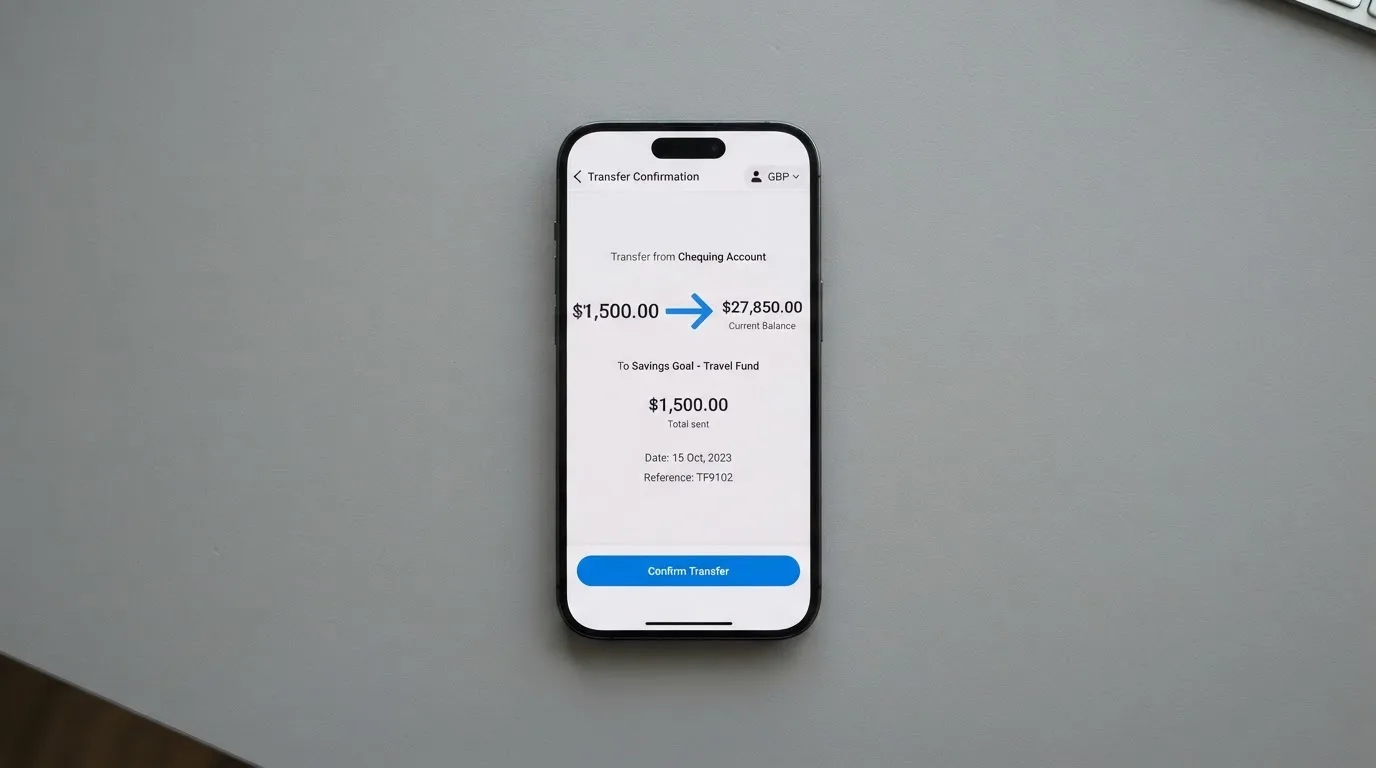
The flow depends on which type of card you bought. Reloadable cards show a “Top up” or “Add Funds” option in the app; you select the card, choose the asset, send to the address the app gives you, and the balance lands in USD once the transfer confirms. Non-reloadable cards are pre-paid and cannot be topped up at all — once the balance is spent, you buy a new one. The platform’s position is that the creation and top-up fees for both types are “displayed in the card description during creation,” scale with the amount on privacy cards, and may be higher for some non-fiat methods; it explicitly suggests USDT, USDC, bank transfer or mobile money as the lower-cost paths and flags that BTC, ETH, LTC and XMR may cost more because of volatility and additional processing. The minimum top-up is not stated, and the help center simply does not put a number on any of this.
The platform also supports a withdrawal path in the opposite direction. The FAQ answers “Can I withdraw my funds?” with “Yes. Terms and conditions apply,” and the help center explains the steps: select the active card, open “More” or “Manage,” and choose “Withdraw Funds.” The fees, minimum, processing time and destination chain are not stated. ATM withdrawals are explicitly not permitted; if the app’s “Withdraw Funds” option is the only way to move money off the platform, then “withdrawal” here means a crypto transfer, not a cash payout.
A few practical points are worth underlining because they matter to the reader. Stablecoin funding is the cheapest documented path, but only on the network the platform expects; sending USDC to a Tron address when the platform is waiting for an Ethereum USDC will either fail or get lost. Volatile-coin funding is the most expensive documented path because the platform converts at the prevailing rate, and any movement in price between when you sent the transaction and when the platform credits the balance works against you. Bank transfer and mobile money are listed as funding options for some flows, which is unusual for a card that markets itself on crypto, and which means the platform does have a fiat rail even if the public pages do not describe the fees. Setting a load cap is a usable safety feature: the platform lets you cap the amount loaded onto a card, which is a simple way to limit exposure if you are worried about theft or a stolen card number.
Paying with it every day
In day-to-day use, DigitalPurse behaves like a virtual prepaid card stored in a mobile wallet. The platform says the card works at “merchants supporting mobile wallets such as Apple Pay, Google Pay, Samsung Pay.” That is the only published acceptance channel. There is no physical card, no card number you can punch in at a hotel front desk, and no contactless swipe of a piece of plastic. The card number is generated inside the app, and you add it to a wallet to tap-to-pay at a contactless terminal, or you key it in online where the merchant accepts the BIN.
The platform publishes a list of prohibited purchases that is “not exhaustive.” It includes:
- Betting and casino gambling
- Government-licensed online casinos
- Non-sport internet gaming
- Dating and escort services
- Security brokers and dealers
- Foreign and non-fiat currency transactions
- Wire transfers and money orders
- Cash disbursements (manual and automated)
In practice that means a long list of MCCs the platform will decline. It also explains why the help center does not list a foreign-currency fee: the platform’s position is that the card is for USD, and spending in another currency is treated as a separate kind of transaction that the terms restrict.
Two more everyday points are worth knowing. The platform does not support chargebacks. The help center is direct: “we cannot support chargebacks.” The reasons it gives are “unsustainable fraud,” the finality of blockchain transactions, and the platform’s privacy stance, and the same rule applies to any sub-issuer. For the reader, this is the practical difference between DigitalPurse and a normal Visa or Mastercard: if a merchant takes your money and does not deliver, or double-charges you, the platform will not arbitrate. Returned items are refunded to the card originally used, and there is a help article on refunds that have not arrived, but the platform’s own policy puts you back where you started rather than reversing the payment. Gift-code orders cannot be returned or refunded once processed, and there are no published dispute time frames.
The app itself is iOS and Android; the home page links to digitalpurse.engineering/android and /iphone rather than to the public stores, so you may need to follow a link or use a search term to find the official app. Unofficial third-party data points to an Android rating of about 4.6 of 5 from roughly 170 reviews with 50,000+ installs and an iOS rating around 4.5–4.7 from over a thousand ratings, but these are not official figures and the platform does not display ratings on its own pages. As a final point, support is described as 24/7 and is reachable through the app’s support system, a Telegram bot, the help center (29 articles in English) and a support email for failed purchases — which is a reasonable channel mix for a virtual card, but the absence of a phone line and the mixed reviews of support quality in the third-party sources mean that you should not rely on getting a person on the line quickly if something goes wrong.
What can go wrong
Most of the risk profile of DigitalPurse is the risk profile of any card where the user holds crypto with a custodian, plus the specific gaps in the card’s published information. The most concrete things to know are these.
The card is custodial. The platform holds the balance that funds the card and works with sub-issuers to place the card on a network. The site says it uses “secure encryption, minimal data collection, and strict access controls” and that it is “a technology platform, not a bank,” but the card itself is a prepaid balance, not a bank deposit, and it is not covered by a deposit guarantee scheme. In-app freeze, two-factor authentication and per-card spending caps are the practical safety nets the platform describes; insurance against theft of the balance, recovery of lost funds, and any kind of compensation scheme are not stated on the public pages.
The issuer is unnamed. The site says services “may be facilitated by third-party licensed financial institutions,” and the help center does not name the partner. The footer gives the operating company as DECLASSIC TECHNOLOGIES LLC dated 2026, but the registration country and any licence are not published on the pages I could find. That means the regulatory framework the card operates under is not stated, and the consumer protections that come with that framework are not stated either.
Chargebacks are not supported. For a cardholder, this is the single biggest practical difference from a normal bank card. If a merchant takes the money and does not deliver, or if there is a duplicate charge, the platform will not arbitrate the dispute; refunds are at the merchant’s discretion, and any reversal is credited back to the original card. With a standard debit card, the card network’s chargeback rules give you a defined process with reason codes; with DigitalPurse, that process is explicitly not available.
Card declines at large merchants are a recurring theme in third-party sources. A third-party review site (cryptocards.so) flags recurring declines at Google Cloud, Azure and DigitalOcean, which it attributes to prepaid BIN blocking at those merchants’ payment processors. App Store reviewers have also raised the issue. The official help center does not list these merchants as restricted, and the platform’s own Trustpilot page is broadly positive (a user report/aggregator reading puts it at 4.8 out of 5 from 232 reviews, with 60 in the last 12 months and the latest review dated 19 Oct 2026; an earlier reading on a different Trustpilot domain showed 4.5 from 192 reviews, so the figures are close but not identical). Where the platform differs from third-party sources is on complaints: a minority of older reviews on the third-party site call the platform a scam over declined cards, slow support and high fees, and the site references Reddit threads in r/Ghana and r/Nigeria that I did not independently verify. The positive reviews on Trustpilot are the majority, and the company “hasn’t invited customers recently” on the platform, which suggests a hands-off relationship with the review site rather than an active reputation-management effort.
Programme-closure risk is real. Visa’s November 2022 termination of its global agreements with FTX and the issuer’s wind-down of the FTX US debit card are the most famous examples, and the WaveCrest suspension in 2018 closed all WaveCrest-issued Visa programmes. A card whose issuer is not named, whose regulator is not stated, and whose programme partner is not disclosed, has more closure risk than a card whose programme is published. In a closure scenario, the typical sequence is a notice period, then the end of new loads, then the end of spending, then a window to withdraw any remaining balance; for a virtual card on a private platform with no public closure policy, that sequence is not defined and any unspent balance is at the platform’s discretion.
Stablecoin and network risk is the same as anywhere else. Crypto transfers are irreversible, so a deposit to the wrong address or the wrong network can be lost. USDT and USDC are US-dollar-pegged but not guaranteed: Tether and Circle publish reserve information and attestations, but stablecoins have depegged before (TerraUSD in May 2022, USDC briefly in March 2023 during the US banking crisis), and a deposit made just before a depeg would be credited at a worse rate. The platform also does not publish the network it expects for each asset, so the risk of a wrong-chain deposit is on the user.
Support is mixed. Third-party sources describe both praise and criticism of the support team. The channels themselves (app, Telegram bot, help center, email) are listed, but the speed and quality of resolution on issues like a wrong-chain deposit, a declined authorisation, or a missing refund are not stated in a way that would let a reader set expectations.
What to take instead
If DigitalPurse’s specific mix of features appeals to you but the published gaps make you hesitate, three alternatives are worth a look. They are not perfect substitutes, and they all have their own trade-offs, but each one does at least one thing that DigitalPurse does not.
Bitrefill (6.8 / 10)
Bitrefill offers a virtual and physical Visa card you create through the app. The card is described as free on the card page, with 2% total cashback and no cap (1% on each crypto deposit and 1% on each purchase). Funding accepts Bitcoin, Lightning, Ethereum, USDC, USDT, Solana, BASE, Polygon and Li.Finance, plus Apple Pay, Google Pay, Visa and MasterCard, with a SEPA transfer also supported. The trade-offs: the country list is not stated (terms say access is “subject to eligibility criteria” and “further eligibility requirements established and verified by our partners shall apply”); an inactivity fee kicks in after 12 months without spending or cash-out, and the amount is not stated; the SEPA pay-in fee is 1.99%; the deposit spread on crypto-to-euro conversion is not stated; and the FX fee on spending is not stated either. Compared with DigitalPurse, Bitrefill is more transparent about the product (Visa, EUR) and offers a real cashback, but it adds an inactivity fee and is just as opaque on the FX side.
UPay (6.1 / 10)
UPay sells virtual and physical cards in personal and business variants, with payment conversion to USD, EUR, AED and other currencies. The home page claims support in 180+ countries, but the country list is not stated and the page notes that UPay does not serve residents of certain countries, with the list subject to change. Funding accepts BTC, ETH, USDT and USDC, networks not stated. The card page does not list cashback, though the home page mentions an “Earn While You Sleep” product (title only). The fees, the FX margin and the licence are not stated, and the KYC partner accepts only ID documents issued by the same country as the user, which is a real restriction for expats and travellers. UPay is closer to DigitalPurse in product shape than Bitrefill, with the same network-disclosure gap and the same fee-disclosure gap, but it offers both virtual and physical cards and a multi-currency payment experience.
Kemy (6.0 / 10)
Kemy is the most expensive of the three but the most explicit on pricing. It offers unlimited virtual cards (Visa shown on mockups) at $15 issuance, valid 3 years, with a $2 monthly fee, and a physical Mastercard at $250 issuance, valid 3 years, $10 monthly, DHL Express included, one per user. Top-up fees are $1.5 under $100 or 1.25% from $100 (min $5) for virtual and the same for physical (min $10). The transaction fee is 3.5% + $1, and a failed transaction costs $0.80. Funding is in USDT and USDC on the main networks (chains not listed), plus BTC, ETH and SOL via on/off-ramp, plus fiat via mobile money and virtual bank accounts. The platform claims to serve 190+ countries with “a few restrictions,” to be checked at sign-up. There is no cashback. The published pricing page has an internal conflict on the main-account deposit fee (8% in one summary, 5% in another), which is itself a transparency warning. Kemy is the only one of the three that publishes a complete fee schedule upfront, and that is the main reason to consider it if pricing clarity is what you need.
Quick comparison
| Card | Card form | Card network | Card currency | Stated cashback | Pricing transparency | Strongest feature |
|---|---|---|---|---|---|---|
| DigitalPurse | Virtual only | Not stated | USD | Not stated | Very low | Quick, privacy-tilted virtual card |
| Bitrefill | Virtual and physical | Visa | EUR implied | 2% (1% on deposit + 1% on spend) | Medium | Cashback and crypto variety |
| UPay | Virtual and physical | Not named | USD, EUR, AED, others | Not stated on card page | Low | Multi-currency payment conversion |
| Kemy | Unlimited virtual + one physical | Visa (virtual), Mastercard (physical) | Not stated | None | High (with one internal conflict) | Full published fee schedule |
If your main reason to look at DigitalPurse is the privacy card option, the No-KYC card from DigitalPurse is genuinely unusual, and neither Bitrefill nor UPay offers the same product directly. If your main reason is the broad crypto menu, Bitrefill has a wider published list including Lightning. If your main reason is published transparency, Kemy is the only one of the four with a complete fee schedule on the website. If your main reason is a physical card you can hand to a hotel front desk, DigitalPurse does not offer that and you should look at Bitrefill, UPay or Kemy.
Who I would recommend it to
DigitalPurse is the right card for a fairly narrow reader. If you already hold crypto, you want a virtual card you can top up and add to Apple Pay in minutes, you are willing to find out the real price only after you open the app, and you accept that the card will not arbitrate disputes the way a normal bank card would, then this product does what it claims. The Monero support is a real differentiator, the mobile-wallet integration is the right shape for a virtual card, and the 24/7 support channels are appropriate for the audience.
It is the wrong card if any of the following matters to you: a physical card for situations where mobile wallets are not accepted, ATM access for cash, a published country list before you sign up, a named issuer and a known regulator, a defined chargeback process, or pricing you can confirm before you commit. The 5.8/10 score reflects that. The product works, but it is built for users who do not need the things it does not publish. If that description does not fit you, one of the three alternatives in the previous section is a better fit.
Frequently asked questions
What is the DigitalPurse card?
The DigitalPurse card is a virtual payment card you fund with cryptocurrency and spend through mobile wallets such as Apple Pay, Google Pay or Samsung Pay. It is run by DECLASSIC TECHNOLOGIES LLC and is described by the company as a “technology platform, not a bank,” with services “facilitated by third-party licensed financial institutions.” There is no physical card.
How does the DigitalPurse card work?
You create an account in the iOS or Android app (or through the Telegram bot), create a virtual card, top it up with BTC, LTC, XMR, ETH, USDT or USDC, and the platform converts the deposit to a USD balance on the card. You then add the card to a mobile wallet and tap to pay at any contactless terminal that accepts the underlying network, or you enter the card number at an online merchant that accepts the BIN.
Is DigitalPurse a bank?
No. The company is explicit that it is “a technology platform, not a bank” and that the card is facilitated by unnamed “third-party licensed financial institutions.” The platform does not name the issuer on its public pages, and the card balance is not a bank deposit, so it is not covered by a deposit guarantee scheme.
Who owns DigitalPurse?
The footer of the site attributes the platform to DECLASSIC TECHNOLOGIES LLC, dated 2026. The registration country, the licence and the issuing bank partner are not stated on the public pages, and the help center does not name the partner either.
Is the DigitalPurse card available in my country?
The card’s public pages do not publish a country list. The home page, terms and help center do not state which countries are served, which region issues the card, or any citizenship or residency rules. The only firm condition in the public material is that you must be at least 18 and may hold one personal account.
How do I apply for the DigitalPurse card?
You download the iOS or Android app from the platform’s site and create an account, or you start through the official Telegram bot. From there, the help center describes a card-creation flow inside the app with the card “available instantly” once the order is processed, though the order “may take up to 24 hours.” There is no web application.
Does the DigitalPurse card require KYC?
Not at sign-up. The help center says KYC “may be required for some payments or products” and that unverified users have daily and monthly order caps (amounts not stated), while verified users get higher limits. The platform also sells a separate “Non-KYC” card at a higher price “because they offer greater privacy and flexibility.” The specific KYC documents and the processing time are not listed on the public pages.
How do I top up the DigitalPurse card?
On a reloadable card, you open the app, select the card, choose “Add Funds,” pick an asset (BTC, LTC, XMR, ETH, USDT or USDC), and send to the address the app shows. The platform says USDT and USDC are the cheapest paths and that BTC, ETH, LTC and XMR may cost more because of volatility and extra processing. Non-reloadable cards cannot be topped up; once the balance is spent, you buy a new one. Minimums, networks and processing times are not stated.
Can I withdraw money from the DigitalPurse card?
The FAQ says yes, with “terms and conditions apply.” The help center describes a path inside the app: select the active card, open “More” or “Manage,” and choose “Withdraw Funds.” The fees, minimum, processing time and destination chain are not stated. ATM withdrawals are explicitly not permitted; the platform treats them as a “transfer of value” and lists them among prohibited purchases.
Is the DigitalPurse card safe?
It uses the controls the platform publishes (in-app freeze, 2FA, per-card spending caps, mobile-wallet tokenisation) and the standard risks of holding a balance with a custodian apply. The platform does not publish insurance against theft of the balance, recovery procedures for lost funds, or any compensation scheme, and the platform’s policy of not supporting chargebacks means you cannot rely on the card network to arbitrate a dispute.
Virtual cards – cryptocardchooser.com
Content created by the «cryptocardchooser.com» team