I went through Bing's fees, countries and complaints — this is a thin 4.2 out of 10
 Available in US
Bing is a crypto payment card: you load it from your own crypto, and it spends like an ordinary card at an ordinary shop. The virtual tier promises a card “in just 5 minutes without KYC”, which is exactly the part that will appeal to you if a normal bank card has been refused to you, or if you live somewhere without easy access to one. That promise is real, and it is also the whole pitch. Strip that away and you are left with a service whose own pages contradict each other on fees, which does not name the countries it supports, and which is sitting on a Trustpilot page where 89% of 58 reviews are one star.
My score is 4.2 out of 10. That is a low number, and I want to explain it rather than hide behind it, because the reasons are specific and checkable. This card does solve a real problem for a specific person. It is just not a card I would tell a friend to build their spending on.
The conditions described here are current as of October 28, 2026.
Verdict
4.2 / 10. The card suits you if you have no usable ordinary bank card, you need a virtual card number today rather than in weeks, and you are comfortable treating it as a small prepaid product rather than a bank account. It does not suit you if you want published, reliable limits, a fee schedule you can trust, or a company that tells you plainly who issues the card.
| Criterion | Mark | Why |
|---|---|---|
| Who can get it | 5 / 10 | No country list is given; closed to US citizens, US permanent residents and US-incorporated entities; physical cards are issued from Hong Kong |
| Cost | 3 / 10 | Exclusive 25 USD, Star 40 USD, Platinum 168 USD issuance; 2% exchange, 1.5% cross-border, 3% declined transaction, 2% top-up on the pricing page, 1% in the FAQ |
| Top-up options | 6 / 10 | BTC, ETH, USDT, USDC; networks not named; unclear whether the physical card can be funded with crypto at all |
| Reliability and complaints | 2 / 10 | Bingcard, Inc.; issuer and licences not named; Trustpilot 89% one-star out of 58 reviews; conversions and withdrawals stuck in “Processing” |
| Everyday use | 6 / 10 | Virtual Exclusive and Star, physical Platinum; Apple Pay and Google Pay not disclosed; unofficial: ATMs only on the physical card |
| Total | 4.2 / 10 | A useful workaround with too much uncertainty attached |
The audience note matters here. The person Bing serves best is someone who deliberately wants a virtual card without KYC — and if that is you, you already know this card is not for everyone, and I would not try to talk you out of your own reason. My objection is narrower: the pricing pages disagree with each other in writing, and that is not something I can resolve for you from the outside.
Will they give you the card
The card’s own pages do not say who is eligible. There is no country list; the wording is that the service is for residents of “countries and territories we support”, and the list itself is not published. The minimum age is 18.
What is stated clearly is the exclusion: accounts may not be opened for US citizens, US permanent residents or US-incorporated entities. That is narrower than “not available in the US” — a non-US citizen resident in, say, Europe is not excluded by that clause. But since the supported-country list is not published, “not excluded” and “supported” are not the same thing, and that gap is yours to close by asking support before you commit money.
One more thing worth knowing: the physical cards are described as issued from Hong Kong. The pricing page says the virtual cards are issued from the United States, with Star also from Hong Kong. So the “issuer country” you would give a shop differs by tier, and merchants can see that country before you have tapped anything.
- Minimum age: 18
- US citizens, US permanent residents, US-incorporated entities: excluded
- Supported countries: not stated on the public pages
- Physical card issuing location: Hong Kong
How to get it
The virtual card is described as arriving “in just 5 minutes without KYC”. The physical card needs you to “Complete your KYC process online”, subject to AML and regulatory requirements. Which documents, and what age or address proof, are not stated.
For a bank card top-up, an ID with a photo, a mobile number and possibly a videoconference may be required, and the card says verification is “generally completed within 24 hours”. So the no-KYC promise holds for the virtual card, but bank card funding pulls you back into verification. If your reason for wanting this card is to avoid identity checks entirely, that is where the promise stops — and I would rather you learn that here than three weeks in.
Delivery: the physical card is “delivered within a maximum of 25 business days”. Which countries it ships to, whether shipping costs anything, and what a replacement costs if it is lost — none of that is stated.
Three tiers exist: virtual Exclusive, virtual Star, and physical Platinum. The card network is never named, only “major global payment networks”. Card validity is three years on the pricing page for Platinum, and two to three years for the virtual cards.
Fees: what it really costs
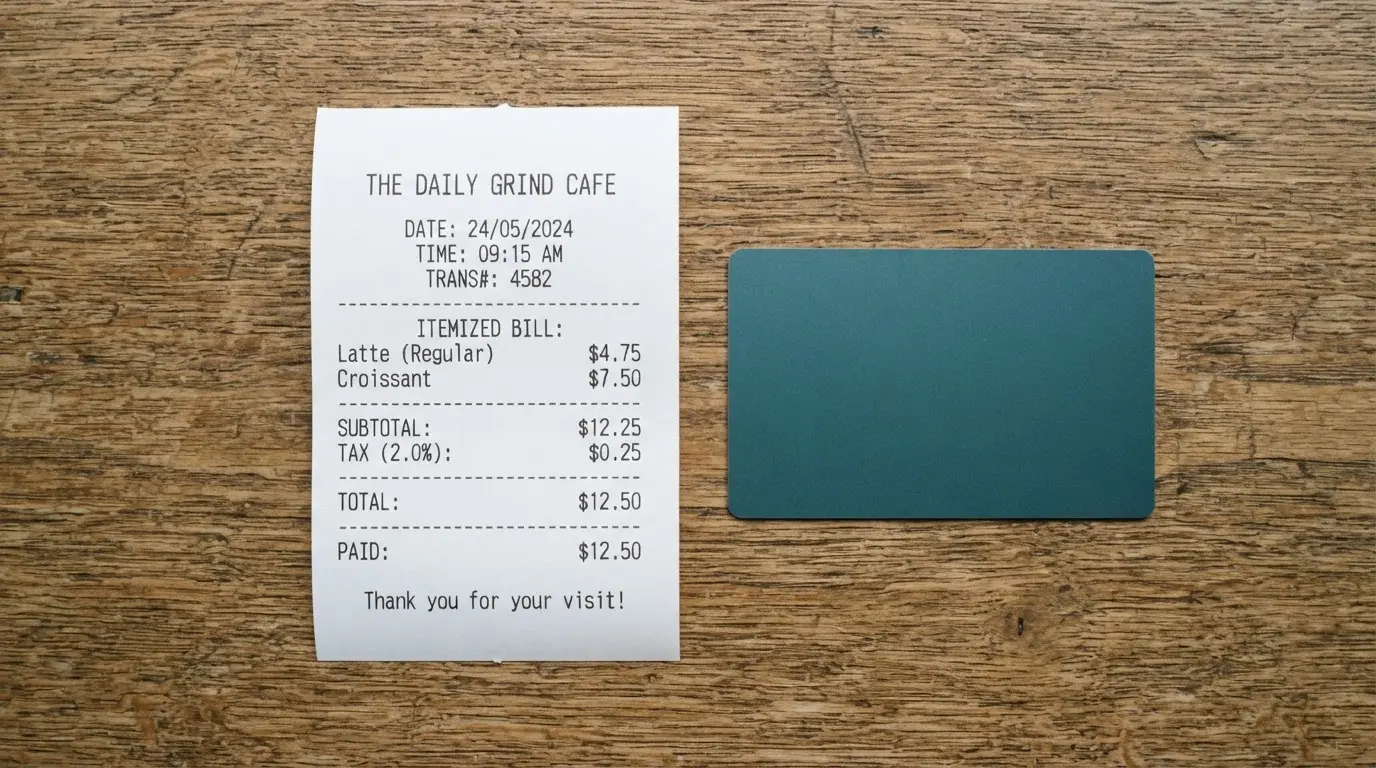
This is the section I would not skip, because it is where the card’s two official pages stop agreeing with each other. Not approximately — the numbers differ.
| Fee or limit | What the card states |
|---|---|
| Issuance, virtual Exclusive | 25 USD |
| Issuance, virtual Star | 40 USD |
| Issuance, physical Platinum | 168 USD |
| Monthly maintenance, Exclusive | 1 USD (FAQ) — pricing page lists 0/month for all |
| Monthly maintenance, Star | none (FAQ); pricing page lists 0/month |
| Monthly maintenance, Platinum | none (FAQ); pricing page lists 0/month |
| Transaction fee | “Only 1% transaction fee” (FAQ); pricing page lists 0% |
| Exchange fee | 2% (pricing page); FAQ says 0% for converting crypto to USD |
| Cross-border handling | 1.5% for transactions in non-US regions, minimum 0.5 USD per transaction |
| Declined transaction | 3% |
| Small transaction | 0.5 USD fee below 50 USD on some cards; FAQ says 1% below 10 USD |
| Top-up fee | 2% (pricing page); FAQ says 1% for deposits and withdrawals |
| Minimum top-up | 10 USD (Platinum 1 HKD) |
| Deposit fee | 2%, minimum deposit 1 USD |
| Withdrawal fee | 2%, minimum withdrawal 10 USD (Platinum 1 HKD) |
| ATM withdrawal | not stated |
| Daily limit | not stated |
| Monthly limit | Exclusive 100,000 USD, Star 200,000 USD, Platinum 1,000,000 HKD (FAQ); pricing page: 100,000 / 50,000 / 1,000,000 HKD |
Note the second limit row from the bottom: the FAQ says Star allows 200,000 USD a month, the pricing page says 50,000 USD. Same product, same company, four times the difference. If you are planning anything large through this card, that is not a rounding difference you can shrug off — ask support which one binds, and get the answer in writing.
Now three ordinary payments, so the abstract percentages become money:
A 4 USD coffee. If this falls under the small-transaction threshold, the FAQ says 1% below 10 USD and the other rule says 0.5 USD below 50 USD. One of those applies and the other does not; nobody has said which. Add whatever exchange fee applies and the coffee is carrying three separate percentage charges stacked on top of each other.
A 30 USD supermarket shop abroad. The transaction fee (1% or 0% depending on the page), plus the 2% exchange, plus the 1.5% cross-border handling because it is outside the US, minimum 0.5 USD. That is somewhere north of three and a half percent before the shop’s own currency handling.
A 200 USD online subscription, declined. The 3% decline fee applies on a purchase you never received. Six USD for nothing.
Conversion is described as instant at the point of transaction. The spread and any FX component are not stated, so I cannot tell you what rate you actually get — only that the card’s own FAQ and pricing page contradict each other about the headline percentage, which is a bad sign for a number that isn’t even published.
Top up options
You can fund the account with BTC, ETH, USDT and USDC. The networks are not named, and whether the physical Platinum card can be crypto-funded at all is unclear.
That network gap is the single most practical thing to sort out before you send anything. A stablecoin transfer to the wrong chain, or to an address on a network the provider does not support, is irreversible — the blockchain cannot reverse it, and recovery then depends on the provider’s support desk. If you hold USDT, note that it exists on several chains and the choice matters; the same token name on a different network is a different asset as far as your deposit is concerned.
Fiat top-up options are not stated. The terms do mention bank card top-ups, and that route can trigger the ID, mobile number and possible videoconference described earlier.
Two more rules from the FAQ: a minimum initial balance of 21 USD, and a stated flat fee on low-value transactions. And on closing your account, any remaining balance goes to the payment details you provide, minus applicable fees — while the terms also require you to keep your wallet balance from going negative. Read those two together and you can see the shape of the trap: leaving a small balance costs you a percentage of it.
Paying with it every day
Everyday use is the card’s respectable middle. 6 out of 10, not because spending fails, but because nobody has told us how you are supposed to spend.
- Apple Pay and Google Pay: not stated
- Blocked merchant categories: not stated, only “any merchant accepting credit cards”
- Cashback or rewards: not stated
- Apps: none mentioned; the account is managed on the web at my.bingcard.com
- Store ratings: not applicable
- ATM access: unofficial — reported as available on the physical card only
The pattern is consistent: for anything a competitor advertises on the front page, Bing’s page is silent. A virtual card number that you paste into a checkout form is genuinely useful, and that is the honest core of the product. But if you want to tap a terminal with your phone or withdraw cash, you are relying on third-party comparison sites rather than the company.
Rewards: an unofficial source, CryptoSlate in 2026, reports no cashback or rewards programme. I would plan on that being right.
On refunds and disputes, the terms are worth reading closely. Card transactions are described as “irreversible and not open to dispute, amendment, or cancellation”, with one exception: fraudulent external wallet top-ups. A card top-up refund can take up to 14 business days and becomes non-refundable once your identity is verified and the funds are credited. You carry the responsibility for chargebacks. Complaints are reviewed within thirty days. In other words, once money is in, you have very little room, and the thirty days applies to a complaint, not to a refund.
What can go wrong
The reliability score here is 2 out of 10, and it is the lowest of any category on the card.
The Trustpilot listing for Bing shows 58 reviews, 38 of them in the last 12 months, and 89% one-star. Trustpilot displays the rating as unavailable due to a breach of guidelines, so take the number as a snapshot of visible reviews rather than a verified score. Themes:
- Purchases declined on multiple sites — a virtual card refused for an AI subscription, declines at Uber among the reported cases
- Currency conversions and withdrawals stuck in “Processing”, from hours to more than a week, in August and September 2026
- A 30 USD virtual card deposit that could not be withdrawn
- A roughly 1.50 USD Solana conversion that returned about 0.06 USD
- Support described as unresponsive and accounts as locked
- Scam allegations, unverified
- One positive review, praising support
The company did reply on 15 August 2026 with a template message about a “complete update” of the service, and again on 29 August 2026. That is a business communicating during a complaint spike, which counts for something. It does not convert the reports into evidence that the underlying problems are fixed.
A “Processing” state is the pattern I would worry about most, because it describes an operation that has begun and not concluded. Combined with a stated withdrawal fee and a minimum withdrawal, that is a real risk to your own money.
On the company itself: Bingcard, Inc., copyright 2025. The company page says the business was founded in December 2021, that the website and licences were “secured” in December 2022 — with neither the licences nor the regulator named — that virtual cards launched in February 2023, and that the physical card’s first phase began February 2024. The issuer, the BIN sponsor, and the licences are not named anywhere on the public pages. That is the gap a reader who cares about regulation should press on.
Security: the site mentions “advanced security measures” and real-time transaction monitoring. The custody model is not stated — so whether your crypto is held by a third party or stays in a wallet you control is genuinely unknown. The account is blocked after three failed login attempts, and unauthorised transactions must be reported through support. Two-factor authentication, in-app card freeze, spending controls and any insurance or safeguarding scheme: not stated.
Support is described as 24/7, with [email protected], a live chat, a contact form and the phone number +1 (210) 699-7454.
Background worth holding onto while you weigh this: a card number’s first six or eight digits identify the issuing institution, and merchants can look that up and apply extra scrutiny when the issuer country differs from the billing address. That is why a Hong Kong-issued card can read as foreign in a local shop. Merchant category codes can also be blocked by policy rather than by law — gambling (MCC 7995) is the classic example — and any issuer’s list varies. Declined authorisations can leave a hold on funds for up to seven days. And prepaid-card coverage is not the same as bank deposit protection, so do not assume a chargeback route exists because it exists for a debit card.
The scale of custodial risk is not hypothetical. Mt. Gox (about 350 million USD reported stolen, 2011–2014), Coincheck (about 400 million USD, 2018) and the Ronin Network (625 million USD, 2022) are the reference points. Whoever holds your private key controls the money; a seed phrase is typically 12 to 24 unencrypted words, and no network will freeze or return a stolen transfer.
What to take instead
I looked at three alternatives and scored them on the same basis. All three score higher than Bing, none of them is perfect, and each has a different catch.
| Alternative | Score | What it does better | What to watch |
|---|---|---|---|
| Bitrefill | 6.8 / 10 | Free through the app; 2% total cashback with no cap, split 1% on each crypto deposit and 1% on each purchase; SEPA transfer supported | Country list not stated; access “subject to eligibility criteria” verified by partners; an inactivity fee applies after 12 months without spending or cash-out, amount not stated; SEPA pay-in 1.99%; deposit spread on crypto-to-euro conversion not stated |
| UPay | 6.1 / 10 | Claims support in 180+ countries; personal and business, virtual and physical; payments convert to USD, EUR, AED and others | Fees not stated at all; conversion may happen during payment depending on network and settlement; KYC partner accepts only ID documents issued in the same country as you; the excluded-country list may change with policy |
| Kemy | 6.0 / 10 | Unlimited virtual cards plus one contactless physical Mastercard; “190+ countries”; USDT and USDC on the main networks, plus BTC, ETH, SOL, mobile money and virtual bank accounts | Expensive: virtual 15 USD issuance plus 2 USD a month, physical 250 USD with DHL included plus 10 USD a month; transaction fee 3.5% plus 1 USD on virtual; a deposit fee shown as 8% in one place and 5% in another |
Where each one suits a different person: if your priority is cashback and a genuinely free card, Bitrefill is the clearest of the three, though check the eligibility rules against your country before you plan around it. If breadth of countries matters more than published fees, UPay claims the widest reach but tells you the least. If you need a physical contactless card and unlimited virtual ones, Kemy is the only one of the three with both — at a price that makes the monthly fees the dominant cost.
You will notice something all three share with Bing, and I would not let anyone tell you otherwise: none of them publishes a plain, complete fee schedule on a single page. This category has a transparency problem, and Bing is the worst version of it I found, not an exception to it.
Who I would recommend it to
I would recommend Bing to exactly this person: you have no ordinary bank card you can get one of, you need a virtual card number in minutes, you can afford to lose the balance you put in, and you treat what you load as spending money rather than savings. In that frame, a 4.2 out of 10 stops being a verdict on your life and starts being a verdict on a spendable float.
I would not recommend it if any of these are true:
- You are planning to hold meaningful money on it for more than a few days
- You need published daily or monthly limits you can rely on
- You need a rewards programme, mobile wallet, or ATM access on a virtual card
- You are in the US, or you are a US citizen or permanent resident
- You want to know who issues the card and under which licence
One last piece of context on regulation, since it explains a lot of what you are seeing. Under the EU’s MiCA regulation (2023/1114), rules on asset-referenced and e-money tokens applied from 30 June 2024 and the remaining provisions, including crypto-asset service provider rules, from 30 December 2024; the transitional period for existing providers runs until 1 July 2026 or until they receive or are refused authorisation, whichever comes first, and ESMA keeps an interim register you can check a provider against. A card is a payment service regulated separately from the crypto side, which is why a crypto card often depends on two licences. Neither of Bing’s is named. That is the single question I would put to support before anything else: who is the issuer, and which regulator authorises them?
And a caution that belongs on any card review, not just this one: in most places digital assets are treated as property, so spending crypto on goods or services generally produces a taxable gain or loss measured in local currency at the value on the transaction date. I am not giving tax advice — I am telling you to ask a qualified professional in your own jurisdiction, because each card payment funded from crypto may be a separate disposal.
Frequently asked questions
What is Bing card?
Bing is a crypto payment card. You load it from your own cryptocurrency — BTC, ETH, USDT or USDC — and it then spends like an ordinary payment card at shops that accept cards. There are virtual tiers, Exclusive and Star, and a physical card, Platinum. The company behind it is Bingcard, Inc. It is a payment product, not a bank account, and the issuer is not named on its public pages.
How does Bing card work?
You create an account on the web, get either a virtual card number in five minutes or a physical card after online KYC, and then top the account up with crypto or by bank card. The crypto is converted into a spendable balance, and the card draws down that balance as you pay. Because it works like a prepaid card rather than a linked debit card, it can only spend what is already loaded, and it cannot overdraw.
Is Bing a bank?
No. Nothing on its public pages presents it as a bank, and no banking licence is named. The company page says the website and licences were “secured” in December 2022, without naming the regulator or the licences, and the physical cards are described as issued from Hong Kong. Treat any account balance as a prepaid balance, not a bank deposit — deposit guarantee schemes and bank-level safeguarding should not be assumed.
Does Bing card require KYC?
It depends on which card you want. The virtual card is described as being issued “in just 5 minutes without KYC”. The physical Platinum requires you to complete KYC online, subject to AML requirements. And a bank card top-up may pull you into verification anyway: photo ID, a mobile number, possibly a videoconference, generally completed within 24 hours. Which specific documents are required is not stated.
How much does a Bing card cost?
Issuance is 25 USD for virtual Exclusive, 40 USD for virtual Star and 168 USD for physical Platinum. Monthly maintenance is 1 USD for Exclusive and none for Star and Platinum per the FAQ, while the pricing page lists 0/month for all three. Beyond that you have an exchange fee of 2%, cross-border handling of 1.5% (minimum 0.5 USD), a 3% fee on declined transactions, and a top-up fee listed as 2% on the pricing page and 1% in the FAQ.
Can I use a Bing card in my country?
Possibly, but you cannot tell from the published information. The card says the service is for residents of “countries and territories we support” and does not publish that list. What is clear is that accounts may not be opened for US citizens, US permanent residents or US-incorporated entities, and the minimum age is 18. Since the supported list is not stated, ask support directly about your country of residence before you send any money.
What are the fees when I pay with it?
The card states “Only 1% transaction fee”, though its pricing page lists 0%. Conversion is instant at the point of transaction, and the spread and any FX element are not stated. Add 2% exchange, 1.5% cross-border handling outside the US with a 0.5 USD minimum, a 3% fee on a declined transaction, and small-transaction charges of either 0.5 USD below 50 USD or 1% below 10 USD depending on which page you read. ATM fees are not stated at all.
How do I top up a Bing card?
With BTC, ETH, USDT or USDC, and the networks are not named — which is the detail to settle first, because a transfer on an unsupported chain is irreversible. Minimum top-up is 10 USD, or 1 HKD for Platinum. A fiat route via bank card is mentioned in the terms but not specified, and that route may require photo ID, a mobile number and possibly a videoconference. Crypto-to-USD conversion is listed as 0% in the FAQ and 2% exchange on the pricing page.
Is Bing card safe?
I would not call it safe on the evidence available. The custody model is not stated, the issuer and licences are not named, two-factor authentication and card freeze are not mentioned, and the Trustpilot page shows 89% one-star reviews out of 58, with reports of conversions and withdrawals stuck in “Processing” and cards declined at multiple merchants. The site does offer 24/7 support, a phone number and live chat, and the account locks after three failed login attempts.
Is Bing card worth it?
For a small, replaceable spending balance funded from crypto you are already moving, the no-KYC virtual card is a genuine convenience and I can see the appeal. For anything you would be upset to lose or unable to withdraw, it is not worth it — because withdrawal fees apply, and the terms state that card transactions are irreversible and not open to dispute, amendment or cancellation, except for fraudulent external wallet top-ups. Cards with published fees and cashback, like Bitrefill at 6.8 out of 10, score better on the same basis.
Virtual cards – cryptocardchooser.com
Content created by the «cryptocardchooser.com» team