The Exa card spends your own crypto, but only as a virtual card inside your phone
 Available in US
The Exa card is one of those cards where the crypto never really leaves your own wallet. You hold the assets yourself, the card spends against them, and the card itself is a number living inside your phone rather than a piece of plastic. For someone who already keeps their money in self-custody and wants to pay for ordinary things without converting through an exchange account, that is a genuinely attractive idea. For everyone else — especially anyone hoping for a metal card in the post, or a bank account opening in their name — this is the wrong tool.
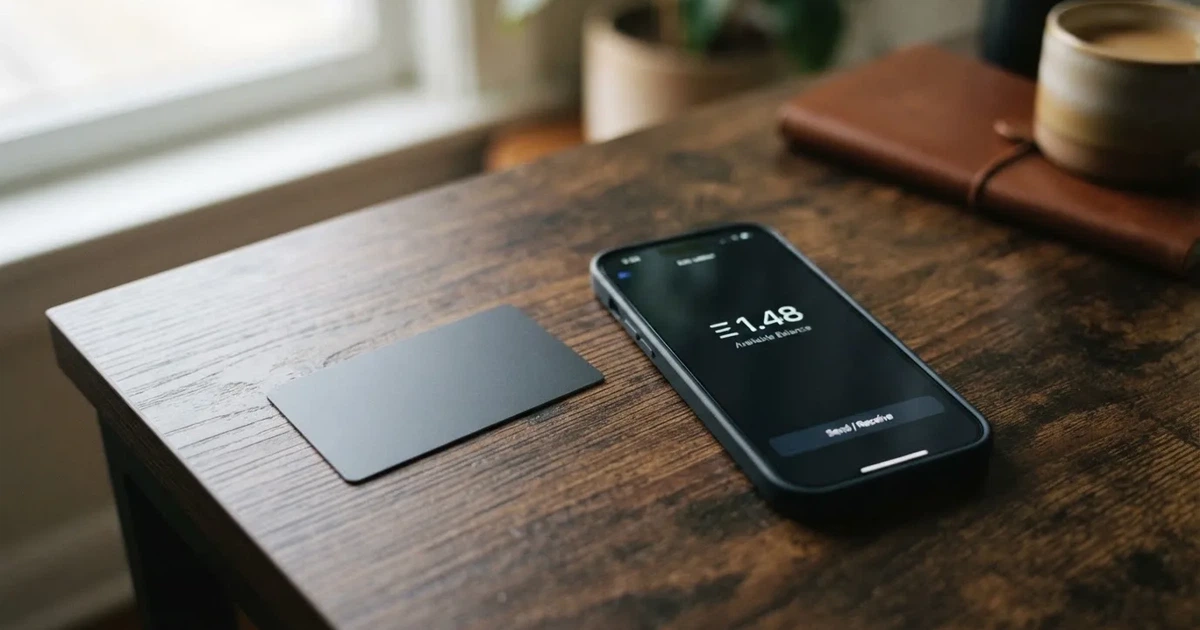
I scored it 6.2 out of 10. Not a warning, but not a recommendation either. The reasons are more interesting than the number, so let me walk you through what I checked and what I found.
The conditions described here are current as of October 28, 2026.
Verdict: 6.2 out of 10, and the gaps are where the points went
The card works on a principle that very few of its competitors work on. Your collateral stays where you put it, under keys only you control. You get a Visa Signature Exa Credit Card, virtual only, and you spend it either as you go (“Pay Now”) or in instalments against that collateral. That is a real design choice, not a marketing flourish, and for self-custody users spending against crypto collateral it is the whole point of the product.
But look at the shape of the score card and you will see where it is thin. Eligibility is broad — 45 countries and 31 US states — and that earns points. Costs are presented as free, with one clear published fee. Top-up works on five specific assets but the networks are not named, which is exactly the detail you need. Reliability is where it thins: the issuer is not named on the public pages, the app ratings are poor on Google Play, and a third-party aggregator scores it 5.7 out of 10. Everyday use is the weakest line at 5 — a virtual-only card is a real constraint when you are standing at a shop that wants to tap something.
| Criterion | Mark | Why |
|---|---|---|
| Who can get it | 7 / 10 | Issued in 45 countries (Argentina, Brazil, Japan, Kenya, Mexico, Singapore, South Africa, UAE; Nigeria conditional) and 31 US states; 18 countries closed, including Belarus, China, India, Iran, Israel, Turkey, Ukraine, Vietnam, Russia |
| Cost | 7 / 10 | Officially 1.5% on payments not in USD, with any credit-opening fee folded into the rate; unofficial: issuance and annual fee $0, ATM $1 plus 0.65% |
| Top-up options | 6 / 10 | Funding in USDC, ETH, wstETH, WBTC, OP; networks not named; unofficial: no crypto deposit fee specified |
| Reliability and complaints | 5 / 10 | Exa Labs SAS, issuer not named, issuance routed through the US (Rain); no Trustpilot page, Google Play 2.7 from 58 ratings; unofficial: the $7.3M Exactly protocol exploit of August 2023 |
| Everyday use | 5 / 10 | Virtual Visa only, with Apple Pay and Google Wallet available; unofficial: ATM use via a contactless card with a PIN |
| Total | 6.2 / 10 | A promising custody model with an unfinished-feeling product around it |
Two words I want to put in front of you before anything else. “Not stated” in this page means the card’s own public pages do not say. I am not filling those gaps with guesses, and you should be sceptical of anyone who does. And the unofficial lines come from third-party sites, not from Exa — treat them as leads worth checking, not as confirmed terms.
Who they will give you the card to
Eligibility runs on residence, not citizenship. That distinction matters and it is the first thing to check against your own situation.
The card is issued in 45 countries. Named among them: Argentina, Brazil, Japan, Kenya, Mexico, Singapore, South Africa and the UAE. Nigeria is conditional — available, but not on the same footing as the rest. In the United States, 31 states.
Eighteen countries are ineligible, and the list includes Belarus, China, India, Iran, Israel, Turkey, Ukraine, Vietnam and Russia. For Russia there is a second, sharper line: Russian residents cannot be issued a card at all, and separately the card cannot be used for spending in Russia. Spending is also blocked in Cuba, Iran, North Korea, Russia, Syria, Ukraine and Venezuela.
So there are two different lists, and people constantly confuse them. The first is where you must live to be issued the card. The second is where the resulting card will be accepted. A card can be issued to you in Singapore and still be declined in a country where the merchant’s payment processor refuses a card with that BIN — that is normal for any card issued across borders, and it applies here.
If you are in one of the 45 countries, the next gate is age and documents. The card’s public pages describe the verification process as taking “no more than 3 minutes”, but they do not list exactly which documents are required, nor spell out an age threshold. That is not a small gap: if your situation is anything other than straightforward — no utility bill in your name, an address that does not match your ID — the three-minute promise is not a promise.
How to get it
The path is short, and that is a point in the card’s favour. You download the app, add funds, and the KYC check is described as taking “no more than 3 minutes”. There is a web version at web.exactly.app, and the documentation covers both iOS and Android.
What you get at the end is a virtual Visa Signature Exa Credit Card, accepted “at over 150 million merchants in more than 150 countries”. That is the standard Visa acceptance claim and it is roughly accurate for online and contactless payments.
Now the part that will decide whether this card works for you: there are no physical cards available at the moment. The card lives in Apple Pay or Google Wallet. Nothing is posted, so delivery time and replacement do not apply. If you have ever had a card swallowed by a machine or fried by a hotel deposit, you will appreciate that. If you need a card for a swipe-only terminal, a payphone-style meter, or an office that insists on plastic, you are out of luck.
One more thing about verification, and it is a detail with a real consequence. Above $10,000 in weekly purchases, an automated source-of-funds check begins: a form plus supporting documents. Raising your limits requires proof of address and proof of funds. The card does not publish the reasons a verification can fail, so if you get refused you will not find the answer on their site — you will be asking support.
Fees and what a payment actually costs
Exa markets the card as free and puts no amounts on the page. There is a help-centre article titled “Exa Card associated fees and costs” whose contents I did not read. So the honest summary is: the one fee Exa states openly is the FX fee, and the official fee list behind it names only two items — the FX fee and a loan origination fee.

The structure that matters is the currency. The card’s currency is USD. Every purchase in another currency is charged a 1.5% FX fee, included in the rate rather than billed as a separate line. There are no multi-currency balances. If you are paid in euros and think in euros, you are converting twice: once from your crypto into dollars, and once from dollars into whatever the shop wants.
Loan origination, where it applies, is charged inside the instalment interest rather than as a separate opening charge.
Unofficial, from CryptoCardHub, page updated August 2026, not confirmed by the card: virtual card issuance and annual fee $0; ATM withdrawals $1 plus 0.65% per withdrawal, $250 per withdrawal, four withdrawals per day, requiring a contactless NFC ATM and a PIN from the app, with the ATM operator possibly adding its own fee.
| Fee or limit | Value |
|---|---|
| Issuance | $0 (unofficial) |
| Monthly or annual fee | $0 (unofficial) |
| Non-USD purchase | 1.5% FX fee, included in the rate |
| Credit opening | Loan origination fee may apply, included in instalment interest |
| ATM | $1 plus 0.65%, $250 per withdrawal, four per day (unofficial); ATM fee not stated officially |
| Weekly purchase limit | $10,000 for credit card purchases |
| Daily, monthly, ATM limits | Not stated |
Now let me price three ordinary days, because percentages are abstract until you spend them.
- A $40 lunch in your own country. No FX fee, no conversion fee disclosed. This is the cheapest way to use the card.
- A €60 dinner while travelling. The 1.5% FX fee is carried inside the rate, so it comes out of the converted amount rather than appearing as a separate charge. Then your crypto has already been converted to dollars to get there.
- A $120 online subscription. Under the weekly ceiling, no source-of-funds check. But note that a purchase is placed on hold at authorisation and settles usually one to three days later, and the final amount can differ — tips, hotel holds, exchange-rate moves.
Top up options
You need funds in your account before the card does anything: “You will need to have funds in your account to enable your Exa Card.” In the background, those funds sit in your self-custody Exa app. The card spends against that balance via Pay Now, or against a credit line in instalments.
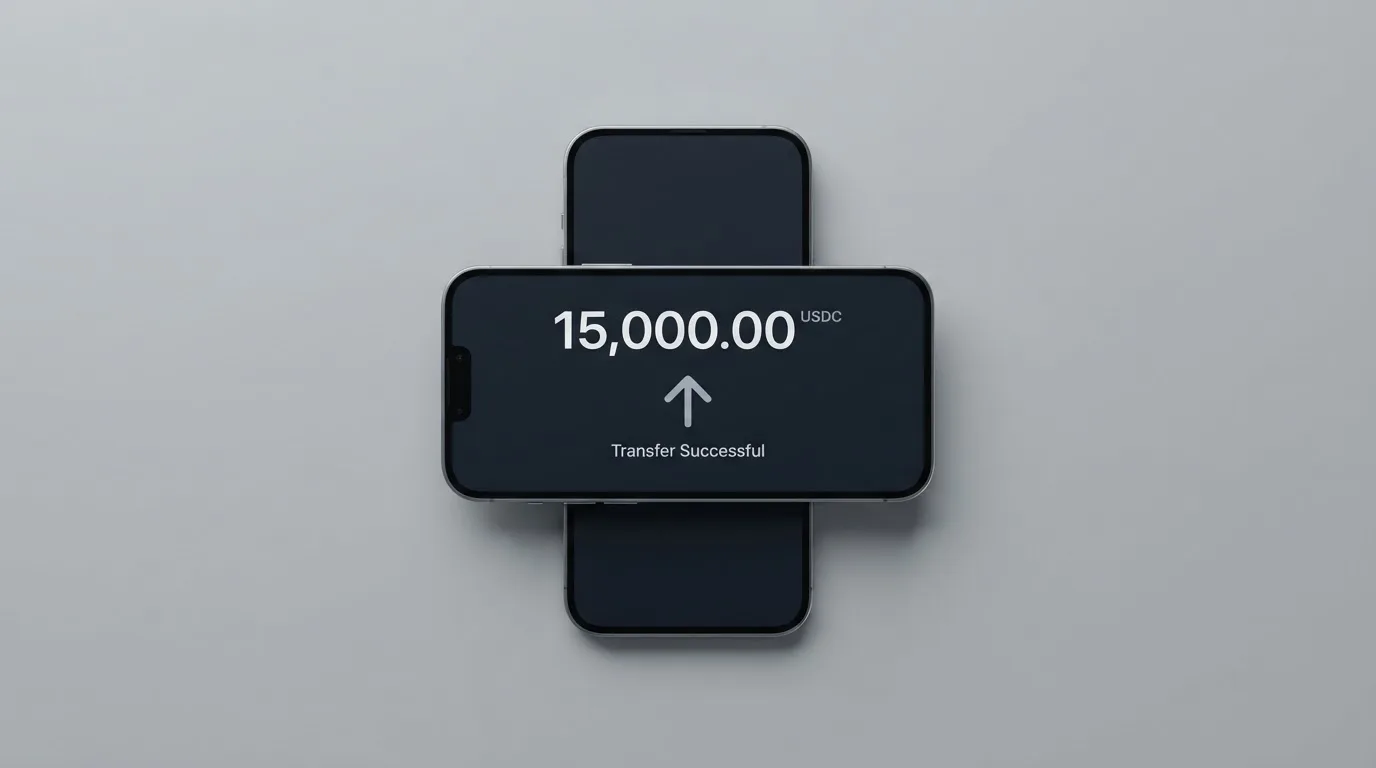
Supported assets per the documentation are USDC, ETH, wstETH, WBTC and OP, as collateral in Exactly Protocol markets. The networks are not named, and that is not a pedantic gap. Blockchain transfers are irreversible. If you send on a chain the provider does not support, or to an address belonging to another network, the money can be gone or need manual recovery with no guarantee. Ask support which networks before you send anything, and check against your own wallet’s network.
What is not stated: the deposit fee, the minimum top-up, and any fiat on-ramp options or their fees. The “associated fees” article behind it lists only the FX fee and the loan origination fee — it does not mention a crypto deposit charge. Unofficial, from CryptoCardHub in August 2026: crypto deposits carry no stated fee, while fiat on-ramp fees vary by third-party route and country.
Withdrawing works in the other direction too. The site says funds can be sent to a bank account or digital wallet, and withdrawn from ATMs. Fees, limits and timelines for withdrawals are not given. What happens to your balance if you close the account is also not stated.
Paying with it every day
A virtual card in Apple Pay and Google Wallet is genuinely useful, and there are help-centre articles for adding the card to both, so both are supported. Merchant categories that are restricted are not stated — and that is worth knowing, because individual issuers routinely block whole categories, such as gambling, on specific cards as a matter of policy rather than law, and the blocked list varies by issuer.
The rewards story is thin, and you should read it carefully. There is no cashback stated. “Earn while you spend” refers to yield on assets you hold, not a reward on what you buy. The help centre does list Visa Signature benefits, 20% off Airalo eSIMs, and a US activation reward — spend $100, get $20 in XRP through Uphold. Unofficial, and worth not planning around: no current cashback is confirmed, and an earlier 1.5% USDC cashback is described as unverified and historical.
App ratings are worth a glance. Unofficial, per CryptoCardHub in August 2026: Apple App Store 5.0 out of 5 from 4 ratings; Google Play 2.7 out of 5 from 58 ratings. Four iOS ratings is not a sample. Fifty-eight Android ratings at 2.7 is a signal.
Two more everyday realities. First, how a purchase settles: it is authorised immediately, completes usually one to three days later, and the final amount can differ. Second, the consumer protections you might assume exist — disputes, refunds, chargebacks — are not stated anywhere on the public pages. In the US, debit card reversal rights come from Regulation E and credit card rights from Regulation Z; prepaid-card coverage varies and should not be assumed. If you cannot find a dispute procedure described, you should assume you will be handling it through support rather than through a formal chargeback process.
What can go wrong
This is the section where I would slow down.
The issuer is not named. The cards are “issued by licensed third parties”, the help centre says “The Exa Card is issued in the United States”, and a US legal address in San Juan, Puerto Rico is “provided by Rain”. The bank behind the Visa programme is not identified on the public pages. Exa Labs SAS is the company in the footer, and Exa Labs does not issue payment instruments — it runs the programme. In the industry, that structure is normal: the crypto brand is often just a programme manager and front end, while a licensed bank or e-money institution holds the card programme. But it means your payment relationship, for chargeback purposes and for regulatory recourse, is with an institution whose name you cannot learn from the site.
Regulatory history in the category is a real record, not a scare story. Visa terminated its global agreements with FTX on 13 November 2022 and the FTX US debit card programme was wound down. WaveCrest, a Visa issuer that supplied several crypto card brands, was suspended by Visa in Europe in 2018, closing all its Visa programmes. Programme closures typically mean a notice period, then loading and spending stop, then you are asked to withdraw remaining balances. When you pick a crypto card, you are picking a company that can end, and a programme that can be closed by someone else.
The complaints are thin but pointed. No Trustpilot page was found for exactly.app, and no Reddit reviews either — which is not the same as “no complaints”. A third-party aggregator, cryptocards.so, rates it 5.7 out of 10 and cites KYC failures for users in African markets, Nigeria especially, no documented support SLA, and exclusion of 24 US states. That last point does not square cleanly with the 31-state figure on the card’s own pages, and I am not going to resolve it for you. Unofficial, the same aggregator reports a $7.3M exploit of the Exactly Protocol in August 2023 — the lending protocol the collateral sits in. That is three years back, not yesterday, and protocol exploits and card issuer failures are different things. It belongs here because your collateral is the thing the credit line runs on.
Self-custody cuts both ways. Keeping your own keys means nobody can lose your funds for you. It also means nobody can restore them for you. A seed phrase is typically 12 to 24 words in an unencrypted form of your private key; anyone who gets it can restore the wallet and spend the balance. Transfers are irreversible, so a stolen key has no built-in recovery — the network cannot freeze or return anything. And you carry sole responsibility for phishing and for clipboard malware that silently swaps an address you copied. The card is described as a self-custodial account “secured with passkeys”, with an optional second account owner, and borrowing and spending running on non-custodial smart contracts. Audits and insurance are not mentioned on the page. Freeze-in-the-app and spending controls are not stated either.
There is one more structural risk that catches people out and has nothing to do with this company specifically. A declined authorisation can leave a hold on your funds for several days, typically up to seven. If your balance is thin, that is money you have but cannot spend.
What to take instead
All four of the cards below scored higher than Exa on my scale, and each is stronger in a different direction. If your objection to Exa is the missing physical card, or the missing issuer name, or the 2.7 on Google Play, one of these probably answers it.
| Card | Score | Physical card | Key difference from Exa |
|---|---|---|---|
| Xplace | 7.7 / 10 | Yes — Silver live; Gold and Platinum described as coming, delivery 7–14 business days | Paid tiers with a stated annual fee; “0% FX on Platinum”; deposits on Solana |
| ether.fi | 6.7 / 10 | Yes — virtual and physical | The richest rewards ladder here, paid in ETHFI |
| Nexo | 6.3 / 10 | Yes — free shipping, but needs a $5,000 balance and at least Gold tier | Longest daily-use history; a clear tier cashback structure |
| Exa | 6.2 / 10 | No — virtual only | Self-custody collateral, no issuer name published |
Xplace (7.7). Country list not stated — the site says services are “not available in all jurisdictions” — and Visa acceptance in 160+ countries. Virtual is instant; the Silver physical card is live with delivery in 7–14 business days. Annual fees are explicit: Basic free, Silver $99/year, Gold $249/year, Platinum $999/year, with no origination fee on borrowing. “0% FX on Platinum”. Deposits are BTC (cbBTC), ETH (wETH), SOL, JitoSOL, USDC, USDT and xStocks, on the Solana network. Credit-mode cashback runs 0.5% Basic up to 2% Platinum, paid in USDC to the wallet at settlement.
ether.fi (6.7). Issued only in listed jurisdictions, residence-based and “subject to KYC and compliance” — Andorra, Argentina, Australia, Austria, Brazil, Canada, Cyprus, Czech Republic, France, Germany, Hong Kong, Hungary, Italy, Japan, Mexico, Poland, Portugal, Singapore, Spain, Switzerland, UAE, UK, plus 31 US states; Belgium and Ireland are eligible without physical delivery. “If your jurisdiction is not listed, you will not be able to apply.” ATM withdrawals are blocked in North Korea, Iran and Myanmar. The first virtual card is free for core members, or $10 in regional-pricing countries. FX by tier: Core 0.5%, Luxe 0.25%, Pinnacle and VIP none. Cashback in ETHFI, locked seven days: Core 3% up to $2,000 monthly, then 1% to $3,000, then 0.5%; Luxe 3% to $10,000; Pinnacle 3% to $50,000.
Nexo (6.3). For residents and citizens of “selected European countries, including the EEA and the United Kingdom” — no country list on the page, and no named excluded jurisdictions. Issued by DiPocket UAB. Physical card needs a balance above $5,000 and at least Gold tier; the virtual card activates in the app with at least $50. No monthly, annual or inactivity fee. FX fee 0.2% on weekdays for EEA, UK and Switzerland, 2% for the rest of the world; 0.7% and 2.5% at weekends. Over 100 digital assets, spending in Debit Mode from stablecoins, crypto and FiatX such as EURx, USDx and GBPx. Cashback only in Credit Mode with more than $5,000 held: Platinum 2% NEXO / 0.5% BTC, Gold 1% / 0.3%, Silver 0.7% / 0.2%, Base 0.5% / 0.1%.
The pattern across all four is worth naming: every one of them is virtual-first, every one of them depends on a licensed third-party issuer, and not one of them publishes the issuing bank’s name prominently. That is the category, not Exa’s failing.
Who I would recommend it to
I would recommend the Exa card to someone who already holds crypto in a self-custody wallet, already understands that they are their own security department, and wants to spend it at ordinary merchants without an exchange account in between. If you can state which five assets you hold and on which networks, and you are comfortable that a $10,000 weekly ceiling is plenty, this card does something the others do not.
I would not recommend it to you if any of the following is true: you need a physical card. You need to know who your card issuer is. You are in an African market where a third-party aggregator already reports KYC failures. You are paid in a currency other than dollars and travel often, because the 1.5% sits inside the rate and there are no multi-currency balances. You plan to lean on chargebacks, because disputes are not described. Or you simply want a card that works everywhere, because virtual-only means every swipe-only terminal is a no.
And the reason for the 6.2 rather than an 8: this product’s central advantage is custody, and custody is the thing hardest to check from outside a company. That is not a complaint about Exa — it is a reason to hold any self-custody card to a higher standard of published detail, and this one publishes less detail than its rivals on fees, networks, limits and issuer identity.
Frequently asked questions
What is the Exa card?
It is a virtual Visa Signature Exa Credit Card that spends against crypto you hold yourself in a self-custody account, rather than against a balance held by a custodian. You load funds, then spend either immediately via Pay Now or in instalments against that collateral as a credit line. The card is issued in 45 countries and 31 US states, and there is no physical version at the moment.
How does the Exa card work?
Your crypto stays under keys you control in the Exa app, acting as collateral or balance. When you pay, the card converts what it needs and spends it. Supported assets are USDC, ETH, wstETH, WBTC and OP as collateral in Exactly Protocol markets. A purchase is authorised straight away and normally settles one to three days later, and the final amount can differ.
Is Exa a bank?
No. Exa Labs SAS runs the programme and states that it does not issue payment instruments — the cards are issued by licensed third parties. The help centre says the card is issued in the United States, and a US legal address in San Juan, Puerto Rico is provided by Rain, but the issuer bank is not named on the public pages. Treat it as a crypto brand front end over someone else’s licence.
Who owns Exa?
The footer reads “© 2026 Exa Labs SAS”, so Exa Labs SAS is the company behind it. The interface runs at exactly.app with the web version at web.exactly.app, and support is through the help centre at intercom.help/exa-app and help.exactly.app, plus the X account @Exa_App. The card programme itself sits with an unnamed licensed third party.
Is the Exa card free?
The card is marketed as free with no amounts published, and unofficial third-party reporting says virtual issuance and the annual fee are $0. The fees that are officially named are a 1.5% FX fee on purchases not in USD, included in the rate, and a loan origination fee that may be charged inside instalment interest. Daily, monthly and ATM limits are not stated.
Does the Exa card require KYC?
Yes. Requesting the card starts a validation process described as taking no more than three minutes, with an about-three-minute KYC check. Above $10,000 in weekly purchases an automated source-of-funds check begins, requiring a form and supporting documents, and higher limits need proof of address and proof of funds. Which documents exactly, and the reasons a check can fail, are not stated.
How do I top up the Exa card?
You add funds to your self-custody Exa account first — “You will need to have funds in your account to enable your Exa Card” — and the card spends from there. Supported assets are USDC, ETH, wstETH, WBTC and OP, but the networks are not named, so confirm the supported network before transferring, since blockchain transfers are irreversible. Deposit fees and minimum top-ups are not stated.
Can I use the Exa card in my country?
Eligibility runs on residence, not citizenship: 45 countries and 31 US states are served, with Nigeria conditional. Eighteen countries are ineligible, including Belarus, China, India, Iran, Israel, Turkey, Ukraine, Vietnam and Russia, and spending is blocked in Cuba, Iran, North Korea, Russia, Syria, Ukraine and Venezuela. For spending abroad generally, a card issued in one country can look foreign to a shop in another, and some merchants decline foreign or prepaid BINs.
Is the Exa card safe?
Mixed, and you should weigh two separate things. On custody, self-custody means no custodian can lose your funds, but it also means no one can restore them — a seed phrase is typically 12 to 24 words, transfers are irreversible, and you carry the phishing risk. On the company side, no Trustpilot page exists for exactly.app, Google Play shows 2.7 out of 5 from 58 ratings per a third party, and the issuing bank is not named on the public pages.
Is the Exa card worth it?
Worth it if you keep crypto in self-custody, can name the networks you will deposit on, and mostly spend in USD or accept a 1.5% conversion. Not worth it if you need a physical card, need a named issuer for disputes, or plan to lean on chargebacks — disputes, refunds and chargebacks are not described on the public pages. The main alternative worth comparing is Xplace at 7.7 out of 10, which ships a physical card but charges an annual fee.
Credit and cashback cards – cryptocardchooser.com
Content created by the «cryptocardchooser.com» team