
The card works as advertised and explains almost nothing
 Available in US
If you are looking for an ordinary bank card and cannot get one — no salary account, no local address, no credit history, or simply a country where opening an account takes months — then HexaCard is exactly the kind of product that gets suggested to you. You load a balance, you get a card number, you spend. On paper that solves a real problem.

I read the card’s own pages and terms closely before writing this, because the gap between what a page promises and what it commits to is usually where the trouble lives. Here is the short version: HexaCard’s public pages are thin, and in several important places they are silent. Costs are given for the card and then hand-waved for everything else. The company behind it is not clearly named on the pages I could read. And the review record is bad enough that I would not treat it as my everyday card without thinking hard first.
That is not a scandal, and it is not a recommendation either. It is a description of where this card sits today.
The conditions described here are current as of October 28, 2026.
The verdict
HexaCard scores 4.6 out of 10.
That is not a rounding error away from passing. It is a card that plausibly works for someone in a hurry, with money already in crypto, who wants to spend today — and a bad fit for anyone building a banking relationship, expecting published prices, or trusting a balance to be there next month.

| Criterion | Mark | Why |
|---|---|---|
| Who can get it | 4 / 10 | Six countries named in the FAQ — Georgia (spelled “Gerogia”), Canada, Germany, United Kingdom, Turkey, United States — plus “over 25 BINs in various GEOs”. Eligibility rules themselves are not published. |
| Cost | 5 / 10 | Virtual $14.99 + $10 first top-up; physical $29.99 + $10. Top-up fees are “various and low”, with no amounts. Users report $15 or $25 for a replacement card. |
| Top-up options | 7 / 10 | USDT, ETH, BTC, LTC, SOL and more, plus fiat through Apple Pay, Google Pay, Visa and Mastercard. Networks are not named — the single most important detail. |
| Reliability and complaints | 2 / 10 | Issuer and company not named on the public pages. Trustpilot 2.0 from 17 reviews, 82% one-star: cards closed, balances zeroed, support silent, and a link to Papara and Turkey. |
| Everyday use | 6 / 10 | Virtual and physical, ATM withdrawals on the physical card. Apple Pay and Google Pay appear as top-up methods; whether the card can be pushed into a phone wallet is not stated. |
| Total | 4.6 / 10 |
Who it suits, in my reading: residents of Georgia, Turkey and Canada who need a card quickly, who already hold the crypto, and who can afford to treat the balance as money that might not be there in a fortnight. Who it does not suit: anyone in the UK, Germany or the US reading this expecting the protections they are used to, anyone who needs to know a fee before a payment, and anyone whose plan depends on cashing back out.
Will they give you the card?
The honest answer is that the public pages do not tell you. There is no published eligibility test, no minimum age, no income requirement, no list of excluded countries beyond an FAQ list of six.
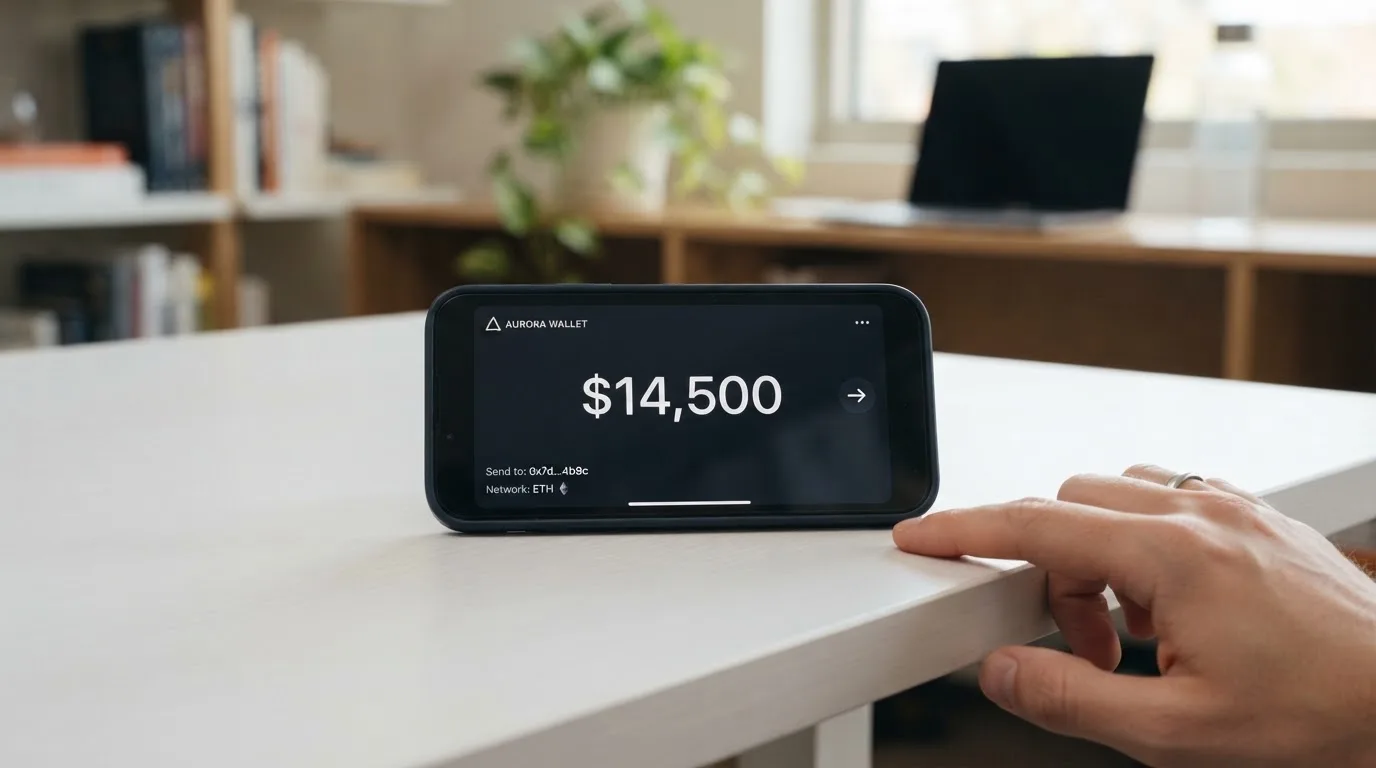
What is actually published is this:
- The official FAQ names six geographies: Georgia (written “Gerogia” on the page), Canada, Germany, United Kingdom, Turkey, United States.
- The site also claims “over 25 BINs in various GEOs” — issuer identification numbers across various geographies, which is the technical way of saying the card’s numbers may be issued from more places than the six above.
- The Card Agreement says Hexacard asks for your name, street address, date of birth and other identifying information, and may request a driver’s licence or other ID documents.
- The Agreement does not state processing time, and does not state the reasons a person might be refused.
That last pair of gaps matters more than it first appears. When you cannot get a bank card, an application that is quietly declined is a worse outcome than one that is refused. You will want to assume some applications simply do not come back, and to keep your other options open while you wait. There are no levels — no stated tiers of verification — so you cannot tell from the outside whether a slow application is normal or a problem.
The company named in the User Agreement is “Hexacard Business Corporation”, under New York law. The Card Agreement points at the “Celtic Bank Privacy Policy” for issuer data but does not name the issuer directly. The help centre carries a Manchester, UK address: Bartle House, Oxford Court, Manchester M2 3WQ. On the App Store the seller is shown as TransferEasy Limited — that is a third-party listing, not something the card’s own pages confirm.
None of that is disqualifying on its own. But you should notice what is absent: no licence numbers, no regulatory registrations, no named issuing bank. I could not find any of those claimed on the pages I read, and no regulator warning or news either.
How to get it
Not much is published, and what is published is mostly about the card rather than the process. The application itself sits behind a phone app; the site links iOS and Android versions.
What I can tell you:
- There are two products, not a ladder of tiers. A virtual card at $14.99 plus a $10 initial top-up, and a physical card at $29.99 plus a $10 initial top-up. The physical card adds cashback and ATM withdrawals; the virtual one does not.
- The card works on “Visa and MasterCard or American Express networks” — the wording is “or”, which does not tell you whether your specific card is Visa, Mastercard or Amex until you receive it.
- Currency support is claimed two ways that do not quite match: “28 currencies” in one place, “32 different currency units” in another. Which currency the card itself is denominated in is not stated.
- Delivery is not described at all. Countries, time, shipping cost, and the cost of a replacement card are not published anywhere I could find. The only figure available is the card price.
That last bullet is the one to sit with. If you lose a physical card, the price is reportedly $15 or $25 depending on who you ask and when — but that figure comes from user reports, not from a published schedule. A replacement card with no published procedure and no published turnaround is a real cost of carrying this card.
On the app: the App Store listing shows version 1.2.7, first released 13 December 2023, rated 3.6 out of 5 from 17 ratings. Again, that rating is unofficial — it comes from a third-party app-data source, not from the card.
What it really costs
Here is the price list, and then the parts of the price list that do not exist.
Published:
| Fee or limit | What the card says |
|---|---|
| Virtual card issuance | $14.99 |
| Physical card issuance | $29.99 |
| Initial top-up required | $10 |
| Monthly fee | not stated |
| Crypto top-up fee | “Various and low fees for charging” — no amounts |
| Conversion fee | not stated |
| Foreign-exchange fee | not stated |
| ATM withdrawal | Available worldwide on physical cards; fee and allowance not stated |
| Daily limits | not stated |
| Monthly limits | not stated |
The Card Agreement says limits are set by the account holder’s administrator or by Hexacard, with no amounts given. So in practice your ceiling may be decided after you sign up, by a party you cannot contact directly.
Let me put that into three ordinary payments, because that is how you will actually experience this:
- A €4 coffee. You will spend from a balance you loaded earlier. What the coffee costs you depends entirely on the conversion fee and the exchange rate applied — neither of which is published. If the card is denominated in dollars and you are elsewhere, this is where the FX rate matters, and you cannot see it in advance.
- A $30 online subscription. Straightforward in shape, harder in practice. The site says transactions are monitored 24/7 and 3-D Secure codes can arrive via app or SIM. If the merchant declines a prepaid or foreign BIN — which some do, because they can look up the issuer country — the failure looks like a declined card, not like a policy.
- A cash withdrawal at an ATM. Available on physical cards worldwide, with no published fee, no published daily allowance and no published monthly allowance. This is the single largest unknown in the table above, and it is the one most likely to surprise you.
The uncomfortable truth is that the two biggest numbers in a card’s cost are the rate you get on conversion and the fee on the currency — and HexaCard publishes neither. You are buying a container and being told the fill price varies.
How to top it up
Topping up is where this card looks best on paper, and where the paper is most dangerous to you.
Crypto: “USDT, ETH, BTC, LTC, SOL and more”. Networks are not specified.
That single missing word — network — is doing enormous work here. USDT exists on several chains that are not interchangeable at all. The same token, the same name, the same apparent value, and sending it on the wrong network can mean losing the money. Circle lists USDC as natively supported on 38 networks, including Ethereum, Solana, Base, Polygon PoS, Avalanche, Arbitrum and Stellar; Tether issues USDT across Ethereum, Tron, Solana, Polygon, Avalanche and others. Circle stopped supporting USDC on Tron in February 2024, so “USDC over TRC20” is not a native option. Blockchain transfers are irreversible: a deposit to an unsupported network or to another network’s address can be gone, or need manual support recovery with no guarantee.
On ERC-20 chains, gas is paid only in ETH, so a wallet holding USDT and nothing else cannot send. On Tron, fees are handled through bandwidth and energy, often burning TRX.
Fiat: bank cards, direct transfer and wire transfer, plus Apple Pay, Google Pay, Visa and Mastercard — “depending on region”. Fees: “various and low”. Amounts: not stated.
And here is a genuine contradiction on the card’s own pages: the home page says a “$10 initial top-up required”, while the FAQ says “the minimum amount to top up your balance is $20”. Both are official. Both are on the site. Neither is marked as superseded.
Two more things you will not find written down: who pays the blockchain network fee for your deposit — that is charged by the network, not by the card provider, but whether you are reimbursed is not said — and whether you can get your balance back out.
That last question deserves its own line. Withdrawing a balance back to crypto or to a bank is not stated anywhere. The Card Agreement adds two hard edges: the card fee cannot be refunded after purchase, and Hexacard may cancel or restrict a card at any time, with some cancellations described as “automatic and irreversible”. Cards are auto-cancelled after six consecutive failed transactions or three consecutive failed withdrawals. What happens to the balance when a card closes is not explained.
So: money going in is documented, money coming out is not. If you hold this card, treat the balance as spendable and small.
Paying with it every day
The day-to-day experience is a prepaid card experience, not a bank card experience. You convert or deposit, the balance loads, and the card spends only what is there — it cannot overdraw, which is genuinely useful if your access to money is unreliable.
What you can do:
- Hold a virtual card and/or a physical one.
- Withdraw cash at ATMs worldwide on the physical card.
- Earn cashback on the physical card — for Spotify, Steam and Google Play Store. The rate is not stated. It is a narrow list, which tells you more about the card’s intended audience than anything else on the site.
- Use Apple Pay, Google Pay, Visa and Mastercard to add fiat.
What is not stated:
- Whether the card can be added to Apple Wallet or Google Wallet. Apple Pay and Google Pay appear on the site only as top-up methods, and the FAQ question people ask most — how to add HexaCard to Apple Wallet — is not answered anywhere I could find.
- Which merchant categories are blocked. This matters: gambling sits under MCC 7995, and many issuers block it by policy rather than by law, with the list varying by issuer. You cannot check HexaCard’s list because it is not published.
- Whether transactions are accepted everywhere. Merchant category codes classify businesses by goods and services under ISO 18245, and address verification compares the numeric parts of the billing address you type against issuer records — mainly in the US, Canada and UK, and generally unavailable for foreign-issued cards, which causes declines.
On why a card can look “foreign” and get declined: a card number starts with a 6- or 8-digit issuer identification number. Merchants can look up which institution and country issued it, and may apply extra scrutiny when the issuer country differs from the billing address. For a person holding a card with “over 25 BINs in various GEOs”, that is not a theoretical concern.
Three-D Secure deserves a note. It adds an identity check to online payments, with the issuer assessing risk and either approving frictionlessly or challenging you with a one-time code or biometrics. Visa’s brand is Visa Secure, Mastercard’s is Identity Check. It reduces fraud attempts against you; it can also decline you for looking risky. Under 3-D Secure, liability for fraudulent online payments can shift — some critics argue partly onto the cardholder, not just the bank.
One more small thing that bites: a declined authorisation can leave a hold on your funds for several days, typically up to seven.
What can go wrong
I want to be plain about this section, because it is the reason for the score.
Complaints, from the reviews I could read. The Trustpilot page shows a TrustScore of 2.0 from 17 reviews, 82% one-star and 18% five-star. An earlier reading of an Australian page showed 2.8 from 12 — an older count of the same body of reviews. Four themes repeat:
- Cards and balances blocked or closed, top-ups failing — reported from November 2025 to July 2026.
- Support silent for weeks, over the same period.
- Funds tied to a dispute involving a Turkish issuer and Papara, reported from November 2025 to October 2026, with reported losses around $60–100.
- $15 or $25 asked for a replacement card, in November 2025 and June 2026.
- One reviewer suspected that ten five-star reviews posted within hours were fake, November 2025.
The company replies to 61% of negative reviews. On Trustpilot — a third-party site, and the company’s own statements there are unverified as far as I can tell — it said on 2 November 2025 that services were “fully active” and restrictions were compliance updates; on 26 February 2026 that the Turkey/Papara disruption was on the provider’s side and restoration depended on that provider; and on 3 July 2026 that some top-up methods may be limited depending on region.
What I could not establish. No company name, issuer or licences on the public pages I read. No regulator warning and no news coverage — which cuts both ways: nothing is on the public record, and nothing is reassuring either. I retrieved no Reddit threads.
Security, as described. The site says transactions are monitored 24/7, and that 3-D Secure codes arrive by app or SIM. A testimonial says a card can be deactivated in the app — plausible, but a testimonial is not a policy. The Card Agreement says holds reduce your card limit until released. Whether custody is custodial or self-custodial is not stated, and whether funds are safeguarded or insured is not stated.
That last point deserves plain language. Control of crypto belongs to whoever holds the private key. With a custodial wallet the provider holds the credentials and you must trust them completely. A seed phrase — typically 12 to 24 words — is an unencrypted private key; anyone who gets it can restore the wallet and spend everything. And crypto transfers have no built-in recovery: the network cannot freeze or return funds. Custodial platforms have a track record: Mt. Gox (about $350 million reported stolen, 2011–2014), Coincheck (about $400 million, 2018), Ronin Network ($625 million, 2022).
If a provider does fail. Programme closures typically give notice, then stop spending and loading, then ask users to withdraw remaining balances. FTX is the reference case: Visa terminated its global agreements on 13 November 2022 and the FTX US debit card was wound down by its issuer. WaveCrest, a Visa issuer that supplied several crypto card brands, was suspended by Visa in Europe in 2018, closing all its Visa programmes. One 2026 closure reported by a secondary source had new loads ending 8 July 2026 and spending stopping 8 August 2026 — single source, unconfirmed.
Getting something back. Disputes go first to informal resolution with a 30-day window, then to binding individual arbitration under AAA rules in New York, with no class actions and an opt-out available within 30 days of acceptance. The User Agreement was last updated 4 January 2024. Section 17 states that during third-party provider disruptions “refunds cannot be processed”. The card fee is non-refundable. Chargeback time frames are not stated.
Arbitration in New York, alone, no class action, is a meaningful reduction in leverage compared with a national consumer court — and worth weighing against the size of whatever you are protecting.
On tax, one line only, not advice. The IRS treats digital assets as property, so exchanging them for goods, services or dollars generally produces a taxable gain or loss, measured in local fiat at fair market value on the date of the transaction. Every card payment funded from crypto may therefore be a separate disposal. If you are in the US, that is a bookkeeping obligation, not an optional one. Elsewhere, check your own jurisdiction — I am not going to guess.
What to take instead
I scored the alternatives on the same ten-point scale. Here is how they compare to HexaCard’s 4.6, with the detail that matters for someone choosing.
| Card | Score | Card cost | Fees you can actually read | Rewards |
|---|---|---|---|---|
| Bitrefill | 6.8 / 10 | Page says free through the app; issuance and monthly amounts not stated; inactivity fee after 12 months | Deposit spread on crypto-to-euro conversion (percentage not stated); SEPA pay-in 1.99%; spreads by payment processors and ATM operators; FX fee not stated | 2% total cashback, “no cap” — 1% per crypto deposit, 1% per purchase |
| UPay | 6.1 / 10 | not stated | not stated; conversion may occur during payment depending on network and settlement | No cashback stated on the card page |
| Kemy | 6.0 / 10 | Virtual $15 issuance (3 years) + $2/month; physical $250 issuance with DHL Express (3 years) + $10/month | Virtual: top-up $1.5 under $100 or 1.25% from $100 (min $5), transaction 3.5% + $1, failed $0.8. Physical: same top-up (min $10), failed $0.80 | Cashback not mentioned |
Three things stand out.
Bitrefill is the strongest of the three, and the only one that states any fee percentage (SEPA pay-in 1.99%) and the only one with a published rewards scheme — 2% total cashback with no cap. Its card is virtual and physical Visa; the euro is implied by its terms, since crypto deposits are converted to euros. Its country list is not stated either, and its terms say access is “subject to eligibility criteria” with further requirements “established and verified by our partners” — so it is not more transparent about who gets in, only more transparent about what it costs.
Kemy is the opposite trade. It states almost everything about price and nothing about eligibility, and its physical card is genuinely expensive: $250 to issue plus $10 a month. It claims “190+ countries” with “a few restrictions apply”. It offers unlimited virtual cards and one physical Mastercard, contactless, one per user. Note one internal conflict on its own pages: a main-account deposit fee shown as 8% in the summary and 5% in the section.
UPay sits in the middle and is the vaguest of the three. Country list not stated, card cost not stated, fees not stated. It does say it does not serve residents of certain countries and that the list may change with regulatory and issuer policies, and it claims support in 180+ countries — but its KYC partner accepts only ID documents issued by the same country as yours, which is a sharper constraint than it sounds. Payments convert to USD, EUR, AED and others. Top up with BTC, ETH, USDT, USDC.
| What differs | HexaCard | Bitrefill | UPay | Kemy |
|---|---|---|---|---|
| Score | 4.6 | 6.8 | 6.1 | 6.0 |
| Stated price | Yes, for the card | Mostly | No | Yes, in detail |
| Stated fees | No | Partial | No | Yes, in detail |
| Stated eligibility | No | No | No | No |
| Physical card | $29.99 | Yes | Yes | $250 + $10/mo |
| Fiat top-up | Yes | Yes | Yes | Yes |
Every one of these four is opaque about eligibility. That is the category norm, not a HexaCard failing specifically — but it means the decision is not really “which card is best”. It is “which card’s silence am I most comfortable with”.
Who I would recommend it to
I would recommend HexaCard to someone in Georgia, Turkey or Canada who needs a card this week, already holds USDT or similar, and is spending from a balance they can afford to lose. Not as their everyday card. As a tool, with a small balance and a defined job.
I would not recommend it to anyone building a banking relationship. There is no stated monthly fee but also no published safeguarding, no named issuer on the pages I read, and a balance you cannot confirm you can withdraw. The complaints about balances showing 0.00 after a closure are precisely the failure that a person with no other access to money can least afford.
And I would push anyone reading this in the UK, Germany, the US or Canada — all four are on the official list — to look first at Bitrefill’s published numbers and then decide whether the comparison is worth it. If you have the option of an EMI-issued card under MiCA, that is a different conversation entirely: EMIs must safeguard customer funds by segregating them or insuring them, though such funds are not the same as bank deposits and may not sit under a deposit guarantee scheme. MiCA took legal effect in June 2023; its stablecoin rules applied from 30 June 2024 and the remaining provisions, including crypto-asset service provider rules, from 30 December 2024, with a transitional period running until 1 July 2026 or until a provider is authorised or refused, whichever came first. A card is a payment service regulated separately from the crypto side, so a crypto card often rests on two licences.
Before you fund any card like this, one check takes five minutes: look the provider up on ESMA’s interim register of authorised CASPs, white papers and non-compliant entities. In the US, FinCEN guidance treats administrators and exchangers of convertible virtual currency as money transmitters, while ordinary users buying goods are not.
Frequently asked questions
What is HexaCard?
HexaCard is a prepaid-style payment card you load with crypto or fiat and spend like an ordinary Visa, Mastercard or American Express card. It comes as a virtual card or a physical one, and the balance you hold is the balance you can spend — it cannot overdraw. It is marketed at people who cannot get a normal bank card quickly. It is not a bank, and its public pages do not clearly name the institution that issues the card.
How does HexaCard work?
You sign up in the phone app, verify your identity, pay for a virtual card ($14.99) or a physical one ($29.99), and add a required first top-up. You deposit crypto or fiat, and the card spends that stored balance. The Card Agreement says limits are set by your administrator or by Hexacard, with no amounts published. Most crypto cards work this way rather than reaching into a bank account at the moment of purchase.
Is HexaCard a bank?
No — not on the evidence available. The User Agreement names “Hexacard Business Corporation” under New York law, and the Card Agreement references the “Celtic Bank Privacy Policy” for issuer data without naming the issuer. No licence numbers or regulatory registrations are claimed on the pages I read. A help centre address in Manchester, UK is given. Treat it as a card programme manager, not a bank, and do not assume deposit protections apply.
Is HexaCard card free?
No. A virtual card is $14.99 with a $10 initial top-up, and a physical card is $29.99 with $10. Users also report being charged $15 or $25 for a replacement card, though no replacement schedule is published. Note also that the card fee cannot be refunded after purchase according to the Card Agreement. A monthly fee is not stated — which means you cannot confirm there is not one.
Does HexaCard require KYC?
Yes, in some form. The Card Agreement says Hexacard asks for your name, street address, date of birth and other identifying information, and may request a driver’s licence or other ID documents. No verification levels, processing times or refusal reasons are published. Nationality is usually screened separately from residence, since sanctions and issuer risk policy often follow citizenship and country of birth as well as address.
How much does it cost to use HexaCard?
The card prices are published: $14.99 virtual, $29.99 physical, plus a $10 first top-up. Everything after that is where the problem is. Crypto top-up fees are described as “various and low” with no amounts, and conversion and foreign-exchange fees are not stated at all. ATM withdrawals are available on physical cards worldwide, with no published fee or allowance. Daily and monthly limits are also not stated.
How do I top up HexaCard?
With crypto — USDT, ETH, BTC, LTC, SOL and more — or with fiat through bank cards, direct transfer, wire transfer, Apple Pay, Google Pay, Visa or Mastercard, depending on region. The critical detail is missing: which networks are supported. USDT is issued on Ethereum, Tron, Solana, Polygon, Avalanche and others, and transfers are irreversible, so the wrong network can mean losing the deposit. Also note the site’s own contradiction: $10 required on the home page, $20 minimum in the FAQ.
Can I withdraw money from HexaCard?
The public pages do not say. Whether a balance can be returned to crypto or to a bank account is not stated, and the Card Agreement explains neither. It does say Hexacard may cancel or restrict a card at any time, with some cancellations “automatic and irreversible”, that cards are auto-cancelled after six consecutive failed transactions or three consecutive failed withdrawals, and that the card fee is non-refundable. Approach this card as spend-and-forget, not as a store of value.
Is HexaCard safe to use?
It uses 3-D Secure with codes by app or SIM, and the site claims 24/7 transaction monitoring. Whether custody is custodial or self-custodial is not stated, and whether funds are safeguarded or insured is not stated. The review record is poor: Trustpilot 2.0 from 17 reviews, 82% one-star, covering closed cards, zeroed balances and silent support. Nothing about the card makes it unsafe by design; the risk is that it is opaque when something fails.
How do I add HexaCard to Apple Wallet?
The card’s own pages do not tell you. Apple Pay and Google Pay appear only as methods of adding fiat, not as wallets the card can be added to. In general, adding a card means the issuer’s app or a push-provisioning flow creates a device-specific number stored in the Secure Element, with a one-time code per payment — but only if your issuer supports it. Contact the card’s support before spending time on it, because the feature may simply not exist here.
Virtual cards – cryptocardchooser.com
Content created by the «cryptocardchooser.com» team