
The USD card you fund with USDC, priced at 1% and 2.35%
 Available in US
Keytom is a Visa card that spends a USDC balance. You load it, it converts to dollars, and the card behaves like an ordinary payment card in shops, online and at cash machines — with one structural difference that shapes everything else: the card is USD only and cannot be changed, and the balance underneath it is a stablecoin rather than a bank account. That single design choice decides who this card is comfortable for and who will find it awkward.

I scored it 6.0 / 10. That is a middle-of-the-road card: good everyday mechanics, poor cost structure, and an eligibility rule that reads more narrowly than the headline “150+ countries” suggests. Below I walk through who can actually get it, what signing up involves, what the fees really add up to on an ordinary week of spending, how you top up, what can go wrong, and who I would hand this card to.
The conditions described here are current as of October 28, 2026.
Verdict: 6.0 out of 10
Keytom scores 6.0 out of 10. It is a competently built card with a wide stated reach and a simple mental model, but the numbers lean against frequent use and the fine print on who is excluded is the part I would read twice before applying.
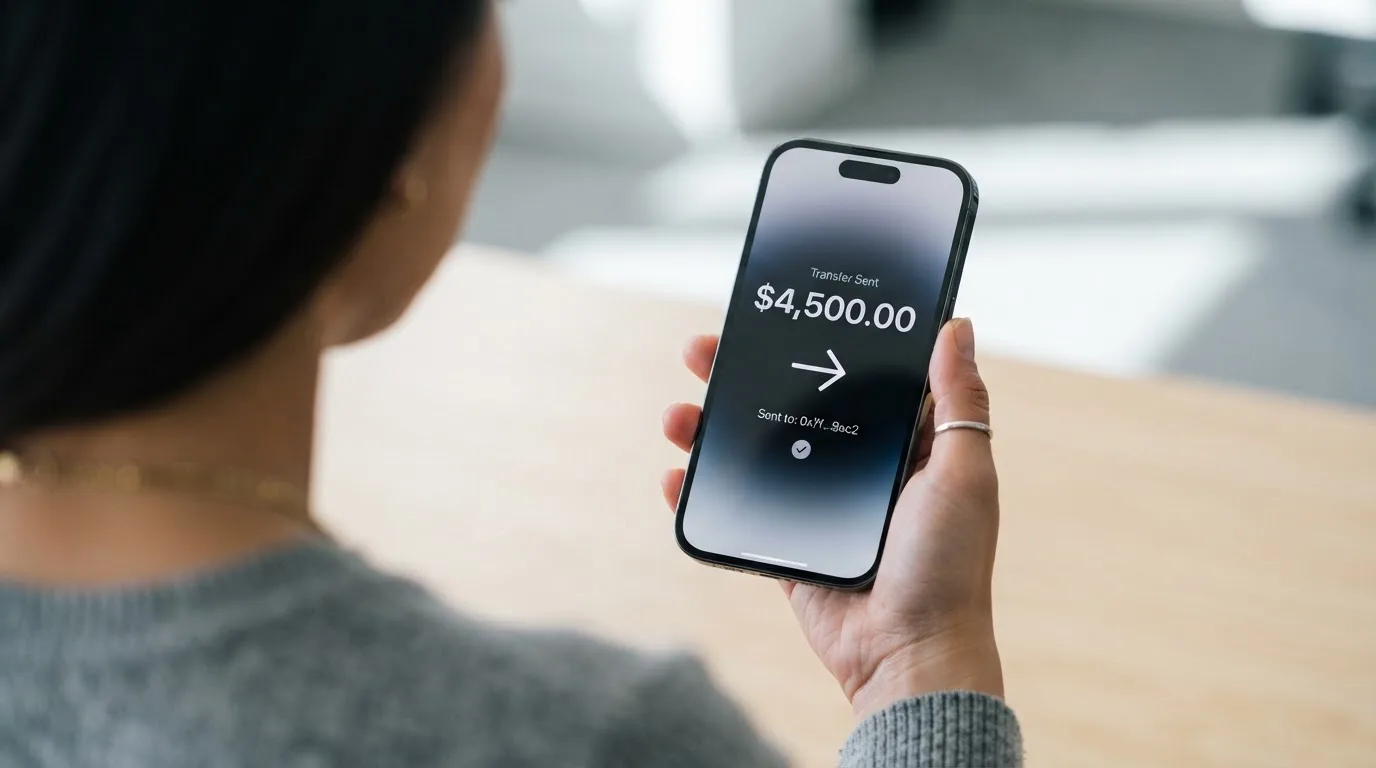
Here is the breakdown, criterion by criterion, with the marks as I recorded them:
| Criterion | Mark | Why |
|---|---|---|
| Who can get it | 8 / 10 | Stated for residents of “150+ countries”, but prohibited jurisdictions include Russia, Belarus, Ukraine, Serbia, Ghana, Uganda, Iran and others |
| Cost | 3 / 10 | Virtual issue is free, physical delivery 50 USDC, monthly fee 10 USDC; payments 1% in USD, 2.35% in other currencies, ATM 2% |
| Top-up options | 4 / 10 | USDC balance, top up by card via Visa Direct or direct USDC; networks not named |
| Reliability and complaints | 7 / 10 | KEYTOM SERVICES LTD, a Canadian MSB with FINTRAC registration M21788474, issuer not named; Trustpilot 4.3 from 37 reviews, complaints about a delayed referral reward |
| Everyday use | 8 / 10 | Virtual and physical Visa, Google Pay and PayPal, ATM up to USD 3,000 a day; Apple Pay not yet |
The score pattern is easy to read. Accessibility and everyday use are the strong points; cost is where it hurts. A user who funds a USD card with USDC — who already holds the stablecoin, and who wants to spend dollars without touching a traditional bank — gets the most out of it. A user who expects a free everyday debit card, or who spends in their home currency rather than dollars, gets the least.
Will they give you the card?
Yes for most applicants, and no for a list that is worth reading properly rather than skimming.
Keytom says residents of “150+ countries” can use it, and adds that availability may be subject to residency restrictions. Then there is the Customer Acceptance Policy, which lists prohibited jurisdictions including Russia and Belarus, along with Ukraine, Serbia, Ghana, Uganda, Iran and others. The rule behind that list is broader than a postcode check: clients with direct or indirect links to those jurisdictions — including ultimate beneficial owners who reside there or hold citizenship there — cannot be onboarded.
There is one piece of nuance in your favour, and it matters if your situation is complicated. Place of birth or former citizenship alone does not disqualify you, if you hold a valid residence permit or citizenship in an eligible jurisdiction and go through enhanced due diligence. So someone born in one of the listed countries but living lawfully elsewhere is not automatically excluded on paper. One caveat: that policy page is written for corporate clients, so it is not a promise about how an individual application will be handled.
The practical test, then: your country of residence and your citizenship are both in scope, and neither is on the prohibited list. If either is uncertain, that is a question for their support team before you send documents.
How to get it
The card page never uses the word “KYC”. What it does describe is 2FA, transaction monitoring and AML procedures, and it says Keytom may request verification information under its AML Policy. Documents, proof of address and an age requirement are not stated for individuals on the public pages.
What you get is a choice of two cards, and you can hold both at once:
- A virtual Visa, issued free
- A physical Visa, delivery about 14 days, 50 USDC
- Maximum two cards in total — one virtual and one physical
- Contactless on both
- Valid for up to 5 years
- USD only, and it cannot be changed
One thing worth being clear about, because “credit BIN” language circulates in this category: this is a credit BIN but it spends your own balance, not a loan. There is no credit line and nothing to repay beyond what you loaded.
On verification levels: Keytom defines no KYC tiers. It says it “may sometimes ask about a transaction” or request verification when activity looks unusual. The stated processing time and the official reasons for rejection are not stated — so if you need a decision by a deadline, do not assume one.
A third-party site (cryptocardhub, August 2026) gives an unofficial picture of what individual applicants are asked for: passport, national ID or residence permit, a selfie with a liveness check, proof of address, and source-of-funds evidence when requested, with applicants 18 and over. That is not confirmed by Keytom’s own pages, and I would treat it as a reasonable expectation rather than a requirement — but it does line up with the general pattern for regulated cards.
Fees: what it really costs
This is where the card earns its lowest mark, and it is worth being blunt: 3 / 10 on cost. There is no way to read the fee list and come away thinking it is cheap.

| Fee or limit | Value |
|---|---|
| Virtual card issue | Free |
| Physical card delivery | 50 USDC (about 14 days) |
| Monthly card fee | 10 USDC per card (20 USDC with both cards) |
| Payment in USD | 1% (minimum 0.66 USDC) |
| Payment in other currencies | 2.35% (minimum 0.66 USDC) |
| ATM withdrawal, USD | 2% (minimum 0.66 USDC) |
| ATM withdrawal, other currencies | 3.35% |
| Soft limit per transaction | about USD 150,000 |
| ATM daily limit | USD 3,000 |
| ATM monthly limit | USD 10,000 |
| ATM yearly limit | USD 100,000 |
| ATM withdrawals | 3 per day, 30 per month |
The monthly fee is charged when your balance covers it, which is a small mercy: a dormant card with an empty balance is not quietly billing you. There is a single tier — no cashback, no perks, no paid upgrade. Virtual is free to issue, physical costs 50 USDC to deliver, and that is the whole ladder.
Now, what does that mean on an ordinary week? Three everyday payments, and which fees bite:
A USD 40 grocery shop. You pay 1%, so USD 0.40, and there is a 0.66 USDC minimum on the fee, so the smaller of the two applies in practice — roughly USD 0.40 if the percentage lands above the floor, otherwise the floor. Add the 10 USDC monthly fee and you have effectively added that amount to the cost of your shopping.
A EUR 25 subscription. This is where the USD-only design bites. Non-USD payments cost 2.35%, minimum 0.66 USDC — so about USD 0.59 on a EUR 25 charge. Worse, the currency conversion rate you get is not the mid-market rate; the FAQ says the crypto-to-USD conversion uses a weighted average of the top 5 exchanges, which is the price at which the card turns USDC into dollars, not the rate your bank would quote. Two percentages stacked on a foreign-currency purchase is the single most expensive way to use this card.
USD 200 from a cash machine. USD withdrawals cost 2%, minimum 0.66 USDC — about USD 4. In another currency it is 3.35%. The ATM operator may add its own fee on top. The physical card is required for cash, up to 3 withdrawals a day and 30 a month; the virtual card works only at contactless ATMs.
Do the arithmetic against a conventional card in your own currency: if you spend in dollars, you are paying 1% every time plus a monthly fee; if you spend in anything else, you are paying 2.35% plus the same monthly fee plus a worse conversion. This card rewards one behaviour only — spending in USD.
How to top it up
Three ways, and the card page lists no top-up fee.
- USDC balance — the card spends a USDC balance directly
- Top up by card via Visa Direct
- Direct USDC top-up, or convert euros or crypto you already hold in Keytom into USDC
What is not stated is the part that matters most in practice: the minimum top-up, which network to use, and who pays the network fee. Those are the three questions I would ask support before sending anything, because a deposit to an unsupported network can be lost — blockchain transfers are irreversible, and a wrong network is the classic way people lose money on cards like this.
A third-party source (cryptocardhub, August 2026) lists unofficial fees for a personal account that the card page does not show: SEPA incoming at 0.5% plus EUR 0.25, outgoing at 1% plus EUR 0.25, with a EUR 2.75 minimum each way, and EUR-to-crypto conversion at 1.5%. None of that is confirmed by Keytom, so treat it as a hint about what to ask rather than a price list.
On getting money back out: not stated. The public pages describe no bank withdrawal and no crypto withdrawal of the card balance. Cash is described through the ATM route only. There is a Deletion Policy linked from the site whose content I did not read, and if cashing out matters to you, that gap is a genuine reason to hesitate.
Paying with it every day
The everyday mechanics are the card’s best feature, and this is where it scores 8 / 10.
The virtual card can be added to Google Pay or PayPal. Apple Pay is “not available yet” per the FAQ — and user complaints in October 2026 note its absence, with the company saying it is “being brought back”, which implies it worked at some point. If Apple Pay is how you pay for everything, that is a real gap right now.
Some things do not work: fuel pumps, gambling and a few others are not supported, and some platforms block in-game purchases. This is the same category restriction you meet on many prepaid cards — fuel stations often need a pre-authorisation for the full pump amount, which a card with an exact balance will fail.
Apps exist for iOS and Android. App Store and Google Play ratings are not stated.
On refunds, the terms are unusually clear and worth knowing before you need them: refunds go through the merchant, usually 2–15 days; the original payment fee is not returned, so a refund can come back slightly lower than you paid; there is no extra refund fee; and hotels and airlines can place holds of up to 30 days. Chargebacks are not mentioned anywhere on the card page — so if a merchant refuses a refund, I would not assume you have a formal dispute route.
Limits are generous in the way that matters for daily life: a soft limit of about USD 150,000 per transaction, and no fixed cap on the number of transactions or on monthly spending.
There is no cashback. The card page states none; a third-party site also says no cashback or purchase rewards are advertised (cryptocardhub, August 2026), though that is unofficial.
What can go wrong
Four risks, in the order I would think about them.
The balance is held by Keytom, not by you. Custody sits with the provider — this is not self-custody. Keytom describes segregated client accounts and says crypto is “insured up to $100 million through Fireblocks” (its FAQ wording), plus 2FA, transaction monitoring, AML, card freeze from the dashboard, and withdrawals that can be paused on suspicious activity. That is a decent list of safeguards. It is still a list of promises by the company holding your money. Custodial platforms have a history: Mt. Gox (about US$350 million reported stolen, 2011–2014), Coincheck (about US$400 million, 2018), Ronin Network (US$625 million, 2022). Counterparty risk is not a theoretical category.
The company is real but the issuer is not named. The operator is KEYTOM SERVICES LTD, registered in Canada as a Money Services Business with FINTRAC, registration MSB M21788474. The issuing bank is not named on the public pages. When a card programme runs on someone else’s licence, the bank behind it is the entity that ultimately has to honour a balance when things go wrong.
Reviews are decent but thin, and one theme repeats. Trustpilot shows 4.3 / 5 from 37 reviews over the last 12 months (5-star 81%, 1-star 14%), read on 2026-10-20 — only about 10 of the 37 were visible to me. Recurring complaints: fees and rates seen as high compared with alternatives (29 January, 9 and 29 September 2026); a referral reward withheld alongside an account closure (January 2026), where the company replied on 12 October 2026 that rewards can be withheld for suspected abuse; and the missing Apple Pay (6 October 2026). The referral complaint is the sharpest warning in the set: if you are here chasing a bonus, you are relying on a discretionary payment the company has already said it can withhold.
Blocks and declines happen for reasons outside your control. A merchant can look up the card’s issuing country and apply extra scrutiny; some merchants decline prepaid or foreign-issued cards for exactly that reason. A declined authorisation can also leave a hold on your funds for several days, typically up to 7. Address verification is mostly a US, Canada and UK mechanism and generally unavailable for foreign-issued cards, which causes declines. And a card whose currency differs from the merchant’s is the most reliable way to trigger friction at a till.
What to take instead
If the reason you are reading this is that an ordinary bank card is hard to get, you are not short of options — you are choosing between differently shaped compromises. Three alternatives came up in my comparison, and each trades away something Keytom does not.
| Keytom | RedotPay | Bitpanda | Wirex | |
|---|---|---|---|---|
| Score | 6.0 / 10 | 6.9 / 10 | 6.5 / 10 | 6.7 / 10 |
| Card | Virtual + physical Visa, USD only | Virtual + physical, USD or HKD card | Physical Visa debit, EUR only | Virtual + physical |
| Who can get it | Residents of “150+ countries”, minus prohibited jurisdictions | Long unsupported-country list by citizenship; separate issuance list by residence | Euro-area residence, verified account | Region-dependent, “130+ countries” claimed |
| Cost shape | 10 USDC/month, 1% USD payments | 10 USD virtual application, 100 USD physical, no maintenance fee | Free account and first shipment, reissue from EUR 5.90 | Issuance free in listed regions, 45 GBP metal card |
| Notable catch | 2.35% on non-USD payments | Merchant fees at some named merchants | EUR only, one active card | Cash withdrawals not permitted in Singapore |
RedotPay (6.9 / 10) is the closest thing to a straight upgrade on cost: no monthly or annual fee, and a 1.00% transaction fee with 1.20% for non-default currency. Against that, its eligibility rules are stated in two documents that word the test differently — one list by citizenship, one list (dated 28 August 2026, 47 places) by residence, saying residents there cannot get virtual or physical cards and cannot use those addresses for billing. India, Indonesia, Morocco, Nepal, Singapore and Turkey appear on that issuance list but not the citizenship list. If you live in one of those six, RedotPay is out. It also charges some named merchants 1.5% (min 0.50 USD), and a 5 USD welcome reward that cannot be used toward the issuance fee.
Bitpanda (6.5 / 10) is the regulated European option: verified account plus residence in a euro-area country, EUR only, one active card at a time, account opening and first shipment free. It spends from a chosen main asset — listed cryptocurrencies, precious metals or EUR — auto-converted at payment, minimum EUR 1. But the crypto conversion fee is not stated, and the cashback figure is not reconciled: the page body says 1% on crypto spending, the summary says “up to 2%”. Fiat, stocks, metals and stablecoins are excluded. Users verified via “Bankident” cannot order.
Wirex (6.7 / 10) has a rewards structure the others lack — Cryptoback in WXT: Standard 0.5%, Premium 3%, Elite up to 8% — with ATM withdrawals, cash advances, crypto purchases, gambling and refunds excluded. It advertises no annual or foreign exchange fee, and the exchange rate is shown in the app before you confirm, though no fixed FX figure is published. Card currency and validity are not stated, and cash withdrawals are not permitted in Singapore.
The pattern across all four is the same, and it is the honest summary of this category: nobody publishes a genuinely cheap all-in price, and every one of them restricts something by geography. If RedotPay’s residence list clears you, its no-maintenance-fee structure is harder to argue with. If you are firmly euro-area and want a regulated European issuer, Bitpanda is the more conventional choice. Wirex is the one to look at if you spend in WXT or want card rewards.
Who I would recommend it to
Recommend it if you already hold USDC, you spend in USD, you want a physical card in about 14 days without a bank in the loop, and you treat the 1% payment fee as the price of that access. Add 10 USDC a month and a couple of foreign purchases, and you should still be ahead of what a card-linked exchange charges on the same spending.
Think twice if your spending is mostly in euros, pounds or anything else. The 2.35% fee plus a non-mid-market conversion makes this the expensive way to spend abroad, repeatedly. Also think twice if you need to get money back to a bank account — no withdrawal route is described on the public pages — or if Apple Pay is central to how you pay, or if a referral bonus is part of your reason for signing up.
Skip it if you are in a prohibited jurisdiction, or your residence or citizenship is unclear under the Customer Acceptance Policy. Settle that question with their support team before you upload a passport.
The honest one-line version: a competent, unglamorous USD card for someone who already lives in stablecoins. It does its job, the job is narrow, and it charges you fairly for it — but if you spend in your home currency, it is the wrong shape of tool and one of the alternatives above will cost you less.
Frequently asked questions
What is the Keytom card?
The Keytom card is a Visa payment card that spends a USDC balance rather than a bank account. You load it with USDC, it converts to dollars, and the card pays like an ordinary card in shops, online and at contactless ATMs. It is USD only and the currency cannot be changed. A physical card costs 50 USDC to deliver and arrives in about 14 days; the virtual one is free to issue.
How does the Keytom card work?
You top up, and the card spends only what you loaded — it cannot overdraw. Payments in USD cost 1% with a 0.66 USDC minimum; payments in other currencies cost 2.35% with the same minimum. The card’s FAQ says the crypto-to-USD conversion uses a weighted average of the top 5 exchanges. The balance is held by Keytom, not self-custody, so the provider stands between you and the funds.
Is Keytom a bank?
No — Keytom is not a bank. The operator is KEYTOM SERVICES LTD, registered in Canada as a Money Services Business with FINTRAC under number M21788474. The issuing bank behind the Visa programme is not named on the public pages. A card like this is a payment service, and in most markets it rests on a licence held by a partner institution rather than by the brand you see.
Does the Keytom card require KYC?
The card page never uses the words “KYC”. It does describe 2FA, transaction monitoring and AML, and says Keytom may request verification information under its AML Policy. Documents, proof of address and an age requirement are not stated for individuals. A third-party site reports passport or ID, a selfie, proof of address and 18+ — but that is unofficial and not confirmed by Keytom.
What are Keytom’s fees?
Virtual issue is free; physical delivery is 50 USDC. The monthly fee is 10 USDC per card, or 20 USDC with both. Payments cost 1% in USD and 2.35% in other currencies, minimum 0.66 USDC. ATM withdrawals are 2% in USD and 3.35% elsewhere, with limits of USD 3,000 a day, USD 10,000 a month and 3 withdrawals a day. No top-up fee is listed on the card page.
How do I top up the Keytom card?
Three ways: spend from a USDC balance, top up by card via Visa Direct, or send USDC directly — you can also convert euros or crypto already held in Keytom into USDC. No top-up fee is listed. What the card page does not state is the minimum amount, which network to use, or who pays the network fee. Confirm those with support before sending, because transfers on the wrong network can be lost.
Can I add the Keytom card to Apple Wallet?
Not at the moment. The FAQ says Apple Pay is “not available yet”, and user complaints from October 2026 note its absence, with the company saying it is “being brought back”. Google Pay and PayPal do work with the virtual card. If Apple Pay is how you normally pay, this gap matters more than the fee schedule does.
Where can I use the Keytom card?
Keytom says residents of “150+ countries”, subject to residency restrictions. Prohibited jurisdictions include Russia and Belarus, plus Ukraine, Serbia, Ghana, Uganda, Iran and others — and the rule extends to clients with links to them, including beneficial owners residing there or holding that citizenship. Birth country or former citizenship alone is not disqualifying if you have a valid permit or eligible citizenship. Fuel pumps and gambling are not supported.
Is the Keytom card safe?
The balance is held by Keytom, not by you, so you are trusting a custodian. The company cites segregated client accounts, 2FA, transaction monitoring, card freeze, and crypto insured up to $100 million through Fireblocks, and withdrawals can be paused for suspicious activity. Those are real safeguards and real counterparty risk. Card use abroad can also be declined because merchants see a foreign or prepaid issuing country. Nothing here makes the card anonymous.
Is the Keytom card worth it?
Worth it if you already hold USDC and spend mostly in USD — you pay 1% plus 10 USDC a month and skip the bank entirely. Not worth it if you spend in another currency, where the fee is 2.35% on a non-mid-market conversion, or if you need to withdraw to a bank account, since no withdrawal route is described. My score of 6.0 out of 10 reflects exactly that split.
App and neobank cards – cryptocardchooser.com
Content created by the «cryptocardchooser.com» team