
A prepaid Mastercard that spends crypto straight from a CoinSpot wallet, priced for Australia and thin everywhere else
 Available in US
If you are reading this, you are probably weighing a strange but increasingly ordinary problem: you have some cryptocurrency sitting on an exchange, and you would like to spend it in a shop, on a subscription, or on a bill without going through a bank that will ask questions first. The Coinspot card is one of the routes to that outcome. It is a prepaid, reloadable Mastercard that draws on cryptocurrency held in your CoinSpot wallets, converts what you spend into Australian dollars at the moment of the transaction, and lets you pay with your phone.
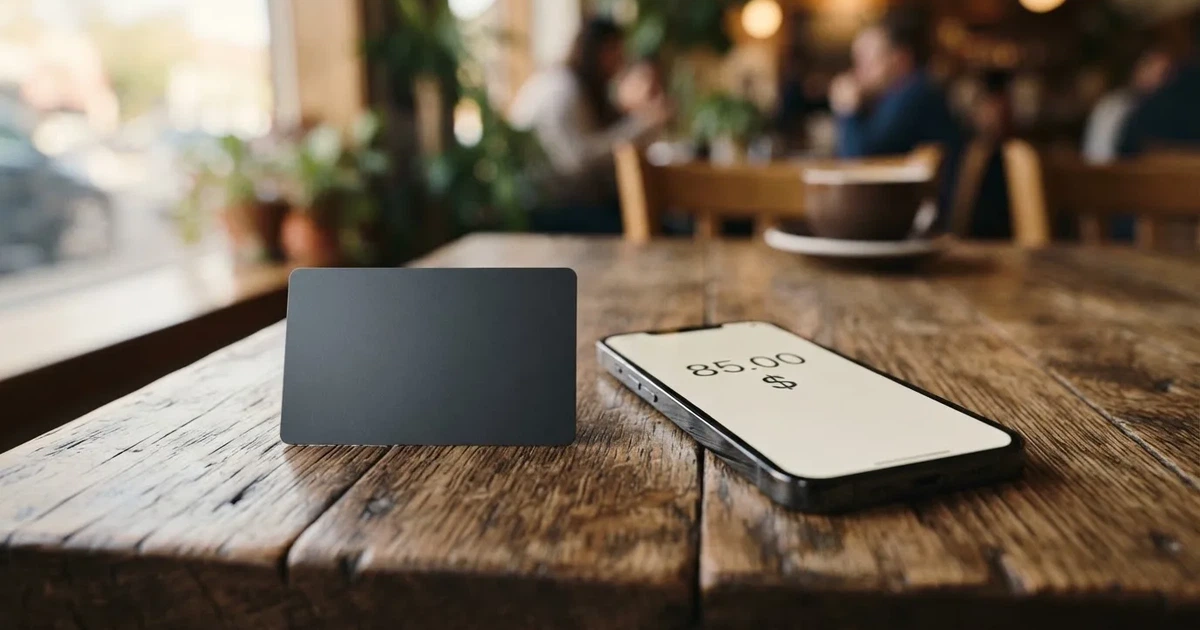
Here is my short version before the detail. The card is built by an Australian exchange, for Australian users, in Australian dollars, around a single uncomplicated idea: spend the crypto you already have. If that is your situation, the card does its job. If you live anywhere else, or if you need a physical piece of plastic, or if you want cash out of an ATM, or if you want rewards for your spending, you will hit a wall. It scores 6.2 out of 10 in my assessment — a genuinely usable tool with a narrow box around it, not a bank account in disguise.
The conditions described below are current as of October 28, 2026.
Verdict: 6.2 out of 10, and the reason is narrowness rather than weakness
My score for the Coinspot card is 6.2 out of 10. That is not a bad score for a product that does one thing reliably. It is a fair score for a product that does one thing reliably for a small and specific audience, and is unclear or unusable for most of the rest of the world.
Who this card suits: Australian residents who already hold crypto on CoinSpot, who are comfortable with their coins sitting on a custodial exchange, who want to pay everyday bills and purchases from that crypto without selling it manually first, and who are happy to pay in Australian dollars only. If that is you, the card is a real convenience and costs nothing to keep.
Who it does not suit: anyone outside Australia; anyone who needs a physical card; anyone who needs to withdraw cash; anyone who wants cashback or points; anyone whose tax position depends on choosing exactly when each disposal happens; and anyone who treats “my exchange never freezes my account” as a foundation rather than an assumption.
The score by criterion, with the marks I gave and why:
| Criterion | Mark | Why |
|---|---|---|
| Who can get it | 3 / 10 | The page refers to AUD and Australian licensing and needs a fully verified CoinSpot account with 2FA; third-party sources say it is for Australian customers |
| Cost | 8 / 10 | No startup or annual fees and no lock-in periods; an unofficial 1% conversion fee is mentioned elsewhere |
| Top-up options | 7 / 10 | Any cryptocurrency listed on CoinSpot, up to five linked wallets drawn in an order you choose, 470+ coins; networks are not named |
| Reliability and complaints | 8 / 10 | Issued by EML Payment Solutions Limited (AFSL 404131) and distributed by Casey Block Services Pty Ltd; the exchange sits at 4.3/5 on Trustpilot across 2,823 reviews, with complaints about account restrictions |
| Everyday use | 5 / 10 | Prepaid Mastercard with Apple Pay and Google Pay; a physical card is not mentioned, and third-party sources describe it as digital-only with no ATM |
That last row is the one that drags the whole thing down, and it is the one most people discover only after they have already applied.
Will they give you the card?
Yes — if you are in the circle the card was built for, which is a narrow one. There is no country list on the card page. What the page does tell you is that it deals in AUD and sits inside Australian licensing, and what it requires is a fully verified CoinSpot account with two-factor authentication switched on. That is the whole stated eligibility test: a verified account, 2FA, and a page that keeps talking about Australian dollars.
Per Finder, from September 2024, it is available to Australian customers with a verified CoinSpot account. That is a third-party description, not something CoinSpot’s own page confirms, so treat it as a strong signal rather than a promise.
Two things the page does not say, and I want to be plain about them rather than leave you guessing. It does not list the documents you will need, and it does not state an age requirement. For prepaid and debit cards in this category the usual floor is 18, but “usually” is not the same as “stated here”, and I will not invent a number the card has not given.
The other silence is country eligibility. No list means no way to check yourself against it before you spend an afternoon on verification. The page’s Australian framing is a strong hint, but a hint is what it is.
If you are reading this outside Australia and hoping the answer is “yes anyway”: the card page gives you nothing to work with, and applying through an Australian address you do not hold is not a route I am going to describe. The honest answer is that this card was not made for you.
How to get it
The path is short, and short is the appealing part. You need a fully verified CoinSpot account — individual verification — plus 2FA enabled. Once the account is fully verified and 2FA is on, the card becomes available inside the CoinSpot app, where it is managed alongside your balances and transactions.
What that means in practice: the card is not something you apply for on a separate form or wait for a decision on. It is a feature of an account you already need, gated behind having finished the exchange’s verification. So the real work is the exchange account, not the card.
The details you would want before you start are not published. Verification tier levels, how long each stage takes, and the reasons an application might be rejected — none of that is stated on the card page. If your situation is complicated (a business account, a trust, a name that does not match your documents), that uncertainty is real, and it is the first thing to ask support about before you invest an afternoon in it.
What you end up with is a prepaid, reloadable debit Mastercard. The page describes adding it to Apple Pay and Google Pay; it does not mention a physical card. Card currency is AUD. There is one card and one tier — no tiers, no metal, no premium version to upgrade into.
Fees: what it really costs, and what it does not say
The headline is genuinely good: no startup fees and no annual fees, and no lock-in period. That is the part most people mean when they ask whether a card like this is “free”. On that narrow question, the answer is yes.
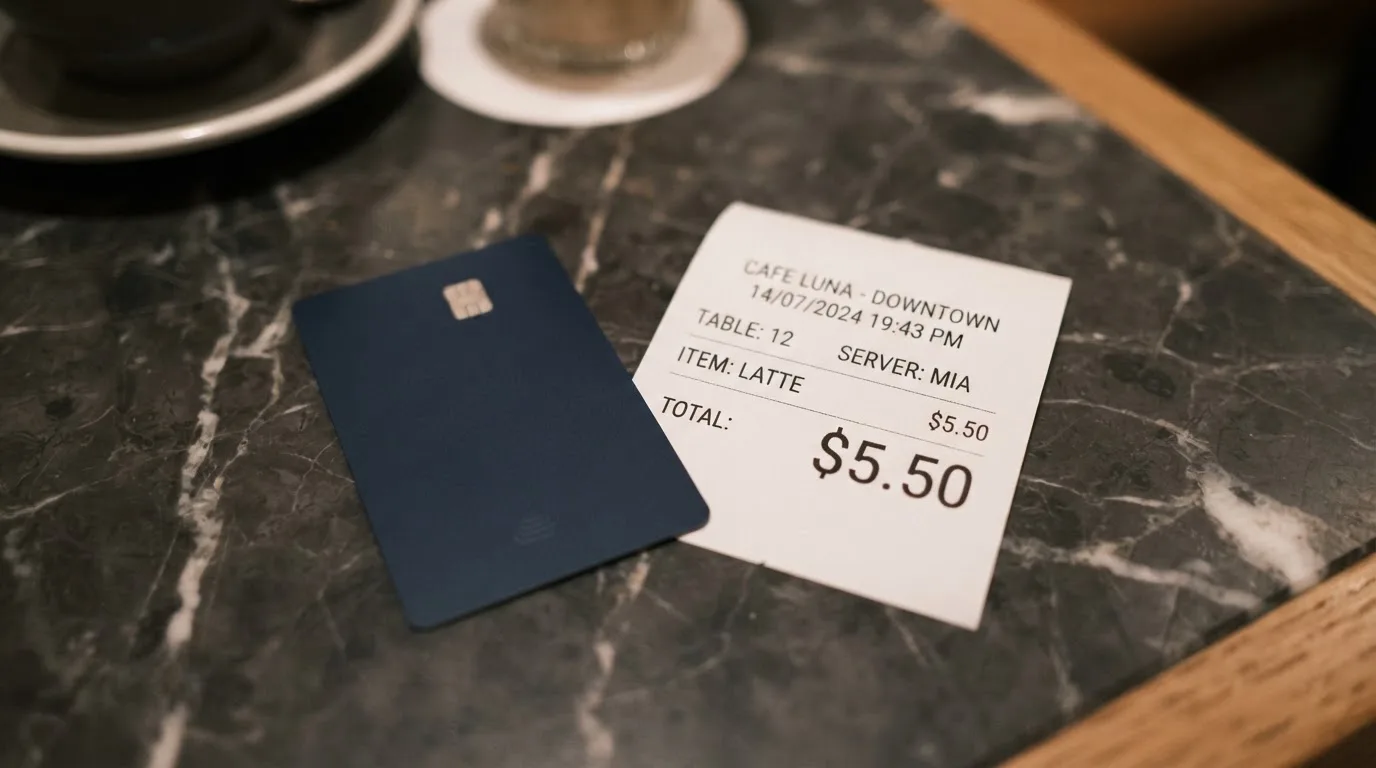
What you actually pay happens at the moment of spending. Crypto is converted to AUD in real time at the point of transaction, at what the page calls CoinSpot’s best exchange rates. The page carries no margin figure and no FX fee figure, which means it gives you nothing to compare against a specific number — that absence matters, and I’ll come back to it.
Third-party launch coverage from savings.com.au and Accountants Daily, and Finder from September 2024, describe a 1% conversion fee, with Finder describing it as applying to buys, sells and swaps and stating there are no annual or activation fees. None of that is on CoinSpot’s own page, so treat 1% as a well-reported unofficial figure rather than a confirmed term.
Here is what I could and could not find, side by side:
| Fee or limit | What the card page says |
|---|---|
| Issuance | No startup fee |
| Monthly or annual fee | No annual fees; no lock-in period |
| Conversion | Crypto converted to AUD in real time at the point of transaction at CoinSpot’s best exchange rates; no margin or FX figures published (unofficial reports: 1% conversion fee) |
| Foreign currency | Not stated; multi-currency balances are not described |
| ATM | Not stated; third-party sources describe the card as digital-only with no ATM withdrawals, and no ATM fee was found in any source |
| Daily spending limit | Not stated on the page; unofficial reports put it at $4,999 (per Finder, September 2024) |
| Monthly spending limit | Not stated |
| Rewards or cashback | Not stated on the page; unofficial reporting describes no rewards or cashback |
Three everyday payments, and which fees actually bite:
A coffee in a Sydney café. This is the clean case. You tap, the crypto behind the card converts to AUD at the transaction, you pay, done. The only cost is whatever the conversion carries. No annual fee, no monthly fee, nothing for keeping the card open.
A monthly subscription billed in another currency, say a software or hosting plan. Here the card’s single-currency design becomes a problem rather than a feature. The balance is AUD, the bill is not, and the page says nothing about a foreign-currency fee or about holding more than one currency. You cannot tell from what is published whether this costs extra, because that line simply is not there. It is the single most important number I could not find, and I would want it in writing before using the card this way.
A weekend abroad, cash out of an ATM. This one does not work as far as anything published goes. The card page does not describe ATM withdrawals, and third-party sources describe it as digital-only with no ATM facilities at all. If your scenario needs physical cash in another country, this card is not the instrument, whatever the fee schedule says.
There is also a quiet tax question sitting under all three. Every payment converts crypto at the moment of spending, and that is generally treated as a disposal of the asset at its value on that date. A card does not avoid that; it just makes it routine enough that you stop noticing it. The IRS position is that digital assets are property, so spending them produces a gain or loss measured in local currency at the fair market value on the transaction date — and prepaid-card chargeback protections vary by jurisdiction and should not be assumed.
Top up: how the card gets filled
There is no bank transfer and no direct AUD top-up described on the card page. The card is funded by spending cryptocurrency from up to five linked CoinSpot wallets, drawn in an order you choose. The card page refers to over 470 cryptocurrencies. That is a genuinely wide menu, and it is the feature that makes this card interesting for someone holding several coins rather than one.
What is not stated, and this is where caution is warranted: the networks are not named. If you hold USDT on one chain and USDC on another, the card page does not tell you which of those routes is actually usable. Top-up fee, minimum top-up, and network fees are also not stated. Separately, CoinSpot’s fees page lists card (AUD) deposits to the exchange as free — but that is about getting funds onto the exchange, not about loading the card.
If you have never moved crypto on-chain before, this is the part to slow down on. A transfer sent on a network the provider does not support, or to an address belonging to a different network, can be lost outright, or need manual support recovery with no guarantee. Network fees are charged by the blockchain itself, not by the card. And a detail that catches people out: on Ethereum, fees are paid only in ETH, so a wallet holding USDT but no ETH cannot send anything at all.
Two more things about moving value out. Withdrawing is not described on the card page, and the treatment of a remaining balance when you close the card or the account is not stated either. What is stated is about refunds: a refund returns the AUD value to your CoinSpot account, and the coins that were spent are not returned. So a cancelled subscription gives you dollars, not the tokens.
If that sounds like too many gaps, here is the order I would test things in: check which networks your coins actually sit on against what the card supports, send a small amount first, confirm it lands, and only then move anything larger.
Paying with it every day
Day to day, this is a phone-first card. Apple Pay and Google Pay are supported, and the card is managed in the CoinSpot app for iOS and Android, where you see balances and transactions. The App Store rating is 4.8/5 from 46K ratings, read on 2026-10-20 at version 3.11.14; the Google Play rating was not readable.
That is the whole daily picture, and it is a narrow one. There is no physical card mentioned on the page and third-party sources state plainly that physical cards are not available. There are no rewards: cashback is not mentioned on the page, and third-party reporting describes no rewards programme at all. Merchant category restrictions are not stated — which means you do not know from the card’s own documentation whether gambling, adult content, or fuel is blocked, and those are the categories issuers most often block.
Two things work in your favour without being advertised. Tapping to pay with Apple Pay or Google Pay is faster than a physical card ever was, and tokenised mobile payments carry a device-specific number with a one-time code per transaction rather than your actual card number, which is a real reduction in exposure compared with handing over plastic. The issuer can also restrict the tokenised number — for example blocking it on magnetic-stripe use.
The practical test, then: can you pay in a shop with your phone, from crypto, without touching a bank? Yes. Can you pay in a shop with a physical card? Not per anything published. Can you get cash? Not per anything published. Can you earn anything back? Not per anything published. That is a phone wallet with a Mastercard number, not a full payment instrument.
What can go wrong
There are no card-specific complaints or Reddit threads available. What exists is exchange-level, and it is worth reading carefully because the card lives or dies inside that exchange.
The Card is issued by EML Payment Solutions Limited (AFSL 404131) and promoted and distributed by Casey Block Services Pty Ltd, trading as CoinSpot. That split matters: the licence sits with the issuer, the interface and the money sit with the exchange. Support is live chat with a local team 24/7, email [email protected], and a Help Centre at coinspot.zendesk.com with a complaints policy and contact form.
On Trustpilot, CoinSpot — the exchange, not the card — sits at a TrustScore of 4.3 from 2,823 reviews, 278 of them in the last twelve months, with 7% one-star, read 2026-10-20 and containing no card mentions. CoinSpot replies to 89% of negative reviews, which is better than most. The reported themes are worth naming plainly: accounts and transfers restricted without a clear explanation (September–October 2026), withdrawal and 2FA difficulties (October 2026), and slow support with repetitive replies (September–October 2026). The pattern in every one of those is the same failure mode — a human being with money on a platform that freezes things during a “security review” and does not explain itself clearly. User reports describe exactly that.
The structural risk underneath: this is a custodial exchange. Control of the crypto belongs to whoever holds the private key, and on a custodial platform that is the provider, so you are trusting them completely. A seed phrase — typically 12 to 24 words — is the unencrypted form of the private key, and anyone who obtains it can restore the wallet and spend its funds. Transfers are typically irreversible and a stolen key has no built-in recovery. And the category’s history is not reassuring: Mt. Gox, about US$350 million reported stolen between 2011 and 2014; Coincheck, about US$400 million in 2018; Ronin Network, US$625 million in 2022.
The upside of custody here is that freezing the card is easy. Third-party reporting (infochoice.com.au, date not shown) describes an app that can freeze the card, set spending limits, and switch the card on and off. Typical safeguards in this category are app-based 2FA, instant freeze, spending limits, 3-D Secure confirmation and tokenised mobile wallets — 3-D Secure being the step where the issuer either approves frictionlessly or challenges you with a one-time code or biometric.
And the failure mode nobody plans for: programmes close. Visa terminated its global agreements with FTX on 13 November 2022 and the FTX US debit card was wound down. WaveCrest, a Visa issuer that supplied crypto card brands, was suspended by Visa in Europe in 2018, closing all WaveCrest-issued Visa programmes. Closures usually run a notice period, then stop spending and loading, then ask you to withdraw remaining balances. A single unconfirmed 2026 report put one such closure at new loads ending 8 July 2026 and spending stopping 8 August 2026. When a card stops working, the balance behind it is the thing you need back, and how that is handled is not stated on this card’s page.
One more that catches people: a declined authorisation can leave a hold on your funds for several days, typically up to seven. A card with a narrow balance and no stated ATM story is thin enough without holds on top.
What to take instead
I want to be careful here — not “which one should you get”, but “what fits which shape of problem”, because these cards are not interchangeable.
Bybit Card — 6.0 / 10. The widest geographic reach of the group by a distance. Card regions in the official help centre cover Argentina, AIFC (Kazakhstan), Georgia, Kazakhstan, Australia, Mexico, Brazil, Peru and Asia Pacific. The application asks for your country of residence and, if the country is not supported, Bybit “will register your interest”. The cards page is emphatic that the product is not meant for European Economic Area customers and that EEA participation is strictly prohibited. Bybit’s fiat-service restricted list — deposits, withdrawals and One-Click Buy, not the card itself — includes Belarus, the Russian Federation, Serbia, China and the United States, and it notes that Russian users can only make RUB fiat transactions. There is no card-specific statement on Russian or Belarusian citizens and no citizenship-versus-residence rule; the card currency depends on the country of your advanced identity verification.
The trade-off is cost and complexity. Virtual card issuance is free in all regions until further notice, with no annual or cancellation fee carrying a value; physical issuance or replacement is 29.99 USD in Australia, 5 USD or USDT in Argentina, 29.99 USDT in Georgia and Kazakhstan (AIFC), 5 USDT in Asia Pacific, and none in Brazil or Mexico, with VIP holders of several of those cards paying no issuance or replacement fee. Conversion is 0.9% over the One-Click Sell rate in Australia, Asia Pacific, Georgia, Kazakhstan, Brazil and Mexico, 0.5% in Argentina; Peru is not supported. FX fees are 2% on top of the network rate in Australia, Asia Pacific, Georgia and Mexico, 2% “International Fee” in Kazakhstan on purchases outside Kazakhstan even in USD, 7% in Argentina, 1.5% in Brazil and 1% in Peru, with FX padding at 0% for the Australia group and Mexico, 5% in Argentina and 1% in Brazil, the excess refunded. There are virtual and physical cards — a virtual card must be obtained first, physical is not available in Peru, and rollout is in phases. Networks range from Mastercard prepaid in Argentina to Visa credit in Asia Pacific. Rewards are rich but conditional: from 2026-10-05 10:00 UTC only crypto-funded transactions earn points or cashback, tiers run from Base at 2.00% with a 5 USD monthly cap up to Infinite at 10% with a 600 USD cap, points pend for 4 calendar days, cashback equals points × 0.002, and Auto Cashback must be on.
The comparison table:
| Coinspot | Bybit Card | Coinbase Card | OKX | |
|---|---|---|---|---|
| Score | 6.2 / 10 | 6.0 / 10 | 6.4 / 10 | 6.2 / 10 |
| Who can get it | Australian customers, per third parties; page gives no country list | Argentina, AIFC, Georgia, Kazakhstan, Australia, Mexico, Brazil, Peru, Asia Pacific; EEA excluded | All US states except Hawaii | EU plus Norway, launched 28 January 2026; Iceland and Liechtenstein excluded |
| Card form | Prepaid reloadable Mastercard; no physical card mentioned | Virtual and physical (virtual first; no physical in Peru) | Visa prepaid debit, virtual or physical | Euro-denominated virtual Mastercard; physical not mentioned |
| Annual fee | None stated | No annual fees; physical issuance varies by region | Zero spending fees, no annual fees | None, per explainer as of May 2026 |
| Conversion cost | Real-time to AUD at exchange rates; unofficial 1% | 0.9% over One-Click Sell rate in most regions, 0.5% Argentina | Spread applies when Coinbase buys, sells or trades | 0.1% conversion spread per explainer (May 2026) vs 0.4% market spread in launch release |
| Rewards | None stated; unofficial reports say none | Points or cashback on crypto-funded transactions only, from 2026-10-05 | Optional crypto rewards, US users only, variable rate | Cashback on USDG purchases only; EUR caps from 2% (10) to 10% (1,000) |
Coinbase Card — 6.4 / 10. The highest score in this group, and the least exotic. A Visa prepaid debit card, virtual or physical, available in all US states except Hawaii, with account opening following the USA PATRIOT Act identity rules — name, address, date of birth, ID. It spends cash or crypto, and all crypto is converted to US dollars for purchases and ATM withdrawals, which is the ATM story Coinspot does not publish. Funding is by linking a bank account or depositing part of a paycheck into Coinbase at zero fees, and a crypto balance on Coinbase can be spent and converted to USD. Zero spending fees and no annual fees, with all fees disclosed in the Cardholder Agreement and User Agreement; the catch is that no Coinbase transaction fees does not mean no cost, because a spread applies when Coinbase buys, sells or trades. Optional crypto rewards on every purchase for US Card users, with a variable rate shown in the app and a rotating choice of which coin you receive. The obvious trade-off: if you are not in the United States, this one is not for you at all.
OKX — 6.2 / 10. The most recent of the four. A Mastercard, euro-denominated virtual debit card linked to OKX Pay, issued via an unnamed European licensed payment provider, launched 28 January 2026 for the EU plus Norway. Iceland and Liechtenstein are excluded, though the explainer’s conclusion says “entire EEA” and is inconsistent with that; the rule is that it applies to users of OKX Europe Ltd., the MiCAR-licensed entity. No card fee, no transaction fee and no OKX FX fee; conversion spread is given as 0.1% in the explainer as of May 2026 against a 0.4% market spread in the launch press release, with the explainer the newer of the two. Funding is USDC or USDG held in OKX Pay, other coins converted first, no auto top-up, and a declined payment if the balance is short. Cashback is on USDG purchases only — USDC earns none — with EUR monthly caps: Regular 2% capped at 10, VIP1 4% at 300, VIP2 4.5% at 450, VIP3 5% at 1,000, VIP4+ 10% at 1,000, the text saying 2–5% against the table’s 10%, which is itself inconsistent.
Or none of them. Worth saying out loud, because it is the option most review pages skip. If you are outside Australia with no supported local card route, the practical problem is often not which crypto card to choose but which regulated exchange you can lawfully open an account with at all. Before optimising the card, check the exchange and the card against the rules where you actually live. Crypto transfers are typically irreversible, and stablecoins can depeg — TerraUSD collapsed in May 2022, USDC temporarily lost its peg in March 2023 — so the “safe” balance you are spending may not hold its value while you are deciding.
Who I would recommend it to
If you are Australian, hold crypto on CoinSpot, mostly spend in Australia, and pay by phone, I would recommend this card without much hesitation. There is no annual fee, no lock-in, a wide list of coins to draw from, and a clean top-up model that spends from up to five wallets in the order you set. The App Store rating suggests the app people actually use every day is solid.
If you are outside Australia, I would not start here. The card page does not publish a country list, the currency is AUD, and there is no ATM or physical-card story. Read the Bybit, Coinbase or OKX sections above and match the region to the rule, not the brand to the reputation.
If you are Australian but need a physical card, cash, or a dispute process you can rely on, I would look elsewhere first — and I would want to see the fee schedule in writing, not inferred from press coverage.
And whatever you pick, before your first payment: check that your coins sit on a network the provider actually supports, send a small test amount rather than a large one, and keep a record of your disposals. That last one is not advice I can give you properly — tax treatment depends on where you live and how long you have held — but it is the thing people most often forget about a card that makes spending crypto feel frictionless.
Frequently asked questions
What is the Coinspot card?
The Coinspot card is a prepaid, reloadable Mastercard that spends cryptocurrency held in your CoinSpot wallets. It converts the crypto to Australian dollars at the moment of each transaction and works through Apple Pay and Google Pay. There is no startup fee, no annual fee and no lock-in period. Its currency is AUD, and a physical card is not mentioned on the card’s page.
How does the Coinspot card work?
You link up to five CoinSpot wallets and set the order they are drawn from. When you pay, the crypto behind the card converts to AUD in real time at what the page calls CoinSpot’s best exchange rates, and the Mastercard number is charged. A refund returns the AUD value to your CoinSpot account, and the coins that were spent are not returned to you.
Who can get the Coinspot card?
There is no country list on the card page. What it does state is that you need a fully verified CoinSpot account with two-factor authentication enabled, and it refers to AUD and Australian licensing. Third-party reporting from September 2024 describes it as available to Australian customers. Documents and an age requirement are not stated on the page.
How much does the Coinspot card cost?
The card’s own page says no startup fees and no annual fees, and no lock-in periods. It converts crypto to AUD at the point of transaction but publishes no margin or foreign-exchange figures. Unofficial launch coverage from savings.com.au, Accountants Daily and Finder describes a 1% conversion fee, with Finder saying it applies to buys, sells and swaps. No ATM fee was found in any source.
Can I use the Coinspot card outside Australia?
The card is denominated in Australian dollars, and the page says nothing about a foreign-currency fee or multi-currency balances, so its own documentation does not support spending abroad. A card issued in one country can also look “foreign” to a merchant in another, which can cause extra scrutiny or a decline at checkout. If you travel regularly, a multi-currency option from a provider that publishes its FX terms would be a better fit.
Can I withdraw cash from an ATM with the Coinspot card?
Not on anything published. ATM use is not stated on the card page, and third-party sources describe the card as digital-only with no ATM withdrawals, noting that physical cards are not available and that ATM fees are not mentioned anywhere. If you need cash, this card is not the instrument for it, and I would not plan around the possibility that an ATM works.
Does the Coinspot card offer cashback or rewards?
No rewards or cashback are mentioned on the card’s page, and third-party reporting from September 2024 describes no rewards programme at all. Several cards in this category do pay rewards — Bybit credits only crypto-funded transactions from 5 October 2026, OKX credits USDG purchases only — so if cashback matters to you, that is a real difference and this card is on the wrong side of it.
Is the Coinspot card safe, and what happens if my account is frozen?
No card-specific complaints were found, but the exchange carries a 4.3/5 TrustScore from 2,823 reviews with reports of accounts and transfers restricted without a clear explanation, withdrawal and 2FA difficulties, and slow support. Because the card draws on a custodial exchange balance, a freeze on the account stops the card. Enabling 2FA and using the in-app freeze and spending controls are the sensible first steps.
Do I need to do KYC to get the Coinspot card?
Yes. The card requires a fully verified CoinSpot account with individual verification plus two-factor authentication. Anti-money-laundering rules are why: regulated businesses must verify customers and assess risk, monitor transactions and report suspicious activity, and where due diligence cannot be completed they must hold off on the transaction or relationship. Tier levels, processing times and rejection reasons are not stated on the card page.
Can I top up the Coinspot card with dollars from my bank?
Not as described on the card page. The card is funded by spending cryptocurrency from up to five linked CoinSpot wallets, with over 470 cryptocurrencies available, and no direct AUD payment is offered. CoinSpot’s fees page does list card (AUD) deposits to the exchange as free, but that is separate from loading the card. Top-up fees, minimums and networks are not stated.
Exchange cards – cryptocardchooser.com
Content created by the «cryptocardchooser.com» team