
Gate card review: a crypto card that does the basics, with some gaps to weigh
 Available in US
If you keep some of your spending money on the Gate exchange and you’d rather not pre-load a card from a bank, the Gate card is built for that exact case. It sits on a Visa or Mastercard rail, lets you pay from crypto you already hold, and refunds a slice of what you spend as cashback. The price is fair for the category, the app flow is straightforward, and the everyday mechanics — top up, pay, earn — work as advertised.
Conditions are current as of October 28, 2026.
What stops it short of being a default recommendation is a thin layer of transparency. The card page does not list which countries are eligible, does not name the bank behind the programme, and buries important details (per-tier perks, blocked merchant categories, mobile wallet coverage) across scattered help articles rather than the main product page. A handful of third-party reviews and the exchange’s overall Trustpilot score (which is low, at roughly 1.5 out of 5 for the exchange itself) also keep the trust picture muddy.
This review is based on the card’s public pages and help center, checked on 2026-10-20, plus independent reports where the official line is silent. Conditions on the card may have changed since; always check the live page before you sign up.
Verdict
The Gate card lands at 6.8 out of 10. It earns the score it does by doing the everyday jobs well: free virtual and physical issuance, no monthly or inactivity fees, a flat 0.90% crypto conversion fee, and cashback of up to 8% on eligible spending for higher tiers. It loses marks for not publishing a country list, not naming the issuer, and for the noisier complaint profile that comes with anything tied to the wider exchange.

The card fits a specific reader: someone who already uses Gate as their main crypto venue, holds USDT, BTC, ETH or GT, and is comfortable trusting a custodial programme to convert and spend on their behalf. If you are not in that group, the value of the card shrinks quickly. You can still apply, but the convenience of paying from your exchange balance is the main thing you would be paying for.
| Criterion | Mark | Why |
|---|---|---|
| Who can get it | 6 / 10 | The card page says “non-restricted countries or regions” without listing them; an unofficial directory counts 24 European countries on Classic, with the US, UK, Germany, France and Canada missing. |
| Cost | 8 / 10 | Standard card: free virtual and physical issuance, no monthly or inactivity fee, 0.90% crypto conversion, 1.00% non-USD FX, 2% ATM, 25 USD replacement. |
| Top-up options | 7 / 10 | Instant Spend Mode covers USDT, BTC, ETH and GT; prepaid mode widens the list but the supported networks are not spelled out. |
| Reliability and complaints | 5 / 10 | Issuer is not named officially; the wider exchange scores about 1.5/5 on Trustpilot, with card-specific reports of a 2024 cashback pause, delayed replacements and frozen balances. |
| Everyday use | 8 / 10 | Virtual card in minutes and a physical card by post; a help article covers adding the card to Google Pay and Apple Pay; unofficial reports say Classic is Google Pay only. |
| Total | 6.8 / 10 |
Who can get the Gate card
The headline rule on the card page is short and not very informative: “Gate Card is only available to users in non-restricted countries or regions.” That is the only official steer. The page does not give a list, does not separate “residence” from “citizenship”, and does not link to a region-by-region policy. If you are reading this from outside the EEA or the US, you should treat eligibility as unconfirmed until Gate support confirms it in writing for your address.
What we do know, mostly from a third-party card directory dated 11 August 2026, is a rough shape: the Classic card was listed in 24 European countries — Belgium, Bulgaria, Croatia, Cyprus, Czech Republic, Denmark, Estonia, Finland, Greece, Hungary, Iceland, Ireland, Italy, Latvia, Liechtenstein, Lithuania, Luxembourg, Norway, Poland, Portugal, Romania, Slovakia, Slovenia and Sweden — with the United States, the United Kingdom, Germany, France and Canada explicitly missing. Another directory adds Austria and Spain while dropping Italy and Lithuania. The two unofficial lists do not agree, and the card’s own pages do not arbitrate, so do not rely on these for a final answer. If you live in any of the listed countries, the odds are decent; if you are in the US, UK, Germany, France or Canada, the odds are bad.
Two points are worth keeping in mind even if the country list does include you. The first is that “non-restricted” is broader than the public blacklist, and the issuer can decline an application even if your address would qualify on paper. The second is that Gate’s help center mentions “the issuing institution’s review” of the application, which means a bank sits behind the scenes and applies its own risk rules. The card page does not name that bank; third-party reports say EEA cards are issued by Stanhope Financial UAB (a Bank of Lithuania e-money institution, licence LB002039) and US cards by Lead Bank with Bridge as programme manager. Both are unofficial attributions.
How to sign up for the Gate card
You need a Gate account and a completed Level 2 identity verification before the card option opens up. Level 2 is the standard exchange tier: a government ID, a selfie or live facial check, and, for some card types, a proof of address dated within the last three months. The card page does not state a minimum age, but standard prepaid-card age rules in most jurisdictions are 18 or older; the exchange’s own terms apply in parallel.
The on-screen flow is the same whether you want a virtual card, a physical card or both. You start from the Gate app, go to the card section, pick a product, and fill in the form. The application has to use the same ID as your Gate KYC, so you cannot apply with a different passport. Once you submit, the virtual card is typically reviewed in 3 to 5 minutes; the physical card, where supported, “usually” takes 7 to 45 days depending on the country, and unofficial sources put the realistic window at 15 to 45 days. If 45 days have passed without delivery, the help center asks you to confirm the address with support and use the “Resend” option.
What is missing from the sign-up story is the rejection side. The card page does not list reasons applications fail, what to do if the address on your KYC does not match the delivery address, or how a re-application looks after a previous decline. If you have been declined by a related programme before, raise it with support before you submit, not after.
What the Gate card really costs
The fee picture on the Standard card is one of the cleaner ones in the category. Issuance is free for both virtual and physical cards, the monthly fee is free, and there is no inactivity fee. The two recurring costs you actually pay are the crypto conversion fee (0.90% on transactions of 2 USD or more, 0.05 USD on smaller ones) and the foreign-exchange fee (1.00% when you spend in anything other than USD). ATM withdrawals cost 2%. A lost or damaged physical card costs 25 USD to replace; a chargeback costs 30 USD regardless of whether you win the dispute.
| Fee or limit | Standard card |
|---|---|
| Virtual card issuance | Free |
| Physical card issuance | Free |
| Monthly fee | Free |
| Inactivity fee | Free |
| Crypto conversion | 0.90% (≥ 2 USD), 0.05 USD (< 2 USD) |
| Foreign exchange (non-USD) | 1.00% |
| ATM withdrawal | 2% |
| Card replacement | 25 USD |
| Chargeback processing | 30 USD |
| Daily spending limit (all tiers T0–T4) | 50,000 USD |
| Monthly spending limit (all tiers T0–T4) | 990,000 USD |
| ATM daily limit | 5,000 USD (up to 10 withdrawals) |
| ATM monthly limit | 15,000 USD (up to 100 withdrawals) |
| ATM yearly limit | 50,000 USD (up to 1,000 withdrawals) |
| ATM per-transaction limit | 5,000 USD |
| Higher limits | On request to [email protected] |
The card page itself says little about these numbers; you find them in the fee table attached to the Standard card. If you see older guides quoting a 25 USD chargeback fee, that is the older general help-center line; the Standard card’s own table puts it at 30 USD. The card page says only that conversion runs “according to the card rules and applicable exchange rates” and that the “issuer may charge fees” on ATM and FX — language that is technically true but practically opaque.
A prepaid variant tracked by a third party adds its own charges: a 0.9% top-up fee, a 10 USDT first-load minimum, a 2% refund fee, a 1 USD reversal fee, a 35 USD chargeback fee, and a 0.10 USD Apple Pay authorisation fee; users below VIP 5 also pay 2 USDT for a virtual card unless the fee is waived. Treat those as unofficial; they did not appear on the pages I read.
To make the table feel like a real shop rather than a sheet of numbers, here are three everyday payments and what they actually cost in fees.
A 60 USD coffee subscription paid in USDT with the Standard card would trigger the 0.90% crypto conversion fee on a transaction of more than 2 USD. The fee comes to 0.54 USD. Because the merchant is in the US (or charges in USD), there is no FX fee on top. You are paying 0.54 USD to convert and route the payment.
A 250 EUR train ticket paid in EUR from a USDT balance works in two steps. First the 0.90% conversion to USD at the rate the card applies, then the 1.00% FX fee on the USD-to-EUR leg. The two fees stack, and that is the cost of paying outside USD on this card.
A 100 USD ATM withdrawal in a non-USD country costs 2%, plus the 1.00% FX fee on the conversion, plus the 0.90% crypto conversion fee. All in, you pay these three percentages on a cash-out, before any fee your own bank might charge on the ATM side.
If a fee is not in the table — for example a top-up fee or a minimum top-up — the card page does not state it. Treat anything you read elsewhere about a minimum top-up as unofficial.
How to top up the Gate card
The card offers two ways to fund a payment, and the difference matters.
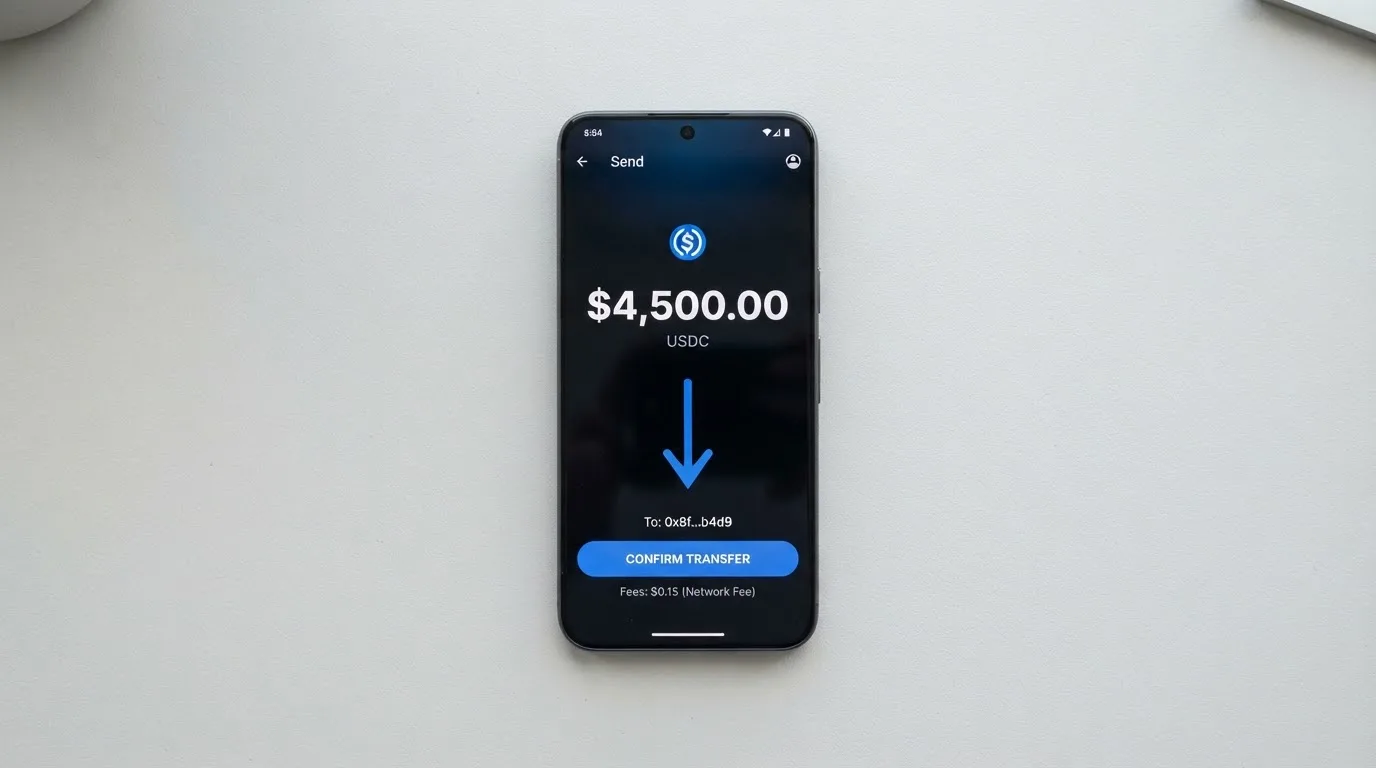
Instant Spend Mode is the simpler path. You pick a coin — USDT, BTC, ETH or GT — and the card converts and pays in one step at the moment of the transaction. There is no pre-load, no balance to manage, and the 0.90% conversion fee on the Standard card is the only charge on this leg. The drawback is the short list. If you hold SOL, USDC, DAI, TON or anything else, Instant Spend Mode is not the path; you have to convert inside the app first or use the second mode.
Prepaid Mode lets you pre-load a fiat balance, and the source can be a wider range of coins held in Gate Pay or in your Spot wallet. The app converts the chosen coin into the card’s fiat balance, and the card spends only that balance. Prepaid mode is useful if you want to set a monthly budget, smooth out the price of a volatile coin by topping up at a moment you choose, or use a coin not on the Instant Spend list. The cost is the same 0.90% conversion fee on the Standard card for transactions of 2 USD or more; the card page does not state a top-up fee or a minimum top-up amount, which is itself a small warning sign.
A few practical points sit behind those two modes. First, the supported networks are not listed on the card page; if you deposit USDT, the network you choose (ERC-20, TRC-20, Solana, Arbitrum, and so on) has to be one Gate accepts for that flow, and a wrong choice can lock funds or trigger manual recovery. Second, blockchain transfers are not reversible, so sending on a network the card does not support is the kind of mistake no support team can fix cleanly. Third, even when Prepaid Mode looks “free of card fees”, the network you sent your crypto on still charged gas; the network is paid by you, the card provider is not.
Paying with the Gate card every day
The day-to-day mechanics are simple. You get a virtual card within minutes of approval, you add it to a wallet on your phone for tap-to-pay, and a physical card arrives in the post. The help center has an article called “Add Your Gate Card to Google Pay & Apple Pay” that walks through both, though it does not say which card families support which wallet.
Unofficial reports fill some of that gap. A third-party directory dated 11 August 2026 says the Classic card is Google Pay only, while the Standard and Signature help pages cover both Apple Pay and Google Pay. Both attributions are unofficial and unconfirmed by Gate. If mobile-wallet support decides whether the card is useful to you, write to support before you apply and ask which wallet your specific tier supports.
Rewards are the other everyday benefit. The card advertises “up to 8% cashback” on eligible purchases, with the rate depending on the tier. The help center’s FAQ says rewards are issued as points that you redeem for USDT or GT, while a banner on one of the pages says cashback is paid in BTC, ETH, USDT or USDC. The two statements conflict, and the card page does not clarify which coins you actually receive; in practice, the third-party directory’s tier model is the most concrete picture: T0 at 0 USDT monthly volume pays 1% with a 5 USDT cap; T1 at 500 USDT pays 1% with a 50 USDT cap; T2 at 3,000 USDT pays 2% with a 100 USDT cap; T3 at 6,000 USDT pays 3% with a 150 USDT cap; T4 at 10,000 USDT pays 5% with a 250 USDT cap; T5 at 15,000 USDT pays 8% with a 400 USDT cap. Points convert at 100 points = 1 USDT and the directory says they do not expire. Treat that as unofficial: it is the clearest number out there, but it is not in the card’s main page text.
Card management runs through the Gate Pay and Gate App. You freeze and unfreeze the card, change the PIN, and see your statements inside the same app where you already trade. The whole exchange app scores 4.3 out of 5 on the US Apple App Store from about 5,200 ratings (an unofficial figure for the whole app, not the card); the card-specific store rating is not on the official pages I read.
Disputes work like this. You contact the merchant first. If that does not resolve, you start a chargeback in the Gate app and upload proof of the merchant conversation. The Standard card’s fee table says the chargeback costs 30 USD regardless of outcome; the help center text says “typically a $25 processing fee”. The two disagree — the table is the one tied to your specific card and is the safer reference. The process “sometimes” takes up to three months, and there is no separate refund timeline; pre-authorisation holds (the temporary blocks a hotel or car-rental desk puts on your card) are released after the service ends.
What can go wrong with the Gate card
The card’s public pages do not list a single “incident” or known issue. The wider picture is more mixed, and it is worth knowing what you are buying into.
The card page describes the product as “a digital assets credit card offered by Gate” and stops there. It does not name the issuing bank, does not publish the licences, and does not link to a programme agreement. The one licence-related fact on the page is that Gate joined the Mastercard Crypto Partner Program. By third-party accounts, the EEA issuer is Stanhope Financial UAB (Bank of Lithuania e-money institution LB002039) and the US issuer is Lead Bank, with Bridge acting as programme manager. None of that is on the official card page.
The complaint trail runs in two layers. At the exchange level, the overall Trustpilot score sits at a low 1.5 out of 5, with most complaints about accounts restricted without explanation, deposits or trading suspended, and slow or no support. The card’s listing on Trustpilot (with a higher score of roughly 3.5/5) is mostly about non-card services, with one card-data complaint that was reportedly resolved. At the card level, third-party reports and small user samples describe a 2024 cashback pause from 19 June 2024, cards retained by ATMs followed by delayed replacement, card funds inaccessible for a short period, merchant-refund delays, chargeback responses taking five to six weeks, and cards being frozen after small purchases. The samples are small, but they all sit in the same direction.
Security basics on the card are present: you can freeze a lost or stolen card temporarily, the PIN is changeable in the Gate Card app, and after several wrong PIN entries the card often freezes by design. The card’s terms warn that a negative balance “will risk having your card getting permanently blocked”. What is not stated is the standard custodial reassurance: custody arrangements, two-factor authentication policy, insurance on funds held, and what happens to your balance if the issuer or programme shuts down. If any of those are deal-breakers for you, you need to ask support directly before you load significant funds.
Support is reachable at [email protected] and through the Help Center. Hours, languages and response-time targets are not on the card page.
What to take instead of the Gate card
If the country gap or the trust gap is what is putting you off, three cards are worth comparing on the same dimensions: who can get them, what they cost, and how they earn rewards.
Bybit Card scores 6.0 out of 10. The official help center lists card regions as Argentina, AIFC (Kazakhstan), Georgia, Kazakhstan, Australia, Mexico, Brazil, Peru and Asia Pacific. The cards page is firm: “This product is not meant for European Economic Area customers. All European Economic Area customer participation is strictly prohibited.” Bybit’s fiat-service restricted list (which covers deposits, withdrawals and One-Click Buy, not the card as such) names Belarus, Russia, Serbia, China and the United States, and says “Russian users can only make RUB transaction in Fiat.” There is no card-specific rule on Russian or Belarusian citizens and no clear citizenship-versus-residence line. The card has no balance of its own; it draws on the Funding Account and the Flexible Easy Earn balance, fiat first, and converts crypto at the One-Click Sell rate plus a 0.9% card conversion fee in most regions (0.5% in Argentina, Peru not supported). Supported coins are BTC, ETH, XRP, USDT, USDC and GRAM, in a default priority you can reorder. Cashback from 5 October 2026 runs on crypto-funded transactions only, in a tier ladder from Base at 2% with a 5 USD monthly cap up to Infinite at 10% with a 600 USD cap, plus a 30-day 10% welcome offer up to 110 USDT.
Coinbase Card scores 6.4 out of 10. It is a Visa prepaid debit card available in all US states except Hawaii. Account opening follows the USA PATRIOT Act identity rules: name, address, date of birth and an ID. It is the only country. There is no annual fee, no spending fee and no Coinbase transaction fee on the card itself; a spread applies when Coinbase buys, sells or trades crypto to fund the payment, and the cardholder agreement spells out the rest. You can fund the card by linking a bank account, depositing part of a paycheck into Coinbase (zero fees), or by spending from a crypto balance that is converted to USD at payment. Optional crypto rewards on every purchase are US-only; the rate is variable and shown in the app, and you pick from a rotating list.
OKX scores 6.2 out of 10. The card launched in the EU plus Norway on 28 January 2026, with Iceland and Liechtenstein excluded. The rule is the EEA user of OKX Europe Ltd., the MiCAR-licensed entity, applies. It is a Mastercard euro-denominated virtual debit card linked to OKX Pay, with a physical card not mentioned in the launch material; the issuer is an unnamed European licensed payment provider. There is no card fee, no transaction fee, and no OKX FX fee. The conversion spread is 0.1% per the explainer in May 2026, against 0.4% in the launch press release, so the newer figure is the safer one. Conversion to euro happens at purchase. You fund it with USDC or USDG held in OKX Pay, via Convert or an external deposit; other coins have to be converted first, there is no auto top-up, and a payment is declined if the balance is too low. Cashback runs only on USDG purchases (USDC earns nothing), with monthly caps in EUR that climb from Regular at 2% with a 10 EUR cap to VIP4+ at 10% with a 1,000 EUR cap. The text and the table disagree on the top rate, so treat the 10% figure as the more recent and the safer.
The shape of the choice is this. Bybit is the strongest on a Latin American or Central Asian footprint, weakest in the EEA. Coinbase is the strongest on US regulatory familiarity and the easiest to trust if you already keep money there, but it is the US only. OKX is the strongest on EEA coverage and a clean euro conversion, but it is a virtual card with no confirmed physical card and rewards run on a narrow USDG-only path. Gate sits between them: a real card, a real network, free issuance, and a country list that is shorter than its rivals in the EEA but broader than the others if you live in one of the 24 unofficial-listed countries.
Who I would recommend the Gate card to
The Gate card makes sense for a specific reader. If you already use Gate as your main exchange, hold USDT, BTC, ETH or GT in a balance you are happy to spend down, and live in one of the countries that third-party directories list as supported, the card earns its place. The fee structure is fair for the category, the rewards are real on the Instant Spend path, and the day-to-day mechanics are simple.
The card makes less sense if any of the following is true. You live in a country Gate has not confirmed in writing. You need a card that works seamlessly with Apple Pay on day one and you are on a tier the unofficial reports say is Google Pay only. You want a clear paper trail of who holds your funds, the licence they hold, and the programme agreement that governs the relationship. You need chargeback processing that costs less than the disputed amount, because the 30 USD fee on a 40 USD dispute is not a sensible bet. You are sensitive to the wider exchange’s Trustpilot score and the unresolved complaints about account access on the Gate exchange.
For everyone else, the Gate card is a fair-priced tool that does what it says on the box, and the rest is the responsibility of the support and country rules that come with any cross-border crypto card.
Frequently asked questions
What is the Gate card?
The Gate card is a Visa or Mastercard payment card offered by the Gate crypto exchange that lets you pay from a crypto balance you already hold on the exchange. The card converts the chosen coin to fiat at the moment of payment, with a 0.90% conversion fee on the Standard card. It comes as a virtual card for online and mobile-wallet use, with a physical card mailed on request.
How does the Gate card work?
You apply in the Gate app, complete Level 2 identity verification, and choose a virtual or physical card. When you pay, the card either converts your chosen coin at the moment of the transaction (Instant Spend Mode, USDT/BTC/ETH/GT) or draws on a pre-loaded fiat balance that you topped up from a wider set of coins (Prepaid Mode). The card itself is a standard Visa or Mastercard and works wherever those networks are accepted.
Is Gate a bank?
No, Gate is a crypto exchange, not a bank. The card is issued by a licensed payment institution behind the scenes; the card page itself does not name the issuer, though third-party reports attribute EEA cards to Stanhope Financial UAB and US cards to Lead Bank. The card is a payment product, not a bank account, and funds held on the card are not covered by deposit guarantee schemes.
Who owns Gate?
Gate refers to Gate.io, a crypto exchange founded in 2013. The corporate ownership, head office and licences for the exchange are not the same as the card’s issuer; Gate the brand operates the programme, and a bank or e-money institution holds the licence that lets it issue cards.
Is the Gate card available in my country?
The card page only says the card is “only available to users in non-restricted countries or regions” and does not publish a list. Third-party directories list 24 European countries for the Classic card (Belgium, Bulgaria, Croatia, Cyprus, Czech Republic, Denmark, Estonia, Finland, Greece, Hungary, Iceland, Ireland, Italy, Latvia, Liechtenstein, Lithuania, Luxembourg, Norway, Poland, Portugal, Romania, Slovakia, Slovenia, Sweden) and exclude the US, UK, Germany, France and Canada, but those are unofficial. Confirm with Gate support before you apply.
How do I get the Gate card?
Open a Gate account, complete Level 2 KYC with a government ID and facial check, and apply for a virtual or physical card in the app. The virtual card is typically reviewed in 3 to 5 minutes; the physical card, where supported, takes 7 to 45 days to arrive (third-party sources say 15 to 45 days). The application has to use the same ID as your Gate KYC.
Does the Gate card require KYC?
Yes. You must complete Level 2 identity verification, which includes a government-issued ID and a facial or selfie check, and some card types also require a proof of address dated within the last three months. The card page does not state a minimum age, but the exchange’s standard rule applies.
How do I add the Gate card to Apple Wallet or Google Pay?
The help center has an article called “Add Your Gate Card to Google Pay & Apple Pay” that walks through both wallets. Third-party reports say the Classic card is Google Pay only, while Standard and Signature support both Apple Pay and Google Pay, but these are unofficial attributions. If mobile-wallet support decides whether the card is useful to you, write to support before you apply and ask which wallet your specific tier supports.
How do I top up the Gate card?
You have two paths. Instant Spend Mode pays directly from USDT, BTC, ETH or GT at the moment of the transaction, with the 0.90% conversion fee on the Standard card. Prepaid Mode converts a wider range of coins from your Spot wallet or Gate Pay into a fiat balance that the card then spends. The card page does not state a top-up fee or a minimum top-up, and the supported blockchain networks are not listed, so confirm the network with support before you send a deposit.
Is the Gate card safe?
It carries the standard protections: instant freeze in the app, PIN change, automatic lock after several wrong PIN entries, and a permanent-block warning for negative balances. What is not stated on the card page is the custody arrangement, two-factor authentication policy, fund insurance, or what happens to the balance if the issuer or programme shuts down. Treat the card as a payment product on top of a custodial exchange, and read the programme terms before you load significant funds.
Exchange cards – cryptocardchooser.com
Content created by the «cryptocardchooser.com» team