
A free Mastercard that spends your crypto balance, if you live in the UK or the EU
 Available in US
The Krak card is free to order, has no monthly or annual fee, and promises zero transaction fees, zero FX fees and zero ATM withdrawal fees on your spend. It is a Mastercard debit card that spends the balance of your Krak Everyday account, and it pays cashback of up to 2% in cash or crypto, depending on how much you hold across Krak, Kraken and Kraken Pro. Up to 4% is offered on travel booked through Krak Concierge.
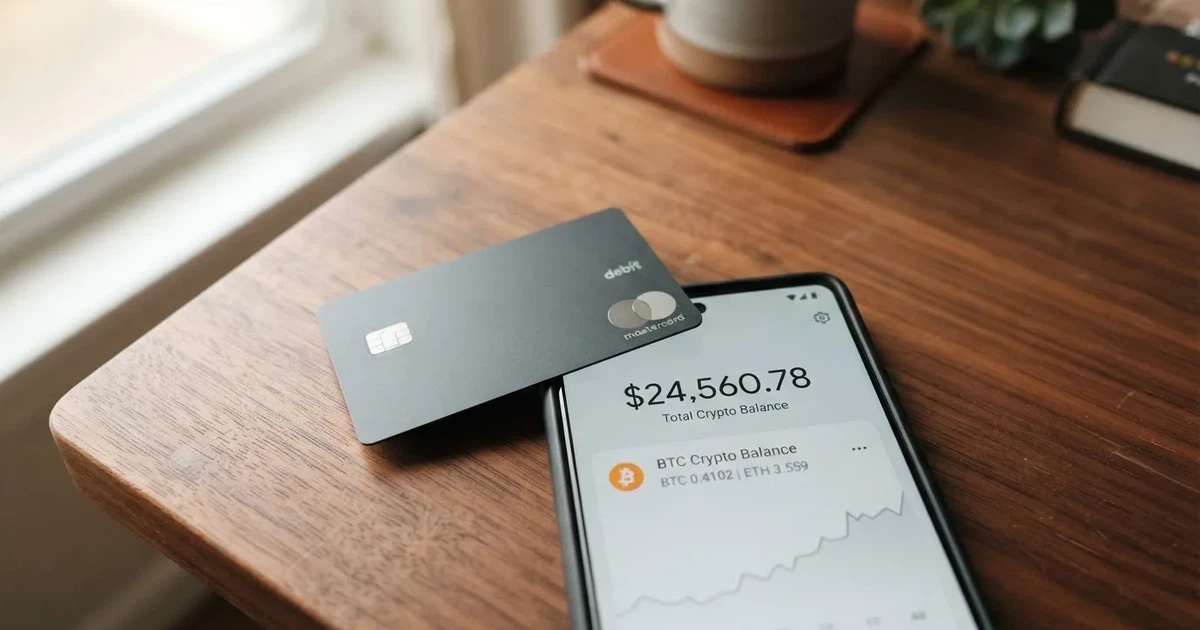
Against that: the card is currently available only to residents of the UK and the EU, with more countries promised. Trustpilot and Reddit stories about account freezes and slow refunds sit alongside an official issuer with a clean regulatory record. And the variable spread applied when you spend across assets is not given a number anywhere on the public pages, so you cannot price it in advance.
The conditions described below are current as of October 28, 2026.
My score for the Krak card: 7.1 out of 10.
| Criterion | Score | Why |
|---|---|---|
| Who can get it | 5 / 10 | Residents of the UK and EU only, with “more countries coming soon” |
| Cost | 9 / 10 | Free to order, no monthly or annual fees, no transaction/FX/ATM fees; replacement $4.99; a variable spread applies when paying with assets |
| Top-up options | 7 / 10 | Spends the Krak Everyday balance; order of spending set in the app; 600+ assets offered, not all available for the card; networks not named |
| Reliability and complaints | 5 / 10 | Issuer Monavate (UK, FCA FRN 901097) and Monavate UAB (Lithuania, licence no. 92); Trustpilot krak.app 3.8 from 34 reviews or 1.9 from 126 — sources differ; complaints about account restriction after a transfer |
| Everyday use | 10 / 10 | Virtual card immediately, physical and metal options, Mastercard, Apple Pay and Google Pay, ATMs with no Krak fee in 190+ countries |
| Total | 7.1 / 10 | Strong daily-use card held back by geography, an unpriced spread and uneven user reports |
Who this suits: a resident of the UK or the EU who already holds crypto or stablecoins with Krak or Kraken, wants a clean Mastercard for everyday spending with no monthly fee, and will not be caught out by the spread. Who it does not suit: anyone outside the UK and EU, anyone who wants a metal card without holding an average of GBP/EUR 50,000 across Krak, Kraken and Kraken Pro, or anyone who needs a specific asset that must be spendable at the till.
The audience note is worth saying plainly: if you are a UK or EU resident who wants crypto cashback on everyday spending, this is one of the more direct ways to get it.
Will they give you the card
Yes, if you live in the UK or the EU — and no one else, right now. The card page says it is “currently available to residents of the UK and the EU, with more countries coming soon”. A footnote adds that geographic restrictions apply. So this is residence, not citizenship: the rule as stated is where you live, not what passport you hold.
There is a wrinkle you should know about before you apply. A Krak help article on personal accounts refers to UK, EEA and US residents — wording that differs from the card page’s “UK and EU”. In other words, the two official descriptions do not perfectly agree, and one of them mentions the US. Treat that as a signal to ask support, not as a promise that a US resident can get a card today. The card page is the more specific statement about the card itself, so that is where I would start.
Inside the UK and EU, the rest of the eligibility picture is simple. You must have a verified Krak account with completed identity verification, you must be at least 18, and Monavate — the institution that actually issues the card — must verify your identity. The public pages do not state exactly which documents are required, what age proof is needed, or whether proof of address is collected. If that matters to you, ask before you upload anything. Nor are the verification levels or how long they take spelled out on the card pages.
How to get it
Three steps, in this order: a Krak account, verified identity, then the card. The account comes first, KYC (identity verification) is completed against it, and only then can you order a virtual card — which the page says arrives in minutes — or a physical one.
You have three card options:
- Virtual. Available immediately once you are verified. This is the card you use first, and you can cancel it separately from any physical card.
- Physical. Two colours, orange or black, shipped free to the UK and EEA. Delivery time is not stated on the pages.
- Metal. Stainless steel, 16 g, and gated: it requires an average of GBP/EUR 50,000 in combined assets across Krak, Kraken and Kraken Pro. That average is the price of admission, and it is a high one.
Replacement of a physical card costs $4.99, or the card-currency equivalent, charged by Monavate.
One more thing about ordering. Virtual and physical cards are cancelled separately — cancelling one does not cancel the other. Keep that in mind if you ever close down a card and assume the whole product is gone.
Fees: what it really costs
Close to nothing on the card side — the catch is the spread, and the spread is not priced. The card is “free to order” and there are “no monthly or annual fees”. On top of that: “zero transaction fees, FX fees, ATM withdrawal fees or monthly fees on your spend”. What does apply is a “variable spread” when you spend across assets, and the page does not say how large it is. That single unknown is the one number I would want to see before I committed my normal spending to the card.
ATMs work in “over 190 countries” with no Krak withdrawal fee, but “third-party ATM fees may apply” — the ATM operator’s own charge, shown to you before you withdraw, is outside Krak’s promise. No free-allowance figure is published.
| Item | What the card says |
|---|---|
| Issuance (virtual or physical) | Free |
| Metal card | Requires average GBP/EUR 50,000 combined assets across Krak, Kraken, Kraken Pro |
| Monthly or annual fee | None |
| Transaction fee on spend | None |
| FX fee | None; Mastercard rate passed through with no markup |
| Variable spread when spending across assets | Applies; size not stated |
| ATM withdrawal fee (Krak) | None, in 190+ countries |
| Third-party ATM fee | May apply, shown before withdrawal |
| Card replacement | $4.99 or card-currency equivalent |
Now let three everyday payments show you what this means in practice.
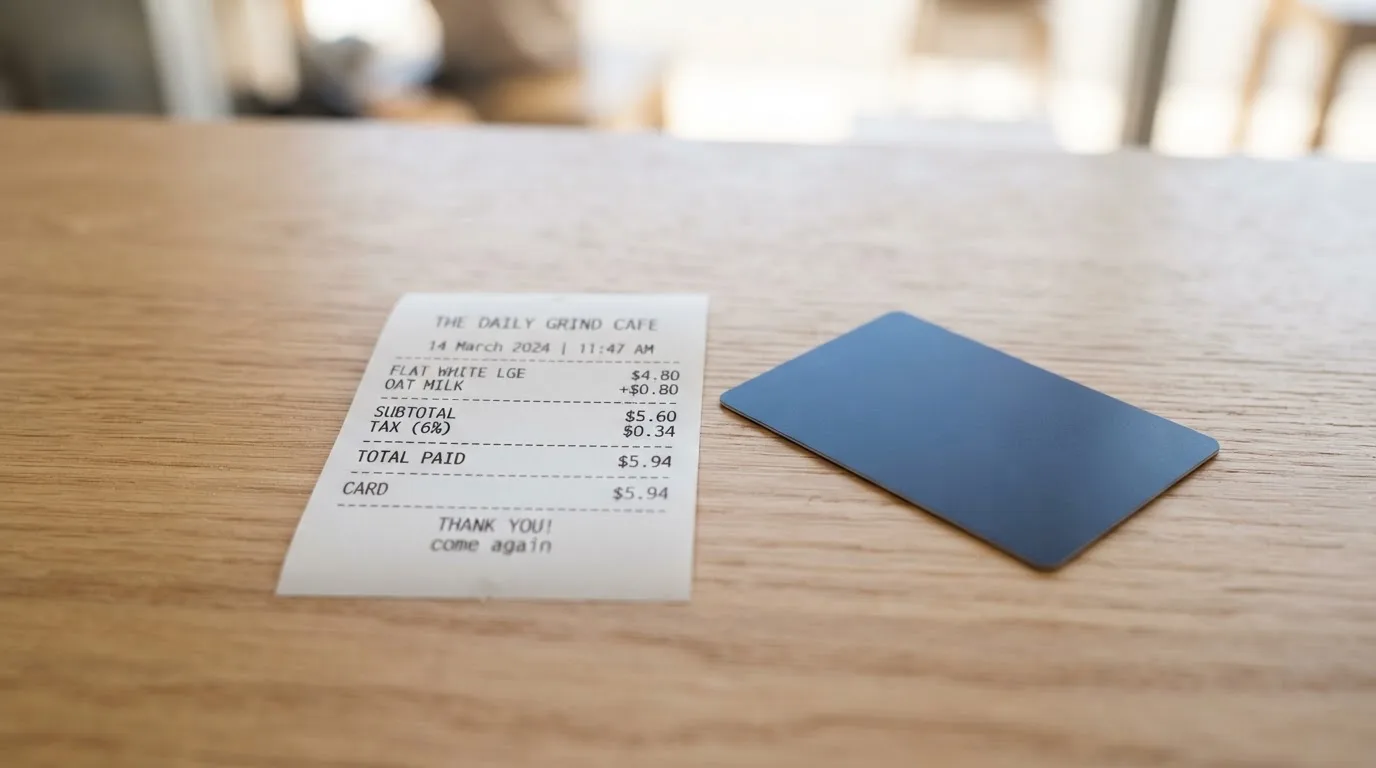
Coffee in a eurozone café, from a GBP card. The card currency is GBP for UK cards and EUR for EEA cards, and card payments settle in the primary currency. The FX rate is “passed through at the Mastercard rate with no markup”. So the only cost here is the Mastercard rate itself — no Krak FX fee. If your card holds crypto, the sell-side spread also applies; if it holds a fiat balance, it does not.
A hotel or a car rental. Here the issue is not the fee but the hold. Hotels and car rentals “may hold an extra 10-20%”, and the unused portion may take up to seven days to clear. Some merchants ask for a PIN and others ask for a signature — one UK cardholder reported terminals requesting a signature rather than a PIN. Budget for the cash to be tied up, not spent.
Spending a stablecoin balance at a supermarket. This is where the spread bites, if you pay from crypto rather than from fiat. You draw from a Spend Order you set in the app; 600+ assets are offered, but not all are available for card use and unsupported ones show as “Unavailable”. The variable spread applies on the sell side. The honest version: if you want to know what a specific asset costs you to spend, there is no published rate to check it against.
Daily, weekly and monthly limits apply to both card spending and ATM withdrawals. The card page does not give figures; they “vary by region and are shown in the app”. The terms also say counts and amounts “may be limited”. A third-party site (CryptoCardHub, 11 August 2026) lists contactless thresholds before PIN of GBP 300 in the UK and a cumulative EUR 150 in the EEA, up to two virtual and two physical active cards, and virtual card creation limited to three per rolling 30 days — unofficial, and the site notes no universal limit table is published.
Top up
The card spends your Krak Everyday account balance — you do not top up the card itself. Multi-currency spending draws on the currencies in the order you set in the app. Which specific coins and networks move funds in is not stated on the pages I read, and that is a real gap: if you hold a particular token, you cannot confirm from the card pages that it is spendable.
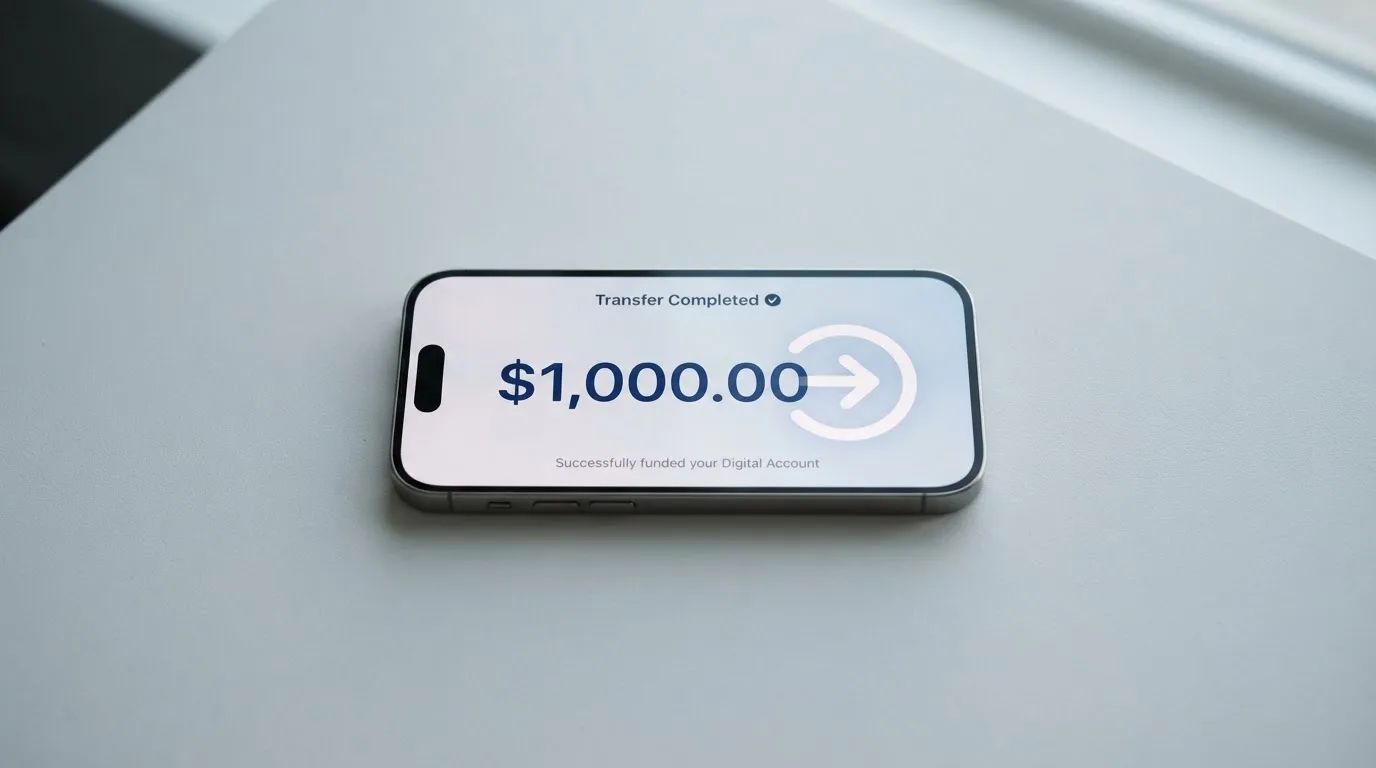
Deposits can be made “at any time in the app”. Some deposit methods carry a 3-day withdrawal hold, which is worth knowing before you need the money at a till. Fiat funding routes exist via Plaid (EUR/GBP) and PayPal; a deposit fee and minimum are not stated on the pages read. A third-party site (CryptoCardHub, 11 August 2026) lists near-instant card deposits at GBP/EUR 0.25 plus 3.75% — unofficial.
What you can do with the balance afterwards is less clear than what you can put in. Withdrawal of the card balance to a bank or crypto account is not described in the card FAQ. To cancel, you contact Krak Support. A fee may apply if the agreement ends within six months, and closing the Kraken E-Wallet terminates the Monavate agreement — the card is tied to the wider Kraken account, not free-standing. Redemption terms are governed by Kraken’s terms, which I did not read.
| Top-up route | What is stated |
|---|---|
| In-app deposit | Available “at any time”; some methods carry a 3-day hold |
| Fiat funding via Plaid (EUR/GBP) and PayPal | Articles exist; deposit fee and minimum not stated |
| Crypto transfer | Specific coins and networks not stated |
| Near-instant deposit (unofficial, CryptoCardHub, 11 Aug 2026) | GBP/EUR 0.25 + 3.75% |
Paying with it every day
This is the card’s strongest suit, and the reason its everyday-use score is a clean 10. The virtual card is available the moment you are verified; the physical card comes free. It is a Mastercard debit card and can be added to Apple Pay and Google Pay. You spend from a Spend Order you configure, 600+ assets are offered (not all usable on the card), and fiat balances can also be spent. You can block currencies from being spent through that order.
The reward. Up to 2% cashback in cash or crypto, depending on the average assets you hold with Krak, Kraken or Kraken Pro. Up to 4% on travel booked via Krak Concierge.
The app. iOS on the App Store and Android on Google Play. Ratings are not stated on the official pages.
Blocked merchant categories are not stated, and users can block currencies rather than categories.
When something goes wrong with a payment, you open the transaction in the app and tap “Get help with this transaction”. Refunds go back to the Everyday account in the card’s primary currency — and crypto is not converted back automatically, which is a small but real trap. The complaint timeline the card states: in the UK, acknowledged within 24 hours, final response within 15 business days (extendable by 20); in the EEA, 15 business days, or 35 if delayed. There is a 14-day cooling-off refund of fees. A Kraken help article, however, says disputes may take 45–60 days. Know both numbers before you count on a fast refund.
What can go wrong
The recurring theme is accounts being restricted and money becoming hard to reach, not fees. Trustpilot krak.app shows 3.8 from 34 reviews in one source and 1.9 from 126 in another — the sources disagree, and I have not resolved which is current. Where I could see the substance, the complaints cluster on a few things: accounts restricted after a bank transfer or deposit, with funds inaccessible (2026); generic escalation replies with no timeline; a UK cardholder whose terminals asked for a signature instead of PIN and whose refund was delayed; and a slow response to an unauthorised-transaction claim. Separately, an aggregator (penchan.co, undated and unverified) reports card payments failing for hours in the UK/EEA, auto-freezes after small transfers from sanctioned addresses, an undisclosed spread, and a Bank of Lithuania fine or warning for Monavate UAB (AML, safeguarding).
Why your money can be locked. This is not only a Krak quirk. Under anti-money-laundering rules, if customer due diligence cannot be completed, an institution is required to refrain from the transaction or the relationship and, where necessary, end an existing relationship. That is exactly why accounts get closed or frozen pending documents — it is the rule working, not a glitch. Nationality is also screened separately from residence, because sanctions and issuer risk policy often apply to citizenship and country of birth as well as address. A third-party site (CryptoCardHub, 11 August 2026) adds that crypto with Krak/Kraken remains custodial, that fiat sits in segregated accounts at regulated institutions, and that UK e-money is not covered by FSCS while the EEA wallet has no deposit-guarantee coverage — unofficial, but it lines up with how e-money accounts generally sit outside deposit guarantee schemes.
A card programme can also be paused. Visa terminated its global agreements with FTX on 13 November 2022 and the FTX US debit card was wound down; WaveCrest, a Visa issuer supplying crypto card brands, was suspended by Visa in Europe in 2018, closing all its Visa programmes. Programme closures typically mean a notice period, then spending and loading stop, then you are asked to withdraw what remains. In 2026 there was a report — a single secondary source, unconfirmed — of new loads ending 8 July 2026 and spending stopping 8 August 2026 after an 11-day security review that suspended deposits, withdrawals and card use in July 2026; Kraken support later said it “dropped the ball”. Official confirmation of that specific incident is not stated on the card pages.
Declines and holds. Some merchants decline prepaid or foreign BINs because the issuer country and card type are visible in the lookup — this is why a card issued in one country can look foreign in another. Address Verification is mainly offered in the US, Canada and the UK and is generally unavailable for foreign-issued cards, which can cause declines. A declined authorisation may leave a hold that stays for several days, typically up to seven. Gambling (MCC 7995) is blocked by many issuers as policy rather than by law, and the list varies — Krak’s own blocked categories are not stated.
Security you can actually use. Freeze, unfreeze or replace a physical card instantly in the app; real-time transaction monitoring and data encryption are in place; 2FA is not stated. Apple Pay replaces the card number with a device-specific number in the Secure Element and a one-time code per payment. Support is in-app 24/7; languages, email and phone contact are not stated.
Who is behind it. The card is issued by Monavate (UK, FCA FRN 901097, company no. 12472532) and, in the EEA, by Monavate UAB, authorised in Lithuania (licence no. 92). Krak is Kraken’s app. Note the split: the E-Wallet is an e-money account issued by Kraken, not by Monavate, and the card terms do not cover safeguarding of that wallet.
What to take instead
If the Krak geography or its unpriced spread is the problem, these are the other cards that came up — each with its own trade-offs. Scores are from the same 10-point scale so you can compare at a glance.
| Card | Score | Who can get it | Notable fees |
|---|---|---|---|
| Krak | 7.1 / 10 | UK and EU residents | None on card; variable spread when spending assets |
| Coinbase Card | 6.4 / 10 | All US states except Hawaii | No spending or annual fees; crypto spread at conversion |
| Bybit Card | 6.0 / 10 | Argentina, AIFC, Georgia, Kazakhstan, Australia, Mexico, Brazil, Peru, Asia Pacific; EEA participation “strictly prohibited” | Crypto conversion 0.9% (0.5% Argentina); FX 2% (up to 7% Argentina) |
| OKX | 6.2 / 10 | EU plus Norway (Iceland and Liechtenstein excluded) | No transaction or FX fee; conversion spread 0.1%–0.4% |
Coinbase Card is the straightforward US answer: a Visa prepaid debit card, virtual or physical, spending cash or crypto, with zero spending fees and no annual fees, and crypto rewards on every purchase for US users at a variable rate shown in the app. All crypto is converted to US dollars for purchases and ATM withdrawals. If you are in the US, this is the cleaner fit.
Bybit Card is the widest map — nine regions — but it is explicitly not for the EEA: “This product is not meant for European Economic Area customers. All European Economic Area customer participation is strictly prohibited.” Its cost structure is heavier (2% FX on top of the network rate in most markets, up to 7% in Argentina; 0.9% crypto conversion) though virtual issuance is free. Its reward tiers are the richest of the four, from 2% at Base to 10% at Infinite, with monthly caps from 5 USD to 600 USD. Note that only crypto-funded transactions earn cashback from 5 October 2026; fiat-funded spending earns none.
OKX is the newest and thinnest: a euro-denominated virtual Mastercard debit card linked to OKX Pay, available in the EU plus Norway since 28 January 2026, with no card fee, no transaction fee and no OKX FX fee. Its conversion spread is reported as 0.1% by an explainer from May 2026 and 0.4% in the launch press release — a conflict, with the explainer the newer. Cashback applies only on USDG purchases, not USDC. A physical card is not mentioned.
If you are in the UK or EU and want a crypto-spending card, Krak and OKX are your two realistic options, and they are shaped differently: Krak is broader (Apple Pay, Google Pay, ATMs in 190+ countries, physical and metal) while OKX is euro-only and virtual-only.
Who I would recommend it to
I would recommend the Krak card to a UK or EU resident who already keeps money with Krak or Kraken and wants a low-cost Mastercard for daily spending. If you want cashback of up to 2% on what you already spend, a virtual card in minutes, Apple Pay and Google Pay, ATM access in 190+ countries, and no monthly fee, this does all of that well — the everyday-use side of the card is genuinely strong.
I would be more cautious if any of the following apply to you:
- You live outside the UK or EU. The card is not for you today.
- You need to know exactly what an asset costs to spend. The variable spread has no published size, and not all 600+ offered assets are usable on the card.
- You are sensitive to account freezes. The user reports cluster around accounts restricted after a transfer or deposit, and money that becomes hard to reach — one Trustpilot reading is 1.9 from 126 reviews, though the sources differ.
- You need a specific metal card. It requires an average of GBP/EUR 50,000 in combined assets across Krak, Kraken and Kraken Pro.
- You are a US resident. One help article mentions US residents for personal accounts, but the card page says UK and EU; ask before you plan around it.
None of that makes it a bad card. It makes it a good, cheap, Euro-and-UK-focused card whose two soft spots are an unpriced spread and an uneven user-record — both of which you can weigh against the very real benefits of zero fees and 2% cashback.
Frequently asked questions
What is the Krak card?
The Krak card is a Mastercard debit card that spends the balance of your Krak Everyday account, which can hold crypto or fiat. It comes as a virtual card available in minutes, a physical card in orange or black, or a metal card. The card is free to order with no monthly or annual fee, and Krak is Kraken’s app.
How does the Krak card work?
You fund your Krak Everyday balance, set the order in which currencies or assets are spent, and the card draws down that balance when you pay. Card currency is GBP for UK cards and EUR for EEA cards, payments settle in the primary currency, and the FX rate is passed through at the Mastercard rate with no markup. Spending across assets triggers a variable spread whose size is not published.
Who owns Krak, and is Krak a bank?
Krak is Kraken’s app. The card itself is issued by Monavate in the UK (FCA FRN 901097) and, in the EEA, by Monavate UAB, authorised in Lithuania. The Krak Everyday balance is an e-money account issued by Kraken, not a bank account, and e-money sits outside deposit guarantee schemes.
Does the Krak card require KYC?
Yes. You need a verified Krak account with completed identity verification, you must be at least 18, and Monavate must verify your identity before issuing the card. The public pages do not state which documents are required or how long verification takes, so ask if that matters to you.
Is Krak card available in my country?
Currently only to residents of the UK and the EU, with more countries “coming soon”. The rule is based on residence, not citizenship, and geographic restrictions apply. A separate help article mentions UK, EEA and US residents for personal accounts, so if you are in the US, check with support before assuming.
How do I top up the Krak card?
You do not top up the card directly — you deposit into your Krak Everyday account in the app, and the card spends that balance. Some deposit methods carry a 3-day withdrawal hold. Fiat funding routes exist via Plaid and PayPal; a deposit fee and minimum are not stated on the pages I read.
Is the Krak card free?
Yes, the card is free to order and there are no monthly or annual fees, and no transaction, FX or ATM fees charged by Krak on your spend. Replacing a physical card costs $4.99. The one cost with no published figure is the variable spread that applies when you spend across assets.
Is Krak card safe, and is my money protected?
The app lets you freeze, unfreeze or replace a physical card instantly, with real-time monitoring and encryption. But the balance is custodial — Kraken holds the crypto — and the wallet is e-money, not a bank deposit, so UK e-money is not FSCS-covered and the EEA wallet has no deposit-guarantee coverage. User reports also describe accounts being restricted after a transfer, with funds hard to reach.
Can I use Krak card at ATMs and in Apple Pay?
Yes. The card works at ATMs in over 190 countries with no Krak withdrawal fee, though third-party ATM operators may charge a fee shown before you withdraw. It can be added to both Apple Pay and Google Pay. Hotels and car rentals may hold an extra 10–20%, and unused holds can take up to seven days to clear.
What are the limits on the Krak card?
Daily, weekly and monthly limits apply to both card spending and ATM withdrawals, and they vary by region — the figures are shown in the app rather than on the public page, and the terms say counts and amounts may be limited. Unofficial figures from a third-party site put contactless-before-PIN at GBP 300 in the UK and a cumulative EUR 150 in the EEA, with a cap on active virtual and physical cards.
Exchange cards – cryptocardchooser.com
Content created by the «cryptocardchooser.com» team