
A cheap virtual card with a 1% spending fee and a long shadow
 Available in US
If you hold USDT and cannot get an ordinary bank card to work where you live, a crypto-linked Visa is one of the few routes that still pays for things. MEXC’s card is one of those routes — and it is a genuinely cheap one, with a virtual card only, no physical version, and a 1% spending fee that applies to most purchases from 1 October 2026. My score for it is 5.6 out of 10. That is not a verdict on whether it works; it is a verdict on whether you should keep money sitting in it long-term.
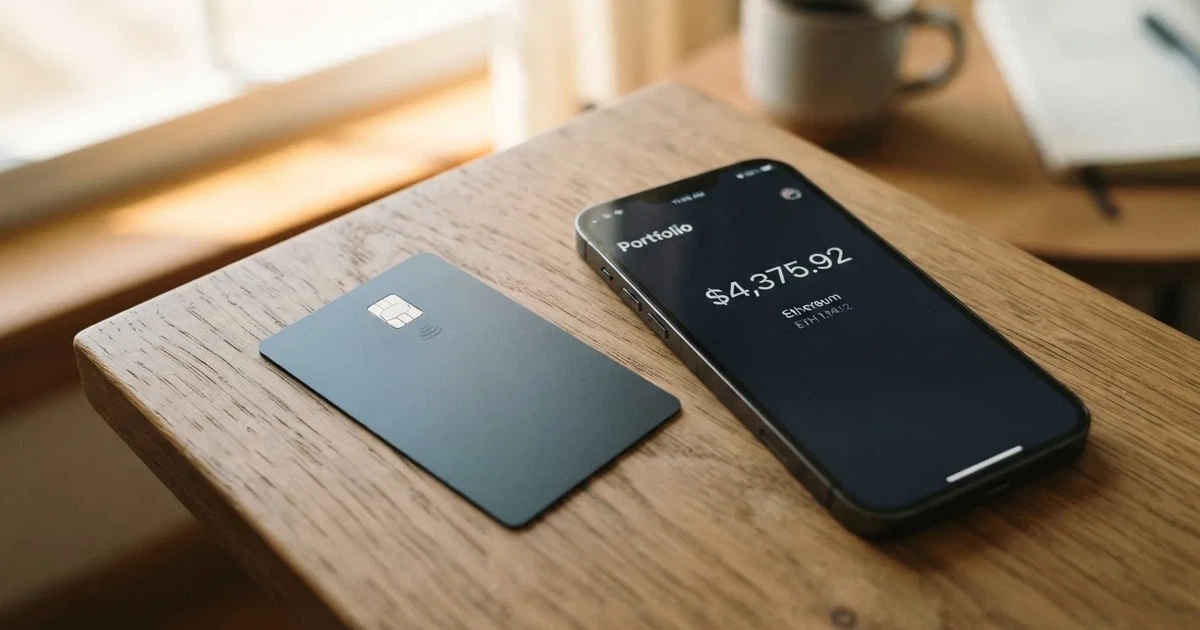
Let me put the reasoning on the table before I explain it, criterion by criterion, so you can disagree with the parts you care about.
| Criterion | Mark | Why |
|---|---|---|
| Who can get it | 8 / 10 | Global Card is closed to residents of 69 countries and territories; everyone else is judged by the country on their proof of address. Unofficial sources count 110 countries in the DefiLlama catalogue |
| Cost | 7 / 10 | Issuance 20 USD (temporarily waived); annual and top-up fees 0; crypto conversion 0%; currency at the Visa rate with no markup; 1% per payment from 1 October 2026 |
| Top-up options | 4 / 10 | USDT only: you send it to the Fiat account, then load the card. Networks are not named |
| Reliability and complaints | 3 / 10 | No issuer named; balance sits at the exchange. On Trustpilot the exchange has no score, 88% of reviews are one-star, with freezes and delayed withdrawals. Unofficial: it appears on the Hong Kong SFC’s suspicious-platforms list |
| Everyday use | 4 / 10 | Virtual Visa Platinum only; Apple Pay and Google Pay are supported; no physical card, no ATM |
| Total | 5.6 / 10 | Cheap and accessible, thin on insurance, funding and everyday reach |
The total is not the arithmetic average of those five marks — it is the weighed score, and the reliability figure drags harder than the others because it is the one you cannot fix yourself. A card that costs you nothing and declines in a shop is not a bargain. A card that costs you a little and always works is.
So who does this suit? Someone in Asia or Latin America who already holds USDT, who cannot get a normal card, who mostly spends in a phone wallet, and who is content to treat the balance as spending money rather than savings. The audience MEXC seems to be designing for is exactly that: USDT holders in Asia who want cashback.
Who should look elsewhere? Anyone who wants a physical card, anyone who needs an ATM, anyone who wants to hold a balance on the card and rely on a named issuer and a safeguarding policy, and anyone in the United States, China, India, Indonesia, Turkey or Russia, where the application is currently blocked.
The conditions described below are current as of October 28, 2026.
Will they give you the card?
Short answer: probably, if your country is not on the blacklist and you can pass Advanced KYC. The Global Card page lists countries including the Philippines, Taiwan, Thailand and others, with a Details link for the full list that the page does not display. Eligibility follows the country on your proof of address, and as of August 2026 the application blacklist includes the United States, China, India, Indonesia, Turkey and Russia, among others. The Philippines, Taiwan, Vietnam and Thailand are not blacklisted. The card’s own page says the list changes.
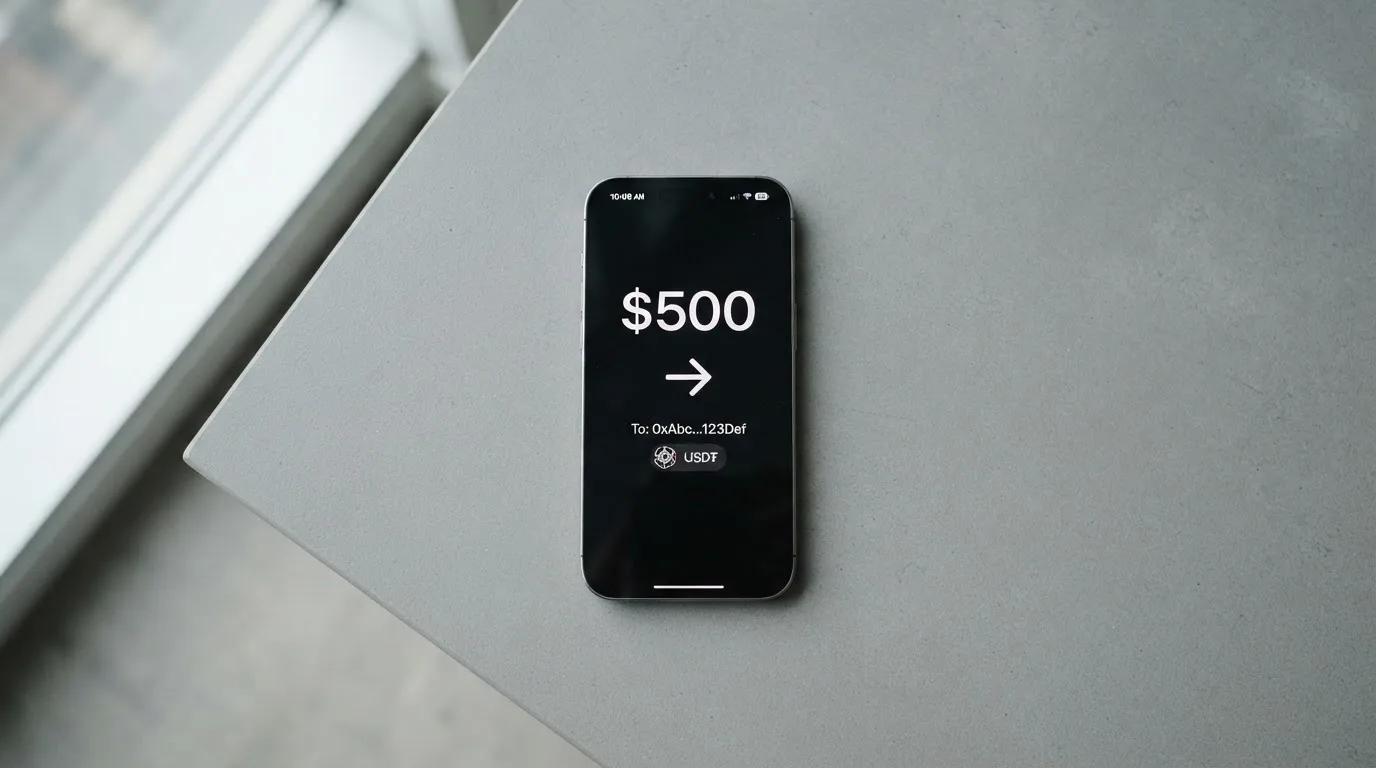
That “among others” is doing real work in that sentence. You get a handful of named countries and a warning that the list moves. If your country is somewhere you have never heard in a payments context — and if you are reading this because ordinary banking is hard for you, that is likely — you are being asked to rely on a Details link you would have to open and read yourself.
Third-party catalogues say something different and broader. DefiLlama lists the card in 110 countries. SpendNode, per DefiLlama and SpendNode in 2026, describes Global Card coverage as Southeast Asia, Latin America, Africa, the Caribbean, the Gulf, Central Asia, plus Japan, South Korea, New Zealand and Israel. Neither is the card speaking, so treat those numbers as unofficial, and note that the official list still excludes Russia and Turkey where those third-party descriptions do not.
There is a reason eligibility tracks the address country rather than your nationality, and it is worth understanding before you apply. Anti-money-laundering rules require regulated businesses to verify customers and keep checking them after the first check — including screening for sanctions. In the EU that due diligence covers name, address, date of birth, nationality and identity documents, plus a sanctions check and a politically-exposed-person check. In the US the customer identification programme requires name, date of birth, address and an identification number. Nationality is recorded and screened separately from residence precisely because sanctions screening and issuer risk policy are usually applied to citizenship and country of birth as well as to where you live. So a card that asks only about your address is still relying on your identity documents.
If due diligence cannot be completed, EU rules require the institution to hold back from the transaction or the relationship and, where necessary, close an existing one. That is not a threat aimed at you; it is the mechanism by which accounts get frozen pending documents. It is also why a crypto exchange account in your name, verified once, is the least painful route into this card. If you are starting from zero — no exchange account, no verified identity anywhere — this is not a card you get this week.
One more thing nobody states plainly: the minimum age. Prepaid and debit cards are generally available to adults (18+), and some issuers set higher limits, but the card page does not say what it requires. Nor does it say how long approval takes, or on what grounds an application is refused.
How to get it
Three steps, and the first one is not really part of the card at all.
- Complete Advanced KYC on the exchange — government ID plus a face check.
- Apply on the My MEXC Card page.
- Transfer USDT to your Fiat account, then load the card from there.
Advanced KYC is the gate. It needs a government ID and a face verification, and your proof of address must come from an eligible country. No income proof is required. The card page does not state a processing time or list rejection reasons, and it does not state a minimum age — the public pages simply do not say, so I will not fill that gap with a guess.
What comes at the end of those steps is a virtual card, and only a virtual card. Physical cards are described as “not yet available”. It is a Visa Platinum virtual card, denominated in USD. Delivery is therefore not applicable — there is nothing to ship.
Let me be blunt about what that means for daily life, because it is the single fact that decides this card for most people. A virtual card lives in your phone. It goes into Apple Pay or Google Pay, and that is how you will use it: tap your phone or watch at a terminal. You can also read the card number and type it into a checkout page, and you can add it to a merchant’s saved cards. What you cannot do is walk into a shop and hand someone a piece of plastic, and you cannot stand at an ATM at all. If either of those is how you shop — cash-heavy local spending, small vendors without terminals, tipping, splitting a bill — a card with no physical form is a poor fit no matter how good the fee is.
Fees: what it really costs
The headline cost story is good. The detail story has a wrinkle that arrived recently and that the page still describes in two different ways at once.

Here is what is stated for the Global Card, the product most people will mean when they say “the MEXC card”:
| Fee or limit | Global Card |
|---|---|
| Issuance | 20 USD, waived for a limited time as of August 2026 |
| Annual fee | 0 |
| Top-up fee | 0 |
| Inactivity fee | 0 |
| Termination fee | 0 |
| Crypto conversion | 0% |
| Currency conversion | At the Visa rate, no MEXC markup |
| Payment fee | 1% from 1 October 2026 |
| ATM | Not applicable to virtual cards |
| Per transaction | 80,000 USD |
| Per day | 1,000,000 USD; 100 transactions |
| Per month | 2,500 transactions |
| Per year | 25,000 transactions |
No monthly or annual spending cap is listed for the Global Card — the card page points to a separate fees-and-limits guide, and that guide was not reachable when I checked, so I cannot tell you what the card page might be summarising.
The card page also shows the 20 USD issuance fee in a way that could mean it, could mean a discounted 0 USD next to it. The page is unclear on this. And on the spending fee the page is still describing a promotional waiver that ran 31 August to 30 September 2026 — which is in the past as of 20 October 2026. Read the fee as real: you pay 1% per payment now.
There is a second product, the MEXC Card for Asia-Pacific markets, and the pricing is different in a way that matters. It is free to issue, charges 0% on transactions, and applies a 1% crypto conversion. On non-USD purchases it adds 1% on top of the Visa rate. So if you are in an Asia-Pacific market and the APAC card is offered to you, that is the cheaper product in exchange terms; if you are elsewhere, the Global Card is what the pages describe.
A note on the Visa rate. The card’s own materials say the Visa spread is usually 0.1% to 0.3%, and that MEXC adds nothing on top of it. That is genuinely competitive — most crypto cards add a markup — but it is not zero, and it will move with the network.
Now the part I would read twice. Take a 100 USD purchase on the Global Card after 1 October 2026. The card deducts 101 USDT. That is the whole cost model in one sentence: no conversion fee, no markup, a flat 1% on the purchase. If you spend 100 USD a month, that is 1 USDT gone. Against an ordinary bank card’s 0 in most markets, this is not free. It is, however, cheaper than almost every competing crypto card’s spread-plus-FX combination, and there are people for whom the only comparison that matters is “an exchange card with a 3% spread” or “no card at all”.
How to top it up
USDT, and only USDT. You send USDT to your Fiat account on the exchange, then add it to the card from the My MEXC Card page. That is the entire funding story, and its thinness is the clearest reason the top-up score sits where it does.
Good news first: there is no top-up fee, and moving USDT into the Fiat account is free. Each top-up runs from 1 USDT to 1,000,000 USDT according to the Global Card guide — though an older MEXC post cites a 100 USDT minimum, which contradicts it. With a current guide and an older post disagreeing, assume the smaller figure until you have made a deposit and seen the screen.
The bad news, and it is the part that can cost you real money: the networks are not stated. When you send USDT you choose a network, and the card page does not tell you which one MEXC accepts. This is not a bureaucratic detail. USDT exists on Ethereum, Tron, Solana, Polygon, Avalanche and others. Send it on a network the provider does not support, or to an address belonging to a different network, and the transfer can be lost or need manual support recovery with no guarantee of success. Blockchain transfers are irreversible; the network cannot undo them.
Two network facts worth knowing while you are deciding. USDT on Ethereum requires ETH for the gas fee — a wallet holding USDT but no ETH cannot send. On Tron, fees are paid through bandwidth and energy resources, often by burning TRX. So “which network do I send on” also means “do I need another token sitting in that wallet”. And Circle stopped supporting USDC on Tron in February 2024, so the USDC-over-TRC20 route that many people have muscle memory for is not a native option.
There is also no card-side fiat top-up that the card page describes — that route is not stated. And if you close the card, the termination fee is 0 and there is no inactivity fee, but the process for moving the remaining balance back to the exchange account, and what happens to it when the card is closed, is not stated either. I would find that out before I loaded it heavily, not after.
Paying with it every day
Apple Pay and Google Pay both work on the Global Card. The Asia-Pacific card supports Google Pay only. Blocked merchants are not stated on the page — and that silence matters more than it sounds, because a card aimed at people who hold crypto is exactly the card some merchants decline.
Here is why that happens, and it is not paranoia. Every card number begins with an issuer identification number of 6 or 8 digits that says which institution issued it and in which country. Merchants look that number up, and if the issuer country differs from the billing address on the payment, the shop may apply extra scrutiny. This is why a card issued in one country can look “foreign” in another. Some merchants decline prepaid or foreign-issued cards for that reason. Another mechanism is the merchant category code — a four-digit number classifying a business, assigned under ISO 18245 when it starts accepting cards. Gambling sits under 7995, and many issuers block that code on specific cards as policy rather than law. The blocked list varies by issuer, and MEXC’s is not published.
Expect the usual friction of a foreign virtual card, then: some declines at unfamiliar merchants, and some declines online where the billing address check fails. Address Verification Service compares the numeric parts of the billing address you type with the issuer’s records; it is mainly offered in the US, Canada and the UK, and is generally unavailable for foreign-issued cards. Declined authorisations can also leave a hold on your funds for several days, typically up to 7.
Two mobile-payment mechanics make this more comfortable than the above suggests. Apple Pay replaces the card number with a device-specific number stored in the phone’s secure hardware, never on Apple’s servers, and every payment carries a one-time dynamic code — so a shop cannot read a static card number. And the issuer can restrict a tokenised number, for example blocking it for online use; I did not find evidence that MEXC does this, but the capability exists.
For online payments, 3-D Secure adds an identity check: the issuer assesses the risk and either approves silently or challenges you with a one-time code or biometric check. On this card the one-time code arrives by email, valid for 4 minutes, or in the MEXC app. Email is the weaker channel of the two. And be aware of the shift that mechanism causes: under 3-D Secure, liability for a fraudulent online payment can move from the merchant to the cardholder’s bank — or, as critics put it, to you.
Cashback is the reason to stay, if there is a reason. It follows your M-Score tier and is paid by the 15th of the following month:
| Tier | M-Score | Cashback | Monthly cap |
|---|---|---|---|
| Standard | — | 4% | 100 USDT |
| Premier | 600–799 | 6% | 300 USDT |
| Elite | 800+ | 10% | 800 USDT |
The Standard, Premier and Elite levels differ only in cashback and that monthly cap. Referral pays 20 USDT to the person who refers and 10 USDT to the person who joins. There is no metal tier and no physical tier — there is only the virtual card. Note that a 10% rate capped at 800 USDT a month is genuinely good; the 1% payment fee means a 800 USDT month nets roughly 72 USDT back, which most people would find worth having.
Disputes are handled the way most cards handle them, and the timelines are generous. You contact the merchant first, then MEXC Customer Service with your reason and your evidence. The windows are 90 days for duplicate charges and 120 days for suspected fraud, goods not received, or goods not as described. Filing is free, though a review fee may apply if the dispute is rejected for incomplete evidence. Refunds usually take 1–7 days, travel refunds up to 30. There is a 0.50 USD charge per refund, but only if the refund rate is excessively high, and cashback on refunded purchases is deducted from your account. That last rule is the one that quietly decides whether cashback is real money: spend 800 USDT, get 80 USDT back, then return the goods, and the 80 goes back too.
What can go wrong
This is the section that produced the 3 out of 10, and I want to describe it as a structure rather than a list of complaints, because the structure is what makes it risky.
The money is at the exchange, not with an issuer. This card is custodial: the exchange holds the spending balance, and the balance you load is an internal account on a trading platform. Nobody has published an issuer name or a safeguarding arrangement. That means your first line of defence is an entity that, by its own admission in the card materials, can freeze a card for risk review, terminate it for repeated failed payments, and withhold withdrawals pending review. Control of your balance belongs to whoever holds the credentials — here, that is not you.
The exchange’s record is the weak point. On Trustpilot, as read on 20 October 2026, MEXC the exchange has no score displayed — the page shows a notice about a breach of guidelines and the removal of fake reviews — across 1,368 reviews, 88% of them one-star. FinTelegram reported a 1.8 out of 5 score with one-star reviews describing frozen or withheld funds, withdrawal friction and support that does not answer. FinTelegram also states that MEXC was on the Hong Kong SFC’s suspicious-platforms alert list; that is an unofficial report and I could not confirm it independently. The user-reported themes are consistent and specific: accounts flagged “risk” with no reasons given and limits applied; withdrawals frozen or delayed for months; generic support replies and unresolved tickets; hard account deletion; and one review describing a 0.50 USD fee on a declined Apple Pay transaction.
Read that list as what it is: mostly about the exchange, not the card. But the card’s money sits at the exchange, so the exchange’s record is the card’s record. When you check whether this card is safe, you are really checking whether the platform behind it is stable, regulated where you are, and honest about why it froze your account.
No named issuer means no clear complaint route. When a payment goes wrong you have a merchant and a platform. In a normal card setup there is a licensed bank in the middle with obligations and a regulator above it. I did not find the issuer name or licences named on the card pages, and support hours for the card specifically are not stated. Regulation helps here: a card is a payment service regulated separately from the crypto side, so a legitimate crypto card usually rests on two licences. If you cannot name either, you have less to point at.
A card that can be stopped at any moment. Card Management lets you freeze the card if you lose it, and then you contact Customer Service for a replacement. That is the safety feature working as intended. The flip side is that the same mechanism can be used against you: repeated failed payments can trigger a risk review and card termination. The card is not yours in the way a physical card in your wallet is yours.
Programmes do end. This is a category history, not a prediction. Visa terminated its global agreements with FTX on 13 November 2022 and the FTX US debit card was wound down by its issuer. WaveCrest, a Visa issuer that supplied crypto card brands, was suspended by Visa in Europe in 2018, closing every programme it had issued. Closures follow a pattern: a notice period, then loading and spending stop, then users are asked to withdraw what is left. The issuer name here is unpublished, so you cannot even research how that issuer has behaved before.
Stablecoin risk is separate from exchange risk. USDT is a dollar-pegged token intended to be backed one-to-one, and it does not always track. USDC briefly lost its peg in March 2023 during the US banking crisis, after TerraUSD’s collapse in May 2022. Also worth knowing: stablecoins are not censorship-proof — Tether says it disables tokens in wallets on the OFAC sanctions list and has frozen funds tied to illicit activity. A frozen stablecoin balance is a balance you cannot spend.
And a tax footnote you should not skip. The IRS treats digital assets as property, so exchanging them for goods, services or dollars generally produces a taxable gain or loss, measured in your local currency at the fair market value on the transaction date. That means each card payment funded from crypto can be a separate disposal. That is US framing; your jurisdiction will differ, and I am not giving tax advice here — but if you will be converting a large balance, get your own advice before you do.
One last thing about the card’s third-party footprint, because it matters for expectations. Third-party catalogues disagree about what this product even is. DefiLlama describes a Visa card in 110 countries. CryptoCardHub described a Mastercard denominated in euros, restricted to internal test users in February 2026. When catalogues conflict that sharply, the card’s own pages are the only authority — and those pages do not name the issuer.
What to take instead
I want to be careful here. The honest framing is that there is no universally better option — each of these wins on a different axis, and for a reader who cannot get an ordinary bank card, eligibility often decides before features do.
Bybit Card, scored 6.0 / 10. This is the one to look at if you want choice of network or real plastic. It offers virtual and physical cards, though a virtual one comes first and physical is phased in and unavailable in Peru. Network varies by region: Mastercard prepaid in Argentina, Mastercard credit in AIFC, Georgia, Kazakhstan, Australia and Mexico, Visa prepaid in Brazil and Peru, Visa credit in Asia-Pacific. Card currency varies too — USD for AIFC, Georgia, Kazakhstan, Australia and Asia-Pacific; ARS, MXN, BRL, or PEN or USD in Peru. Virtual issuance is free in all regions until further notice; physical issuance is 29.99 USD in Australia, 29.99 USDT in Georgia and Kazakhstan, 5 USD or USDT in Argentina and Asia-Pacific, and free in Brazil and Mexico. Its crypto conversion fee is 0.9% on top of the One-Click Sell rate in most regions and 0.5% in Argentina, with FX fees of 2% in several markets, 7% in Argentina and 1.5% in Brazil. Rewards are rich — up to 10% at the top tier — but from 5 October 2026 only crypto-funded transactions earn. Two hard limits for you: the product is not meant for European Economic Area customers and participation is strictly prohibited, and Bybit’s fiat services restrict Belarus, Russia, Serbia, China and the United States.
Coinbase Card, scored 6.4 / 10. The simplest proposition: a Visa prepaid debit card, virtual or physical, spending cash or crypto, with zero spending fees and no annual fees. All fees are in the Cardholder Agreement, and a Coinbase spread applies when crypto is bought, sold or traded, including at payment. Fund it by linking a bank account or from a paycheck. The catch is eligibility: the card is available in all US states except Hawaii, and nothing else. If you are in the US, this is the one with the clearest issuer behind it; if you are not, it is not an option at all.
OKX, scored 6.2 / 10. A euro-denominated virtual Mastercard linked to OKX Pay, launched 28 January 2026 for the EU plus Norway, with Iceland and Liechtenstein excluded. No card fee, no transaction fee, no FX fee; the conversion spread is quoted as 0.1% in a May 2026 explainer against 0.4% in the launch press release, and the explainer is newer. Fund it with USDC or USDG in OKX Pay — other coins must be converted first, there is no auto top-up, and the payment declines if the balance is short. Cashback is USDG-only: USDC earns nothing, so a USDC user gets no rewards at all.
Where MEXC wins: cost. A 0% crypto conversion with no FX markup and a flat 1% is hard to beat, and the cashback tiers — up to 10% capped at 800 USDT a month — are at the top of this group. Where MEXC loses: the APAC product is not universally available either, the only funding route is USDT with unnamed networks, the trust base is a platform with a troubling record, and there is no issuer you can name. Bybit is the stronger alternative where it is offered to you; Coinbase is the only one of these with a conventional issuer; OKX is the one to consider if you are in the EEA and already hold USDG.
Who I would recommend it to
I would recommend it to someone in a country the card accepts, who already holds USDT, who spends mainly through a phone wallet, and who treats the loaded balance as cash in a pocket rather than money in a savings account. If that is you, this is a cheap way to spend — cheaper than most — and the cashback pays part of the 1% back.
I would not recommend it if any of these apply:
- You need a physical card. There is none, and the page says physical cards are not yet available.
- You need an ATM. There is none; withdrawal fees are listed as not applicable to virtual cards.
- You want to hold a balance on it for weeks or months. Your money is an internal balance at a trading platform with 88% one-star reviews and no named issuer.
- You are in the United States, China, India, Indonesia, Turkey or Russia, or you would need to work around a country rule to apply. There is no version of this card that helps you do that, and I am not going to describe one.
- You are sensitive to a 1% fee on every payment and have access to a cheaper ordinary card. Then this card is a downgrade in cost.
Before you load it heavily, three things I would do. Find out which USDT networks the card accepts — the page does not say, and a wrong guess on an irreversible transfer is expensive. Find out how to get your balance back and what happens to it on closure, because the page does not say that either. And read the exchange’s own withdrawal terms before you assume a large balance will come out when you want it to. Those three unknowns are the difference between this being a useful tool and this being the thing you are trying to withdraw from later.
Frequently asked questions
What is MEXC card?
MEXC card is a virtual payment card that spends money you have already loaded. It is a Visa Platinum virtual card, denominated in US dollars, and it draws on a balance held on the MEXC exchange rather than on a bank account. Two versions exist: the Global Card, launched 31 August 2026, and an Asia-Pacific card. Both are virtual only — there is no physical card, and the card page says physical versions are not yet available.
Is MEXC a bank?
No. MEXC is a cryptocurrency exchange, not a bank, and the card it offers is custodial — the exchange holds your spending balance. No issuer name is published on the card pages, and third-party catalogues conflict about the product itself. If a card is described to you as a MEXC bank card, that is not what the card’s own pages say.
Who can get the MEXC card?
Eligibility follows the country on your proof of address. As of August 2026 the application blacklist includes the United States, China, India, Indonesia, Turkey and Russia among others, while the Philippines, Taiwan, Vietnam and Thailand are not listed. The Global Card is closed to residents of 69 countries and territories. Unofficial sources put coverage at 110 countries. The list changes, so check the card’s Details link for the current position.
Does the MEXC card require KYC?
Yes. Advanced KYC is required before you apply, which means a government ID plus face verification, and your proof of address must come from an eligible country. No income proof is required. The card page does not state a minimum age, a processing time, or the reasons an application might be refused, so plan on finding out the timing yourself.
How much does the MEXC card cost?
Issuance is 20 USD, currently waived for a limited time. Annual, top-up, inactivity and termination fees are all 0, and crypto conversion is 0% with currency conversion at the Visa rate and no markup. The cost that matters is a 1% fee per payment from 1 October 2026 — so a 100 USD purchase deducts 101 USDT. The Asia-Pacific card instead charges 0% on transactions but applies a 1% crypto conversion.
Can I add the MEXC card to Apple Wallet?
Yes on the Global Card — both Apple Pay and Google Pay are supported, which is how most people will use a card with no physical form. The Asia-Pacific card supports Google Pay only. When adding the card, expect the usual 3-D Secure check: your one-time code arrives by email, valid for 4 minutes, or in the MEXC app.
How do I top up the MEXC card?
With USDT, and only USDT. You transfer USDT to your Fiat account on the exchange, then load the card from the My MEXC Card page. There is no top-up fee. Each top-up runs from 1 to 1,000,000 USDT per the Global Card guide, though an older MEXC post cites a 100 USDT minimum. The networks are not stated, which matters — check before sending.
Where can I use the MEXC card?
Anywhere that accepts Visa and accepts virtual cards: online checkouts, contactless terminals you tap your phone against, and merchants that take card numbers by hand. You cannot use it at an ATM — the cards are virtual, so withdrawal fees are listed as not applicable. Blocked merchants are not published, so some declines are likely at gambling merchants and at shops wary of foreign-issued or prepaid cards.
Is the MEXC card safe?
Treat the card and the platform as one question. The card itself has sensible controls — instant freeze in Card Management, 3-D Secure, mobile wallet tokenisation. But your balance is custodial at an exchange, no issuer is named, and the exchange carries 88% one-star Trustpilot reviews with reports of frozen accounts and delayed withdrawals. If you are comfortable treating the loaded amount as spendable money, that is a different decision from trusting it as savings.
Is the MEXC card worth it?
For someone who cannot get an ordinary card and already holds USDT, the 0% conversion, no FX markup and 10% cashback at the Elite tier are genuinely competitive, and the virtual-only design costs you nothing. It stops being worth it the moment you need plastic, cash, or confidence that a balance will be there when you want it back. Compare it against Bybit, Coinbase or OKX where those are offered to you — eligibility usually decides first, fees second.
Exchange cards – cryptocardchooser.com
Content created by the «cryptocardchooser.com» team