
A Telegram-first crypto card with no fee card and no clarity on countries
 Available in US
WantToPay is a virtual card you issue inside Telegram and spend from a crypto or ruble balance, and on the evidence I could check it is a competent product for one narrow job — paying a foreign service from a Telegram-first setup — while being notably vague about the things that decide whether you are allowed to have it at all. My score is 4.5 out of 10. That is not a dismissal; it is a card whose lowest scores land precisely on cost and reliability, and whose highest score lands on something narrow.
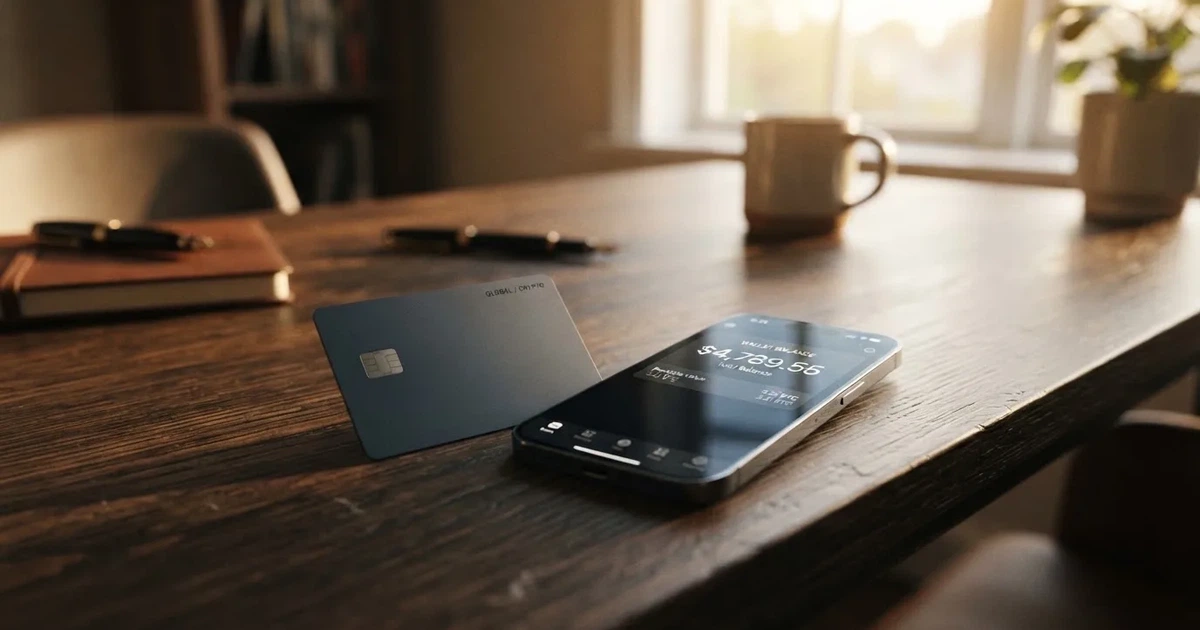
If you are reading this because an ordinary bank card is difficult for you to get, the sections below are ordered so that you can stop early. The eligibility question comes first because it is the only one that can end the conversation outright. Fees come fourth because that is where the product’s headline numbers need the most unpacking. And the risks section is deliberately blunt about the complaint record, because that is what pushed this score down rather than up.
The conditions described are current as of October 28, 2026.
Verdict: 4.5 out of 10, and the weak spots are specific
The single best thing I can say about this card is that its top tier costs 3,490 RUB to issue and there is a tier with no monthly fee at all. The single worst thing is that the card’s own public pages do not say which countries or residents qualify, while the complaints describe cards that stopped working and money that became unreachable. Those two facts sit oddly next to each other, and I cannot reconcile them from the information available.
The intended user, judging by the design, is someone already living in Telegram who wants to pay a foreign subscription or service and does not want or cannot use a regular bank card for it. If that is you, the product does a real job. If you want a card for everyday physical spending, a card you can hold, or one that works at a cash machine, this is the wrong tool — the card is virtual only, there is no cash withdrawal, and Apple Pay is limited to a single tier.
| Criterion | Mark | Why |
|---|---|---|
| Who can get it | 6 / 10 | Countries and residency are not stated anywhere on the site’s public pages; the promotion is for new users aged 18+ and the number of countries is not disclosed |
| Cost | 2 / 10 | Easy 990 RUB, Smart 1,590 RUB, Pro 3,490 RUB to issue; service is $6 a month on Easy, Smart and Pro; crypto top-up runs 9% on Easy and 7% on Smart |
| Top-up options | 6 / 10 | Rubles by phone number or bank card; crypto in BTC, ETH, BNB, USDT, USDC and TON, with networks not named |
| Reliability and complaints | 4 / 10 | Operated by WTP Technology Limited in Hong Kong, issuer unnamed; Trustpilot score hidden for a guidelines breach with 274 reviews; recurring complaints about cards that stopped working and inaccessible funds |
| Everyday use | 5 / 10 | Virtual only; Apple Pay, Google Pay and Samsung Pay only on Smart and Pro; no physical card and no ATM |
| Total | 4.5 / 10 | A product that does one job well and leaves the entry questions — country, issuer, custody — largely unanswered |
Read the table as a shape rather than a verdict on you. Cost at 2 out of 10 is not saying the card is expensive for everyone; it is saying the published numbers are hard to rely on, because a $6 monthly charge and a 9% top-up fee both sit on top of an already low-marked cost picture, and the page does not show a full conversion commission. Reliability at 4 is the number I would weigh most heavily, and the reasons for it are in the risks section rather than here.
Will they give you the card?
I could not confirm that you can. The home page does not list countries or residency requirements, and the terms index did not produce a country list either — so there is no published answer to give you. I would treat that silence as a real risk rather than as an oversight, because eligibility screening happens somewhere even when it is not written down.
What is stated: there is a promotion for new users aged 18 or over. That is the only age and audience condition on the public pages.
Two further points are worth knowing, and they come from third-party reporting rather than from the card itself. Card issuing regions appear to include the United States for Smart, and Singapore for some Prepaid and Easy cards, with the card network not named in that reporting. I am flagging those as unofficial — the card’s own pages do not confirm them, and I would not build a plan on the basis of a sponsored article. But BIN location matters more than most people expect, and I explain why below.
For context on why country rules are not a formality: a card number begins with an issuer identification number of six or eight digits, and any merchant can look that up to see which institution and country issued the card. If the issuer country does not match the billing address you type, the shop may apply extra scrutiny or decline the payment outright. A card that looks “foreign” is not broken; it is being read.
How to get it
There is no application form in the usual sense. The card is issued as a virtual card inside a Telegram Mini App, which means you need Telegram before anything else, and there is no app in the App Store or Google Play. The product is the Mini App and the website.
Identity checking is handled by Sumsub, described as verification with one document, and WantToPay says it does not store document copies. Here is the level in full: email, phone confirmation, a photo of an identity document — passport, foreign passport or driver’s licence, with both sides needed for an ID card or a licence — and a selfie that may ask you to blink or turn your head. Processing is described as usually taking a few minutes. Proof of address is not part of the official steps.
That last point cuts both ways, and readers tend to assume it is good news. For a crypto service it may indeed be simpler than a bank; for a service that holds your money it also means less has been verified about you, and you should think about what happens when support needs to resolve a dispute and has only a document photo and a selfie to work from.
Two details from user reports and third-party sources. Failures are most often attributed to photo quality, and the advice is to contact support after several failed attempts rather than to keep retrying. And unofficial reporting suggests that new users who complete verification within seven days of registering get a 30% discount on the Easy tier — check that in the Mini App at the moment you register, because it is a promotional term and terms like this change.
New users who verify within 7 days of registration get a 30% promo for Easy. Note the gap: what the verification step collects is set out in the official KYC description above, while the discount is a promotional claim from elsewhere and I would treat its duration as unconfirmed.
Fees: what a payment actually costs
This is where the product is weakest, and it is worth being precise rather than alarmed. The card does publish per-transaction fees, which is more than most products in this category bother to do. What it does not publish, on the pages I could read, is a complete all-in cost for a foreign payment.

| Fee or limit | Prepaid | Easy | Smart | Pro |
|---|---|---|---|---|
| Issue price | Face value, $10–$200 | 990 RUB / $10 | 1,590 RUB | 3,490 RUB / $35 |
| Monthly service fee | $0 | $6 | $6 | $6 |
| Crypto top-up fee | Not applicable — fixed denomination only | 9% | 7% | See tier terms |
| Successful transaction fee | $0.25–$0.50 | $0.25–$0.50 | $0.50–$1.00, plus 0.2% for contactless | $0.50 + 1% of the payment amount |
| Failed transaction fee | $0.25–$0.50 | $0.25–$0.50 | $0.40–$1.00 | $1 |
| Purchase limit per day | Up to $20,000 | Up to $50,000 | Not stated | Not stated |
| Single transaction limit | $10,000 | $20,000 | $25,000 | “—” |
| Validity | 24 months | 24 months | 36–60 months | Not stated |
| Monthly spend ceiling | Not stated | Not stated | Not stated | $50,000 |
Three things in that table are worth pausing on. The $6 monthly fee applies to three of the four tiers, so the “no monthly fee” tier is the one with the smallest purchase limit. The Pro transaction fee of $0.50 plus 1% is by some distance the most expensive per payment in the range, and it sits on the tier with the highest limits. And the Pro purchase ceiling of $50,000 per month is the only monthly ceiling stated anywhere; for the other tiers, spending caps are not stated at all.
The monthly fee figure also has a wrinkle. Unofficial reporting describes a “Plus” subscription at 690 RUB or 6 USDT per 30 days, with longer terms at 1,860, 3,310 and 4,100 RUB for three, six and twelve months, and one subscription covering all your cards. That is very likely the same $6 I have listed, expressed in rubles or USDT. I am labelling it unofficial because it comes from third-party reporting, not from the card’s comparison table — but you should count it once, not twice, when you work out your monthly cost.
Now three ordinary payments, so the table becomes something you can use.
A $12 monthly streaming subscription on Easy costs $0.25–$0.50 for the transaction, plus the 9% fee you already paid to load the balance with crypto. If you topped up $100 in crypto, you were charged about $9 before spending a cent. That fee is not per purchase — it is the price of getting money in.
A $40 online electronics purchase on Smart costs $0.50–$1.00, plus 0.2% if you pay contactless, so roughly $1.08 at the top of the range, plus the 7% top-up fee and any conversion.
A $300 foreign purchase on Pro costs $0.50 plus 1%, so $3.50. Add the top-up fee on whatever you loaded and, if you pay in a currency other than the card’s base of USD, a conversion charge that the comparison table does not break out.
That last point is the one I would underline. The card’s base currency is USD, ruble top-ups are converted at the rate shown in the app, and the separate currency-conversion commission is not displayed in the comparison table. Paying in other currencies is simply not stated. If the service you pay bills in euros and your balance is in dollars, you are crossing a currency line on every single payment without a published number telling you what it costs. Ask support before you rely on it.
Top up: two routes, and one of them is one-way
You load the balance in two ways. Rubles come in by instant transfer to a phone number or from a bank card. Crypto comes in as BTC, ETH, BNB, USDT, USDC or TON; the home page lists BTC, USDT, USDC and TON. Bank cards cannot be used to receive payments into the card, and Easy and Smart support both routes.
The minimum deposit is $10 on every tier, and Prepaid has no crypto route at all — it is loaded to a fixed denomination of $10–$200 and that is it. Credits usually land at once but can take up to 180 minutes. Here are the parts that catch people out:
Crypto payment details must be new for every top-up. The provider states this. A transfer to details you have already used cannot be returned. That single sentence is the most important operational warning in this review, and I would put it on a card next to your monitor if you use this.
Who pays the blockchain network fee for the transfer is not stated. Network fees are charged by the blockchain itself, not by the card provider, so you are paying something extra that nobody has quantified for you here.
And the network choice matters enormously. USDT and USDC exist on many chains, and sending the right token on the wrong chain is a common way to lose money. Circle stopped supporting USDC on Tron in February 2024, so “USDC over TRC20” is not a native option. On Ethereum, fees are paid only in ETH, which means a wallet holding USDT and no ETH cannot send at all. Blockchain transfers are irreversible, so a deposit to an unsupported network can be lost outright.
I have not named the supported networks because the card does not name them, and that omission is exactly why you should get the network and address from the app at the moment of each transfer rather than from memory or from a saved address.
One more route exists that you can fill but not empty. Funds land on an “internal balance” if the card provider has a technical failure or if support asks for it, and it can be moved back to any of your cards at any time, free, with a $2 minimum and $500 per day. You cannot add money to it from a card. And when a card expires, it is deleted along with any balance still on it — which is why moving your money off a card before its validity period ends is worth doing.
Paying with it day to day
The card is virtual, the network is not specified on the official pages, the primary currency is USD, and 3D Secure is supported for online payments.
The wallets are where the tiers split. Smart supports Apple Pay, Google Pay and Samsung Pay. Apple Pay on Smart is also the one wallet combination that third-party reporting flags as Smart-only, while Pro is described as carrying Apple Pay and Google Pay plus offline abroad as a benefit. If you pay by phone, you are looking at Smart or Pro, and the $6 monthly fee applies to both.
There is no cashback. There is no physical card in any tier, so there is no queue for one, no delivery to wait for, and nothing to lose at a café. Blocked merchant categories are not stated in the official terms I could read, and that matters more than it sounds: a merchant category code is a four-digit number that classifies a business, assigned when the shop starts accepting cards, and issuers block whole categories by policy rather than by law, with the list differing between issuers. If you pay a service that categorises itself unusually, you may find out at the till.
Unofficial reporting, from a sponsored article, mentions a refusal code for prohibited merchant categories such as crypto exchanges, casinos, adult content, mining, e-wallets and government bodies, with gambling and donations prohibited. It also names four game and store platforms as not payable on any tariff. I would not take any of that as settled, but I would take it as a reason to test your specific merchant with a small payment before committing a month of fees to it.
If you are comparing wallets, it is worth knowing that adding a card to Apple Wallet never puts the card number on Apple’s servers. The number is replaced by a device-specific identifier held in the phone’s secure hardware, and each payment carries a one-time code. That is a real privacy property of the mechanism, though it says nothing about who can see your transactions at the provider end.
What can go wrong
This is the section that cost the card its score, so I want to be specific rather than ominous.
The company behind it is WTP Technology Limited, registered in Hong Kong with incorporation number 76394774. The issuer is not named on the official pages, and unofficial reporting also fails to name the BIN sponsor, describing BIN regions in the USA and Singapore. When you cannot identify the institution that actually holds your money and issues your card, that is not a small gap. It is the gap.
Identity checking is done by Sumsub, with 3D Secure for online payments, and the provider says it does not keep document copies. Beyond that, the usual safeguards are not stated: no information on the custody model, no in-app freeze, no two-factor authentication, no spending controls, no insurance. You have a security page you can read, and a list of things it does not cover.
On the review platforms, the picture is mixed and specific. Trustpilot does not currently display a TrustScore — it is described as unavailable due to a breach of guidelines, with fake reviews removed. There are 274 reviews, 152 of them in the last 12 months, with 85% five-star and 13% one-star. The company’s own home page claims 4.6. Users praise fast virtual card issuing and helpful support; the recurring complaints are cards that ceased to work and funds becoming inaccessible, with a few reporting that support went silent. The company replied to roughly 3% of negative reviews. Many of the positive reviews are very short, and some come from accounts with a single review.
Recent complaint themes from 2026 include declined payments, top-ups taking between ten minutes and nearly an hour, a refusal to refund a 693 RUB issue fee, and a refund taking several months to come back. So: slow money in, stuck money occasionally, hard money back.
Two further risks that are structural rather than company-specific. Programme closures happen in this category — Visa terminated its global agreements with FTX in November 2022 and the US debit card programme was wound down; WaveCrest, a card issuer supplying crypto brands, was suspended by Visa in Europe in 2018 and all its Visa programmes closed. Typically you get notice, then loading and spending stop, then you are asked to withdraw your balance. Separately, a declined authorisation can leave a hold on your funds for several days, typically up to seven, so a card can look empty even though nothing has been lost.
And a hard expiry: a card is deleted when its validity period ends, along with the balance on it. With Easy valid for 24 months and Smart for 36 to 60 months, that is not an immediate problem, but it is a deadline with money attached to it.
What to take instead
None of the alternatives below is a recommendation to buy; they are the comparison I would want before committing to this card. Each scores higher than WantToPay’s 4.5, mostly because they publish more.
Bitrefill, 6.8 out of 10. Offers both virtual and physical Visa cards, with euro as the card currency implied by the terms. The page says the card is free through the app, though issuance and monthly fee amounts are not stated, and an inactivity fee applies after 12 months without spending or cash-out, amount unstated. Costs come from a deposit spread on crypto-to-euro conversion, a SEPA pay-in fee of 1.99%, and spreads by payment processors and ATM operators; the FX fee is not stated. Funding covers a long list — Bitcoin, Lightning, Ethereum, USDC, USDT, Solana, BASE, Polygon, Li.Finance, Apple Pay, Google Pay, Visa, MasterCard — plus SEPA transfer. Rewards are 2% total cashback with no cap, split 1% on each crypto deposit and 1% on each purchase. On eligibility, no country list is published; the terms say access is subject to eligibility criteria set and verified by partners, which is honest but leaves the question open.
UPay, 6.1 out of 10. Virtual and physical options, personal and business cards, network unnamed, and payments convert to USD, EUR, AED and others. The page does not state costs or fees, and notes that conversion may occur during payment depending on network and settlement. Funding is wallet top-up with BTC, ETH or USDT, with USDC also listed; networks not stated. No cashback on the card page, though the home page lists an “Earn While You Sleep” product. The notable thing here is the KYC position: the partner accepts only identity documents issued by the same country as the user, and the page says UPay does not serve residents of certain countries, with the list subject to change. That is a harder rule than WantToPay’s silence, and for many readers it is the more useful information of the two.
Kemy, 6.0 out of 10. States 190+ countries, with a few restrictions and an eligibility check at sign-up — more concrete than anything on this page. Unlimited virtual cards, plus one physical Mastercard with contactless, one per user. Pricing is the most transparent of the three: virtual cards $15 issuance valid three years and $2 a month; physical $250 issuance with DHL Express included, $10 a month, one card per user. Virtual top-up is $1.5 under $100 or 1.25% from $100 with a $5 minimum, transaction fee 3.5% plus $1, failed transaction $0.80; the physical card carries the same top-up with a $10 minimum and a $0.80 failed-transaction fee. Funding is USDT and USDC on the main networks with chains not listed, plus BTC, ETH and SOL, and fiat via mobile money and virtual bank accounts. No cashback mentioned. One caveat worth flagging: its deposit fee is shown as 8% in one place and 5% in another on the same pricing material — a small but real illustration of why I keep asking about numbers.
| WantToPay | Bitrefill | UPay | Kemy | |
|---|---|---|---|---|
| Score | 4.5 | 6.8 | 6.1 | 6.0 |
| Card form | Virtual only | Virtual and physical | Virtual and physical | Virtual and one physical |
| Cash withdrawal | None; cards not intended for withdrawing funds | ATM spread applies, amount not stated | Not stated | Not stated |
| Published costs | Some; conversion commission not shown | Partly; FX fee not stated | Not stated | Most complete of the four |
| Cashback | None | 2%, no cap | None on card page | Not mentioned |
| Eligibility clarity | Countries not stated | Partner criteria, no list | Excluded countries exist, list may change | 190+ countries, some restrictions |
Who I would recommend it to
I would recommend WantToPay to one kind of person: someone already inside the Telegram ecosystem who needs a virtual card to pay one recurring foreign service, has crypto or rubles to load it with, has tested a small payment successfully, and does not need a physical card, cash, or a documented answer about which country can hold the licence. For that person the economics are not bad — the 7% and 9% top-up fees are real but bounded, and there is a tier with no monthly fee.
I would not recommend it to someone whose priority is a card that works reliably for months, because the complaint record describes the opposite. I would not recommend it to anyone who needs cash, since funds cannot be withdrawn from the card. I would not recommend it to someone who expects a straightforward international product, because the eligibility question is unanswered and the card’s service reach is not clearly defined. And I would not recommend it to someone who intends to hold a balance on the card across months without paying attention to the expiry date, because expiry deletes the card and the balance with it.
If your decision hinges on something the card has not published, ask support directly before you load money — through the Telegram bot @WantToPaySupportBot, which is staffed 07:00 to 00:00 GMT+3, or by email. The knowledge base also carries an AI assistant. Pro tier includes VIP support. The questions I would ask are narrow: which countries and residence statuses are accepted, who the issuer is, what the currency-conversion commission is on a non-USD payment, and which merchant categories are blocked.
Frequently asked questions
What is WantToPay?
WantToPay is a virtual payment card issued through a Telegram Mini App and website, with no app in the App Store or Google Play. You load a balance in rubles or in crypto and spend it online. Four tiers exist: Prepaid, Easy, Smart and Pro. There is no physical card in any tier. The company behind it is WTP Technology Limited, registered in Hong Kong, and the issuing institution is not named on the public pages.
How does the WantToPay card work?
You open the Telegram Mini App, verify your identity, pick a tier and receive a virtual card immediately, which is described as taking a few minutes. You top it up by ruble transfer to a phone number or from a bank card, or with BTC, ETH, BNB, USDT, USDC or TON. The balance converts to the card’s base currency, US dollars, and you spend it like any other card online. 3D Secure applies to online payments. Funds cannot be withdrawn as cash.
Is WantToPay a bank?
No. It is a card programme run by a technology company, WTP Technology Limited in Hong Kong, with an unnamed issuer behind it. The card is not described as a bank account and no deposit guarantee is mentioned anywhere. Crypto cards like this usually have an e-money or payment institution holding the programme while the brand you see is the front end. The issuing institution being unnamed is the part I would want answered before loading anything significant.
Which countries can get a WantToPay card?
I could not confirm this. The public pages do not list eligible countries or residency requirements, and the terms index gave no country list either. The only stated audience condition is a promotion for new users aged 18 and over. Unofficial third-party reporting points to US issuing for Smart and Singapore BINs for some Prepaid and Easy cards, but the card itself does not confirm that. If your country is not obviously covered, ask support before you pay anyone.
What does a WantToPay card cost?
Issuance is 990 RUB for Easy, 1,590 RUB for Smart and 3,490 RUB for Pro, while Prepaid has a fixed denomination between $10 and $200. Service is $6 a month on Easy, Smart and Pro and zero on Prepaid. Successful transaction fees run $0.25–$0.50 on Prepaid and Easy, $0.50–$1.00 plus 0.2% for contactless on Smart, and $0.50 plus 1% of the amount on Pro. Failed transaction fees are $0.25–$0.50, $0.40–$1.00 and $1 respectively.
How do I top up a WantToPay card?
Two routes for Easy and Smart: rubles by instant transfer to a phone number or from a bank card, and crypto in BTC, ETH, BNB, USDT, USDC or TON. The minimum deposit is $10 on all tiers, and Prepaid takes a fixed denomination only. The crypto top-up fee is 9% on Easy and 7% on Smart; the ruble route is converted at the app rate with no fee stated. Credits usually land at once but can take up to 180 minutes, and a crypto transfer to previously used payment details cannot be returned.
Can I withdraw money from a WantToPay card?
No, and the card is not designed for it. The official description says the cards are not meant for withdrawing funds from services, and no withdrawal to a bank or crypto wallet is offered. Unofficial reporting says the same thing and adds that cash machines are not mentioned at all. Money only leaves the card by being spent. If you top up more than you plan to use promptly, you are exposed to both price movement and the card’s expiry deleting the balance.
Is the WantToPay card safe?
It uses 3D Secure for online payments and says it does not store document copies, with identity checking by Sumsub. But the custody model, two-factor authentication, in-app freeze, spending controls and insurance are all not stated. The company is Hong Kong-registered with an unnamed issuer, and Trustpilot currently shows no score because of a guidelines breach, with 274 reviews and complaints about cards that stopped working and funds becoming inaccessible. Treat the money on it as you would treat a prepaid balance.
Which wallets can I use, and is it free?
There is no cashback. Smart supports Apple Pay, Google Pay and Samsung Pay, and Pro is described as carrying Apple Pay and Google Pay along with offline abroad use. Apple Pay on Smart is the one wallet combination third-party reporting flags as limited to that tier, though the card’s own comparison table does not spell out the wallet split in detail. Adding a card to Apple Wallet keeps the number off Apple’s servers, replaced by a device-specific identifier.
Is WantToPay worth it?
For one recurring foreign payment from a crypto balance, occasionally yes, particularly on Smart at 7% top-up with no physical-card expectations. For everyday use, no. A declined payment or a card that stops working can block a subscription you cannot cancel from elsewhere, and $6 a month applies to three of the four tiers. Test with a small top-up first, use a fresh payment address every time as the provider requires, and check the expiry date on your card before the balance outlives it.
Virtual cards – cryptocardchooser.com
Content created by the «cryptocardchooser.com» team