
Worldwide is a virtual Mastercard you can only refill through one Russian payment rail, run by a free-zone company nobody has reviewed
 Available in US
The Worldwide card looks, from the outside, like an escape hatch. The marketing says the card works “where Russian cards are not accepted”, in “150+ countries”, and that you can order and top it up from Russia without a VPN. That is a real draw for someone whose ordinary card does not travel. But the pages behind that pitch are thin where it counts. Eligibility rules are not described. The issuer is called a “licensed foreign issuer” without being named. There is no physical card, no ATM, and — on the main card’s own top-up page — no crypto top-up at all, only SBP, the Russian Fast Payment System. The company behind the iOS app is listed as URUS – FZCO, a UAE free-zone entity, and the single App Store rating reads 1.0 out of 5 with the word “scam” in it.
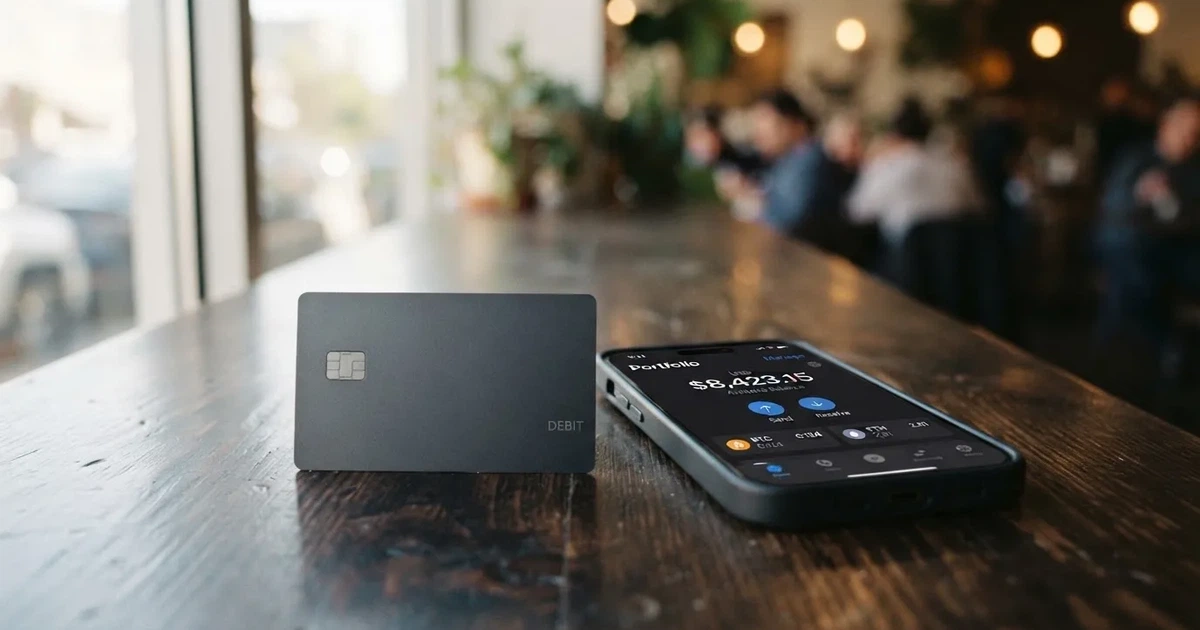
I scored it 4.2 out of 10. That is not a rejection on principle — plenty of services in this category are worse — it is a reflection of how much of the picture is missing rather than how bad what is written is. If you only need a virtual Mastercard for subscriptions and online payments, the card does one specific job and the price of that job is stated plainly. If you need a card in your hand, cash from an ATM, crypto funding, or an answer to “who issued this and under what licence”, you will not find it here.
The conditions described are current as of October 28, 2026.
Verdict: 4.2 / 10, built for a narrow job
| Criterion | Mark | Why |
|---|---|---|
| Who can get it | 5 / 10 | Eligibility rules and countries of issuance are not described; the marketing says “150+ countries” and the app is listed in many storefronts, but nothing says where the card is issued |
| Cost | 5 / 10 | Standard from 2,900 RUB a year, Premium from 3,900 RUB, Promo 2,390 RUB with 0 RUB maintenance in the first year; operations at 0.00 USD and SBP top-ups at 0%, but the conversion markup is not disclosed |
| Top-up options | 3 / 10 | The card’s own site: SBP only, crypto “not offered”. The App Store app: USDT TRC-20 |
| Reliability and complaints | 3 / 10 | Issuer unnamed, described only as a “licensed foreign issuer”; app developer URUS – FZCO; no reviews to read, one App Store rating of 1.0 out of 5 with a scam note, unverified |
| Everyday use | 4 / 10 | Virtual Mastercard only; Apple Pay and Google Pay on Premium and Promo; no physical card, no ATM |
| Total | 4.2 / 10 |
Who this suits: someone who pays for online subscriptions, wants a virtual Mastercard number that works abroad, and funds it from a Russian bank account through SBP without fuss. The Promo tier, with its first year free and a USD account, is the version that costs least to try.
Who it does not suit: anyone who needs a plastic card, ATM withdrawals, crypto funding from the card’s main site, or an answer about the institution holding their money. It also does not suit you if you are outside Russia and intend to fund it through a Russian bank — that path is the only one the card’s site offers.
Will they give you the card?
Yes, apparently to almost anyone who finds the Telegram mini-app — but the card itself does not tell you the rules, which is the honest summary of this section.
The product is distributed as a Russian-language Telegram mini-app named Card Without Borders. It advertises that you can order and top up “from Russia without a VPN”. Beyond that, eligibility is not stated. There is no list of countries where the card is issued, no residency requirement, and nothing about whether citizenship matters as opposed to where you live. If you have been wondering whether your nationality is the obstacle, the answer the company gives you is silence.
The marketing claim is reach rather than eligibility: the card works “where Russian cards are not accepted”, in “150+ countries”. That is a statement about where the card can be *used*, not about who can hold it, and the two are easy to confuse when you are reading quickly.
The App Store app complicates the picture further rather than clearing it. It is listed in many storefronts — the US, Canada, the UK, Turkey among them — but says nothing at all about where the card is issued. A user in another country is therefore in an odd position: able to download the app, unable to learn whether the card would be issued to them.
What to check first, before you spend anything: whether the terms and the Telegram mini-app’s own screens name a country of issuance, a licensing entity, and an age requirement. Prepaid and debit cards are generally available to adults aged 18 and over, and some issuers set higher limits, but this card’s pages do not repeat that.
How to get it
The process is short, and that is genuinely its selling point: activation is described as fully online, inside the Telegram mini-app, with “no queues or courier meetings”.
The card you get is virtual, and the site’s FAQ identifies it as a Mastercard. There are four tiers on the card side — Standard, Premium, Promo and Business — and Promo works through a USD account. The separate iOS app describes itself more thinly: a “virtual card” with top-up, and it does not state the network.
Two things are worth pausing on. First, verification: the site says no visits, no paperwork and no passport are needed, which is marketing wording rather than a description of a process. The KYC steps and the documents, if any, are not stated, and neither are the verification levels or the reasons a request might be refused. Second, the App Store app mentions biometric unlock but says nothing about identity checks.
So the honest picture: the flow is fast and fully digital, but the gate is invisible. That is a double-edged fact. If you were planning to keep the card small and low-value, speed matters more than paperwork. If you were planning to load significant sums, you are being asked to trust an arrangement whose compliance checks are not written down anywhere you can read.
What to check first: the identity requirements inside the mini-app itself, before you enter any documents, and what you are shown about who holds the funds.
Fees: what it really costs
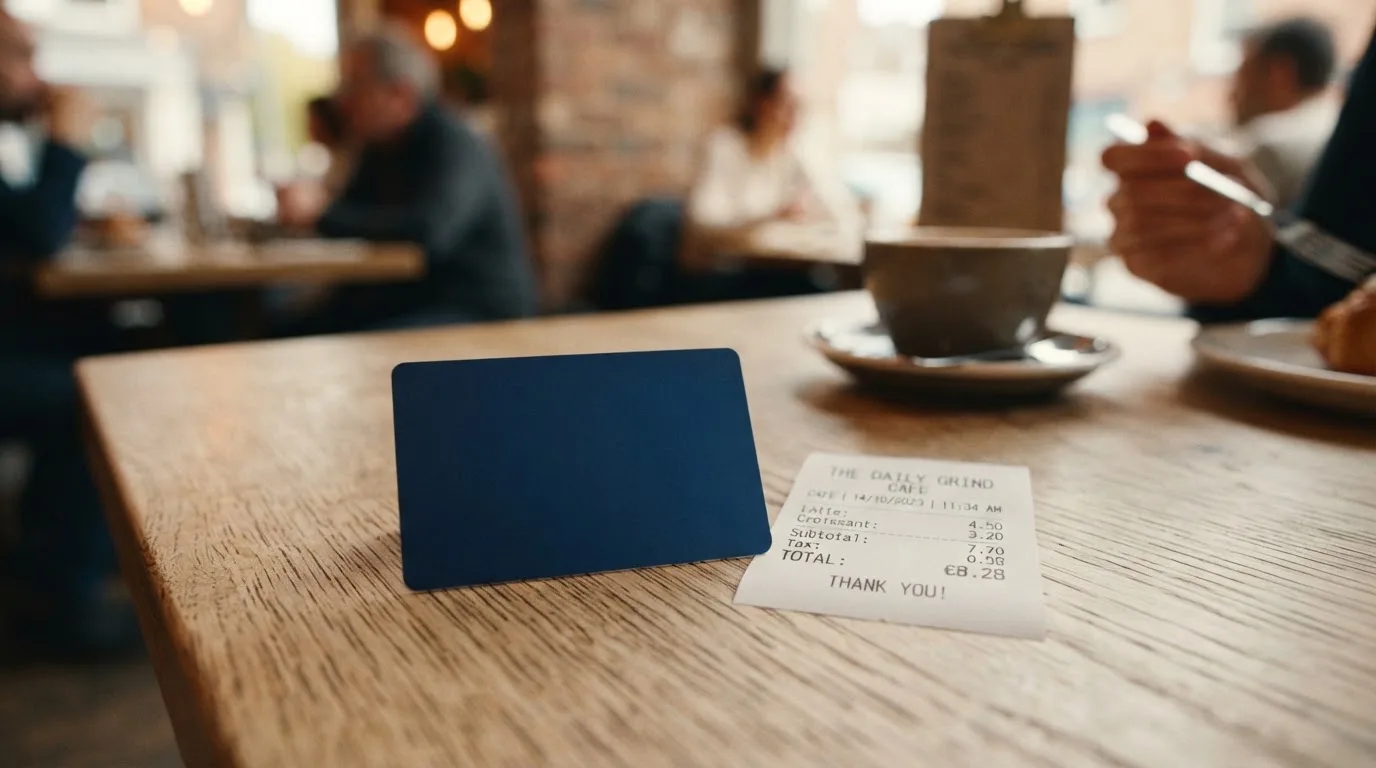
The price list is one of the clearer parts of this card’s presentation, and it is also where a decision usually gets made. Here is everything stated, in one place.
| Item | What the card states |
|---|---|
| Standard | from 2,900 RUB/year |
| Premium | from 3,900 RUB/year |
| Promo | 2,390 RUB to issue, 0 RUB maintenance in the first year, 0% top-up fee |
| Business | from 12,900 RUB/year |
| Card operations | 0.00 USD per operation |
| SBP top-up | no transfer fee, 0% |
| FX | “close to exchange/central bank rate”, rate shown before top-up; no percentage given |
| Conversion markup | applied on top of the Central Bank rate, amount not stated |
| ATM | not stated, and no physical card or ATM is offered |
| Top-up bounds | 500 RUB minimum, 200,000 RUB maximum per SBP transfer |
| Spending limits | no numeric limits published; Premium is described as “purchases without restrictions”, Business as “unlimited turnover” (marketing wording) |
Now the everyday arithmetic, which is where most people will actually feel this card. Take a subscription you already pay for, at 5 USD a month, converted from rubles at the Central Bank rate plus a markup of undisclosed size. The 0.00 USD per operation means the payment itself is free; what you do not know is how much extra the conversion costs. If you keep a small buffer, as the card’s own blog suggests because the foreign-currency charge may come out slightly above the ruble amount, you are absorbing a number nobody has published.
Three more everyday cases. A subscription paid in a currency other than your balance currency — the fee for spending in other currencies is not stated, and on a USD-and-EUR card you are likely to hit exactly that. A purchase from a merchant that declines prepaid or foreign-issued cards, which happens because the merchant can look up the issuer from the card’s first digits and see the country; the card then fails and the effort is yours. And a declined payment that leaves a hold on your money, which can sit for several days, typically up to seven.
There is one unverified figure worth mentioning because it circulates: a user review claims a 20 USDT card fee. The card’s own App Store listing shows no amounts at all. Treat the 20 USDT claim as an unverified report from a single reviewer.
The wider point: in this category a card’s headline fee is rarely the whole cost. The conversion spread, the amount you pay to move money onto the card, and the currency mismatch at checkout do most of the damage when they exist.
Top up: one rail on the site, another in the app
Here is the single most important practical fact about this card, and the biggest reason for the low top-up score. The card’s own top-up page offers SBP only — Russia’s Fast Payment System — from any Russian card or account, credited in one to three minutes, sometimes up to fifteen. Crypto top-up on that page is marked “not offered”.
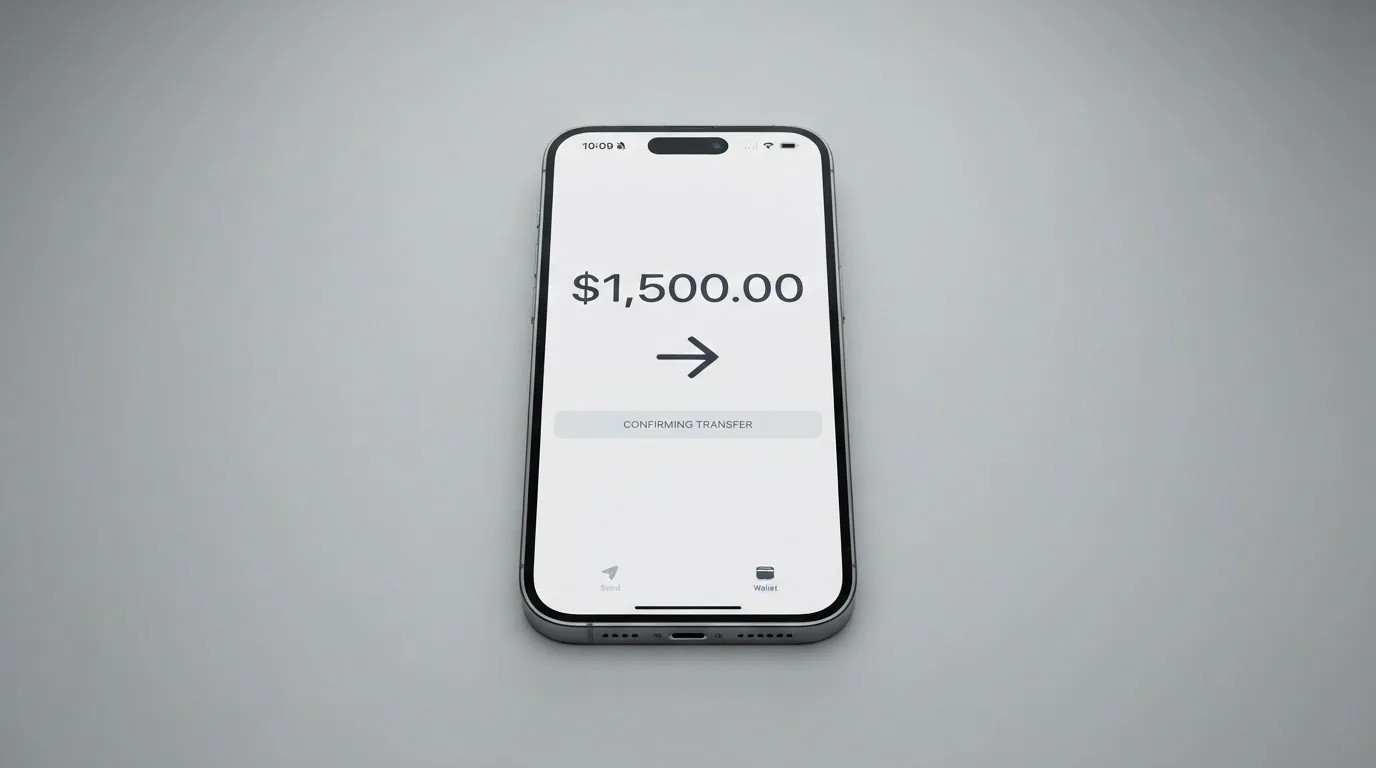
The App Store app tells a different story: USDT TRC-20 deposits, plus top-ups from the account balance, with fee terms shown on the deposit and top-up screens. That app also supports USDT withdrawals over TRC-20. Whether these are one product with two funding paths or two related products is not something the pages resolve.
For the SBP route, the practical details are: you pay by QR code or by entering the details in your banking app, the transfer fee is 0%, the minimum is 500 RUB and the maximum 200,000 RUB per transfer, which is the Central Bank’s SBP limit. Your rubles are converted at the Central Bank rate plus a markup of undisclosed size, and the rate is shown to you before you confirm the transfer.
Two limits you should hold in your head. The 200,000 RUB ceiling is per transfer, so a large top-up means several transfers. And the maximum is a system limit, not a promise about your account.
One thing that is not stated and that I would want answered before loading money: what happens to the balance if you close the account. No withdrawal route for the card side, and no statement about the balance at closure. The app’s USDT withdrawals over TRC-20 may or may not cover this.
A general caution about crypto deposits, whatever a provider says: transfers are irreversible, so funds sent on a network the provider does not support, or to an address belonging to another network, can be lost or need manual recovery with no guarantee. Check the network on the screen before you confirm, every time.
Paying with it every day
Day to day, this is a virtual Mastercard that spends a pre-loaded balance, with mobile wallets on two of the four tiers.
Apple Pay and Google Pay are listed for Premium and Promo. Standard and Business are not listed as supporting them, and the iOS app mentions Apple Pay setup on the card screen without saying which tiers qualify. If you plan to pay by phone — which for a virtual card is the normal case — you are looking at Premium at 3,900 RUB a year or Promo at 2,390 RUB with the first year free. Metal is not mentioned at all.
Blocked merchants and merchant category codes are not stated. For context, gambling transactions carry MCC 7995 and many issuers block them on specific cards by policy rather than by law, with the blocked list varying by issuer; you cannot tell from these pages whether this card does the same. If gambling or similar purchases matter to you, that is a question to ask directly.
Loyalty is not stated. No cashback, no points, or rewards programme are described, so treat rewards as absent.
Two contradictions to be aware of. The card’s blog says the network is “Mastercard or Visa” while the site FAQ says Mastercard — I would plan for Mastercard. And the app’s own numbers are thin: “Worldwide: Wallet USDT Card” for iPhone and iPad, iOS 16.0 and later, free, 18.3 MB, nine languages including Russian, versions from 1.0 on 30 June to 1.3.12 on 1 October. One rating, 1.0 out of 5, read on 20 October 2026. Not found on Google Play.
There is one genuinely helpful thing about a failed payment: funds return to the card balance automatically. If the problem is on the service’s side rather than the merchant’s, Telegram support can return funds via SBP. A formal chargeback procedure is not described, which means for a genuine merchant dispute you have support’s goodwill and not a documented chargeback route.
Address verification is worth knowing about even though the card does not mention it: it compares numeric parts of the billing address you type against the issuer’s records, and it is generally unavailable for foreign-issued cards. That is one of the more common reasons a checkout fails when nothing is obviously wrong.
What can go wrong
The risk profile here is not about the crypto; it is about who holds your money and what you cannot find out.
The issuer is described only as a “licensed foreign issuer” — unnamed. The site does not name an operator. The App Store developer is URUS – FZCO, a UAE free-zone company form. Licences are not stated. In practice, a crypto card depends on two licences rather than one: the card is a payment service regulated under e-money and payment-services law, while the crypto side falls under separate crypto regulation. When neither entity is named, you cannot check either register.
I searched for reviews and found nothing for this product — nothing on Trustpilot, Reddit or Otzivik. There is an unrelated old complaint page for a different “Worldwallet” product and some Kazakh CardB news, neither of which is attributable here. What exists is a single App Store rating of 1.0 out of 5, described as “not safe and probably a scam” and claiming a 20 USDT card fee, both unverified. One rating is not evidence, but it is not nothing, and the appropriate response is to size your exposure accordingly rather than to treat it as a verdict.
The company does say some useful things. Security is described as 3D Secure and “modern encryption”. The app has biometric unlock and one account per user, and its developer states that the “Assets” positions are internal products and that the company is “not an exchange, broker or investment adviser”. Support is Telegram, described as 24/7 with live staff, with Standard chat, Premium priority and Business a personal manager; if a transfer does not arrive, support checks the receipt and credits manually.
What is not described is the part that usually matters most in this category: the custody model. Whether the balance is safeguarded in segregated accounts, whether there is an instant card freeze, and what spending controls exist — none of that is stated. Safeguards that do exist elsewhere in the industry — app-based two-factor authentication, instant freeze, spending limits, 3D Secure confirmation, tokenised mobile wallets — cannot be assumed here.
Two smaller gaps. The latest dated item on the blog is 19 September 2026, which is recent but not a substitute for terms. And the app’s first version is dated 30 June with no year shown, so the app’s age is not something you can establish from the listing.
Why this is worth taking seriously: card programmes do close. Visa terminated its global agreements with FTX on 13 November 2022 and the US debit card was wound down by its issuer; WaveCrest, a Visa issuer that supplied crypto card brands, was suspended by Visa in Europe in 2018, closing all WaveCrest-issued Visa programmes. Closures typically give a notice period, stop spending and loading, then ask users to withdraw remaining balances. None of that is a prediction about this card. It is a reminder that “licensed foreign issuer” is a phrase you should be able to resolve into a name.
One more practical warning. Blockchain transfers are irreversible. Stablecoins are not censorship-proof either — Tether says it disables tokens in wallets on sanctions lists and has frozen funds tied to illicit activity.
What to take instead
If your reason for wanting this card is that yours does not work abroad, there are alternatives with more published detail. Here is how the main ones compare on the points that decide it.
| Worldwide | MaxSwap | Karta | Tegro | |
|---|---|---|---|---|
| My score | 4.2 / 10 | 5.2 / 10 | 7.9 / 10 | 4.7 / 10 |
| Card | Virtual Mastercard | Virtual only, Mastercard | Visa Signature, virtual and physical | Virtual card, Visa |
| Entry cost | Promo 2,390 RUB, first year free | Card 50 USD with a 25 USD first deposit; total issuance listed 77.125 USD | Virtual activation 5.00 USDT (FAQ also shows an older 30 USDT price struck through); physical from 100.00 USDT | 13 USD one-time, no subscriptions; minimum card amount 50 USD |
| Card payments | 0.00 USD | 0.25 USD plus 0.4% | 1.5% | Not stated |
| Funding | SBP only on the site; USDT TRC-20 in the app | Crypto, 22 coins listed, no network list | USDT/USDC on Tron, Ethereum, BNB Smart Chain, Polygon, Arbitrum, Optimism, Base, Solana; fiat rails by country | USDT on Tron only |
| Top-up or deposit fee | 0% over SBP | 4.5% plus 1 USD | Crypto top-up free | Deposit fee 4% |
| FX | Central Bank rate plus an undisclosed markup | No separate rate stated; costs to be taken into account when paying | Not stated separately | Not stated |
| Mobile wallets | Apple Pay and Google Pay on Premium and Promo | Not stated | Not stated | Not stated |
| Rewards | Not stated | Not stated | Cashback claimed, rate and payout currency not stated | Not stated |
| Monthly fee | Promo 0 RUB first year; others annual | Not stated | None listed | None |
Karta is the clear leader here, at 7.9 / 10, and the reasons are structural rather than cosmetic: it is a Visa Signature available both virtual and physical, it works in 200+ countries and territories where Visa is accepted, it has the widest published funding network list of any of these, and crypto top-up is free. Its card payments cost 1.5%, and its transfer fees are specific — SEPA 1.5% plus EUR 2, SWIFT in USD 1.4% plus 2 USD — which is more information than Worldwide gives you. Two caveats: availability “depends on local regulations and partner coverage”, and bank withdrawals are “coming soon”.
MaxSwap, at 5.2 / 10, claims no geographical restrictions and supports a long list of coins — ADA, ALGO, AVAX, BCH, BNB, BTC, DOT, ETH, HBAR, HT, KRRX, LINK, LTC, MATIC, NEAR, SHIB, SUSHI, TON, TRX, UNI, USDC, USDT, XLM, XRP — with no network list published. Its fees are heavier: 4.5% plus 1 USD to top up, then 0.25 USD plus 0.4% per transaction.
Tegro, at 4.7 / 10, is a virtual Visa with a 13 USD issue fee, a 4% deposit fee, and USDT on Tron only. The bot issues an address and a unique amount and credits automatically, which is a genuine convenience, but everything else must be converted to TRC-20 first.
The honest comparison point: none of these four publishes its conversion markup clearly, and none of them names the sort of regulatory detail you would want. Worldwide’s distinguishing feature is not that it is better or worse on the numbers — it is that it is the only one of the four whose main funding route is a domestic Russian payment system rather than crypto rails.
Who I would recommend it to
I would recommend this card to one person in particular: someone with a bank account in Russia who pays for online services in dollars or euros, who does not want a plastic card, and who is content to hold a small balance. For that person the value proposition is legible — a virtual Mastercard from 2,390 RUB with the first year’s maintenance free, a 0 RUB operation fee, a 0% top-up over SBP, money back automatically on failed payments, and Apple Pay and Google Pay on the tiers where those matter.
I would not recommend it to anyone who needs to answer four questions and cannot: who issued this card, under what licence, where are my funds held, and what happens to them if this closes. Those questions are not hidden behind a support chat; they are simply unanswered on the public pages.
Before you commit, three checks in this order. Open the top-up screen in the mini-app and confirm that SBP is genuinely your funding route and that your bank can reach it. Ask, in writing, who the issuer is and what the conversion markup is — an answer you can paste is worth something, and silence is worth something too. And look at the balance question specifically: what happens to the money if you stop using it, or close the account.
If you are outside Russia and your money is not in a Russian account, this is the wrong card and one of the alternatives above will serve you better with more published detail.
Frequently asked questions
What is the Worldwide card?
Worldwide is a virtual Mastercard that you order and fund through a Russian-language Telegram mini-app called Card Without Borders, marketed as usable from Russia without a VPN and accepted “where Russian cards are not accepted”, across “150+ countries”. There is also a separate iOS app, “Worldwide: Wallet USDT Card”, which describes a virtual card with USDT TRC-20 deposits. No physical card is offered.
How does the Worldwide card work?
It works on the pre-loaded balance model: you put money on first, and the card spends only that balance, so it cannot overdraw. Spending draws down a balance denominated in USD or EUR, with rubles converted into it. Failed payments return funds to the card balance automatically, and Telegram support can return funds via SBP where the problem is on the service’s side.
Is Worldwide a bank?
Nothing on the public pages says it is. The card is described as issued by a “licensed foreign issuer” that is not named, and the site does not name an operator. The iOS app’s developer is URUS – FZCO, a UAE free-zone company form. Licences are not stated, so you cannot check any register to confirm what stands behind the card.
Who owns Worldwide?
That is not stated publicly. The App Store listing names URUS – FZCO as the developer of the app; the card’s own site names no operator and no issuer, referring only to an unnamed “licensed foreign issuer”. No corporate group is publicly described.
How do I get the Worldwide card?
You open the Telegram mini-app, choose a tier — Standard, Premium, Promo or Business — and the site describes activation as fully online, with no visits, paperwork or a courier. The KYC steps, the documents required and the reasons a request might be refused are not stated, which is worth knowing before you upload anything.
How much does the Worldwide card cost?
Standard is from 2,900 RUB a year and Premium from 3,900 RUB. Promo is 2,390 RUB to issue with 0 RUB maintenance in the first year and a 0% top-up fee. Business is from 12,900 RUB. Card operations are 0.00 USD and SBP top-ups carry no transfer fee, but the conversion markup on top of the Central Bank rate is not disclosed anywhere.
How do I top up the Worldwide card?
On the card’s own top-up page, only by SBP from a Russian card or account, credited in one to three minutes and sometimes up to fifteen, with a 500 RUB minimum and a 200,000 RUB maximum per transfer. Crypto top-up on that page is marked “not offered”. The separate iOS app instead describes USDT TRC-20 deposits, with fees shown on screen.
Can I use the Worldwide card in my country?
The card is marketed as working in “150+ countries” and “where Russian cards are not accepted”, which is a claim about where it can be spent, not about who can hold it. Countries of issuance are not stated, and nothing says whether citizenship or residence matters. Note that foreign-issued and prepaid cards are declined by some merchants because the issuer country is visible from the card number.
Is the Worldwide card safe?
It uses 3D Secure and what the site calls modern encryption, and the app has biometric unlock and one account per user. But the custody model is not stated: no word on segregated accounts, instant freeze or spending controls. There are no reviews to read, and the single App Store rating is 1.0 out of 5 with a scam note attached.
Is the Worldwide card worth it?
Worth it if you need a virtual Mastercard for subscriptions, fund it through SBP, and keep the balance small — Promo costs 2,390 RUB with the first year free. Not worth it if you need a physical card, ATM access, crypto funding from the main site, or a clear answer about who issued it and where your money is held.
Virtual cards – cryptocardchooser.com
Content created by the «cryptocardchooser.com» team