
The free virtual card that leaves your keys where they are — and what you give up for it
 Available in US
Solid is one of those cards that arrives with an unusual pitch attached: it is not really a card account at all, but a way of spending directly out of a crypto wallet you hold yourself. There is no monthly fee, no issuance fee, and no fee to load it, and the card you get is a virtual Visa that lives in your phone. In exchange for that, you get a product that has almost no physical presence — no plastic, no cash machines, no published country list — and a much narrower idea of what a bank account is for.
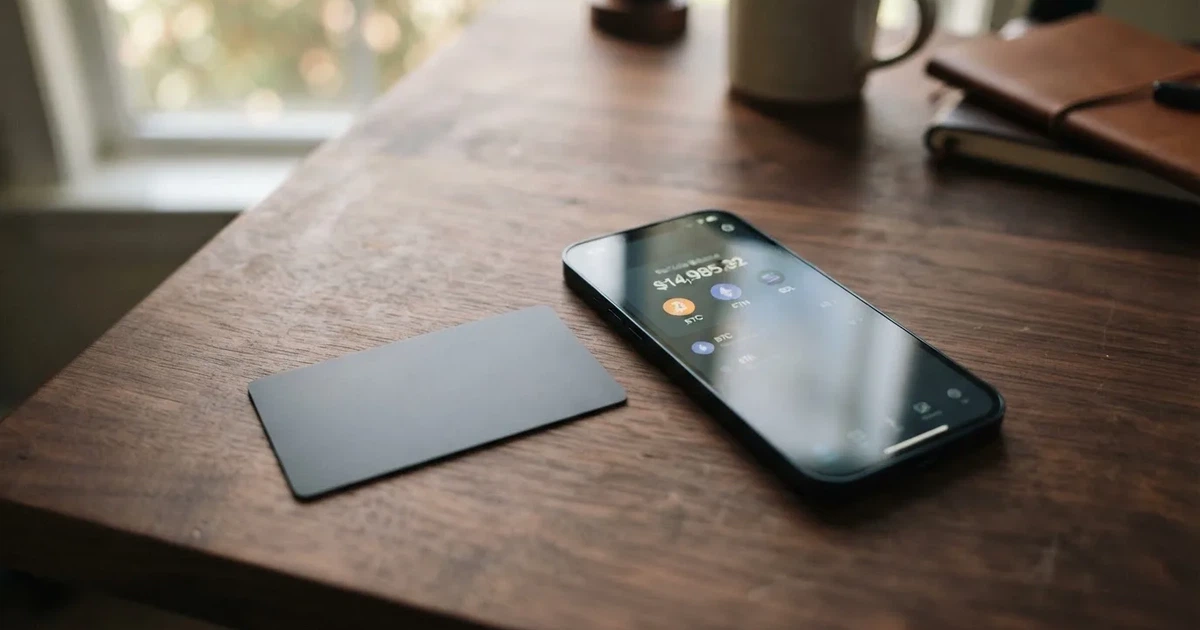
I read through the card’s public pages and put the pieces together for anyone who is choosing a card because an ordinary bank card is not straightforward to get. My honest summary: this is a good fit for a fairly specific person, and a poor fit for nearly everyone else.
The conditions described here are current as of October 28, 2026.
The verdict: 7.8 out of 10
Solid scores 7.8 / 10. It earns that on the strength of access, cost and design choices, and it loses most of its points on everyday practicality.
| Criterion | Mark | Why |
|---|---|---|
| Who can get it | 9 / 10 | Offered in 105 countries across most major world regions; the country list and any exclusions are not published |
| Cost | 8 / 10 | Issuance and monthly fees are free, top-up is 0% at every tier; but not quite free — 1.5% on currency conversion, and a one-off $10 to open a Virtual Account |
| Top-up options | 8 / 10 | Dollars and the stablecoins USDC and USDT, by bank transfer or crypto; networks Fuse, Ethereum, Base, others through a bridge; minimum $10 |
| Reliability and complaints | 8 / 10 | Issuer is Rain or Wirex depending on country of residence, banking is SSB, Member FDIC; self-custody throughout; no complaints or reviews found |
| Everyday use | 5 / 10 | Virtual Visa only, no physical card described; Apple Pay and Google Pay are supported; unofficial reports say no ATM access |
The card suits you if you already hold crypto, understand what a self-custodial wallet means, want a Visa number in your phone for online spending, and would rather pay nothing to hold it. The audience note from my own scoring says it plainly: self-custody users wanting a free virtual card.
It does not suit you if you need a physical card for a shop that takes cards only, if you need cash from an ATM, if you want a clear list telling you whether your country is eligible, or if you would rather not hold the responsibility for a wallet yourself. There is no physical card described anywhere on the pages I read, and no ATM access mentioned officially — a third-party site reports there is none at all, which I treat as unofficial and unconfirmed.
Who will they give you the card
Solid says the card is offered in “105 countries across most major world regions”. That is a large number and a vague one. The country list is not published, and neither is a list of exclusions. The advice on the page itself is to check the app for your country, or join the waitlist if it is unsupported. That is the honest answer, and it is also an unsatisfactory one: the rule that decides whether you can have this card is a rule you cannot read in advance.
What is clear is that the issuer is assigned by country of residence — Rain in some countries, Wirex in others. So the test is where you live, not what passport you hold. That distinction matters, because nationality and residence are screened separately in this industry, and a card that is open to residents of a country can still be closed to citizens of it.
One unofficial thread deserves a mention because it is the kind of thing you will read on an affiliate site: a third-party report from SpendNode in September 2026 says cards cannot be issued to residents of a list of countries including India, Turkey and Russia. That list is not official and I could not confirm it against the card’s own pages. Treat it as a warning to check in the app, not as a rule.
How to get it
The application is short. You download the app, verify your identity, and the card activates. The card’s own wording is that you can “verify your identity in about 2 minutes and your card activates”.
A few things are not stated, and I would rather name them than fill them in. The pages do not say which documents you need, whether proof of address is required, or what age rule applies. There is a single identity check and no tiers of verification described; no rejection reasons are published.
What you do need to know before the card is usable is the funding step: deposit at least $10, and that money is what the first purchases come from. The card itself is free and virtual — “get your free virtual Solid Card directly in the app”. No physical card is mentioned. It is a Visa, described as issued on the Visa Platinum tier, with a page footnote that it is “a Visa credit card issued by Rain”. The card currency is USD, which matters immediately if you live anywhere else.
Fees: what it really costs
This is the part of the review that most often flatters a card, so I will take it line by line. The headline is genuinely good: issuance is free, the monthly fee is free, and the top-up fee is 0% at every tier — Core, Prime and Ultra alike. There is no paid tier requirement for the free part.
But “free card” is not “free spending”, and the costs that remain are easy to miss until you are the one paying them.
| Fee or limit | Value |
|---|---|
| Card issuance | Free |
| Monthly fee | Free |
| Top-up fee | 0% at all tiers (Core / Prime / Ultra) |
| Spending in USD | No fee |
| Spending in a non-USD currency | 1.5% total FX cost in the rate: 1% card provider + 0.5% Solid |
| Crypto deposit, Fuse network | Free |
| Crypto deposit, Ethereum | 0.1% |
| Crypto deposit, other networks | 0.03% bridge fee |
| Minimum crypto deposit | $10 |
| Swaps, by tier | 0.5% (Core) / 0.25% (Prime) / free (Ultra) |
| Apple Pay / Google Pay | 0% |
| Opening a Virtual Account | $10, one time |
| ATM | Not stated |
| Limits | Based on available balance or collateral; can be set per transaction, daily, weekly, monthly, yearly or lifetime, adjustable per user; a single transaction tops out at roughly $750,000; above roughly $250,000 may need extra Visa verification; no fixed daily or monthly figure is published |
Three everyday payments
A coffee in your own country, paid in dollars. You spend USD, so the FX cost does not apply. Nothing is deducted for the card itself. This is the cleanest case and it costs you nothing.
A subscription in dollars while your balance sits in crypto. The card converts from your dollars or stablecoin balance at the moment of payment. What you pay depends on the tier’s swap fee: 0.5% at Core, 0.25% at Prime, nothing at Ultra. So the same subscription costs more or less depending on which tier you sit in — and Core is the tier you get automatically simply by opting in.
Anything priced in euros, yen or pounds. Here the 1.5% is what you actually feel, and it is built into the exchange rate rather than shown as a line item, which is why it is easy to underestimate. The split is 1% to the card provider and 0.5% to Solid. On a recurring monthly payment of any size, that adds up to a visible drag, and no tier removes it.
Two limits are worth holding in your head. There is no fixed daily or monthly cap published — limits are driven by your available balance or collateral, and you can set them yourself — but a single transaction is capped at roughly $750,000. Above roughly $250,000, extra Visa verification may be required. For ordinary spending these numbers will never touch you.
One more cost that is not on the card’s page but belongs in any honest budget: the network fee for the blockchain transfer that funds the card. That fee is charged by the blockchain, not by Solid, so the 0% top-up rate is not the whole cost of a crypto top-up.
Top up: how the money gets in
You fund the account “with dollars or stablecoins”, with USDC and USDT named. There are two routes: a bank transfer, or a crypto deposit. The top-up fee itself is 0% at all tiers, and the minimum crypto deposit is $10.
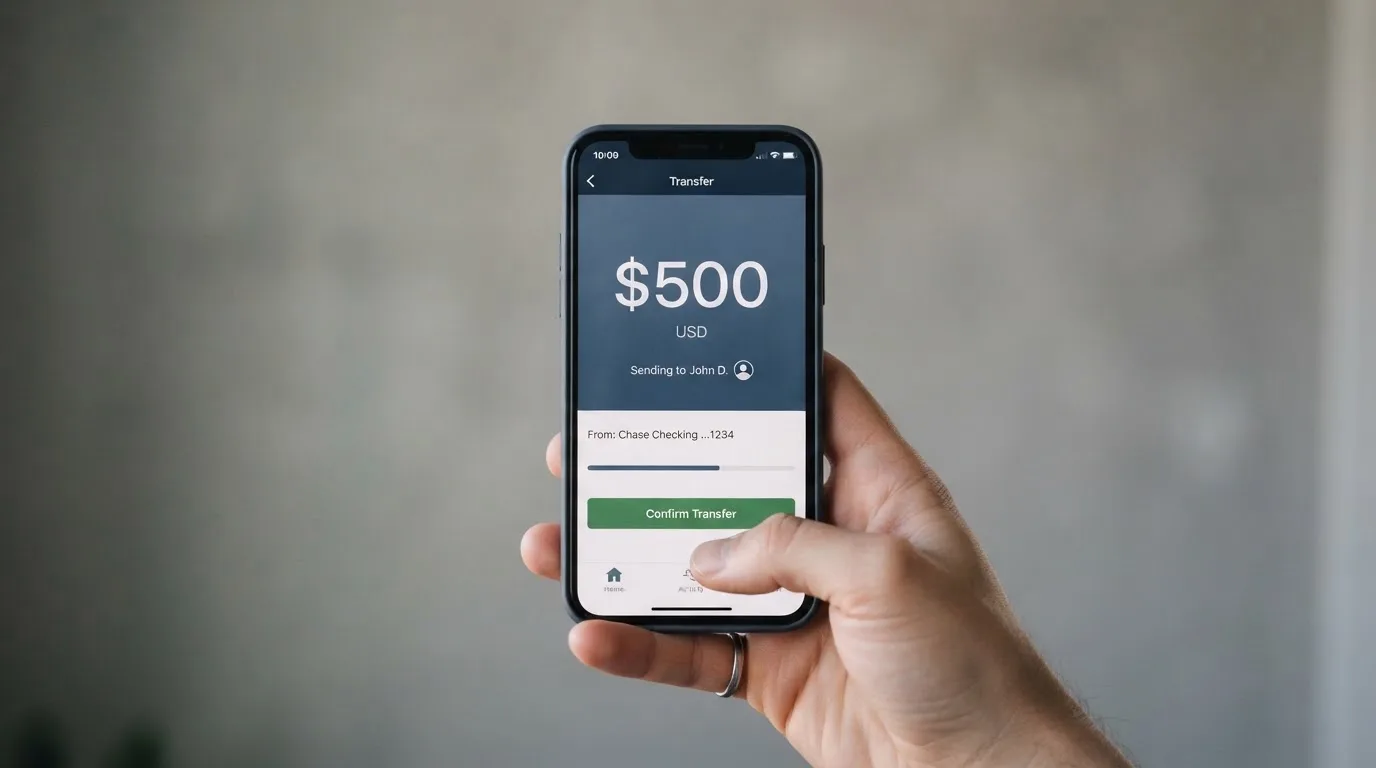
For fiat, the route is a bank transfer, or a Virtual Account — which costs $10 to open, once. For crypto, the named networks are Fuse, Ethereum, and Base (where EURC is listed), with other networks reachable through a bridge. The bridge route carries the 0.03% fee, Ethereum carries 0.1%, and Fuse is free. Who pays the blockchain’s own network fee is not stated beyond those deposit percentages.
There are also two spending modes, and this is worth understanding before you are surprised. Cash mode is the default and simply spends your balance. Credit mode is in beta, is available on Wirex cards only, and borrows against soUSD.
On the way out, the homepage advertises “instant withdrawals” of earnings, and cash-out to a bank account, with ACH and wire arriving as dollars in the wallet. Withdrawal fees are not stated. Neither is what happens to your balance if you close the card — and if you are holding self-custodied crypto, that is a question worth asking before you ever need it.
Paying with it every day
Apple Pay and Google Pay are supported, with what the page calls “one-tap integration” on mobile. On the web you add the card details manually. Blocked merchant categories are not stated; the page notes only that certain categories such as gas stations carry extra safeguards.
The reward structure is unusually generous for a card that costs nothing to hold, so it is worth knowing how it works before you optimise around it. Cashback is paid in USDC: 3% on Core with a cap of $50 a month, 4% on Prime capped at $100, and 5% on Ultra capped at $200. The homepage summarises this as “up to 5% cashback”. Cashback is credited 14 days after the transaction settles, so it is not immediate money in your balance.
The tiers are worth a quick look because the free part is genuinely good and the paid part is a real cost:
| Tier | Cashback | Cap | Fees | How you get there |
|---|---|---|---|---|
| Core | 3% | $50/month | 0.5% bank deposit and swap fee | Automatic on opt-in |
| Prime | 4% | $100/month | 0.25% fee | $199/year subscription, or lock 50,000 FUSE for 12 months |
| Ultra | 5% | $200/month | No deposit or swap fee | Lock 400,000 FUSE for 12 months only |
Prime adds 10% on AI, streaming and music, 8% on rides, and +2% APY on the first $10,000 of savings, plus priority support. Ultra adds 20% on AI, streaming and music, 10% on rides and airlines, and +3% APY on the first $25,000. There is no metal card at any tier. From 12 October 2026 the lock amounts rise to 70,000 FUSE for Prime and 600,000 for Ultra — a change that moves the price of those tiers after publication.
On support and everyday questions: apps exist on the Apple App Store and Google Play, plus a web app, and the site shows no aggregate rating or review count. Help runs through support.solid.xyz, [email protected], a Telegram channel and an X account, with standard support on Core and priority on Prime and Ultra. Visa’s own Customer Service Center runs 24/7.
On disputes, the honest position is that the dispute and chargeback process and its time frames are not stated. What is stated is Visa Platinum purchase protection up to USD 10,000, claimed through Visa’s benefits portal.
What can go wrong
The card’s own record. I found no incident and no programme change on the pages I read. On complaints, official sources state nothing, and the single dedicated search I ran returned only unrelated brands — so the absence of user reports here reflects an absence of searchable discussion, not a demonstrated track record. I found no Trustpilot page, no App Store score and no Reddit thread for Solid. Treat that silence as neutral.
Who you are actually dealing with. Solid describes itself as “a financial technology company, not a bank”. Banking services come from SSB, a Member FDIC, so deposits are insured up to $250,000 per depositor per insured bank — and that insurance does not cover the crypto in your wallet, which is the point of a self-custodial card but also its risk. The governing terms are Fuse Network LTD Card Terms, split between a US Consumer Program and an International Consumer Program. Licence numbers are not stated.
The self-custody trade. The card is “fully self-custodial, only you hold the keys”, with passkeys, and funds “remain in your non-custodial wallet until used for transactions”. You can freeze or unfreeze the card instantly in the app, and set per-user limits. Read that as a genuine gain and a genuine cost: crypto transfers are typically irreversible, a stolen key has no recovery path, and nobody can reverse a mistaken payment for you. If you are comfortable with that, fine. If your instinct is that someone else should be responsible, this is the wrong card.
Rules that can change under you. Lock amounts for Prime and Ultra changed on 12 October 2026. Members who reached a tier before 25 September 2026 keep it, with at least 30 days’ notice. The issuer is Rain or Wirex by country, and Credit mode is beta and Wirex-only. No licence events were found.
Practical declines. This is not a Solid quirk but a category one, and it is the reason I marked everyday use at 5. A card issued in one country can look foreign to a shop in another, and merchants may apply extra scrutiny when the issuer country differs from the billing address. Address verification is mainly offered in the US, Canada and the UK and is generally unavailable for foreign-issued cards, which causes declines. Some merchants decline prepaid or foreign-issued cards by policy. A declined authorisation can also leave a hold on your funds for several days, typically up to seven. With no physical card and, according to an unofficial third-party report, no ATM access, your entire payment life is online and dependent on the merchant accepting you.
What to take instead
I compared Solid against three alternatives that show up for the same reader. None of them is a straight substitute — they trade away different things.
RedotPay — 6.9 / 10. The advantage here is transparency about who cannot use it: two official lists, one of which names 37 countries and regions whose citizens cannot complete verification, and a second dated 28 August 2026 listing 47 places whose residents are ineligible for both virtual and physical cards. If you are in India, Indonesia, Morocco, Nepal, Singapore or Turkey, you learn that before you apply rather than after. Against that, RedotPay charges to issue: 10.00 USD for a virtual card, 100.00 USD for a physical one, non-refundable once paid, plus 5.00 USD for the first replacement and 10.00 USD each after. A 1.00% transaction fee applies, 1.20% outside your default currency, and a welcome reward of 5 USD that cannot be used toward the issuance fee.
Bitpanda — 6.5 / 10. The most conventional of the three: a physical Visa debit card in EUR, one active at a time, free account opening and free first shipment, reissue at 5.90 EUR. The catch is scope. You need a verified account and residence in a euro-area country, and users verified through “Bankident” cannot order the card at all. Non-EUR spending carries a 0 EUR fee but Visa mark-up fees still apply, and the crypto conversion spread is not stated. If you want something that behaves like a normal card in one currency, this is the least surprising option.
Wirex — 6.7 / 10. Notably, Wirex is one of Solid’s own possible issuers, so this is not entirely an outside comparison. It offers one physical and one virtual card at a time, a metal Visa Signature debit card, and a claim of “no annual or foreign exchange fees” — though the fee page itself does not specify an FX fee, only “market-leading exchange rates” viewable in the app, so the marketing line and the fee schedule are not quite the same statement. Availability “depends on your region”, and the Singapore terms prohibit cash withdrawals entirely. Cryptoback runs 0.5% on Standard, 3% on Premium and up to 8% on Elite, with long lists of excluded categories.
Where each of them wins, in one line: RedotPay if you need to know your eligibility up front and can pay for the card; Bitpanda if you want a physical euro card with no crypto complications; Wirex if you want both card forms and a metal option. Solid wins only on one axis: holding cost. It is the cheapest card here to hold and one of the cheapest to load.
Who I would recommend it to
I would recommend Solid to someone who already has a balance of dollars or stablecoins sitting in a self-custodial wallet, who is comfortable with 12-to-24-word seed phrases and irreversible transfers, and who wants a Visa number in Apple Pay for subscriptions and online spending without paying a subscription to own it. For that person the combination — free to hold, free to load, no custody risk, instant freeze — is genuinely hard to beat, and the cashback paid in USDC is a real bonus rather than a marketing line.
I would not recommend it to someone whose first question is whether it works in their country. The answer exists only inside the app. Nor would I recommend it to anyone who needs physical presence in the world: a shop that wants to tap, a card reader at a market stall, cash from an ATM. Nor to someone who wants someone else to be responsible for their money.
And a word on the gaps. The 5 out of 10 for everyday use is not a complaint about quality; it is a fact about what this card is. It is a spending interface for a wallet, not a bank account in a different costume. Judge it on that promise, and it delivers.
Frequently asked questions
What is the Solid card?
Solid is a virtual Visa card that spends directly from a crypto wallet you hold yourself, rather than from a bank account. It is issued on the Visa Platinum tier, the card currency is USD, and it is offered through an app with Apple Pay and Google Pay support. Solid describes itself as a financial technology company, not a bank, with banking services provided by SSB, a Member FDIC.
Is Solid a bank, and who actually issues the card?
No — Solid says plainly that it is “a financial technology company, not a bank”. The banking side is SSB, a Member FDIC, so deposits are insured up to $250,000 per depositor per insured bank; that insurance does not cover crypto held in your own wallet. The card itself is issued by Rain or by Wirex, depending on your country of residence, and the governing terms are the Fuse Network LTD Card Terms.
Is the Solid card free?
The card is free to hold: issuance is free, there is no monthly fee, and top-up is 0% at every tier. What is not free is converting currency — 1.5% on any non-USD purchase, split 1% card provider and 0.5% Solid — plus the swap fee of 0.5% at Core or 0.25% at Prime, a one-off $10 to open a Virtual Account, and blockchain network fees on crypto deposits.
Which countries can get a Solid card?
Solid states the card is offered in 105 countries across most major world regions but publishes neither the country list nor any exclusions. The card’s own advice is to check the app for your country or join the waitlist. An unofficial third-party report from September 2026 lists India, Turkey and Russia among places where cards cannot be issued, but that list is not confirmed by the card.
Does Solid require KYC, and how long does it take?
There is a single identity check, described as taking about 2 minutes, after which the card activates. The pages do not state which documents are required, whether proof of address is needed, the age rule, or the reasons a check might be refused. You also need to deposit at least $10 before the card can fund purchases.
How do I top up the Solid card?
You can fund it with dollars or with the stablecoins USDC and USDT. Fiat arrives by bank transfer, optionally through a Virtual Account that costs $10 to open once. Crypto deposits run on Fuse, Ethereum and Base, with other networks reachable via a bridge; the deposit fee is free on Fuse, 0.1% on Ethereum and 0.03% on other networks, with a $10 minimum. Who pays the blockchain’s own network fee is not stated.
Is there a physical Solid card or ATM access?
No physical card is described anywhere on the pages I read — the card is virtual and lives in the app. ATM fees and ATM access are not stated officially, and an unofficial third-party source says there is no ATM access at all. Since there is no plastic, there is no PIN, no chip and no cash machine.
How do I add the Solid card to Apple Pay or Google Wallet?
Both Apple Pay and Google Pay are supported, with one-tap integration on mobile. On the web you add the card details manually. Apple Pay replaces the card number with a device-specific number stored in the Secure Element rather than on Apple’s servers, and each payment uses a one-time dynamic security code.
Is the Solid card safe for my money?
The card is fully self-custodial: only you hold the keys, passkeys are supported, and funds stay in your wallet until used for a transaction. You can freeze and unfreeze instantly in the app. Visa Platinum purchase protection up to USD 10,000 applies, and deposit insurance covers the banking side up to $250,000 — but neither covers crypto in your own wallet, which is your responsibility alone.
Is Solid worth it, and what should I check before applying?
It is worth it if you already hold crypto, want a free virtual Visa with real cashback, and accept online-only spending. Check three things first: whether the app says your country is supported, whether you can live with a USD card and a 1.5% cost on non-USD purchases, and whether you are comfortable that lost keys and mistaken transfers cannot be reversed. Tier lock amounts also changed on 12 October 2026.
App and neobank cards – cryptocardchooser.com
Content created by the «cryptocardchooser.com» team