
A $1,000-a-year premium debit card with no FX fees, and a price tag that scares most people off
 Available in US
Most people who look at the Xapo Bank card are searching for something ordinary: a card that works at the
supermarket, at the fuel pump and on a booking site. On that level, the card does its job — metal, Visa,
spending a USD balance with, on the bank’s own wording, “no FX fees and no hidden markups”. But there is one
number attached to it that changes everything else: membership costs USD 1,000 a year, with a 30-day full
refund window. After that number, this is not a cheap card, and it is not for everyone. It is for premium
banking clients holding USD, EUR and Bitcoin, and I want to be clear about that before we go further.
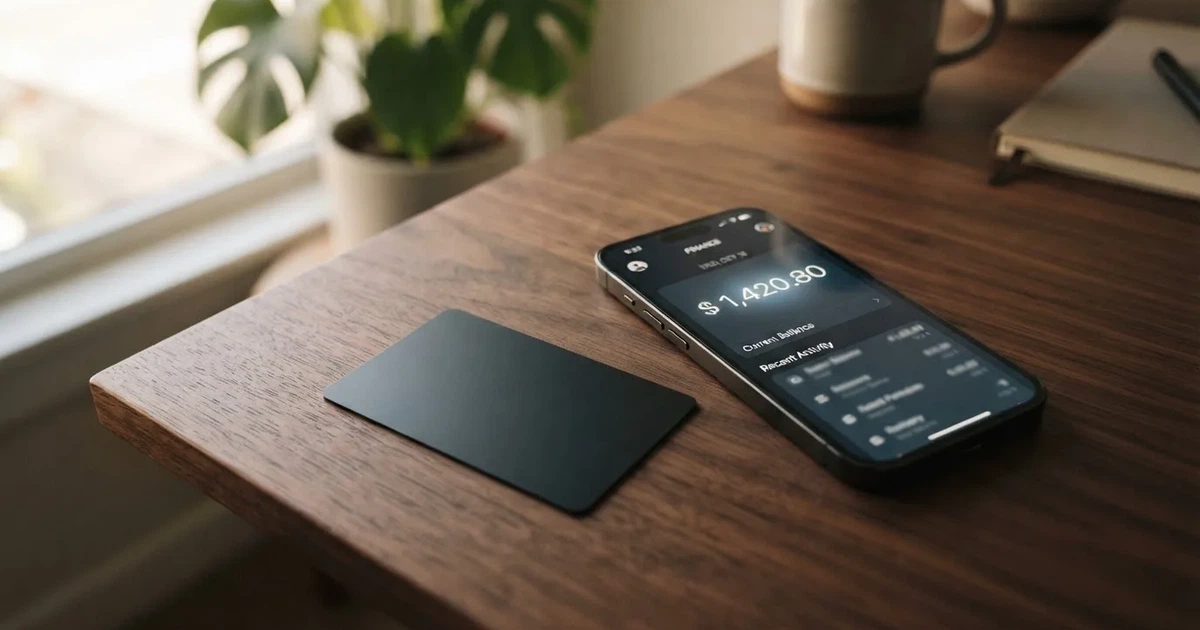
The conditions described here are current as of October 28, 2026.
Verdict
The Xapo Bank card scores 5.8 out of 10 overall. That average hides a very lopsided picture: the card is
excellent at the narrow job of spending crypto-linked balances abroad and poor at everything else a card
is expected to do for free. If you spend thousands of dollars a month in foreign currencies, the no-markup
promise has real value. If you are looking for a debit card to buy groceries with, a $1,000 annual fee is
the entire conversation.
| Criterion | Mark | Why |
|---|---|---|
| Who can get it | 7 / 10 | No country list on the terms; unofficial sources point to 50 listed countries including the UK, Canada, Germany, Japan and Singapore, and 28 restricted ones including the US |
| Cost | 2 / 10 | Membership USD 1,000 a year with a 30-day refund; metal card free, “no FX fees and no hidden markups”, ATM “2% of the withdrawal amount” above USD 100 a month |
| Top-up options | 6 / 10 | The card spends the Xapo account balance; USDC and USDT convert to USD, plus SWIFT, ACH, SEPA, Faster Payments and Bitcoin over Lightning |
| Reliability and complaints | 7 / 10 | Xapo Bank in Gibraltar, Gibraltar FSC permission as a credit institution, USD deposits covered up to GBP 120,000; Trustpilot 3.9 out of 5 across 1,141 reviews with 31% one-star |
| Everyday use | 8 / 10 | Metal, standard and virtual debit cards, ATMs in 100+ countries; Apple Pay and Google Pay not disclosed |
| Total | 5.8 / 10 | Strong card mechanics, pricing that only makes sense at high volume |
Who this suits: you already hold or intend to hold money at Xapo, you pay in more than one currency, and you
treat the $1,000 as the price of a premium relationship rather than the price of a card. Who it does not
suit: almost anyone whose main need is an everyday card, a first card, or a way to avoid friction at the
checkout. There is also a category of person for whom this is close to unusable — anyone in a restricted
jurisdiction, and anyone unwilling to hand over identity documents to a custodial bank.
One more thing worth saying plainly: this is a real bank, not a crypto startup with a plastic gimmick. It is
incorporated in Gibraltar and regulated by the Gibraltar Financial Services Commission with Permission
No. 23171 as a credit institution, and there is a separate entity, Xapo VASP Limited, with DLT provider
Permission No. 26061. Whether that matters to you depends on where you live and what you are protecting
against — but it is a different category of counterparty from most of the cards people compare this with.
Will they give you the card
The honest answer is that the card’s public terms do not tell you, and that gap is itself information.
The card terms are titled “Cards Issued Outside Europe Region”, which tells you the document covers
non-European issuance. But the country list is not stated on the card terms or on the Transact page.
Citizenship versus residence is also not stated: you cannot tell from the public pages whether the rule
follows your passport, your address, or both. And two thresholds matter more than the list itself. Xapo may
refuse to issue a card at its own discretion, and anyone who has previously had an account suspended cannot
order one.
What is floating around on third-party sites is a picture of roughly 50 listed countries — the UK, Canada,
Germany, Japan and Singapore among them — alongside 28 restricted countries and jurisdictions including the
United States, Russia and Ukraine, with eligibility judged by residence. That last part is the useful clue:
another unofficial source says the card reaches more than 100 countries but excludes US residents and US
passport holders, which again suggests citizenship counts, not just address. Take all of this as unofficial
and not confirmed by the card. The list changed on at least one of those sites as recently as August 2026.
What this means for you: if you are in the United States, on a US passport, or in a restricted
jurisdiction, assume you are out until the bank tells you otherwise in writing. If you are anywhere else,
assume you are probably in — but do not plan a move around it, because a discretionary refusal can be made
at any time, not only at signup.
How to get it
You need a Xapo account first; the card is linked to it, so there is no separate application. On the card
side the requirements are short: you must be at least 18, and verification means a valid passport or
national ID, personal details confirming both identity and residence, and a real-time photo or short video
taken in the app. That is the standard identity check every regulated bank runs, and it is not negotiable
in the sense that no amount of explaining replaces it.
What is not stated is almost as important as what is. The card terms do not specify which KYC documents are
accepted or what proof of address means in practice. There are no named tiers, no published processing
time, and no published list of rejection reasons. If your case is unusual — a recent address change, a
second nationality, a residence in a place with weak document coverage — you are in the part of the process
the bank has not documented.
On delivery, one rule is firm: cards go only to the verified address. An alternative address is at your
own risk and not guaranteed. Countries served, delivery time and delivery cost are not stated. Replacements are
where the first concrete number appears: one additional replacement card within a calendar year costs
USD 25, and other lost, stolen or damaged re-issue fees “may apply”, with the amounts sitting in a Fees
Information Sheet that is not part of what I could read. Unofficial sources describe physical delivery as
varying by region, an emergency replacement at $100 plus address-dependent shipping, and the first
replacement each year free — the same USD 25 figure, framed differently.
So the honest summary is: the process is ordinary, the sequence is short, and the details that would let you
predict your own outcome are the ones the bank has not published.
Fees: what it really costs
Here is where the card is honest and where it is expensive, and you need both halves of that sentence.

Membership is USD 1,000 a year, with a full refund available within 30 days. That refund window is
genuinely useful: it is effectively a month-long free trial, and if the product does not work for you the
downside is bounded. After that, you have paid a thousand dollars for the privilege of spending money you
already had. The metal card itself is currently free to order, and there is a single membership with no
named tiers — metal, standard and virtual debit cards are all included.
| Fee or limit | What it is |
|---|---|
| Membership | USD 1,000 per year, 30-day full refund |
| Card issuance | Metal card currently free to order |
| Replacement card | USD 25 for an additional replacement within a calendar year; other re-issue fees may apply |
| Foreign exchange | “no FX fees and no hidden markups” |
| Bitcoin spending | “no fees and competitive spreads” |
| ATM withdrawal | “2% of the withdrawal amount” above USD 100 per month; ATM operator fees may apply |
| Monthly spending and withdrawal limits | Default limits exist, adjustable in the app; amounts not stated |
| Currencies held | USD, GBP, EUR plus Bitcoin; each payment can draw from the USD or Bitcoin balance |
Now, three ordinary payments, because the structure of the fees only becomes clear when you follow money
through it.
A coffee in a country where you hold the local balance costs you exactly the price of the coffee. If you
hold USD and buy in EUR, the payment is converted and debited from your balance at no FX fee and no
markup. This is the case the card is built for. What you must do is refuse the merchant’s offer to charge
you in dollars instead — dynamic currency conversion is discouraged by the bank, and it is the single
easiest way to give away the exact advantage you are paying $1,000 for.
An ATM withdrawal of USD 60 is inside the free allowance. A withdrawal of USD 200 in one month costs you 2%
of the withdrawal amount, and the ATM operator may add their own fee on top. So cash is where the pricing
model stops being flattering, and it stops being flattering in a way that quietly affects anyone who travels
with cash habits.
A payment funded from Bitcoin spends the Bitcoin balance at “no fees and competitive spreads”. This is not
“free” in the sense of costless — there is a spread — and it is not free of the tax question at the end of
this review. It is cheap relative to a typical exchange, which is the fair comparison, and it is the reason
the card exists at all.
Two limits deserve your attention even though the numbers are not published. Default monthly spending and
withdrawal limits exist and can be adjusted in the app, but the amounts appear only in the app — so if your
plan depends on a specific ceiling, you will have to check it yourself after signing up. And some merchant
categories are blocked: the bank blocks a list of merchant category codes it does not publish, so recurring
pre-authorised payments, self-service petrol pumps and cash-like transactions may be declined. If you pay for
fuel by tapping at an unattended pump, or if a subscription is billed from an unusual merchant code, that is
a realistic friction point rather than a theoretical one.
How to top it up
The card spends the Xapo account balance and nothing else. There is no separate card balance to load, which
is simpler than it sounds: whatever is in the account is what the card can spend.
You have two broad routes. You can deposit fiat, and you can deposit crypto.
For fiat, the rails are SWIFT, ACH and RTP/FedACH for USD, Faster Payments for GBP, and SEPA for EUR. For
crypto, the stated path is stablecoins — USDC and USDT — which are automatically converted to USD when they
arrive. Bitcoin goes in over Lightning, and Lightning is also listed as a withdrawal route.
The deposit fee and the minimum top-up amount are not stated, which matters if you are planning to move
small sums around. And the general caution applies with extra force for stablecoins: transfers on
blockchains are irreversible. Sending on a network the provider does not support, or to an address belonging
to a different network, can mean the money is gone or needs manual recovery with no guarantee. A
“USDC over TRC20” deposit in particular is not a native option, since the issuer stopped supporting USDC on
that network in February 2024. Check the deposit screen before you send, not after.
Withdrawals go back out the same way — SWIFT, ACH, Faster Payments, SEPA and Lightning — but the withdrawal
fees are not published either. Closing your account cancels the card; the card can also be cancelled on its
own; and what happens to a remaining balance at closure is not stated. One thing is stated plainly and is
worth reading: Xapo may end the agreement with two months’ written notice. That is the single most useful
line in the withdrawal paragraph, because it tells you how much runway you have to move money out if you ever
decide to leave.
Paying with it every day
You can hold USD, GBP, EUR and Bitcoin, and each payment can draw from either the USD balance or the Bitcoin
balance. That flexibility is the card’s real daily advantage: it behaves like an ordinary multi-currency card
until you decide to spend bitcoin instead, at which point it behaves like a crypto wallet with a chip on it.
Three card formats are included with membership — metal, standard and virtual — and Visa terms apply to
non-European cards, though the network is not named on the Transact page. ATMs work in 100+ countries. Some
merchant categories are blocked through a list of MCCs the bank does not publish. Apple Pay and Google Pay are
not disclosed either way, which I read as “not documented” rather than “not supported”: the card is a
physical object with a number on it, and tokenised mobile wallets are the normal way people pay today, so if
phone payment matters to you, treat it as an open question to raise before you pay the $1,000.
On cashback, do not build a plan around it. From 1 July 2026 general everyday cashback was replaced by
targeted campaigns, the first being 3% in Bitcoin on taxi and rideshare spending from 1 July to 31 October
2026, requiring an active metal card, and with cashback stated to apply to selected spending only. No general
cashback rate is stated. This is a campaign, not a product feature.
There is a separate money offer worth knowing about if you hold a balance: an introductory rate of 4.6% per
annum on the first $100,000 in USD Savings for 90 days, for members paying between 22 September and
23 November 2026. If you are considering the membership mainly for the interest rather than the card, that is
the number to look at — and if you read this after 23 November 2026, check whether the offer still exists,
because as described it was time-limited.
The app is one app for iOS and Android, running 24/7, with freeze and unfreeze controls in it. Store
ratings were not retrieved, so I cannot tell you what users rate it. Refunds are stated to usually take up to
10 business days, and if a refund arrives in a currency you do not hold it is converted at the
payment-system rate, with Xapo not liable for losses from that conversion — which is a small line that can
matter more than it sounds. The terms give no dispute or chargeback timeframes at all.
What can go wrong
No official incidents came up in my checks. That is worth something, but it is worth what it is: an absence
of found incidents, not a guarantee.
What is real is the user record. On Trustpilot, Xapo Bank sits at 3.9 out of 5 across 1,141 reviews as of
20 October 2026, with 31% of those reviews at one star. The themes repeat: account freezes and closures
reported in November 2025 and again in July and August 2026; users unable to withdraw or close in August
2026, and a $1,000 annual fee not refunded in July 2026; slow compliance reviews, one reportedly running
seven weeks between June and August 2026; high fees; and templated support. There is praise for support in
the same mix. A one-star review calls the bank fraudulent over a year of failed transactions. On Reddit
r/CryptoHelp, a 2025 post reports an unresolved identity verification problem of more than three years with
unresponsive support.
Read that pattern carefully, because it is the pattern that should shape your decision. It is not a story
about theft. It is a story about onboarding and compliance friction — accounts held while reviews run,
balances that cannot be moved out, fees not refunded — landing on a customer who has already committed
$1,000 and, in the savings case, is relying on the bank to return it. This is what a custodial setup means
practically: the party who holds your key decides when you get your money.
Which is why the 30-day refund window deserves to be treated as the deadline it is. If you are not convinced
within 30 days, that is the cheapest exit you will ever get.
On safety specifically. This is a custodial bank in Gibraltar: the bank holds the credentials, so you are
trusting the bank completely with anything you deposit. The protections on offer are freeze and unfreeze in
the app, “bank-grade security” and fraud monitoring, with PCI DSS, SOC 2 Type II and SOC 3 certifications
listed; 2FA is not mentioned in the card terms. USD deposits are covered by the Gibraltar Deposit Guarantee
Scheme up to the USD equivalent of GBP 120,000. Bitcoin and crypto are not covered — that is the single
largest gap between what people assume and what they have, and it is not a small one. Support runs through
the app or customersupport.xapo.com, with a contact page, a dedicated Relationship Manager and a complaint
page. A dedicated Relationship Manager is arguably the real product: you are paying $1,000 a year for a bank
that knows your name.
Nothing here is a recommendation to hold more than you are comfortable having held for you. It is a
description of where the risks sit so you can weigh them.
What to take instead
The alternatives below are not all worse cards — they are different trade-offs, and several of them cost
nothing. My scores: Xapo Bank 5.8, RedotPay 6.9, Bitpanda 6.5, Wirex 6.7.
| Card | Score | Who it fits | Main catch |
|---|---|---|---|
| Xapo Bank | 5.8 / 10 | Premium banking clients holding USD, EUR and Bitcoin | $1,000 a year in membership |
| RedotPay | 6.9 / 10 | Users in supported regions wanting virtual plus physical cards | Long restricted-country list; 1.00% transaction fee, 1.20% in a non-default currency |
| Bitpanda | 6.5 / 10 | Euro-area residents spending from a chosen asset | EUR card only; VISA mark-up fees apply on non-EUR |
| Wirex | 6.7 / 10 | Multi-region users wanting cash, stablecoin and crypto spending | Metal card order fee 45 GBP in the UK, “only 45 EUR” elsewhere; region-dependent availability |
RedotPay is the most directly comparable alternative, and on paper it is cheaper for almost everyone.
Virtual and physical cards, Visa debit in the Singapore terms. Virtual card application 10.00 USD, physical
100.00 USD and not refundable once paid, virtual replacement 5.00 USD for the first and 10.00 USD each after.
Account maintenance is waived — no monthly or annual fee. But the transaction fee is 1.00% and 1.20% when
you pay in a non-default currency, which is precisely the use case where Xapo claims to charge nothing; small
authorisations and declined transactions attract their own small charges after free allowances. Its KYC list
is long and bluntly worded: citizens of the listed countries “will not be able to complete identity
verification (KYC) or use RedotPay’s services”, with restrictions “based on local regulations and sanction
policies—not on individuals”. A separate card-issuance list dated 28 August 2026, covering 47 places, adds
India, Indonesia, Morocco, Nepal, Singapore and Turkey as residents ineligible for both virtual and physical
cards and unusable as billing addresses. Notably, Georgia, Armenia, Kazakhstan and the UAE appear on
neither list. Funding is on-chain crypto, or buying crypto by credit card in the app; deposit to the card
balance is free. A 5 USD welcome reward is usable only on spending and valid 30 days, and cannot be applied
to the issuance fee.
Bitpanda is the calmest option for a euro-area resident, and the least adventurous. It requires a
verified account and residence in a euro-area country, and users verified via “Bankident” cannot order.
Physical Visa debit card, EUR only, one active card at a time. Account opening and monthly costs are free,
first shipment is free, reissue is EUR 5.90 (EUR 9.90 for lost or stolen) and each additional card is
EUR 10. On non-EUR payments the FX fee is EUR 0 but “VISA mark-up fees apply”, so the headline saving is
smaller than it looks. Spending draws from a chosen main asset and an optional fallback — listed
cryptocurrencies, precious metals or EUR — converted to EUR at payment, minimum payment EUR 1, with Crypto
Indices excluded. The rewards page contradicts itself: the body says 1% cashback on crypto spending, the
summary says “up to 2%”, with fiat, stocks, metals and stablecoins excluded.
Wirex spreads itself widest: “Worldwide (130+ countries)” on the homepage, though physical and virtual
availability “depends on your region”, and fees published separately for the UK, EEA, APAC, Singapore,
Australia and “Other”. One physical and one virtual card at a time; the metal card is a Visa Signature debit
card in the Singapore terms. Card issuance is free in the listed regions, but the metal card costs 45 GBP on
the UK page with free DHL Express and “only 45 EUR” as a delivery fee elsewhere. Spending can use cash,
stablecoins and cryptocurrencies; fiat deposits by SEPA, Faster Payments, ACH and PIX are free. The FX fee is
not specified on the fee page — rates are shown in the app before you confirm — while the card page claims no
foreign exchange fee. Cashback is paid in the platform’s own token: 0.5% Standard, 3% Premium, up to 8% Elite,
with ATM withdrawals, cash advances, crypto purchases, gambling and refunds excluded. Singapore terms are
unusually restrictive: cash withdrawals “are not permitted in Singapore”, and the residence country you enter
must match your ID.
My own read: if your problem is “I cannot get an ordinary card”, a plain prepaid or virtual card from a
mainstream provider will probably serve you for a fraction of the price, and Bitpanda or Wirex will do it
without the membership. Xapo Bank’s case is specifically the combination of a custodial balance, a real bank
licence, a deposit guarantee on fiat, and no FX markup — and a Relationship Manager. If all four of those
matter to you, the $1,000 has something to do with. If only the last one matters, look cheaper first.
Who I would recommend it to
I would recommend it to exactly three kinds of person, and I would steer everyone else away.
First, you already have a relationship with Xapo. You hold or expect to hold USD, EUR and Bitcoin there,
the savings rate is live on your balance, and you use the app anyway. Then the $1,000 buys a Relationship
Manager, a metal card with no FX markup and a deposit guarantee on your fiat — a bundle you are not
assembling from scratch.
Second, you travel and spend heavily in multiple currencies, and you have measured what markup a normal
card costs you on that spending. If the arithmetic works, it works. The no-markup promise is the whole
product; if your spending does not justify it, nothing else here will.
Third, you are comfortable with a custodial counterparty. You understand that the bank holds the keys, that
BTC and crypto deposits sit outside the GBP 120,000 deposit guarantee, that accounts can be frozen during
compliance review, and that you are trusting a Gibraltar-incorporated institution with the timing of your
money. That is a legitimate position — plenty of people bank this way already. It just should be a
considered one, made with open eyes.
And my caution, in one place: the complaints record is not about theft, it is about accounts stuck while
reviews run and balances that could not be withdrawn. The 30-day refund window is the only cheap exit
anyone here ever gets. Give it the full month, set yourself a reminder to use it, and decide then — not
after two failed payments in a country where you needed the card.
Before you pay, check three things yourself: whether your country and passport are eligible, what the ATM
and conversion actually cost at your own spending volume, and whether the balance you would hold is mostly
fiat (covered) or mostly crypto (not covered). Those three answers settle most of the decision.
Frequently asked questions
What is the Xapo Bank card?
It is a Visa debit card — metal, standard or virtual — that spends the balance of your Xapo account rather
than a bank account elsewhere. Membership costs USD 1,000 a year with a 30-day full refund, and the metal
card is currently free to order. You can hold USD, GBP, EUR and Bitcoin, and each payment draws from your
USD or Bitcoin balance. It is issued by Xapo Bank, a Gibraltar-incorporated bank.
Is Xapo Bank actually a bank, and who owns it?
Xapo Bank is incorporated in Gibraltar, Company No. 111928, at 2 Irish Town, Gibraltar GX11 1AA, and is
regulated by the Gibraltar Financial Services Commission with Permission No. 23171 as a credit institution
under the Financial Services Act 2019. The crypto side sits with a separate entity, Xapo VASP Limited, as
a DLT provider with Permission No. 26061. So yes — it is a regulated bank, not a marketing label.
How much does the Xapo Bank card cost a year?
Membership is USD 1,000 per year, refundable in full within 30 days. The metal card itself is currently
free to order, there is no monthly fee, no FX fee and no hidden markup on foreign spending. A replacement
card within a calendar year is USD 25. ATMs charge 2% of the withdrawal amount above USD 100 per month, on
top of any operator fee.
How do I top up the card, and what does it spend?
The card spends the balance of your Xapo account only — there is no separate card balance to load. You can
send USD by SWIFT, ACH or RTP/FedACH, GBP by Faster Payments, EUR by SEPA. USDC and USDT deposits are
converted to USD automatically, and Bitcoin goes in over Lightning. Deposit fees and minimum top-up
amounts are not stated on the public pages.
Can I use the Xapo Bank card in my country?
The card terms and Transact page do not state a country list, which is the main frustration here. Unofficial
sources, not confirmed by the card, point to about 50 listed countries including the UK, Canada, Germany,
Japan and Singapore, and 28 restricted ones including the United States, Russia and Ukraine, judged by
residence. Another source says more than 100 countries except US residents and US passport holders.
Does the Xapo Bank card work with Apple Pay and Google Pay?
The card’s public pages do not say. Apple Pay and Google Pay are simply not disclosed, and I would read that
as undocumented rather than unsupported — tokenised mobile wallets work on most modern Visa debit cards, but
I would not want you to find out after paying $1,000. There is one app for iOS and Android, running 24/7,
with card freeze and unfreeze controls inside it.
Is the Xapo Bank card safe?
The fiat side is protected: this is a custodial bank in Gibraltar, and USD deposits are covered by the
Gibraltar Deposit Guarantee Scheme up to the USD equivalent of GBP 120,000. Bitcoin and crypto are not
covered by that scheme — that is the gap to hold in mind. Listed certifications are PCI DSS, SOC 2 Type II
and SOC 3; 2FA is not mentioned in the card terms. Freeze, spending limits and fraud monitoring are
available in the app.
What have people complained about?
Trustpilot shows 3.9 out of 5 from 1,141 reviews, with 31% at one star. The recurring themes are account
freezes and closures, being unable to withdraw or close an account, a $1,000 annual fee not refunded, slow
compliance reviews — one reportedly seven weeks — high fees and templated support. There is also praise for
support in the same mix. No official incidents came up in my checks, but that is an absence of findings.
Is Xapo Bank worth $1,000 a year?
If you already hold money at Xapo, spend heavily in more than one currency, and treat the fee as the price
of a premium banking relationship with a dedicated Relationship Manager, then yes — the no-FX-markup and
deposit-guarantee combination is real. If you want an everyday card for groceries and fuel, it is a
thousand dollars for something a prepaid card does far cheaper. Use the 30-day refund window as a free trial
and give it the full month.
What happens to my money if I close the account?
Closing the account cancels the card, and the card can also be cancelled separately. What happens to a
remaining balance at closure is not stated on the public pages, which is the detail to ask about before you
ever get there. One thing is clear: Xapo may end the agreement with two months’ written notice, so you
have runway to move funds out if it ever happens.
App and neobank cards – cryptocardchooser.com
Content created by the «cryptocardchooser.com» team