
A $2 virtual USD Visa card that spends straight from your crypto balance — and leaves a lot unsaid
 Available in US
Busha looks, on paper, like a small clean proposition: a virtual Visa card denominated in US dollars, spendable directly from balances of USD, USDT and USDC sitting in your Busha wallet, with a one-off card creation fee of $2 and, in the company’s own words, “no funding fees or maintenance fees”. If that is the job you need — pay online with stablecoins you already hold, without opening a bank account you cannot open — the pitch is genuinely appealing.
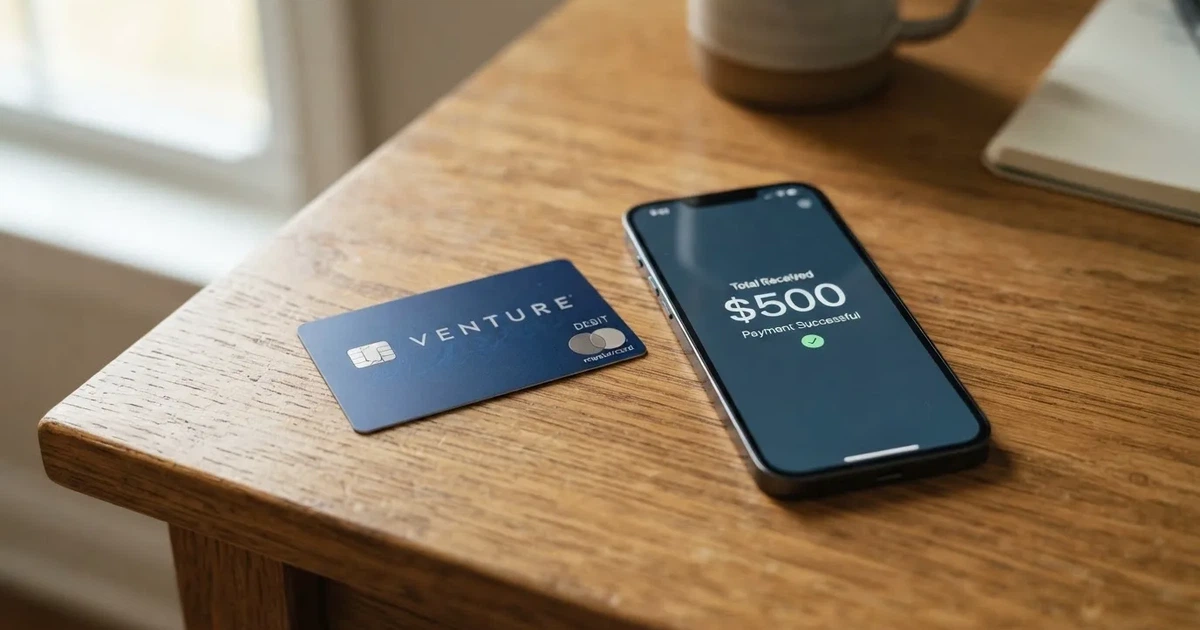
But when I go through the card’s own public pages with the questions a real applicant would ask, a lot of the picture is missing. The card’s public pages do not say which countries it accepts applications from, what the conversion or foreign-exchange fee is, what the spending limits are, or which identity documents you need. The card is virtual only, so there is no plastic in your hand, and Apple Pay and Google Pay are not supported. Those are not disqualifying on their own — a virtual card for online payments is a normal thing — but they narrow who this is really for.
My score for the Busha card is 4.8 out of 10. That is an average, not a verdict of “bad”. The cost side genuinely scores well. Almost everything else is held back by missing information rather than by anything I found going wrong. Read on and I will show you exactly which parts score well, which parts are just unclear, and what questions to ask before you commit money.
The conditions described on this page are current as of October 28, 2026.
| Criterion | Mark | Why |
|---|---|---|
| Who can get it | 2 / 10 | Countries not named; Busha entities exist in Nigeria, Kenya and Ghana; unofficial sources point to Nigeria, Ghana and Kenya |
| Cost | 8 / 10 | $2 card creation once, no funding or maintenance fees; FX fee not disclosed |
| Top-up options | 5 / 10 | Spending from USD, USDT and USDC wallet balances; networks not named |
| Reliability and complaints | 6 / 10 | Busha Digital Limited, licensed by SEC Nigeria as a Digital Asset Exchange; issuer not named; unofficial Trustpilot 3.5–3.8 of 5 from 16–17 reviews, slow withdrawals and support |
| Everyday use | 2 / 10 | Virtual Visa only; Apple Pay and Google Pay not supported; unofficial reports say no ATMs |
| Total | 4.8 / 10 |
Who this card is for, and who it is not for
The honest answer is that Busha is aimed at Nigerian, Ghanaian and Kenyan residents who already hold stablecoins and want to spend them online in dollars. That is the crowd the product fits — not people in Europe or the US, and not people who want a card in their pocket.
Before anything else, you need to know the eligibility rule is not published. The card’s own material does not name any country. What it says is that applicants “complete the eligibility questions” — which tells you a check exists, not what it checks. Busha as a company has entities in Nigeria, Kenya and Ghana, and the card does not support naira payments, so the card itself is a dollar card rather than a local-currency one.
Third-party reporting, which the card has not confirmed, says the card is available to applicants in Nigeria, Ghana and Kenya aged 18 or over with a verified Busha account. I treat that as a strong hint rather than a rule, because it comes from outside the company and may lag or lead the actual policy. If you are outside those three countries, my advice is not to assume you are eligible and not to assume you are not — just ask Busha before you spend time on the form.
Who it suits:
- You hold USDT or USDC and want to spend it at merchants that take international USD cards online.
- You live in a place where an ordinary bank card is awkward to get or inconvenient to use.
- You are comfortable holding your crypto on a custodial platform rather than in your own wallet.
- You do not need cash from ATMs, a physical card, or a phone wallet.
Who it does not suit:
- Anyone outside the company’s likely three markets who is guessing whether they can apply.
- Anyone who needs a physical card, or who pays in shops by tapping a phone.
- Anyone who plans to hold a balance on this card for a long time and wants the fees spelled out.
- Anyone who wants to hold their own keys — Busha is a custodial wallet, so the platform holds the credentials.
Will they give you the card
The short answer: probably yes if you are in the right country and pass identity checks, but the card’s public pages do not actually spell out the entry conditions, so you cannot self-assess with confidence.
What is stated: countries are not specified, and the application route is that you answer eligibility questions. What that leaves open is most of what you would want to know. Documents required, proof of address, minimum age — none of it is stated on the pages I could read.
There is more company substance here than the missing documentation suggests. Busha Digital Limited is registered in Nigeria (reg. 1495049) with a Kenya registration (PVT-GYUQJAEL), and Busha Digital Ltd is registered in Ghana (CS-182631123). The company is licensed by the SEC Nigeria as a Digital Asset Exchange, and it has data-protection registrations in Kenya (ODPC 15965), Ghana and Nigeria. What is not named is the card issuer — the bank or e-money institution that actually stands behind the Visa BIN and holds your card balance. That distinction matters more than it sounds, and I will come back to it in the risk section.
One card is virtual only, on Visa, denominated in US dollars — the card describes itself as a “stablecoin-backed virtual USD Visa card”. You can hold up to four cards, each with a custom name and colour. There is no physical card: the virtual one is issued “within minutes” after approval and after you pay the $2 fee.
Verification levels do exist. A Busha help-centre article titled “Verification Levels and Limits” describes a Nigerian naira scheme with three tiers: Level 1 allows deposits only, with no withdrawals; Level 2 allows up to NGN 10,000,000 per month in deposits and withdrawals; Level 3 allows up to NGN 500,000,000 per month. Which level you need for the card specifically, which documents each tier requires, how long processing takes, and why a verification can be refused — none of that is stated.
There is also an anti-money-laundering and KYC policy and an ID verification article, but neither was readable, so I cannot tell you what you will be asked for.
How to get it
Practically, the sequence is short: answer the eligibility questions, accept the Card Terms, pass identity verification, pay the $2 creation fee, and the virtual card appears “within minutes” of approval. Note what is missing from that list — I cannot tell you how long verification takes or how often it fails, because the card’s public pages do not say. The Card Terms themselves are referenced but not linked from the post I could read, which is worth chasing before you apply: they are the document that would tell you about disputes, refunds and closing an account.
Two warnings before you start. First, spend an afternoon on the eligibility questions and get a clear yes or no from Busha’s support if you are anywhere near the border of eligibility — do not upload identity documents to find out. Second, remember what you are agreeing to: you are opening an account with a custodial exchange, not simply buying a card.
Fees and what a payment really costs
The headline cost is friendly: a one-time $2 card creation fee, and “no funding fees or maintenance fees”. By the standards of this category, that is a genuinely cheap card to hold. The catch is that this is where the published information runs out, so let me show you what is known and what is not.
| Fee or limit | What the card’s public pages say |
|---|---|
| Card creation | $2, one time |
| Monthly or maintenance fee | “No funding fees or maintenance fees” |
| Crypto conversion fee | not stated |
| Foreign exchange fee | not stated |
| ATM fees | not stated (virtual card) |
| Spending limits | not stated (no caps listed) |
| Card currency | USD only; naira payments not supported |
Now let me walk through three everyday payments, because that is where the missing numbers would bite you.
Paying a USD-denominated online subscription in dollars. This is the case the card is built for. A Visa card paying international USD, from a balance that is already in dollars or in a dollar-pegged stablecoin. The published fee picture is the good one: no maintenance, no funding fee, $2 once. But the conversion fee is not stated, so if your balance sits in USDT or USDC rather than plain USD, I cannot tell you what the exchange costs you or what rate you get. That is the single most important number for you to get an answer to before you lean on this card.
Paying a European or British merchant in euros or pounds. Here the picture gets thin fast. The card works “wherever Visa supports international USD payments”, and any payment in another currency is by definition a conversion. The card’s public pages do not state the FX fee, and third-party reporting that claims there are no annual, monthly, transaction or foreign transaction fees conflicts directly with the card’s own published fee description, so I would not plan on a zero-FX card. Assume there is a markup and ask what it is. If you pay in another currency a lot, this is where a card with a published FX fee starts to look better.
Paying anything in Nigerian naira, or taking cash out. Neither works as far as the published information goes. Naira payments are not supported. And while ATM fees are technically “not stated”, the reason is that the card is virtual — third-party reporting says there are no ATM withdrawals and no cash advances, which matches what a card with no physical or virtual ATM capability would do in practice. If you need cash, this is the wrong card.
One more cost that is not the card provider’s, but is easy to forget: the network fee for moving crypto into your wallet. On-chain gas is charged by the blockchain, not by Busha, so a top-up from your own wallet can cost more than the $2 you paid for the card.
How to top up
The mechanism is simple in principle: you hold USD, USDT and USDC in the Busha wallet, and the card spends from those balances. The card’s post says “Busha Card currently supports spending from USD, USDT, and USDC balances” and repeats that there are no funding fees and no maintenance fees.
What is not stated is the part that actually decides whether a top-up works: which networks are supported. If you hold USDT on Tron and send it over a network Busha does not support, the transfer can be lost, or you can end up in a support queue with no guarantee of recovery. This is the most common way people lose money with cards like this, and it is entirely avoidable by asking one question first: which networks and which deposit addresses should I use for USDT and for USDC? Then send a small test amount before sending anything you would miss.
The minimum top-up and any network fee for deposits are not stated for the current card. A 2022 post for the earlier USDC-based card gave a minimum of 2 USDC and a maximum of 5,000 USDC per funding, with up to 10,000 USDC held per card — but that was a different product, and I would not treat those figures as current.
Moving money back out is the other gap. The current post does not describe how to withdraw a card balance or how to close a card, and the Card Terms are not linked. So before you load anything meaningful, find out what the exit looks like.
Paying with it every day
Day-to-day, this is a narrow but workable tool. It is a virtual Visa, it works online wherever international USD Visa payments are accepted, and it cannot overdraw because it spends a balance you already hold.
What you give up is the stuff most people use a card for. Apple Pay and Google Pay are “not currently supported”, so you cannot add the card to your phone’s wallet. No physical card means no contactless taps in shops, no card-in-hand situations, and no ATM. Blocked merchant categories are not stated — gambling and similar codes are blocked by policy at many issuers rather than by law, and the list varies by issuer, so I cannot tell you what Busha blocks.
App quality is the one bright spot in this section. There is a Busha app on iOS and Android. Its App Store Nigeria listing shows 4.6 out of 5 from 5.4K ratings, and Bush’s own site cites 4.6 on the App Store (5k+) and 4.5 on Google Play (11k+). Those are decent numbers for a regional app, and the app is where you would manage the card, freeze it, and watch balances.
Two everyday features people ask me about are absent from what I could read: no cashback or rewards are mentioned for the card, and there are no dispute, chargeback or refund terms in the post. Neither is disqualifying, but if you plan to spend meaningfully you want to know what happens when a payment goes wrong. Also keep in mind the general mechanics: a declined authorisation can leave a hold on your funds for several days, sometimes up to seven, and merchants that decline prepaid or foreign-issued card numbers exist everywhere — which is one reason the virtual-USD-card setup can feel “foreign” to a shop’s risk system.
What can go wrong
Nothing I found suggests Busha is a bad actor. The risks here are mostly about thin information and the ordinary hazards of holding crypto with a platform.
The first is the missing issuer. Busha is licensed by the SEC Nigeria as a Digital Asset Exchange, but the card issuer or BIN sponsor is not named. The company markets and runs the programme; a licensed institution issues the actual card and holds the balance. When something goes wrong — a payment reversed, an account frozen, a programme wind-down — knowing which institution stands behind the card is worth real money, and you cannot find that out from the card’s public pages.
The second is custody. Busha is a custodial exchange wallet, which means Busha holds your keys and you trust them completely. Crypto transfers are typically irreversible, and a stolen key has no recovery built in. Custodial platforms have a history: Mt. Gox (about US$350 million reported stolen 2011–2014), Coincheck (about US$400 million, 2018), and Ronin Network (US$625 million, 2022). Card programmes specifically have shut down too — Visa terminated its agreements with FTX on 13 November 2022 and the FTX US debit card was wound down, and WaveCrest, a card issuer that supplied several crypto brands, was suspended by Visa in Europe in 2018, closing every programme it had issued. Programmes typically give notice, then stop spending and loading, then ask you to withdraw what is left. Ask yourself honestly whether you would be comfortable with that, because it is a normal category event, not an exotic one.
Third, the top-up mistake I mentioned: sending on the wrong network. Blockchain transfers are irreversible, so a deposit to an unsupported network can be gone. Tether also says it disables tokens in wallets on the OFAC sanctions list and has frozen funds tied to illicit activity, so stablecoins are not censorship-proof either.
Fourth, complaints. Officially I found none — a targeted search for Busha card complaints turned up no Busha reviews at all, only unrelated ones. But third-party reporting from May 2026 cites Busha on Trustpilot at roughly 3.5–3.8 out of 5 from about 16–17 reviews, with recurring themes of slow or missing deposits and withdrawals, KYC delays and forced tier upgrades, rate gaps when selling crypto, and slow support. Google Play shows about 4.36. I did not fetch the Trustpilot page itself, and a sample that small is not a verdict — but the pattern it describes, verification friction and slow money movement, is exactly what you would want to weigh before loading a balance.
Fifth, the quiet product-change risk. On 8 July 2022 Busha announced earlier USD virtual cards: USDC-funded, Mastercard, early access, up to 10 cards, “completely free”. The current card is Visa, up to 4 cards, with a $2 creation fee. The product has already changed shape once, and the date of the current Visa card post was not captured. Companies change fees, limits and eligibility. Nothing personal is at risk by assuming this can change.
Card-level security controls — freeze, two-factor authentication, spending caps — are not described in the post, though the site footer mentions an ISMS policy and the help centre has a Security section of eleven articles I did not read. Support runs through a help centre at support.busha.io in English and a contact page. There is no dedicated Busha Card collection in the help centre, which the collections list — KYC, Security, Busha Spend, Busha Business among them — does not include.
What to take instead
If the reason you are here is that fees or access are the problem, Busha is not the only option, and three others publish their numbers more completely. I include their scores for scale, but read the table for the detail.
| Busha | RedotPay | Bitpanda | Wirex | |
|---|---|---|---|---|
| Score | 4.8 / 10 | 6.9 / 10 | 6.5 / 10 | 6.7 / 10 |
| Card | Virtual USD Visa | Virtual and physical, USD and HKD | Physical Visa debit, EUR | Virtual and physical, Visa or Mastercard |
| Cost to you | $2 once | Virtual $10; physical $100 | Opening and monthly free; reissue EUR 5.90 | Free in UK, EEA, APAC, SG, AU |
| Published FX fee | not stated | 1.20% off-default currency; 1.00% transaction fee | EUR 0, but Visa mark-ups apply | Card page says none; fee page does not specify |
| Big gap | eligibility, FX, limits unstated | two official lists word eligibility differently | euro-area residents only | availability depends on region |
RedotPay is the closest in spirit and the most transparent about money. It publishes a 1.00% transaction fee, a 1.20% fee on non-default currency, small-authorisation and declined-transaction charges, and merchant-specific surcharges of 1.5% for a named list of merchants. It offers both virtual and physical cards, in USD and HKD. Its cost is higher at issuance — $10 virtual, $100 physical, non-refundable — plus an optional Pro tier at $12.90 monthly or $129.00 annual. Its weakness is the same shape of problem Busha has: two official pages word the eligibility rule differently, one citizenship-based list of restricted countries and one residence-based list of 47 places where residents are ineligible for cards. You would want to check both.
Bitpanda is the plainest option for Europeans. It requires a verified account and residence in a euro-area country, users verified via Bankident cannot order. You get a physical Visa debit card in euros, one active at a time, with free opening, free monthly cost and a free first shipment. It spends from a chosen asset — listed cryptocurrencies, precious metals or euros — converted to EUR at payment, with a EUR 1 minimum. The non-euro FX fee is EUR 0, but Visa mark-ups apply, and the crypto spread is not stated. It is simply not available to you if you do not live in the euro area.
Wirex is the broadest by reach, with a service area of “Worldwide (130+ countries)” and fees published for the UK, EEA, APAC, Singapore, Australia and “Other”. It gives you a virtual card for online use and a physical card for point of sale and ATMs, one of each at a time, with free issuance in the main regions and a metal Visa Signature debit card at a 45 GBP order fee on the UK page. It spends from cash, stablecoins and cryptocurrencies, and top-ups can come from another Wirex account, another person or a third-party payment provider, with SEPA, Faster Payments, ACH and PIX deposits free. The catch is that availability “depends on your region”, the card currency is not stated, the fee page does not specify an FX fee, and in Singapore cash withdrawals are not permitted and transactions with prohibited countries are barred.
My read: for paying online with stablecoins, RedotPay publishes the costs you need and lets you hold a physical card as well; Busha is cheaper to start and possibly less friction to get. For a euro-area resident with a normal bank account, Bitpanda is the least exotic choice. For reach across many countries, Wirex is the broadest, but its regional variation is the thing to check before you commit.
Who I would recommend it to
I would recommend the Busha card to one specific person: someone living in Nigeria, Ghana or Kenya who already holds USDT or USDC, pays mainly online in dollars, has no workable alternative bank card, and is comfortable with a virtual-only card with no phone-wallet support and a custodial platform behind it. For that person, $2 to get started and no monthly fee is a real improvement on paying fees to an informal channel.
I would not recommend it — and would point at RedotPay or Bitpanda instead — to anyone who pays in local currency, needs cash, needs a physical card, needs Apple Pay or Google Pay, wants to know exactly what the FX and conversion fees are, or holds more money on it than they could comfortably lose while waiting for a slow support reply.
If you do want to try it, the order I would do things in is: confirm you are eligible with support first; get the issuer name and the Card Terms in writing; ask which networks to use for USDT and USDC and send a small test; ask what happens to your balance if you want to close the card; and only then load money. Keep the balance small until you have seen a payment land, and read the fee answers rather than assuming zero.
Frequently asked questions
What is the Busha card?
The Busha card is a virtual Visa card denominated in US dollars, described by the company as a “stablecoin-backed virtual USD Visa card”. It spends directly from balances of USD, USDT and USDC held in your Busha wallet, and there is no physical version. You can hold up to four cards, each with a custom name and colour, created for a one-time $2 fee.
Is Busha a bank?
Not exactly. Busha Digital Limited is a crypto company registered in Nigeria, Kenya and Ghana and licensed by the SEC Nigeria as a Digital Asset Exchange, and the card sits on a custodial exchange wallet. The bank or e-money institution that actually issues the Visa card is not named on the card’s public pages, so the entity that would owe you money if something went wrong is the one detail you should ask about.
Who can apply for a Busha card?
The card’s public pages do not name any countries; they say applicants “complete the eligibility questions”. Busha entities exist in Nigeria, Kenya and Ghana and the card does not support naira payments. Third-party reporting from May 2026 says the card is available to Nigeria, Ghana and Kenya applicants aged 18+ with a verified account — unofficial, and not confirmed by Busha.
What documents do I need to apply for it?
Nobody will tell you from what is published. An AML and KYC policy and an ID verification help article exist but could not be read, and required documents, proof of address and minimum age are not stated. A verification-levels article does describe a Nigerian naira scheme where Level 1 allows deposits only, Level 2 up to NGN 10,000,000 per month, and Level 3 up to NGN 500,000,000 per month.
How much does a Busha card cost?
The card creation fee is $2, once. Busha states there are no funding fees and no maintenance fees. What is not stated is the fee for converting crypto into dollars and the foreign exchange fee, and those two numbers matter far more to your total cost than the $2 does if you pay in anything other than dollars.
Can I use a Busha card in my country?
Only where Visa accepts international USD payments, because the card is USD only and naira payments are not supported. Availability of the card itself depends on the eligibility questions, which Busha does not publish. Because the card is virtual, there is no in-person tap, and third-party reporting says there are no ATM withdrawals or cash advances at all.
Does the Busha card work with Apple Pay or Google Pay?
No. The company’s own post says “Apple Pay, and Google Pay are not currently supported.” There is no tokenised phone-wallet route, so if you mostly pay by tapping your phone, this card does not fit your habit, and RedotPay or a card with mobile-wallet support would be a better starting point.
How do I top up the Busha card?
You hold USD, USDT or USDC in the Busha wallet and the card spends from those balances, with no funding fee. The critical missing detail is which networks are supported, because sending on the wrong network can lose the money outright. Find that out, send a small test first, and check for withdrawal or closure terms before loading more.
Is the Busha card safe?
It has real company substance — registration in three countries and an SEC Nigeria licence — and a solid app rating. But it is custodial, so you are trusting the platform with your crypto, and irreversible transfers mean mistakes cannot be undone. Third-party reporting from May 2026 cites a Trustpilot score around 3.5–3.8 out of 5 from about 16–17 reviews, with slow withdrawals and support delays recurring.
Is the Busha card worth it?
Worth it if you are in Nigeria, Ghana or Kenya, already hold stablecoins, pay online in dollars and lack a normal bank card — $2 to start with no monthly fee is a strong deal for that person. Not worth it if you need a physical card, phone-wallet payments, cash, published FX fees or a clear picture of the rules, and a card like RedotPay with published fees serves those cases better.
App and neobank cards – cryptocardchooser.com
Content created by the «cryptocardchooser.com» team