
A straightforward US Visa debit for spending from your Coinbase balance, weighed up against the trade-offs
 Available in US
The Coinbase card is a Visa prepaid debit card that draws on a Coinbase balance and converts whatever crypto you hold into US dollars at the moment you pay. It is issued in the United States by Pathward, N.A., a Member FDIC bank, and runs on Marqeta’s card platform. There is no annual fee, no Coinbase transaction fee and no foreign transaction fee from the issuer, but a spread applies whenever the card converts your crypto to dollars, and that spread is the cost most users actually feel. The card fits a specific reader well — a US resident who already keeps funds on Coinbase and wants to spend them like cash — and it is a poor fit for almost everyone else, because availability is limited to all US states except Hawaii.
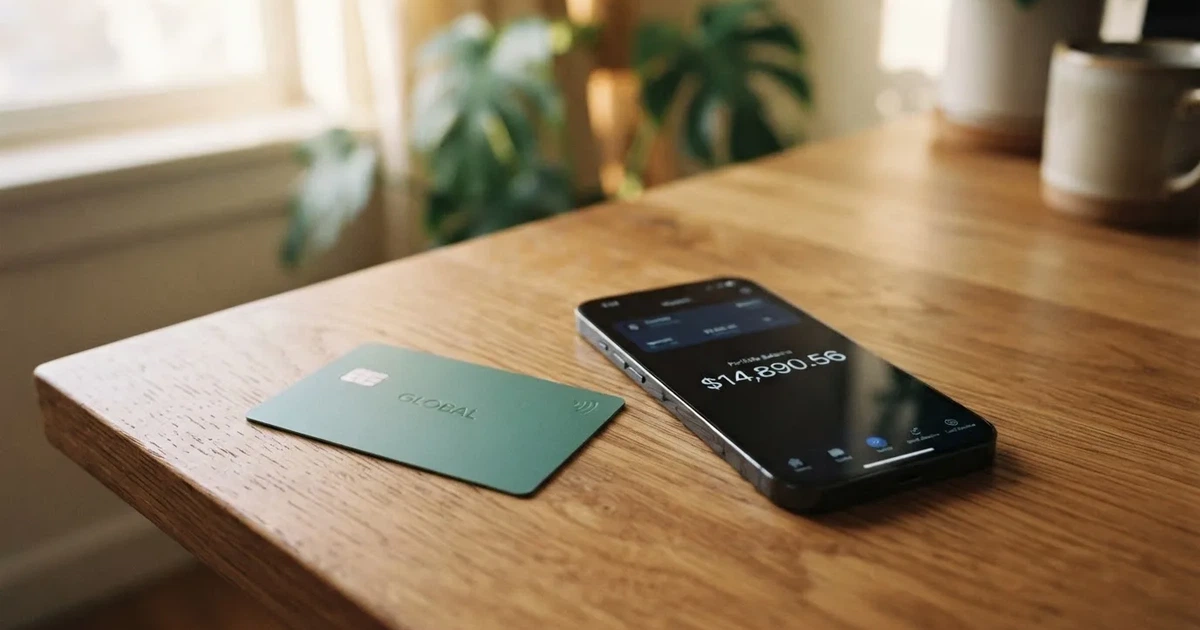
The conditions described here are current as of October 28, 2026.
Verdict
Coinbase earns 6.4 out of 10 in this review. That is a fair score for a US-only prepaid Visa with no spending fees on its face, offset by a thin geographic reach and a cost structure that is harder to read than the marketing suggests.
| Criterion | Mark | Why it lands there |
|---|---|---|
| Who can get it | 4 / 10 | All US states except Hawaii, and no other countries. Tight. |
| Cost | 8 / 10 | No annual fee, no spending fee, no issuer FX fee, no ATM fee from Coinbase, but the conversion spread is the real cost. |
| Top-up options | 4 / 10 | Linked bank account or direct paycheck deposit, both fee-free; the supported coins and networks for converting crypto are not publicly listed. |
| Reliability and complaints | 7 / 10 | Backed by an FDIC-member US bank and a major card platform; Coinbase’s overall Trustpilot score is 4.0 out of 5 from 23,282 reviews, with account-freeze and slow-support themes. |
| Everyday use | 9 / 10 | Virtual or physical Visa, accepted wherever Visa is taken, ATM access, unofficial support for Apple Pay and Google Pay. |
| Total | 6.4 / 10 |
The card is a good fit for US residents who already hold a Coinbase balance and want to spend it in stores, online and at ATMs without a separate on-ramp. It is not a good fit for non-US residents, for users who want a paid-tier rewards structure, or for anyone who needs a card that earns meaningful cashback by default — the crypto rewards rate is variable and user-selected rather than a fixed percentage.
Will they give you the card
The card is offered only inside the United States. Coinbase publishes availability as “all US states except Hawaii”, and there is no list of supported countries beyond the US. If you are not a US resident, this card is not an option through Coinbase.
Eligibility follows the rules of the USA PATRIOT Act and standard US customer-identification rules. Coinbase asks for your name, address, date of birth and other identifying information, and may ask to see your driver’s licence or another identifying document before opening the card account. There is no credit check and no staking requirement. The older cardholder agreement states that the cardholder must be at least 18 years old and either a US citizen or a permanent resident, and that some uses may be limited until identity verification is complete; Coinbase’s current card page does not restate that wording, so the present public line on age and citizenship is what the help center now says.
Because the card is prepaid, the bank running the programme — Pathward, N.A. — is the issuer, and Visa U.S.A. Inc. is the network under whose licence the card is issued. The card programme itself runs on Marqeta’s issuing platform. Coinbase acts as the programme manager, the brand on the front of the card and the custodian of the crypto balance that backs it.
Two practical consequences flow from this. First, eligibility depends on what the issuer will accept, not on what Coinbase alone decides, and an application can be refused or limited at the issuer’s discretion if identity checks fail or risk limits apply. Second, because the bank is US-based and licensed in the US, the card is bound by US rules on customer identification, sanctions screening and account handling. Non-residents cannot simply be issued one by mailing in foreign documents.
How to get it
The sign-up path is short and lives inside the Coinbase app. The standard order is: create or sign in to a Coinbase account, complete the card application, choose a virtual card for instant use, and order the physical card if you want a plastic one for in-store and ATM use. There is no separate application form on a web page — the card is created in-app.
Identity is the only real friction. Coinbase “may also ask to see your driver’s licence or other identifying documents”, and that request is what gates the card. Until verification is complete, your account may be limited in what it can do. There is no credit pull and no requirement to lock up any crypto in staking or in a yield product as a condition of being issued the card.
The card itself is a Visa prepaid debit, available as a virtual card or as a physical card. Both are drawn on the same balance, and both spend dollars — the card does not spend crypto directly. Whenever you tap or insert the card, Coinbase converts the chosen crypto in your balance into US dollars at the moment of payment, and those dollars are what the network authorises. That conversion step is the part of the flow you should care about most, because it is where the cost of the card actually lives.
The card page does not say how long a physical card takes to arrive. The older cardholder agreement notes that there is no fee for a replacement card sent because the card has expired, but the delivery window and any replacement fee for a lost or damaged card are not in the current public wording.
Fees
The headline cost story is clean and the fine print is where it gets interesting. The card page advertises “zero spending fees and no annual fees”, and that much is straightforward — there is no monthly fee, no annual fee and no Coinbase transaction fee when you pay. All other fees are disclosed in the Cardholder Agreement and the User Agreement rather than on the marketing page.

| Fee or limit | What it is |
|---|---|
| Issuance | Not stated on the current card page; older fee schedule lists funding from Coinbase USD Wallet at $0 and a $0 monthly fee. |
| Monthly fee | None. |
| Conversion | No explicit Coinbase fee; a spread applies whenever Coinbase buys, sells or trades crypto to fund the payment. |
| Foreign transaction (issuer) | 0% from the issuer on the older fee schedule. |
| Foreign transaction (Coinbase) | The card page does not state one; the network still converts foreign-currency purchases, and Coinbase reserves the right to charge its own fee (“you may also be charged a fee by Coinbase”). |
| ATM | $0 from Coinbase; the ATM operator may charge its own fee; ATM withdrawals count toward the daily limit. |
| Balance inquiry at ATM | $0 per the older fee schedule. |
| Cash-withdrawal limit | $1,000 per 24 hours and no more than 6 cash withdrawals a day, per the older Combined Terms from 2021. |
| Spending limit | Varies by customer; risk checks may lower it. Find yours in the app under Card > Support > “View spending and ATM limits”. |
To make that concrete, three everyday payments look like this on a Coinbase card. First, a $40 grocery swipe at a US supermarket: the card converts whatever crypto you selected into dollars at the moment of authorisation, and the only cost is the spread between Coinbase’s quoted rate and the market mid-rate. There is no swipe fee, no monthly fee and no fee from Coinbase for the transaction itself. Second, a $60 dinner in a foreign country paid by tapping the card: the issuer charges 0% on the older fee schedule, but the Visa network still converts the foreign currency to dollars, and you take the spread on the crypto conversion at the same time. The double-conversion path is where the all-in cost can creep up. Third, a $200 ATM withdrawal in the US: Coinbase charges $0, the ATM operator may add its own fee, and the withdrawal counts against your $1,000-per-day ATM cap. Older terms also cap the number of ATM and over-the-counter cash withdrawals at six per day.
Two consequences of the spread model are worth carrying away. The first is that the card’s “no transaction fee” line is technically true and practically misleading if you do not know what the spread is: the spread is a hidden fee that the issuer takes inside the rate, and the published rate is what matters more than the published fee. The second is that the older Combined Terms from 2021 set a $1,000 daily cap on ATM and over-the-counter cash withdrawals, with a separate cap of six cash withdrawals per day, and while the current help center says limits vary by customer, those numbers are still useful as a floor for what the card was designed to handle.
Top up
Top-up is where the card is at its most straightforward and its most vague. The card page says funding comes from a linked bank account or from part of a paycheck deposited directly into Coinbase, and both are “zero fees”. The older fee schedule puts a number on it: funding from the Coinbase USD Wallet is $0, and the monthly fee on the card is $0. There is no minimum top-up stated, and there is no on-ramp from arbitrary crypto networks or external wallets — the funding side of the card is built around your existing Coinbase account, not around arbitrary external transfers.
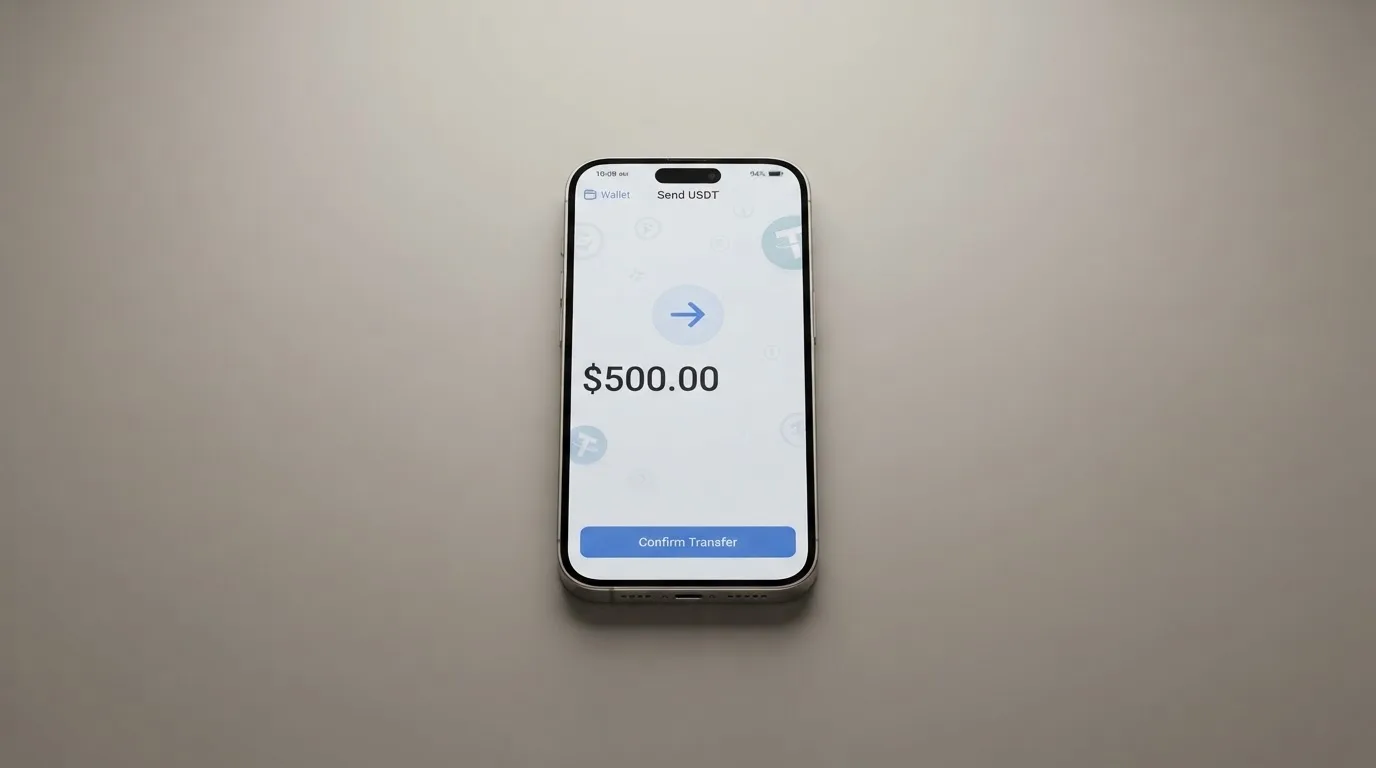
What is not stated is also worth saying once. The public materials do not list which cryptocurrencies you can spend from, which networks are supported for converting into USD, or what the minimum top-up amount is. If you hold a long-tail coin on Coinbase, the card will let you choose it, but the conversion path is undocumented, and that means the rate you get for an unusual coin is harder to verify in advance. If you want to top up from a bank outside the US, the card simply does not support that — the bank account has to be a US one, and the paycheck has to be a US one.
The card has its own “Top up” flow inside the app, and the everyday way to fund it is to keep a working balance in your Coinbase USD wallet. Because the card spends from that balance by converting whatever crypto you select, the practical question is how much you keep in crypto and how much in dollars. Keeping the card’s working balance in dollars removes the conversion step and removes the spread, but it also means you are sitting on dollars that are not earning a yield on the card.
The card page does not state a balance-withdrawal path for cashing out the card balance to a bank account. The older agreement adds a sharp edge: if the cardholder’s address changes to a non-US address, the card may be cancelled and the funds returned. That detail matters if you are a US resident now and expect to move abroad; the older wording, not the current card page, is the only place that outcome is described.
Paying with it every day
The card is built for normal payments. It is accepted wherever Visa is taken — which is most places in the US and abroad — and it works online, in stores and at ATMs. The card page lists 18 interface languages for the app, including Russian and Turkish, so for a multilingual household the app itself is unlikely to be the obstacle.
The card works as a virtual card in Apple Pay and Google Pay, according to unofficial coverage in TechRadar and CryptoSlate, but Coinbase’s own card page does not currently confirm this. If you rely on a phone wallet, that is the area of the card to verify inside the app before depending on it. Coinbase has not published a list of blocked merchant categories, and the card is not marketed as a gambling-blocked product; the underlying Visa rails, not Coinbase, decide which MCCs are allowed at the point of sale.
Crypto rewards are optional, and they are the part of the card that changes most. You pick a rotating crypto reward inside the app, the rate is variable, and the rate that applies to your card is the one shown in the app at the time of purchase. There is no fixed “X% back” promise. The reward is a US-card feature and does not apply to non-US users, who are not eligible for the card in any case.
The app itself is on iPhone (iOS 16.4 and up), Mac and Apple Vision, with an App Store rating of 4.7 from 1.8 million ratings. Google Play was not readable on the day this review was compiled, so an Android-app rating is not included here. That asymmetry is worth noting if your household mixes platforms.
Two operational details shape daily use. First, dispute handling: the older cardholder agreement says the cardholder should report unauthorised transactions, after which the issuer decides within 10 business days and may take up to 45 days, crediting the account within 10 business days meanwhile; losses reported more than 60 days after the statement may not be recoverable; merchant refunds are handled by the merchant and may post with a delay. Second, holds: an authorised payment that is later declined can leave a hold on the balance for several days, typically up to seven, which matters if you are running the card close to its limit.
What can go wrong
Coinbase is a well-known brand, but the card’s reliability is not just a Coinbase question — it is also a question about the bank, the network and the way Coinbase handles customer support. The issuer, Pathward, N.A., is a Member FDIC bank, the card programme runs on Marqeta’s platform, and Visa U.S.A. Inc. is the network. That stack is solid in the abstract, and the failure modes that show up in user reports are mostly about the brand layer, not the rails.
On Trustpilot, Coinbase as a whole sits at 4.0 out of 5 from 23,282 reviews, with a 5-star share of 45% and a 1-star share of 43%. The themes in the negative reviews are familiar to anyone who has used a centralised exchange: slow or absent support, account freezes, heavy verification, multi-day holds on larger deposits, and complaints about fees on conversions and debit-card transfers in 2026. A US PIRG study ranked Coinbase third among digital wallets by complaints filed with the Consumer Financial Protection Bureau, with difficulty retrieving money as the dominant theme. Interesting Engineering reported that Coinbase confirmed it had mistakenly overcharged some users’ bank accounts. None of these is a card-specific failure, but the card sits on top of the same account and the same support team, so the experience will not be insulated from them.
Two structural risks are worth naming. The first is custody: the funds backing the card sit with Coinbase and the issuing bank, not in your own wallet. The older agreement says funds transferred from the Coinbase USD Wallet are eligible for FDIC insurance up to $250,000 if deposit-insurance requirements are met, and Visa’s Zero Liability policy applies if you report a lost or stolen card promptly. The second is an issuer change that the static-assets folder caught: the older agreement in Coinbase’s official static-assets folder names MetaBank, N.A. as the issuer, with Marqeta as programme manager, while the current card page names Pathward, N.A. The card page is the more recent statement, and the bank name is the one to use today, but a swap like this is a reminder that card programmes do change hands, and the terms attached to a card can shift when the issuer does.
Contact paths for problems are listed in the older agreement: phone 1-888-908-7930, email [email protected], mail 100 Pine Street, San Francisco, CA 94111, plus the help center and the in-app Card > Support section. The card page does not currently restate a phone number, so the in-app path is the one to start from if the help center is not enough.
The sanctions and country screen is the area to take seriously even if it never comes up. Coinbase, like every US-regulated venue, screens customers against sanctions lists and applies risk policy at the issuer’s discretion. Nationality is screened separately from residence. Moving countries, taking on dual citizenship, or travelling through a sanctioned jurisdiction can all trigger a review. None of that is unique to this card, but it is the kind of thing that has frozen accounts at centralised exchanges in the past.
What to take instead
If the Coinbase card does not fit — because you are outside the US, because you want a paid-tier rewards structure, because you need a multi-currency card, or because you want a non-custodial flow — three alternatives are worth a look.
| Card | Score | Where it works | Card type | Top-up | Rewards | Best for |
|---|---|---|---|---|---|---|
| Bybit Card | 6.0 / 10 | Argentina, AIFC (Kazakhstan), Georgia, Kazakhstan, Australia, Mexico, Brazil, Peru, Asia Pacific. Not the EEA. | Virtual and physical Visa or Mastercard, prepaid or credit depending on country; USD, ARS, MXN, BRL, PEN | Funding Account plus Flexible Easy Earn; fiat first, then crypto sold at the One-Click rate plus a 0.9% conversion fee (0.5% in Argentina) | From 5 October 2026 only crypto-funded transactions earn points or cashback; tiers Base 2% up to Omega 10% on monthly caps | Non-US users who want tiered crypto cashback and a wider regional reach |
| OKX | 6.2 / 10 | EU plus Norway, from 28 January 2026; Iceland and Liechtenstein excluded. | Euro-denominated Mastercard virtual debit linked to OKX Pay; no physical card mentioned | USDC or USDG in OKX Pay; other coins must be converted first; no auto top-up | Cashback only on USDG purchases, monthly caps Regular 2% up to VIP4+ 10% | EU users who want a euro card with no transaction fee and a regulated EU licence behind it |
| BingX | 5.8 / 10 | EEA, APAC, LATAM and other selected regions; no country list. | Virtual (instant) and metal Visa debit; settles in USD | USDT from the BingX Fund Account only | Not stated | A US dollar-settled card where USDT is the only funding token, and where reward details need to be confirmed with support |
The pattern that shows up across all three is the same: each card solves a different geographic problem and creates its own trade-off. Bybit gives the broadest region list and the deepest tier structure, but it bars EEA customers entirely and applies its tier cashback only to crypto-funded spending, not to fiat spending. OKX is the cleanest EEA option on paper, with no transaction fee and an EU licence, but it is euro-only, virtual-only and pays cashback only on USDG purchases, not on USDC. BingX is the simplest of the three, but the public materials are thin on costs and rewards, so the practical advice is to confirm the terms with support before relying on it.
If you are a US resident who already has a Coinbase balance, the comparison does not change the basic recommendation. The Coinbase card is a credible US-only prepaid Visa with no monthly fee and no spending fee, and the alternatives above are not available in the US. If you are outside the US, the comparison is the recommendation: pick the card that matches your region, and read the fine print on conversion fees, FX padding and reward eligibility before applying.
Who I would recommend it to
The short version: a US resident who already keeps funds on Coinbase and is happy to spend from a US dollar balance with a variable crypto reward on top. The longer version is a list of where it works and where it does not.
It works if you live in any US state except Hawaii, you are at least 18, and you are a US citizen or permanent resident. It works if you want a no-monthly-fee Visa that you can hold as a virtual card in your phone wallet or as a physical card in your wallet. It works if your everyday pattern is to keep a working balance in dollars on Coinbase and spend it down through the card, with the option to flip into a chosen crypto for the reward. It works if you are comfortable with the spread model and you are not optimising for a fixed cashback percentage.
It does not work if you live outside the US, because the card is not available to you at all. It does not work if you want a paid-tier structure with a guaranteed higher cashback rate for higher monthly spend, because the Coinbase card has a single tier and a variable rate. It does not work if you want a multi-currency card, because the card is a US dollar card. It does not work if you are trying to avoid centralised custody, because the balance sits with Coinbase and the issuing bank. It does not work if your top-up source is an external wallet on an unsupported network, because the public materials do not list which networks you can convert from, and the documented funding paths are US bank account and US paycheck.
A reasonable way to test it before committing is to start with the virtual card, keep the working balance in dollars to skip the spread, and check the in-app limits and the help center entry on spending and ATM limits for your account. If the limits work for your pattern, the card is a low-cost way to spend a Coinbase balance. If they do not, the older Combined Terms from 2021 — $1,000 a day in ATM and over-the-counter cash withdrawals, six cash withdrawals a day — are the floor to expect, and the alternatives above are the next place to look.
Frequently asked questions
What is the Coinbase card?
The Coinbase card is a Visa prepaid debit card that draws on a Coinbase balance. It comes as a virtual card or a physical card, and it converts your crypto into US dollars at the moment of payment, so the card itself always spends dollars. The card is issued by Pathward, N.A. and runs on Marqeta’s platform under a Visa U.S.A. Inc. licence.
How does the Coinbase card work?
When you tap or insert the card, Coinbase converts the crypto you have selected into US dollars, the network authorises the payment in dollars, and the merchant is paid in dollars. If you pay in a foreign currency, the network converts the merchant’s price into dollars, and you take the conversion spread on the crypto leg at the same time. The card balance is held by Coinbase, not in your own wallet.
Who can get the Coinbase card?
US residents in any state except Hawaii. The application requires the standard US customer-identification information — name, address, date of birth and an ID if asked — and you must be at least 18. There is no credit check and no staking requirement, and the card is not offered in any other country.
How do I apply for the Coinbase card?
Inside the Coinbase app, not on a web page. The flow is to sign in, complete the card application, create a virtual card for instant use, and order a physical card if you want one for in-store and ATM use. Verification may pause the account until documents are reviewed.
How do I add the Coinbase card to Apple Wallet or Google Pay?
The card page does not currently confirm mobile-wallet support, but unofficial coverage from TechRadar and CryptoSlate lists Apple Pay and Google Pay. The practical step is to add the virtual card through the wallet app and let the tokenised number be created on the device; if the wallet does not accept the card, treat the absence as a sign to rely on the physical card instead.
How do I top up the Coinbase card?
From a linked US bank account or by depositing part of a US paycheck into Coinbase, both fee-free. The card spends from your Coinbase USD wallet, and you can flip the funding source to a chosen crypto inside the app. The card page does not state a minimum top-up or which networks you can convert from, so treat the on-ramp as the Coinbase account itself rather than as an external wallet.
Is the Coinbase card free?
There is no monthly fee, no annual fee and no Coinbase transaction fee on a payment. The cost that shows up in practice is the spread Coinbase takes when it converts your crypto into dollars at the moment of payment. Foreign-currency transactions are charged at 0% by the issuer on the older fee schedule, but the network still converts the foreign currency, and Coinbase reserves the right to add its own fee.
Is the Coinbase card safe?
The funds sit with Coinbase and the issuing bank, not in your own wallet, and the older agreement says the Coinbase USD Wallet is eligible for FDIC insurance up to $250,000 if deposit-insurance requirements are met; Visa’s Zero Liability policy applies if you report a lost or stolen card promptly. The card is a custodial product, so the risk is counterparty and account-handling risk at Coinbase, plus the usual card-fraud risk that any debit card carries.
Is Coinbase a bank?
No. Coinbase is a cryptocurrency exchange and the card’s programme manager. The card itself is issued by Pathward, N.A., which is a Member FDIC bank, and the card programme runs on Marqeta’s issuing platform under a Visa U.S.A. Inc. licence. Funds in the Coinbase USD Wallet are eligible for FDIC pass-through insurance only if the conditions set by the bank and the programme are met.
Can I use the Coinbase card outside the US?
The card is issued in the US and the card page does not list any other country, so you cannot apply outside the US. The card can still be used for foreign-currency purchases at the point of sale, with the network converting the merchant’s price into dollars and the issuer charging 0% on the older fee schedule. The older agreement also says that if the cardholder’s address changes to a non-US address, the card may be cancelled and the funds returned.
Exchange cards – cryptocardchooser.com
Content created by the «cryptocardchooser.com» team