
A cheap virtual crypto card with real funding freedom and real support problems
 Available in US
Kolo is a virtual card that you top up with cryptocurrency and then spend like an ordinary payment card, in Apple Pay, Google Pay or anywhere cards are accepted. On paper it is one of the more open cards in this category: the service says it runs in 170+ countries and the card works in 60+, and you can fund it with any crypto at all — BTC, ETH, LTC, USDT, USDC and more — across seven networks. That combination, funding a virtual card with any crypto across many networks, is the single thing Kolo does better than most alternatives I looked at, and it is why the card scores as well as it does. What holds it back is everything around the edge: the card is virtual only right now, the fees for card payments are described in ways the official pages and the terms do not quite reconcile, and the company behind it has changed operator three times in a year while users report blocked withdrawals and closed accounts.
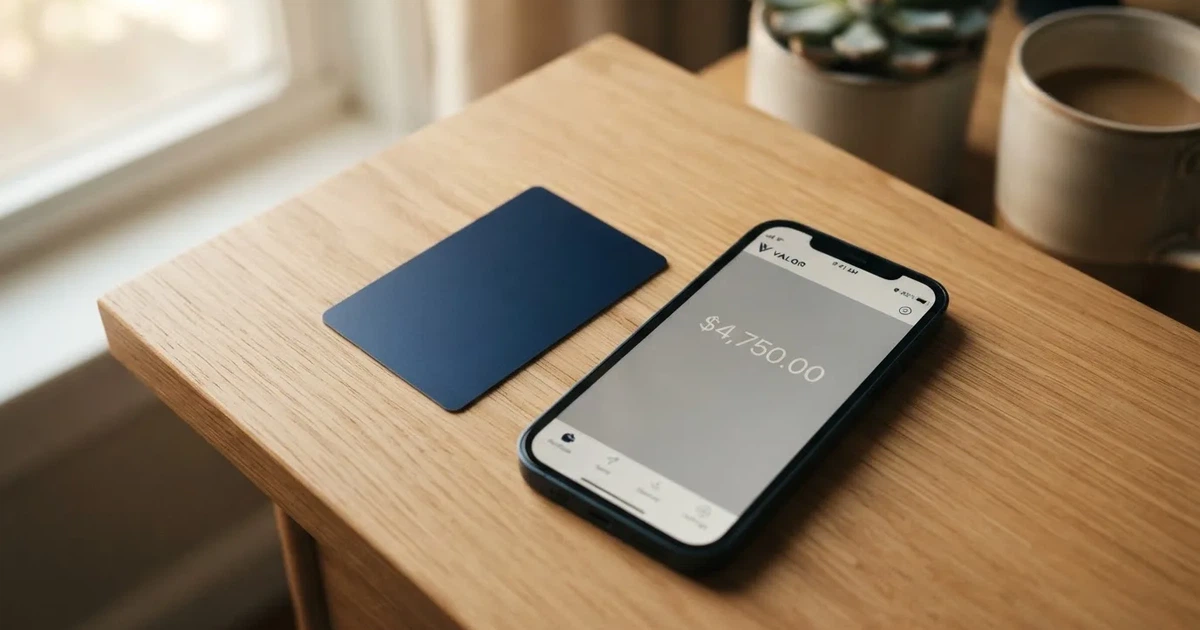
The conditions described here are current as of October 28, 2026.
I would say plainly: if your problem is that a normal bank card is hard to get, Kolo is genuinely worth trying, because the eligibility rules are about as wide as this category gets. If your problem is that you want a physical card in your hand, or a card you can use at cash machines, Kolo cannot do that for you today — not by policy, but because the plastic does not exist yet.
Verdict: 6.4 out of 10
| Criterion | Mark | Why |
|---|---|---|
| Who can get it | 7/10 | Service in 170+ countries, card works in 60+; only embargoed and sanctioned countries are closed |
| Cost | 7/10 | Officially 1% exchange plus network costs; unofficial: virtual issuance free, 0 USD a month, 1% conversion on payments, ATM 1 USD + 0.65% |
| Top-up options | 9/10 | Any crypto, BTC/ETH/LTC/USDT/USDC and others, seven networks on the site logos, in-app swap |
| Reliability and complaints | 4/10 | Operator changed three times in a year, issuer unnamed (partner Signify/Rain), complaints about blocked withdrawals and closed accounts (Trustpilot 3.7) |
| Everyday use | 5/10 | Apple Pay and Google Pay are there; unofficial: virtual only, plastic announced with no dates, no ATM on the virtual card |
| Total | 6.4/10 | Strong funding, weak operational track record |
The reliability mark is the one that costs Kolo the most, and I want to be honest about why. Top-up options earned the highest mark in the whole table because there is no rival in this comparison that accepts essentially any coin on any of several networks with an in-app swap. But a card is a payment instrument, and a payment instrument is judged on whether it works when you need it. Users report withdrawals that did not complete, accounts closed without explanation, verification loops lasting 3 weeks, and a support inbox that does not answer. Those are not the complaints of a product nobody uses; they are the complaints of people who have money on the balance.
One more thing about who owns this. Since 1 July 2026 all services are provided by Hardline Holding Limited in Kazakhstan, company number 221240900259. Before that: BURVIX SP. Z O.O. from January to June 2026, and earlier Cryppo UAB until 2025. Card Services are provided in collaboration with Signify Holdings Inc, of Wilmington, Delaware, which is the Rain card programme. The card issuer, BIN sponsor and licences are not named on the pages I could read. You do not need to care about any of that on day one, but you should care on day one hundred, because a business that changes its operating entity three times in twelve months is a business whose terms you will need to reread more than once.
Will they give you the card
Mostly yes, and this is where Kolo sits above the field. The official terms bar anyone who is in, controlled from, or a national or resident of Cuba, Iran, North Korea, Sudan, Syria, or any other country under US, UN, EU or HM Treasury sanctions, along with listed sanctioned persons. The rule covers both nationality and residence, which matters if you hold one passport and live in another country. Everything outside that list is, on the face of it, eligible: the site says the service runs in 170+ countries and the card works in 60+, with the country list at kolo.xyz/countries. A third-party US restriction I had seen elsewhere is not in the terms text I read.
Two practical notes. First, the list of countries where the card works at a merchant is not the same as the list of countries you can sign up from — the service being available somewhere does not mean the card will be accepted there. Second, proof of age and proof of address are simply not stated on the pages I could read, so if you were hoping for a card with no document checks at all, that is not what this is.
So: unless you are in a sanctioned jurisdiction, or hold the nationality of one, the answer to “will they give me this card” is probably yes, subject to verification.
How to get it
The application runs on full identity verification through Sumsub, described as roughly a one-minute flow, plus two-factor authentication. Extra documents may be asked for if you want higher limits — that is normal and not a warning sign in itself, but it does mean the “one minute” applies to the first check rather than to the whole relationship.
What the card actually is: the official terms say Card Services are provided in collaboration with Signify Holdings Inc, the Rain cards operation. The card form, network and currency are not stated in anything official I could find. Third-party reports, unofficial and not confirmed by Kolo, describe a Visa network card, virtual only, in USD and in EUR as Visa Platinum, with a physical card advertised for Q3 2026 and no ordering schedule attached to it. Another unnamed third party says the EUR card may require additional verification including proof of address. Treat all of that as a picture that may be out of date rather than a specification.
What is confirmed: you get a virtual card issued in the app or in the Telegram mini-app, and you add it to Apple Pay or Google Pay. Delivery of a physical card is not stated officially, and delivery timing is not stated either — the unofficial reports agree that it is unscheduled.
On limits, the terms are honest in a way that many are not. They say limits depend on which verification steps you have completed, that Enhanced Due Diligence may be required to raise them, that Kolo may refuse or later lower limits, and that suspicion of fraud can trigger enhanced verification. Higher limits can be requested to [email protected]. But no named tiers, no per-tier numbers, no processing time and no official list of rejection reasons are published. You will see your actual limits only after you log in. That is a real gap, and it is the kind of gap that leaves a person guessing whether a declined payment was a limit problem or a risk problem.
Fees: what it really costs
This is the section where I have to work hardest, because Kolo’s official pages and its terms describe different things and neither fully settles the question. Let me give you the official position first, then the unofficial one, then the arithmetic you should actually plan around.
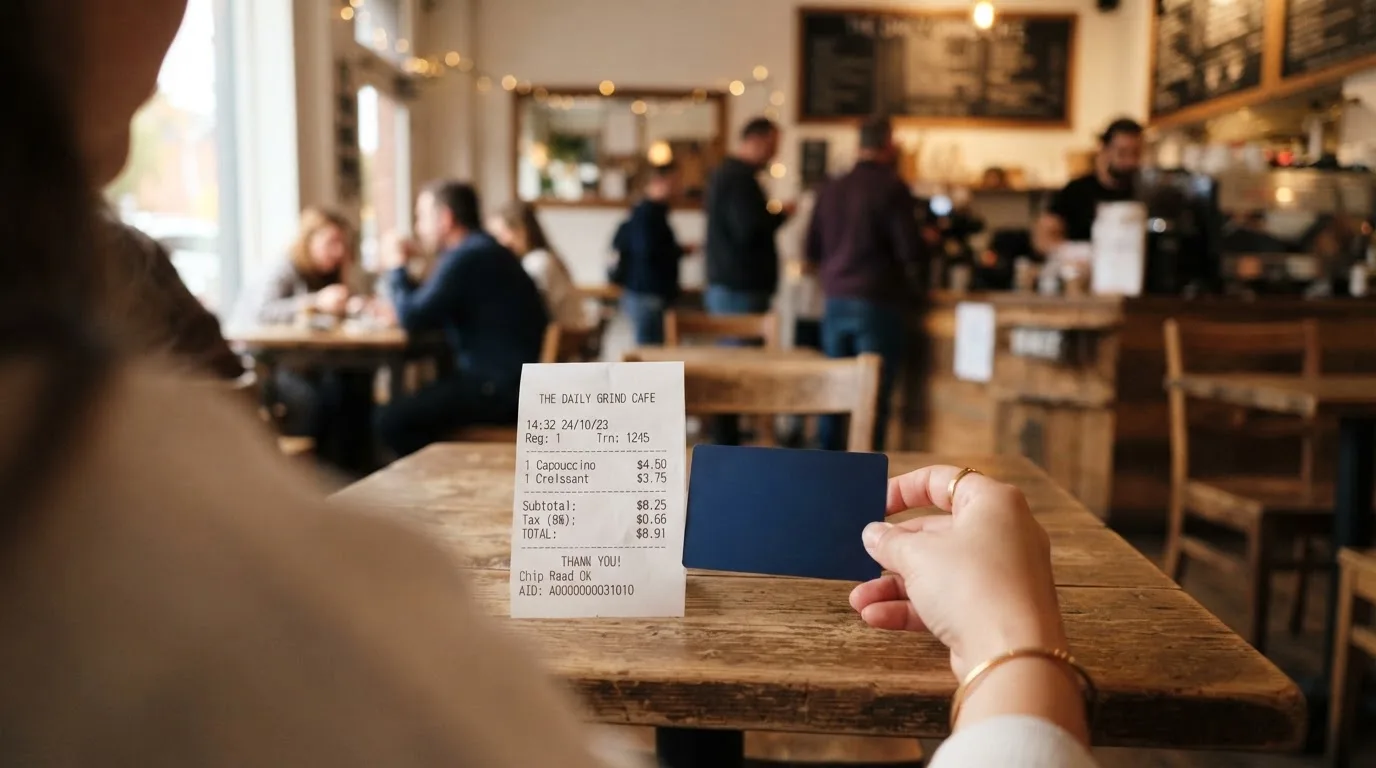
Officially: a base fee of 1% of the order plus network or bank costs applies to exchange orders — buying, selling or swapping digital assets — and that figure is shown before you confirm. The site says 0% mark-ups on USDT, USDC and EURC, and that crypto top-ups are converted for no extra fee. Card FX fees and card-payment fees are not stated in any official source I could find. The site and the terms are not reconciled on this point.
Unofficially, from card-comparison sites in September and October 2026: virtual card issuance free, 0 USD monthly fee, with an activation balance of $10 or EUR 10 that stays on the card balance. On payments, a 1% Kolo conversion fee on all card payments including stablecoin-funded ones. For a USD card paying in a non-USD currency, the Visa rate plus 1%. For a USD purchase at a non-US merchant, an extra 1% issuer fee. For a EUR card making a non-EUR purchase, the Visa rate plus 0.55%, 0.65% or 1.35% depending on the currency. One source measured all-in foreign exchange cost at about 1.40% against the mid-market rate and repeated the 0% mark-up claim on USDT, USDC and EURC — the two unofficial sources do not fully agree on the stablecoin case, which is exactly the case most people would use.
Also not stated officially: card currency, the FX spread itself, multi-currency balances, ATM fees, and any tier structure. There are no tiers, plans or metal cards on the site or in the terms — only a single cashback programme.
| Fee or limit | What the card’s own pages say | What unofficial sources say |
|---|---|---|
| Issuance | Not stated | Virtual card free |
| Monthly fee | Not stated | 0 USD per month, 0 USD annual |
| Activation | Not stated | $10 / EUR 10 balance, stays on the card |
| Exchange (buy/sell/swap) | 1% of the order plus network or bank costs | Same |
| Stablecoin top-up converted | “No extra fee”, 0% mark-ups on USDT, USDC, EURC | One source measures all-in FX at about 1.40% against mid-market |
| Card payment conversion | Not stated | 1% Kolo conversion fee on all card payments |
| Foreign currency purchase | Not stated; site says payments convert to local currency at the point of sale | Visa rate plus 1% (USD card); Visa rate plus 0.55% / 0.65% / 1.35% by currency (EUR card) |
| Purchase at a non-US merchant | Not stated | Extra 1% issuer fee on a USD card |
| ATM withdrawal | Not stated — site and terms do not mention ATM at all | 1 USD + 0.65% per withdrawal; 500 USD limit per withdrawal; 3 per rolling 24 hours; 0.60 USD for a balance inquiry or a declined attempt |
| ATM on the virtual card | Not stated | Reported as unavailable, planned for the physical card; one other review says 250 USD per withdrawal, 3 per 24 hours |
| Daily and monthly limits | Volume limits per period vary by payment method and verification level, shown after login; no numbers published | — |
Now, three everyday payments, and which of those fees actually bite.
Coffee, 4 USD, in your own currency. If your card is USD and you are paying in USD, the only fee that would apply is the 1% Kolo conversion fee on the card payment — about 4 cents. The exchange fee does not touch you here; that is for buying or selling crypto in the app. If your card is USD and the shop is in euros, you are looking at the Visa rate plus 1%, plus possibly the extra 1% issuer fee, on unofficial figures — so somewhere around 2% above the mid-market, and one source measured the all-in cost at about 1.40%.
A monthly subscription, 30 USD, charged from a stablecoin-funded balance. Here the two descriptions collide. The site says crypto is converted during payment for no extra fee with 0% mark-ups on USDT, USDC and EURC. The unofficial sources say there is a 1% conversion fee on all card payments including stablecoin-funded ones, and they do not fully agree with each other. I cannot resolve this from public pages. What I would do is find out in the first week, by watching one small payment in the app and seeing what it says.
Withdrawing cash. Officially, cash machines are not mentioned anywhere on the site or in the terms. Unofficial figures: 1 USD plus 0.65%, capped at 500 USD per withdrawal and three per rolling 24 hours, and the ATM reportedly does not work on the virtual card at all. I would plan as though cash is simply not available to you.
One practical safeguard that costs nothing: on-chain network fees are charged by the blockchain, not by Kolo, so a top-up is never free of cost even when the service says no extra fee. And if you hold ERC-20 tokens, gas is paid only in ETH — a wallet with USDT and no ETH cannot send.
Top up: any crypto, several networks
This is the strong part, and it is the part I would lead with.
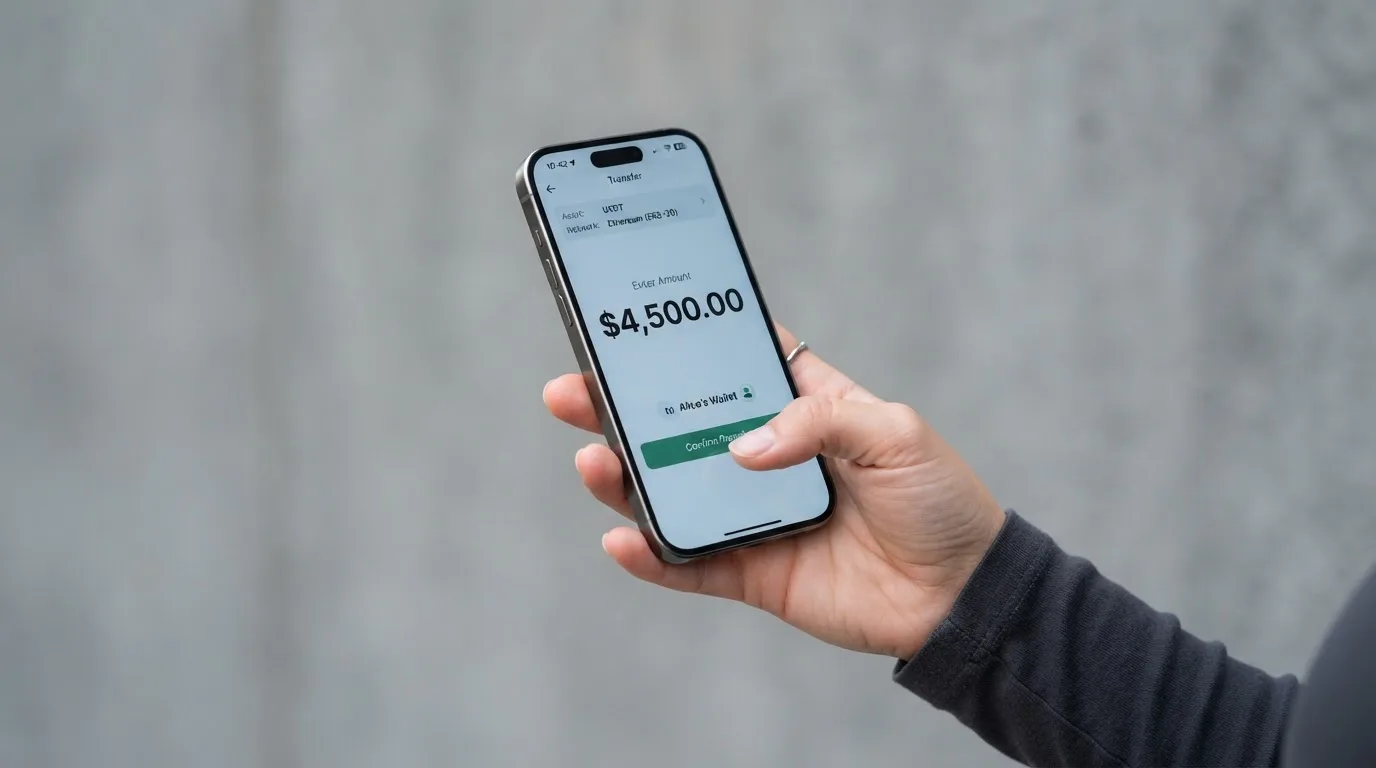
Kolo says “any crypto”. BTC, ETH, LTC, USDT and USDC are named specifically, with more accepted. You can swap inside the app. Seven networks appear as logos on the site — among them Tron, Solana and Base, plus what look like BNB Chain, Ethereum and Sui, and one unlabelled. No minimum top-up, network fee payer, or bank-transfer fee is officially stated; unofficially, the minimum is the 10 dollar or euro activation balance and no top-up fee is published, though on-chain gas can still apply.
There is a cashback programme attached: 2% in BTC for the first 30 days, then 1%, capped at 2 USD then 1 USD per purchase and 100 USD a month. The site’s own figures sit slightly oddly together on the second-tier rate, so treat 1% as the working assumption. The terms say the Cashback Program is voluntary and discretionary, paid in digital assets, and may be changed or ended at any time without notice.
Two things to know before you send anything. First, network choice is not cosmetic: a deposit sent on a network Kolo does not support, or to an address belonging to another network, can be lost or need manual support recovery with no guarantee, because blockchain transfers are irreversible. Getting the network right on the first attempt is the cheapest risk reduction available to you. Second, if you send a chain Kolo does not list among its seven, no support email rescues it automatically.
If you want to take money back out, the site says crypto can be sent to Revolut, Wise, N26 or any SEPA bank account, with no fees or limits given — and, since 1 July 2026, the terms say the wallet is non-custodial: Kolo cannot unilaterally transfer, seize or recall your assets, and on suspension or closure your ability to recover your own key share and assets is preserved. You remain liable for amounts owed before a closure. Withdrawal fees themselves are not stated.
Paying with it every day
Day to day, Kolo behaves like a prepaid card: crypto is converted and loaded as a balance, and the card spends only that balance, so it cannot overdraw. Apple Pay and Google Pay are both supported, and the card runs through them — Apple Pay replaces the card number with a device-specific number stored in the phone’s secure element, and each payment uses a one-time dynamic code. That is a real security benefit over typing card numbers into websites, though it is not unique among cards.
Availability is the stated pattern: wherever Google Pay or Apple Pay, or Visa or Mastercard, is accepted. Blocked merchant categories are not stated, which means you do not know in advance whether gambling, adult or ticket merchants will decline. That matters more than it sounds: many issuers block gambling merchant codes by policy rather than by law, and the blocked list differs from issuer to issuer. If a category matters to you, ask support before you rely on it.
One structural point worth knowing, because it explains declines you may hit elsewhere. Merchants can look up the six or eight digit issuer identification number at the front of a card number and see which institution and country issued it, and they may apply extra scrutiny when the issuer country differs from the billing address. That is why a card issued in one country can look foreign to a shop in another. Address verification, which compares the numeric parts of the billing address, is mainly offered in the US, Canada and the UK and is generally unavailable for foreign-issued cards — a common cause of a decline that has nothing to do with your balance. And a declined authorisation can leave a hold on your funds for several days, typically up to seven.
Platforms are iOS, Android and a Telegram Mini App, with downloads at get.kolo.xyz. Store ratings and rating counts I could not read — the store pages were not reachable when I checked.
What can go wrong
The complaints are the reason this section exists, so I will not soften them.
On Trustpilot, as read on 20 October 2026, Kolo sits at 3.7 out of 5 from 54 reviews, 16 of them in the last twelve months, with 79% five-star and 17% one-star. Kolo does not reply to negative reviews. An earlier reading of the same user-reported data showed 3.9 from 52 reviews. Some reviewers allege fake positive reviews; that is unverified and I mention it only so you do not treat the five-star share as a measurement.
The recurring themes are consistent enough to take seriously:
- Withdrawals blocked or not completed, with support silent — reported in November 2025, December 2025, February, May and September 2026.
- Accounts or wallets closed without explanation — reported in January, May and June 2026, including one report from Zimbabwe.
- Verification problems — one case lasting 3 weeks, another repeated; an Indonesian ID reported as not accepted in September 2026.
- The card could not be added to a phone wallet in one December 2025 report.
- On the positive side, fast Telegram support in September and November 2025.
Where the disputes process is concerned, the terms are unusually blunt in your favour on one point and against you on others. A 14-calendar-day right of withdrawal from the agreement exists after account acceptance, by email to [email protected]. Digital asset orders are final, non-cancellable and non-refundable. If a card transaction is disputed or charged back, related cashback is cancelled or deducted. And Kolo may pursue losses from your chargeback with your bank, including acquirer and card-scheme administration fees and the value of the assets. The card-payment dispute process itself and its time frames are not stated. In the US, reversal rights for debit cards come from Regulation E and credit card rights from Regulation Z, and prepaid-card coverage varies — do not assume it applies.
On security and custody, since 1 July 2026 the wallet has been non-custodial with MPC key shares: you hold one share, required for every transaction, and Kolo holds another and may decline to co-sign for legal or risk reasons, with the recovery process preserved. No storage fees are charged. The site claims two-factor authentication for login and withdrawals, real-time “Fraud Shield” AML and risk checks, Sumsub KYC, and alignment with MiCA and the Travel Rule. In-app card freeze, spending controls and insurance are not stated — so if freezing the card quickly is important to you, ask. Claims of ten million users and MiCA compliance on the site are self-reported; licences and fines are not stated.
The wider category context is worth holding in mind too, because it applies to any card of this type. Visa and Mastercard do not issue crypto cards to consumers; they license issuers and can suspend a programme — Visa terminated its global agreements with FTX on 13 November 2022 and the FTX US debit card was wound down, and WaveCrest, a Visa issuer that supplied several crypto card brands, was suspended by Visa in Europe in 2018, closing all WaveCrest-issued programmes. Programme closures typically mean a notice period, then stopping spending and loading, then a request to withdraw remaining balances. Kolo’s own operator changes are a reminder that the entity behind your card can move.
What to take instead
Each of these scored slightly higher or comparably on the same kind of review, and each trades something away. The choice depends on which of Kolo’s weak points actually hurts you.
| Card | Score | Card form and network | Up-front and ongoing cost | Weak point for someone choosing Kolo |
|---|---|---|---|---|
| Kolo | 6.4/10 | Virtual only; network not officially stated | Issuance and monthly fee not stated officially; 1% exchange plus network costs | No plastic, no ATM on the virtual card, weak complaints record |
| MetaMask | 7.1/10 | Mastercard virtual issued instantly; metal pre-orderable; one card per user | Virtual free, no annual or maintenance fee; metal 199 USD/year | Spends from a connected wallet on named networks, not from any crypto at any network; far narrower sign-up geography |
| KAST | 6.1/10 | Virtual and physical, up to 10 cards; Visa Platinum, Infinite metal, gold plated | Standard 0 USD/year; Premium 1,000 USD/year; Private 10,000 USD/year | Membership tiers, and stablecoin-only funding |
| Zeal | 6.1/10 | Visa, virtual for online use, addable to Apple Pay; accounts in EUR, USD, GBP | Not stated; no fee schedule published | Live mainly in listed regions rather than 60+ countries |
MetaMask is the one to consider if you want the cleanest cost structure and a real metal option. It scores 7.1, opens sign-ups in 45 listed countries and territories with proof of residency, other regions on a waitlist, and US and UK sign-ups temporarily closed per its FAQ; ineligible regions limit sign-ups, not spending, and the citizenship rule is not stated. Its card is Mastercard, virtual first and instant, metal pre-orderable after Virtual approval, one per user. Virtual is free with no annual or maintenance fee; metal is 199 USD a year. Fees are described as a minimal fee per transaction with no additional MetaMask fees and no foreign transaction fee, using the Mastercard rate — though the amount is not stated on the pages read. Funding is the trade-off: it spends directly from a connected wallet on Linea, Base, Monad and Solana, with mUSD, wETH, EURe, GBPe, USDC and USDT named. Solana-only wallets cannot withdraw credit. Cashback is 1% on Virtual, and the Metal headline 3% with a footnote limiting 3% to the first 10,000 USD spent then 1%.
KAST is for someone who wants a physical card and a tier system and can accept stablecoin-only funding. It scores 6.1. Eligibility is shown at KYC — if your country is not listed, it is not available there — and the country list is not published; a Restricted Locations list is referenced with no countries named. Identity matters as much as residence: if you live in a supported country but hold only an ID from a restricted region you may still fail KYC, dual citizens with an ID from a supported country may pass, only the account holder’s own ID is accepted, a VPN does not bypass this, and you can create an account in an unsupported country with KYC still locked. Cards are Visa Platinum Standard, Infinite metal Premium, Infinite gold plated Private, plus Pengu, Solana and Bitcoin designs; balance in USD with stablecoin deposits converted 1:1 at 0% spread. Standard is 0 USD a year, Premium 1,000 USD, Private 10,000 USD billed annually upfront with no monthly option; extra virtual card 2 USD; Standard physical card 0 USD card fee plus 40 USD delivery, Premium and Private physical cards included; inactivity fee 1 USD a month after 12 months. Fees: stablecoin top-up 0%, card spend in USD 0%, transaction 0%, Apple and Google Pay 0%, non-USD FX 0.5% to 1.75% by residence country, transaction country and card programme, non-USD transactions under 25 USD cost 0.10 USD, a declined transaction for insufficient balance 0.50 USD. Funding is USDT, USDC, PYUSD and RLUSD on Ethereum, Solana, Polygon, Arbitrum and TRON, no bank account needed — though the terms say acceptable tokens are “currently USDT and USDC”, which conflicts with the app.
Zeal is the quietest of the three, and if you are inside its footprint it is a reasonable pick: 6.1, spending in 150+ countries with issuance depending on eligibility and regional availability, and the live programme covering the EU, UK, Brazil, Colombia, Mexico, Japan, Singapore, the Philippines, Indonesia and Thailand. The card is Visa, virtual for online use and addable to Apple Pay; physical is not stated. Accounts are in EUR, USD and GBP. Zeal charges no additional FX fee and converts at the Visa wholesale rate, though Gnosis Pay fees such as ATM may still apply. You spend from balances in the card Safe, and cashback goes to GNO on Gnosis Chain where GNO must be held in that Safe to qualify, up to 4%, with rates that can change.
What none of them does is what Kolo does: take nearly any crypto on nearly any of the main networks and turn it into spendable balance with a tap. If that is your requirement, the comparison above may not help. If it is not your requirement, MetaMask’s cleaner fee schedule and wider card choice, or KAST’s physical options, are stronger buys.
Who I would recommend it to
I would recommend Kolo to someone in a country where opening a normal bank card is slow, refused or impossible, who holds crypto rather than pounds or euros, and who is comfortable doing the plumbing themselves — checking the network before sending, watching a first small payment to see what fee is really applied, and not putting money on the balance that they cannot afford to have blocked for a fortnight. I would also recommend it to anyone who already uses Tron, Solana or Base and wants their stablecoins spendable without a separate exchange account.
I would not recommend it to someone who needs a physical card, needs cash from a machine, plans to make large purchases, or has had their accounts frozen elsewhere before and would find a compliance review unbearable. Nor would I recommend it as your only card.
Two habits would change my advice materially, and both are free. First, keep a balance you can lose, because the complaints that recur most are about money that was already on the card when something went wrong. Second, ask [email protected], before you fund anything, the two questions the public pages do not answer: what is the conversion fee applied to a stablecoin-funded card payment, and what is your ATM position on the virtual card. A written answer to both would resolve the largest gap in this review.
Frequently asked questions
What is Kolo card?
Kolo is a virtual payment card you fund with cryptocurrency and spend like an ordinary card, in Apple Pay, Google Pay or at any card-accepting merchant. You convert or top up a fiat or stablecoin balance, and the card draws only on that balance, so it cannot overdraw. Since 1 July 2026 the wallet has been non-custodial, secured by MPC key shares, and services are provided by Hardline Holding Limited in Kazakhstan. The physical card has been advertised but has no published schedule.
How does Kolo card work?
You sign up, complete identity verification through Sumsub, enable two-factor authentication, receive a virtual card in the app or the Telegram mini-app, and add it to Apple Pay or Google Pay. You then send crypto to Kolo or swap in the app, and it converts to a spendable balance. Each purchase is deducted from that balance at the point of payment, with the site saying payments convert to local currency at the point of sale.
Is Kolo a bank?
No. The site describes a MiCA-aligned service, but a card is a payment service regulated separately from crypto regulation, so this kind of product typically depends on two sets of rules. Card Services are provided in collaboration with Signify Holdings Inc of Wilmington, Delaware, the Rain card operation. The card issuer, BIN sponsor and licences are not named on the pages I could read, and the entity has changed twice in 2026.
Does Kolo card require KYC?
Yes. Full identity verification runs through Sumsub, described as about a one-minute flow, plus two-factor authentication. Limits depend on which verification steps you have completed, and Enhanced Due Diligence may be required to raise them; suspicion of fraud can trigger enhanced verification. Proof of age and proof of address are not stated on the pages I could read, and one unofficial source says the EUR card may require additional verification including proof of address.
How much does Kolo card cost?
Officially, exchange orders — buying, selling or swapping — cost 1% of the order plus network or bank costs, shown before you confirm. Card-payment fees are not officially stated. Unofficially: virtual issuance free, 0 USD a month, a 10 dollar or euro activation balance that stays on the card, a 1% conversion fee on card payments, and ATM at 1 USD plus 0.65% if ATMs work on your card at all.
Can I use Kolo card in my country?
Probably, if you are not in a sanctioned jurisdiction. The official terms bar anyone in, controlled from, or a national or resident of Cuba, Iran, North Korea, Sudan, Syria or any country under US, UN, EU or HM Treasury sanctions. The service runs in 170+ countries and the card works in 60+, with the list at kolo.xyz/countries. Note that being able to sign up is not the same as the card being accepted at a merchant there.
How do I top up Kolo card?
Send any crypto — BTC, ETH, LTC, USDT and USDC are named — or swap in the app. Seven networks appear as logos on the site, including Tron, Solana and Base. The site says crypto is converted during payment for no extra fee with 0% mark-ups on USDT, USDC and EURC. Check the network carefully before sending: transfers are irreversible, and a wrong network can mean lost funds or a manual support recovery with no guarantee.
How do I add Kolo card to Apple Wallet?
Through the app or the Telegram mini-app, where the virtual card is issued, then add it to Apple Pay or Google Pay — the site says the card works wherever those wallets are accepted. Apple Pay stores a device-specific number in the phone’s secure element and uses a one-time code per payment. One Trustpilot report from December 2025 describes being unable to add the card to a phone wallet, so if it fails, Telegram support has been reported as the faster channel.
Is Kolo card safe?
There are real safeguards: two-factor authentication for login and withdrawals, Sumsub KYC, real-time AML and risk checks, and since 1 July 2026 a non-custodial MPC wallet where you hold a key share required for every transaction. Against that, Trustpilot shows 3.7 out of 5 from 54 reviews, with recurring reports of blocked withdrawals, accounts closed without explanation and verification problems, and Kolo does not reply to negative reviews. A 2025 review of the platform category notes custodial failures of US$350 million at Mt. Gox and US$625 million at Ronin.
How do I delete my Kolo account or get my money out?
Crypto can be sent to Revolut, Wise, N26 or any SEPA bank account, with no fees or limits stated officially. The terms say Kolo cannot unilaterally transfer, seize or recall your assets, and that on suspension or closure your recovery of your own key share and assets is preserved, though you stay liable for amounts owed before closure. Support is at [email protected] and there is a Telegram channel and mini-app at t.me/kolo. Withdrawal fee figures are not published, and completing a withdrawal is exactly where complaints cluster.
Wallet cards – cryptocardchooser.com
Content created by the «cryptocardchooser.com» team