
Phantom Cash reviewed for US residents spending a dollar stablecoin balance
 Available in US
Phantom Cash is not a bank and not a physical card. It is a virtual prepaid Visa debit that spends the balance of a Cash account inside the Phantom app, and it is open only to people living in the United States, New York excluded. That narrow gate does most of the explaining in this review: if you are reading this outside the United States, the eligibility question is settled before anything else, and the useful part of this page is understanding what the arrangement actually is, and how thin the published detail is.
That thinness is the other half of the story. Across the card’s own public pages, the numbers that normally decide a review — issuance fee, monthly fee, conversion rate, spending limits, ATM access — are either pointed at in general terms or simply absent. A third-party card database fills some of those gaps, and I flag those figures as unofficial throughout, because the card itself does not confirm them. My score reflects that gap honestly rather than papering over it.
I gave Phantom Cash 5.3 out of 10. It is a competent, narrow product: it does what it says for one group of users, through recognisable infrastructure. It scores poorly on reach and on transparency, not on competence.
The conditions described here are current as of October 28, 2026.
Score: 5.3 out of 10
| Criterion | Mark | Why |
|---|---|---|
| Who can get it | 4 / 10 | United States only, excluding New York, by place of residence |
| Cost | 7 / 10 | Officially, fees are not disclosed; unofficial: issuance, replacement and inactivity free, top-ups free, international transaction 1% + $0.30 |
| Top-up options | 4 / 10 | The card spends a CASH balance; funding by Apple Pay, Google Pay, debit card or bank, withdrawal to a bank or a Solana wallet; direct crypto top-up not named |
| Reliability and complaints | 6 / 10 | Issuer Lead Bank, programme manager Bridge Ventures LLC, Stripe; the virtual card is being replaced with a new issuer, no dates; no complaints found |
| Everyday use | 5 / 10 | Virtual Visa, Apple Wallet and Google Wallet only; unofficial: no ATM |
| Total | 5.3 / 10 | A working product with a very narrow door and very little published detail |
Who this suits, plainly: a resident of the United States, outside New York, who already holds dollar stablecoins in Phantom and wants to spend that balance at ordinary shops without routing it through an exchange first. If Phantom is already your wallet, this is a natural companion rather than a new relationship.
Who it does not suit: anyone outside the US, anyone in New York, anyone who needs a physical card, anyone who plans to use an ATM, and — the quieter exclusion — anyone who wants to know exactly what a given transaction will cost before making it. On that last point the card does not fail; it simply does not answer.
Will they give you the card?
No, not unless you live in the United States, and not if you live in New York. Eligibility is by residence, not citizenship.
That is the whole official rule. There is no published list of other countries, no waitlist, no invitation tier — just the United States with one state carved out. So before anything else: if you are not a US resident outside New York, there is no application to make.
A second question follows, and it confuses people: who owns the balance and who issues the card are not the same question. Phantom is the platform provider and describes itself as “not a bank”. The card is issued by Lead Bank under a Visa licence, Bridge Ventures LLC is the programme manager, and Stripe processes the transactions. Identity verification — see the next section — sits with that infrastructure, not with Phantom. Hold on to those three names; they return in the risk section, because they are about to change.
How to get it
Identity verification through Link is required for the virtual card. The marketing page describes verification as handled by Stripe for bank transfers, direct deposit and debit-card funding. Applicants must be 18 or over. Whether proof of address is required is not stated on the pages I read.
The sequence the card describes is short: fund your Cash balance, complete verification, receive the virtual card, add it to Apple Wallet or Google Wallet.
Worth understanding here: KYC is not required for Phantom or Phantom Cash in general. Verification is tied to the banking rails — bank transfers, direct deposit and the debit card — not to using the wallet. Verification levels, how long they take, and the grounds on which a check might be refused are all not stated. That is a real gap, because if your application is declined, the public pages do not explain why.
The card itself is a virtual prepaid Visa debit that works wherever Visa is accepted. No physical card is mentioned anywhere on the pages I read — nothing about card delivery, because there is nothing to deliver. Currency is not stated as such: the balance is denominated in CASH, a stablecoin, which implies US dollars rather than declaring them.
If your question is whether you can add it to your phone: yes, and that is the intended path. You add it to Apple Wallet or Google Wallet and tap. There is no plastic in your other pocket.
Fees and what a payment really costs
The card’s own wording is that “fees may apply”, with amounts left to the Cardholder Agreement, and the specific fee amounts are not stated. Stablecoin trades inside the app are described as fee-free. If your spending decision depends on the rate at which CASH converts when you spend, that rate is the missing piece — and no figure I found replaces it.
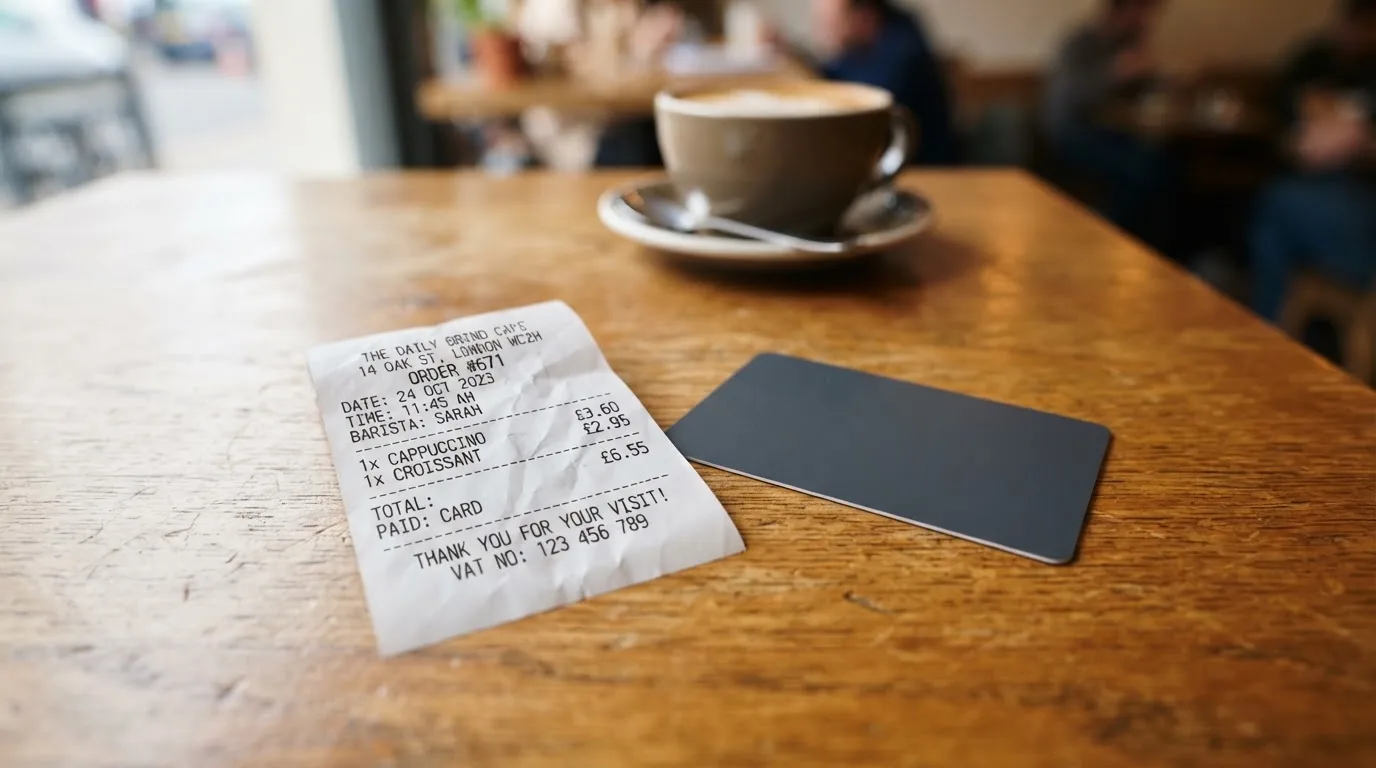
What follows comes from a third-party card database, not from Phantom. Treat it as orientation, not as terms you could rely on in a dispute.
| Fee or limit | What the unofficial source says |
|---|---|
| Issuance | No card issuance fee |
| Replacement | No replacement fee |
| Inactivity | No inactivity fee |
| Loading cash | Free |
| US purchases | Free |
| International transaction | 1% + $0.30 per transaction |
| FX fee | 1% + $0.30 per international transaction |
| ATM withdrawal | Not available; ATM fee not disclosed |
| Daily spending limit | $2,000 by default, up to $5,000 on request |
| Monthly limit | Not disclosed |
Those entries come from a third-party card-details page carrying a September 2026 verification date, with part of the underlying data carried forward from an older dataset. That last detail matters: a carried-forward figure may describe a configuration the card has since moved beyond, and it is one more reason the Cardholder Agreement outranks anything in that table.
Now let us push three ordinary payments through it, because that is where a fee list stops being a table and becomes a number.
A $40 lunch in Chicago, paid in dollars inside the United States. By the unofficial figures this is the cheapest case: US purchases free, no FX involved, no ATM, spending a stablecoin balance you already hold. The cost you cannot see is the conversion applied to CASH at the moment of payment. If CASH is not exactly a dollar in your account, that difference is yours — and it is the fee nobody has published.
A €28 hotel night in Berlin. Here the unofficial international fee applies: 1% + $0.30, so on a $30-equivalent purchase, roughly $0.60. Small, but that is the kind of line that exists only for cross-border spending, and it is exactly the kind of line a card that does not publish its fee schedule cannot confirm. Also relevant: a US-issued card used in Germany can look foreign to a merchant’s systems, because the first six or eight digits of a card number identify the issuing institution and country, and a mismatch against your billing address can invite extra scrutiny. That is a fact about how card numbers work, not a Phantom feature — but it is why single-country cards are fussier abroad than people expect.
Withdrawing $60 at a cash machine in Mexico City. By the unofficial figures, ATM withdrawal is not available on this card. Whatever your reasoning — the 1% + $0.30 international fee, the foreign-BIN scrutiny, the conversion rate you cannot see — the answer is the same: you would withdraw to a bank account or a Solana wallet instead, which puts you back on the funding routes rather than spending.
The honest summary: this card looks cheap on its face and is genuinely cheap in the simple case. But the simple case is exactly where there is nothing to hide. The costs you would actually care about — conversion, anything beyond the unofficial international line, and any ATM use at all — are undisclosed or, in the ATM case, closed.
Top up the balance
The card spends the Cash account balance in CASH. The Cash account is funded by Apple Pay, Google Pay, debit cards or bank accounts, depending on your region. Withdrawals can go to a bank account (in the United States) or to a Solana wallet. Fees and minimums for funding are not stated; stablecoin trades are described as fee-free.
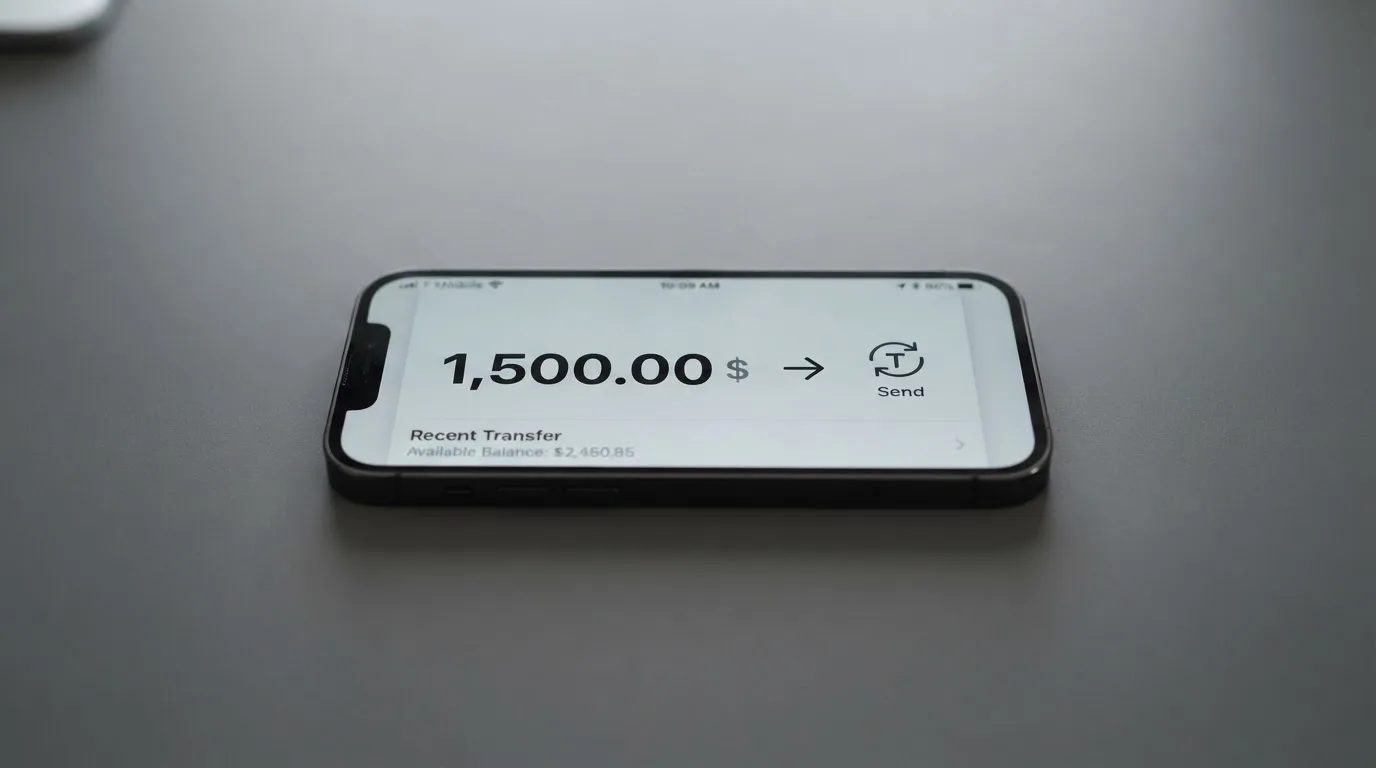
That last sentence is the pivot of the whole product, so read it twice. The route *into* the balance is, on the published description, fiat rails — Apple Pay, Google Pay, a debit card, a bank account. The route *out* at a shop is CASH. What is not named is a direct crypto top-up: no page I read lists “send USDC to this address to fund your card”. If you are already sitting on stablecoins, that absence does real work in your decision, and I would not assume it closes in your favour.
Think of it as a three-part system:
- Money in: Apple Pay, Google Pay, debit card, or bank account, depending on region — the same rails as any app that moves cash.
- Money out to a shop: CASH, converted as you spend.
- Money out to yourself: a US bank account or a Solana wallet.
Which part is realistic for you? If your money is in a bank account and your problem is spending stablecoins, the flow starts awkwardly, because the card’s stated inputs are fiat. If your money is already CASH in Phantom, the flow is exactly what you want, and the card is a spending front end rather than an exchange.
One warning belongs here too, because it concerns the withdrawal leg. Crypto transfers are effectively irreversible. A withdrawal sent to the wrong network or the wrong address can be lost, or can need manual support recovery with no guarantee. Fees and timing for withdrawals are not stated on the pages I read, and neither is what happens to a balance when an account closes. If you plan to hold money in Cash and pull it out later, those are three things to ask before you rely on it.
Paying with it every day
Add it to Apple Wallet or Google Wallet and tap. The card can be added to both. Which merchant categories are restricted is not stated — and that silence covers a lot, because gambling (MCC 7995, covering casinos, betting and lotteries) is one of the categories issuers commonly block on specific cards by policy rather than by law, and the blocked list varies by issuer. If gambling or quasi-cash merchants matter to you, that is a question for the operator, not a question this page can answer for you.
The card is available in the Phantom mobile app. Which platforms, and what the store ratings look like, are not stated on these pages.
Two things are genuinely missing here, and both are things people search for and rarely find:
- No card cashback is stated. Holding CASH is described as earning passive income without lockups, but no rate is given — no percentage, no mechanism, no vesting. “Passive income” with no number attached tells you a feature exists, not what it is worth. Plan as if the reward is zero and treat anything else as upside.
- No value was found at all for the card’s rewards or cashback rate in the published material. That is stronger than “it is low”. It means the question does not have an answer.
On disputes: Stripe handles card disputes for debit-card transactions, with the new issuer taking over that role. How a dispute is raised and how long it takes are not stated. This matters more than it sounds, because in the United States, debit-card reversal rights come from Regulation E while credit-card rights come from Regulation Z — and prepaid-card coverage varies and should not be assumed. You are holding a virtual prepaid Visa debit. I would not build a plan around reversing a charge you cannot pay for.
One practical note that applies to any card and bites prepaid cards harder: a declined authorisation can leave a hold on your funds for several days, typically up to seven. With a stored balance, a declined hotel booking or car rental quietly reduces what you have available.
What can go wrong
The card is being replaced, and nobody has said when. The official notice reads: “Your virtual Phantom debit card is being replaced as we move to a new card issuer.” Users are told to add the replacement to Apple Wallet or Google Wallet. No dates are given. That instruction is the tell — re-adding a card to a wallet is manual work, and doing it after the old number stops working is a scramble rather than a plan. If you rely on this card, check it periodically and keep a second payment method alive for the weeks when it does not work.
Three names are changing at once. Lead Bank issues, Bridge Ventures manages, Stripe processes and handles disputes. With a new issuer incoming, expect at least some of those roles to move. That is a normal industry event, not a scandal — but it means the terms you evaluate today are not necessarily the terms in six months.
No complaints, which cuts both ways. Searches for complaints and for user discussion found nothing specific to Phantom Cash. Read that as weak evidence, not strong. It can mean a small user base, a young product, or people who quietly switched to something else and did not write about it. Absence of noise is not evidence of reliability, and it is certainly not evidence of safety.
Nothing is said about the security controls you would look for. Card freeze, two-factor authentication and insurance are all not stated. I am not telling you they are missing — I am telling you the public pages do not say they exist, and you should check them in the app before relying on the card for anything that matters. On identity data, Phantom says it does not store KYC information because verification is handled by Stripe, which is a genuinely good structural answer; the balance is secured on-chain as CASH; and Phantom again says plainly that it is not a bank.
Support exists but is thinly described. There is a Phantom Help Centre with a “Start a chat” option. Languages and hours are not stated. Given the card-replacement notice above, chat support is the thing you will actually use — establish its coverage early rather than discovering it in a hurry.
And the category-level risks that apply to anything in this space. Custodial platforms have a history: Mt. Gox (about US$350 million reported stolen, 2011–2014), Coincheck (about US$400 million, 2018), Ronin Network (US$625 million, 2022). Card programmes can be switched off underneath you — Visa terminated its agreements with FTX on 13 November 2022, and WaveCrest’s Visa programmes were closed after suspension in Europe in 2018. Closures tend to follow a pattern: a notice period, then loading and spending stop, then you are asked to withdraw what remains. Phantom Cash’s current arrangement looks stable; “looks stable” is not “cannot change”.
What to take instead
If what you want is a payment card and the reason you are reading about crypto cards is that an ordinary bank card is proving difficult, the honest starting point is to work out which alternatives actually fit your country — the field is more varied than any single product’s official pages suggest. Here is how the three I examined compare with Phantom Cash, on published figures.
| Phantom Cash | MetaMask | KAST | Zeal | |
|---|---|---|---|---|
| Score in this comparison | 5.3 / 10 | 7.1 / 10 | 6.1 / 10 | 6.1 / 10 |
| Where you can sign up | US only, excluding New York | 45 listed countries and territories; others on a waitlist; US and UK sign-ups temporarily closed per FAQ | Country list not published, shown at KYC | 150+ countries to spend; programme live in EU, UK, Brazil, Colombia, Mexico, Japan, Singapore, Philippines, Indonesia, Thailand |
| Card | Virtual prepaid Visa | Mastercard; virtual first and instant, metal pre-orderable after; one per user | Virtual and physical, up to 10 per user | Visa; virtual, addable to Apple Pay |
| Cost | Issuance, replacement and inactivity free (unofficial) | Virtual free, no annual or maintenance fee; metal $199/year | Standard 0 USD, Premium 1,000 USD/year, Private 10,000 USD/year | Not stated |
| International fee | 1% + $0.30 (unofficial) | No foreign transaction fee; Mastercard rate used | 0.5%–1.75% on non-USD | No additional FX fee; Visa wholesale rate |
| ATM | Not available (unofficial) | Officially not stated | Gnosis Pay fees may still apply | Gnosis Pay fees may still apply |
| Rewards | None stated | 1% cashback in mUSD on Virtual; Metal headline 3%, limited to the first $10,000 spent then 1% | 1.5% / 2% / 3% cashback in USD by tier, capped monthly | Up to 4% cashback in GNO |
| Limits | $2,000 daily default, up to $5,000 on request; monthly not disclosed (unofficial) | Officially not stated | Tier caps on eligible spend | Officially not stated |
MetaMask is where to look first if you are outside the United States and want a card that spends directly from a connected wallet. Sign-up is open in 45 listed countries and territories — Andorra, Argentina, Brazil, Canada, Mexico, Germany, France, Spain, Uruguay among them — with proof of residency required; ineligible regions limit sign-ups, not spending. It is a Mastercard, virtual and instant, with metal pre-orderable in the app afterwards, one card per user. The virtual card is free with no annual or maintenance fee, and there is no foreign transaction fee, so the Mastercard rate applies. It spends directly from the connected wallet on Linea, Base, Monad and Solana, across tokens including mUSD, wETH, EURe, GBPe, USDC and USDT. Two caveats: US and UK sign-ups are temporarily closed per the FAQ, and Solana-only wallets cannot withdraw the credit. Cashback is 1% in mUSD on Virtual; the Metal card advertises 3% but the footnote limits it to the first $10,000 spent, then 1%.
KAST is the most flexible on card type — up to ten cards, virtual and physical, from Visa Platinum to Visa Infinite metal and gold-plated — and the most open on funding: stablecoins including USDT, USDC, PYUSD and RLUSD on Ethereum, Solana, Polygon, Arbitrum and Tron, with no bank account needed. Note that the Terms say acceptable tokens are “currently USDT and USDC”, which conflicts with the app’s own list. Costs are tiered and steep at the top: Standard 0 USD, Premium 1,000 USD/year, Private 10,000 USD/year, billed annually upfront with no monthly option, plus 2 USD for an extra virtual card, 40 USD delivery on a Standard physical card, and 1 USD/month inactivity after 12 months. On fees it is generous — 0% on stablecoin top-up, USD spending, transaction fee and Apple/Google Pay — with a 0.5%–1.75% non-USD FX fee depending on where you live, 0.10 USD on non-USD transactions under 25 USD, and 0.50 USD for a declined transaction. Cashback is 1.5% / 2% / 3% in USD by tier on the first 2,000 / 10,000 / 40,000 per month. Its eligibility rules are the strictest of the three: country is checked at KYC, citizenship and ID document matter separately, dual citizens holding an ID from a supported country may pass, only your own ID is accepted, and a VPN bypasses nothing.
Zeal is the simplest. It spends from balances in the card Safe, in EUR, USD or GBP, on Gnosis Chain and Celo. It charges no additional FX fee, converting at the Visa wholesale rate, and pays up to 4% cashback in GNO provided you hold GNO in the card Safe. Rates can change. Issuance and fees are not stated on its site or App Store listing.
And one comparison that is not a competitor at all: if your blocker is an ordinary bank card, that blocker is often administrative rather than financial, and a card that demands the same documents through a different company will not clear it. In the United States, the customer identification programme requires name, date of birth, address and an identification number, and electronic systems also validate proof-of-address documents against records. If a bank said no, a crypto card is unlikely to be the shortest path to yes — and it is worth saying plainly that this is the situation in which I would spend less effort comparing card features and more effort finding out what the original refusal actually was.
Who I would recommend it to
I would recommend Phantom Cash to a US resident outside New York who holds dollar stablecoins in Phantom, already trusts the app with their funds, and wants to tap that balance at a shop tomorrow without opening an exchange account. For that person the card is proportionate: small, virtual, free to issue by the unofficial figures, doing one job.
I would not recommend it if any of these are true:
- You live outside the United States, or in New York. This is the entry condition, not a preference.
- You need a physical card. There is no plastic, and none is mentioned.
- You plan to use a cash machine. By the unofficial figures, ATM withdrawal is not available.
- You are outside the US and comparing this on cost. It is not in the comparison.
- You want to know the conversion rate before you spend. It is not published, and I would not build a budget on an unstated rate.
- You are considering it as an earner. No card cashback is stated and no rate is given for holding CASH.
- You are uneasy about the card changing hands mid-year. It already is, on an unannounced timetable.
For everyone else, the same three questions: can I fund it from where my money actually is, what happens when the issuer changes, and can I see the cost of a transaction before I make it? Phantom Cash answers the first comfortably for one specific person, the second partially and with a live notice, and the third not at all. That distribution is the score.
Frequently asked questions
What is the Phantom Cash card?
Phantom Cash is a virtual prepaid Visa debit card issued through the Phantom crypto app. You hold a Cash account denominated in CASH, a dollar stablecoin, and the card spends that balance anywhere Visa is accepted. There is no physical card. Phantom describes itself as not a bank: Lead Bank issues the card under a Visa licence, Bridge Ventures LLC manages the programme, and Stripe processes transactions.
How does the Phantom Cash card actually work?
Your CASH balance converts to a dollar-denominated spend as you pay. Adding the virtual card to Apple Wallet or Google Wallet turns it into a tap-to-pay card with a device-specific number, so each payment carries its own one-time security code. If that sounds too easy, the catch is that the card’s pages never publish the conversion rate applied to CASH, which is the number that would tell you what a purchase really cost.
Who can get the Phantom Cash card?
United States residents only, excluding New York, judged by where you live rather than your citizenship. Applicants must be 18 or over. There is no country list, no waitlist and no other opening — no alternative exists if you are outside the US. Identity verification through Link is required for the virtual card, while the marketing page describes Stripe as handling it for bank transfers, direct deposit and debit-card funding.
Does the Phantom Cash card require KYC?
For the wallet, no — Phantom and Phantom Cash themselves do not require identity verification. Verification is required for the banking rails: bank transfers, direct deposit and the debit card. Phantom says it does not store KYC information because that is handled by Stripe. Verification levels, turnaround and grounds for refusal are not stated on the pages I read, so there is no published answer if yours is declined.
Is the Phantom Cash card free?
Unofficial figures say there is no issuance fee, no replacement fee and no inactivity fee, and that cash loads and US purchases are free. Officially, the card says only that “fees may apply” and leaves amounts to the Cardholder Agreement. The international fee is given unofficially as 1% + $0.30 per transaction, and the conversion rate is not published anywhere I found.
Can I use Phantom Cash at a cash machine?
Probably not. A third-party card database lists ATM withdrawal as unavailable for this card and the ATM fee as undisclosed, though Phantom itself does not address it. Your withdrawal routes are a US bank account or a Solana wallet. Fees and timing for those are not stated either, and crypto transfers are effectively irreversible if a withdrawal goes to the wrong network or address.
Why do I have to add the card to my wallet again?
Because the virtual card is being replaced as Phantom moves to a new card issuer, and the official notice tells users to add the replacement to Apple Wallet or Google Wallet. No dates are given. Lead Bank, Bridge Ventures and Stripe handle the current set-up, and that arrangement is changing — so keep a backup payment method for the weeks when this one does not work.
Is Phantom Cash safe?
It has real structural strengths: the balance is secured on-chain as CASH, Phantom states it does not hold KYC data, and no complaints specific to Phantom Cash surfaced in my searches. Treat that last point as weak evidence rather than reassurance. Card freeze, two-factor authentication and insurance are all not stated on the public pages, so check them in the app rather than assuming them.
Is the Phantom Cash card worth it?
For a US resident outside New York already holding dollar stablecoins in Phantom, it is worth it as a convenience: tapping a balance you already have without moving it anywhere. For everyone else, no. There is no stated cashback, no physical card, no ATM, no published conversion rate, and the card is mid-migration to a new issuer — a thin case for switching to it, and a strong one if it is already your wallet.
How do I delete or close my Phantom Cash account?
The pages I read do not say. There is a Phantom Help Centre with a “Start a chat” option, but its hours and languages are not stated, and the handling of any remaining balance on closure is not stated either. If that matters to you, ask support directly before moving funds in, since leaving is the moment the answers become expensive.
Wallet cards – cryptocardchooser.com
Content created by the «cryptocardchooser.com» team