The Gemini Mastercard, reviewed from the outside: who it suits, what it charges, and where it falls short
 Available in US
The Gemini card is a Mastercard World Elite credit card, issued by WebBank and run by the Gemini exchange. It is not a prepaid debit card funded by crypto at the till: it is a regular US dollar credit card, paid off in fiat, that happens to pay its rewards back to you in Bitcoin or one of 50-plus other cryptocurrencies held on Gemini. That distinction shapes everything about who it suits, what it costs, and how it works in practice. I went through the cardholder agreement, the support pages, the app store listings, and the third-party reviews to put this page together; conditions are current as of 2026-10-20.
Conditions are current as of October 28, 2026.
Verdict
The Gemini card earns a 4.9 out of 10 in my scoring. That is a middling card, not a bad one, and the picture is uneven: the everyday mechanics are genuinely good (no annual fee, no foreign transaction fees, mobile wallets, real credit-card rights), but the eligibility rules and the support track record pull the overall number down.
| Criterion | Score | Why it scores this way |
|---|---|---|
| Who can get it | 4 / 10 | Open to residents of all 50 US states; no other countries listed |
| Cost | 7 / 10 | No annual fee and no foreign transaction fees; APR 16.49–34.49% on purchases |
| Top-up options | 2 / 10 | It is a credit card repaid in fiat, not a balance you load with crypto |
| Reliability and complaints | 3 / 10 | Trustpilot 1.3/5 across 1,513 reviews; frozen accounts, slow support, no phone line |
| Everyday use | 8 / 10 | Apple Pay, Google Pay and Samsung Pay work; cash advance available at ATMs |
| Total | 4.9 / 10 |
Who the card suits, in plain words: a US resident who wants a flat credit card from a brand they already trust for crypto, who likes the idea of credit-card rewards paid in Bitcoin, and who is comfortable applying with a hard credit pull and a Social Security Number. If that sounds like you, the rewards and the lack of an annual fee make it worth a closer look.
Who it does not suit, equally plain: anyone outside the United States; anyone who wants to load and spend actual crypto (this is a credit card, not a crypto debit card); anyone who prizes strong customer support and a phone number to call; and anyone who is shopping for a prepaid card they can top up from a stablecoin balance.
Who will they give you the card
Gemini’s own support pages say the card is open to residents in all 50 US states, with terms and restrictions applying. The card page itself does not spell out the eligibility list, and I could not find a country-by-country breakdown, so the practical answer is: if you are not a US resident, this card is not for you. The same is true if you are a US resident but you are not comfortable with a US-issued credit application, which is what the card is.
Two further points are worth flagging up front, because they will decide whether you should even start the application:
- This is a credit application with a creditworthiness check. The annual percentage rate on purchases is set when the account opens, somewhere between 16.49% and 34.49% variable, and it depends on your credit profile. Cash advances run at 29.49% variable, and the penalty rate is 33.49% variable. All three move with the US Prime Rate.
- Third-party reviewers, including CryptoSlate and Gerald, mention a valid Social Security Number as part of the requirements, though I did not see an SSN rule in the card text I read. Treat that as unofficial until Gemini confirms it on the card page itself.
Gemini is not a bank, and the card is not a Gemini-branded loan. WebBank, a US industrial bank that specialises in partnerships, is the actual issuer; Gemini is the programme manager. That separation is normal in the US card market, but it does mean that the credit decision, the billing, and the dispute process are run by WebBank under its own cardholder agreement, not directly by Gemini. Keep that in mind when something goes wrong, because the support channel you call (or, more often, write to) routes through Gemini, not the bank.
How to get it
The card page does not walk through the application steps in detail, which is something worth knowing before you commit your time. From the cardholder agreement and from third-party reports, here is the shape of the process:
- You apply through the Gemini app or website. A credit application is a hard credit pull, so it will show up on your credit file.
- WebBank reviews your creditworthiness and decides whether to open the account, and at what APR. KYC tier levels, processing time, and the exact reason a particular application is rejected are not spelled out on the card page.
- Unofficial reports from reviewers describe a metal physical card arriving about 5 to 7 days after approval, and a virtual card being issued in the app once verification is done. I did not find a Gemini text confirming the metal finish or the 5–7 day window, so treat those as unofficial.
You should also know what happens when a card goes missing: the cardholder agreement gives you one free card replacement in any 12-month period; each additional replacement costs $50. Delivery countries, shipping times, and any shipping fees beyond that are not stated on the card page, so if you need the card to arrive at a US address on a specific date, ask Gemini before you order.
What it really costs — Fees
The headline numbers on this card are friendly: no annual fee, no foreign transaction fees, and no crypto conversion fee in the usual sense, because you are not converting crypto at the till. The credit-card mechanics underneath, though, are exactly what you would expect from a US World Elite Mastercard, and the rate you are offered depends on your credit profile.

| Fee or limit | What it is |
|---|---|
| Issuance fee | Not stated |
| Monthly / annual fee | None |
| Crypto conversion fee | Not applicable (credit card repaid in fiat; rewards are paid in crypto) |
| Foreign transaction fee | None |
| APR on purchases | 16.49% to 34.49% variable, set at account opening |
| Cash advance APR | 29.49% variable |
| Penalty APR | 33.49% variable |
| Cash advance fee | $10 or 3% of each cash advance, whichever is greater |
| Card replacement | First replacement in 12 months free; $50 each additional |
| Late payment | Up to $35 (first late fee up to $25) |
| Returned payment | Up to $35 |
| 4% rewards tier cap | $300 of combined gas / EV charging / transit spend per month, then 1% |
| Credit limit | Not stated officially; unofficial reports describe $1,000 to $25,000 |
| ATM withdrawal limit | Not published |
Three everyday examples help turn those numbers into something you can picture:
- Coffee abroad: a $5 flat white in a London café goes through as a USD transaction with no foreign transaction fee. The Mastercard exchange rate applies. The interest on the purchase only starts if you carry a balance; if you pay the statement in full, this is effectively free.
- Petrol fill-up: $80 at a US petrol station earns 4% back, paid in crypto, as long as you are under the $300 monthly cap on the gas / EV charging / transit category. Above the cap, the rate drops to 1% on the same merchant category.
- Cash advance at an ATM: a $200 cash advance at a US ATM, repaid a month later, costs roughly $6 as the 3% cash advance fee on the spot, then 29.49% APR running from the day you took it out. Cash advances have no grace period, and the fee is the greater of $10 or 3%, so for a $200 advance the fee is $10, not $6.
A note on the 4% tier, because it is the most attractive number on the rewards page. The cap is on combined gas, EV charging, and transit spending in a calendar month, and it resets on the first of each month. The official page describes that as a single 4% category, but in practice you will hit the cap faster than you think if you also commute by rail or charge an EV regularly.
How to top it up — Top up
There is a small but important mental shift here, and it is the one that surprises most people: the Gemini card is not topped up at all. It is a credit card, so the card network authorises the purchase, WebBank extends the credit, and at the end of the statement period you repay the balance in US dollars. There is no stored balance, no on-chain deposit, no network selection, and no gas fee.
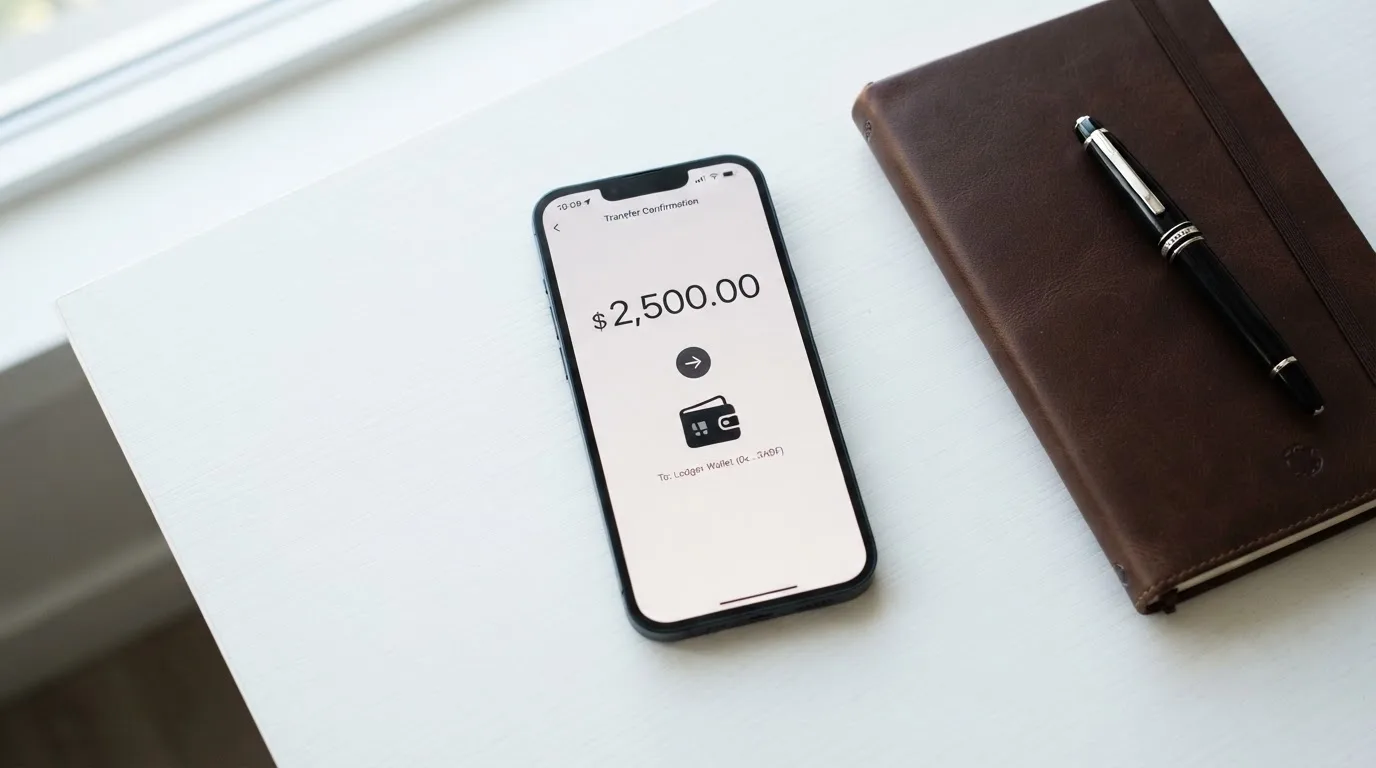
What that means in practice:
- You do not pick a coin to fund a payment. The shop is paid in fiat, the statement is in fiat, and the payment you make from your bank account is in fiat.
- Crypto enters the picture only as a reward. The 1% to 4% you earn is paid into your Gemini account in Bitcoin by default, or in any of 50-plus other cryptocurrencies, and you can change which one you receive at any time. That is genuinely useful, because it lets you capture the upside of a price move without manually converting rewards.
- The closest thing to a top-up is a cash advance. You can take cash out at an ATM against the card’s credit line at 29.49% APR, with a fee of $10 or 3% of the amount, whichever is greater. There is no fee-free way to convert the credit into cash for moving elsewhere.
If you were hoping for a card where you top up a stablecoin balance, transfer USDC on a specific network, and spend that balance at a merchant, this is not that product. The closest analogues are Lava and RedotPay, which I cover in the alternatives section, and the prepaid model is also the typical structure for non-US crypto debit cards.
Paying with it every day
Once the card is in your hand (or, more likely, in your phone), the day-to-day experience is built around contactless mobile payments and a few specific bonus categories.
The card works with Apple Pay, Google Pay, and Samsung Pay, according to Gemini support. Apple Pay, in particular, replaces your real card number with a device-specific number stored in the phone’s Secure Element, so a tokenised number goes to the merchant even if you tap to pay; the issuer can restrict a tokenised number independently of the physical card. That matters if your card is lost: freezing it in the app should stop both the plastic and the wallet.
On the app side, the Gemini iOS app is rated 4.8 out of 5 from around 110,000 ratings in the US App Store (read 2026-10-20). It supports iOS 17.2 and later, Apple Watch, and Apple Vision, and is localised into English, French, German, Italian, Portuguese, and Spanish. Russian is not among the supported languages, which is one reason this review is for English-speaking readers. I did not pull the Google Play rating for this pass.
The rewards structure is the part that will pull most people toward (or away from) the card:
- 4% back on gas, EV charging, and transit, on the first $300 of combined monthly spending in those categories.
- 3% back on dining.
- 2% back on groceries.
- 1% back on everything else.
- Rewards are paid instantly in Bitcoin by default, or in any of 50-plus other cryptocurrencies on Gemini, and you can change the reward coin at any time.
- 10% Vault Rewards at some merchants, capped and varying, for users who opt in.
- A referral programme pays $50 in crypto per signup, with an extra $250 for every five referrals, up to 50 referrals a year.
The instant-pay mechanic is a real differentiator. Many crypto cards pay rewards once a month or only on certain categories; here, the cashback lands in your Gemini account the moment the transaction settles, and you can swap the reward asset without unstaking or moving anything.
A few practical gaps you should know about before you picture yourself using it:
- Blocked merchant categories are not stated on the card page, and a few exclusions apply to instant rewards. If a specific category matters to you, ask Gemini directly before you apply.
- The cardholder agreement has a “Billing Rights” section on disputing transactions, but the 60-day window that US Regulation Z gives credit cardholders is not confirmed in the text I read, so do not assume you have that long.
What can go wrong
A credit card from a major US bank with no annual fee and a 4% rewards tier sounds like a clear win on paper, and the credit mechanics are. The things that bring the overall score down are operational: the support experience, the complaint record, and the limits of what Gemini can do as a programme manager rather than the issuer.
The most concrete signal is the public Trustpilot score for Gemini as a whole: 1.3 out of 5 across 1,513 reviews, with 212 in the last 12 months, and Gemini has replied to about 3% of negative reviews (read 2026-10-20). The themes that come up over and over, with dates drawn from public posts, are:
- Frozen accounts and withdrawal holds, including reports in August and September 2026 of holds lasting up to 35 days.
- Slow or unresponsive support, with email as the only channel and no phone line, particularly through July to September 2026.
- Card-specific problems: disputes denied after a card was compromised (October 2026), repeated declines over a three-month stretch (October 2026), a card closed without explanation (September 2026), the app losing balance or payment history after a July payment, and late fees charged after app glitches in July 2026.
- One user-reported case from January 2026 describes a fraud freeze that stayed unresolved for more than two months.
None of these are unique to crypto cards, and a complaint volume of this size is a function of how many customers Gemini has, not a guarantee that you will hit them. But the support model, in particular, is something to weigh: there is no published phone line for the card, the response time on email-only support is the most common complaint, and the public reply rate on negative reviews is very low. If your plan is to use this card as your primary card, you are betting that you will not need urgent help.
On the positive side of the risk ledger, the cardholder agreement version on file is dated 1 April 2026, the issuer is WebBank (a US industrial bank that has been around for a long time and runs several other fintech card programmes), and the credit account is a US-regulated credit account, not a crypto balance held by Gemini. That is a meaningful difference from a prepaid crypto card where the funds are at the mercy of a custodian: the worst-case scenario on a credit card is a billing dispute, not a frozen balance. The card page does not describe app-level controls like instant freeze, two-factor authentication, or spending limits; treat those as not stated until Gemini publishes them on the card page itself.
What to take instead
If the Gemini card does not fit your situation, three alternatives cover most of the cases I would think about. None of these is a credit card with rewards in Bitcoin; they are different shapes of product, and the trade-offs are different.
| Card | Score | Shape | Country fit | Headline fee | Headline reward |
|---|---|---|---|---|---|
| Gemini | 4.9 / 10 | Mastercard World Elite credit card, fiat, crypto rewards | US residents, all 50 states | No annual fee, no FX fee | 4% gas/EV/transit (cap $300/mo) |
| Lava | 7.1 / 10 | Crypto-funded spend at 150M merchants in 150+ countries | Not stated | No annual fee, no FX fee, no FX spread | Up to 5% back in Bitcoin |
| Trastra | 4.1 / 10 | Visa prepaid debit card, topped up from a Mover wallet | 31 listed countries, including Germany, France, UK; non-Europe not available | Not stated | Not stated |
| RedotPay | 6.9 / 10 | Visa debit (USD and HKD card), virtual and physical, crypto-funded | Long unsupported list; many EU/EEA residents, UK, Georgia, Armenia, Kazakhstan, UAE eligible; Russia, Belarus, Ukraine, Serbia, US, Mainland China, Singapore, India, Indonesia, Turkey, Morocco, Nepal not | $10 virtual, $100 physical, 1% transaction fee | 5 USDs welcome reward; no card cashback rate published |
A few thoughts on each, in the order most readers ask about them:
Lava is the strongest fit if you specifically want a crypto-funded card with no FX fees, no FX spread, and 5% back in Bitcoin. The card page does not say who can apply, and it does not name the network, but the spend reach (150 million merchants in 150+ countries) is genuinely wide for a non-US product. If Gemini’s US-only restriction rules you out, Lava is the first one to look at.
Trastra is a prepaid Visa debit card topped up from a Mover wallet with crypto. The eligibility list is the most useful part: it is available in 31 listed countries including Germany, France, and the UK, and the company says it “will be available for all residents of the European Economic Area (EEA)”. Outside Europe, the page says “Not at the moment.” That is a clear and honest answer, and it is the right card if you are in the EEA and you want a prepaid crypto-funded card. The published fee and reward detail on the page is thin, so you will need to dig further before applying.
RedotPay is the most operationally transparent alternative: a Visa debit card available in USD and HKD, with a published fee table that took effect on 1 December 2025. The headline costs are a $10 application fee for the virtual card and $100 for the physical card, a 1% transaction fee on the default-currency conversion, and a 1.20% fee on non-default currency. The country story is complicated: the KYC list of unsupported countries includes Russia, Belarus, Ukraine, Serbia, and the United States, and the card-issuance list dated 28 August 2026 adds India, Indonesia, Morocco, Nepal, Singapore, and Turkey. If you are in the EU, the UK, Georgia, Armenia, Kazakhstan, or the UAE, you are on neither list and the card is an option. The welcome reward is 5 USDs, usable only on spending and valid 30 days; no card cashback rate is published.
A wider point worth keeping in mind when you are shopping across these cards: most non-US crypto cards are prepaid debit cards, not credit cards. That means a credit pull is not part of the application, the card cannot overdraw, and any balance you load is held by the card’s custodian until you spend it. Gemini is the only card in this group that gives you a US credit line and credit-card-style dispute rights, and that is a real differentiator for the right reader.
Who I would recommend it to
The honest answer is that this is a niche card, and the niche is specific. I would recommend the Gemini card to a US resident who:
- Already has a Gemini account, trusts the brand for custody, and would rather keep rewards in Bitcoin than in statement credit.
- Drives or commutes enough to hit the 4% gas / EV / transit category regularly, but not so heavily that the $300 monthly cap feels restrictive. (If you drive a lot, the cap will start to feel small; if you only fill up once a month, the 4% is a meaningful extra.)
- Plans to pay the statement in full every month, so the 16.49% to 34.49% APR on purchases never kicks in.
- Is comfortable with a hard credit pull, an SSN as part of the application, and a US-issued credit account.
- Does not need a phone line for support and is willing to rely on the app and email.
I would not recommend the Gemini card if any of the following is true:
- You live outside the United States. There is no path I could find for a non-US application.
- You want to spend crypto directly. The card is repaid in fiat; the crypto is the reward, not the funding.
- You need cash-flow flexibility from a prepaid balance you top up. There is no top-up.
- You prioritise strong customer support. The Trustpilot record and the absence of a phone line are real.
- You are looking for a stablecoin-denominated card. This card does not hold a stablecoin balance.
If you do not fit the niche, the alternatives section above is the right place to start. If you do, this is a card worth applying for, and the application itself is the moment to confirm the credit limit and the APR you are being offered, because those are the two numbers that decide whether the rewards make sense for your spending.
Frequently asked questions
What is the Gemini card?
The Gemini card is a Mastercard World Elite credit card issued by WebBank and run by the Gemini cryptocurrency exchange. It is a US dollar credit card repaid in fiat, and it pays its 1% to 4% cashback in Bitcoin or in any of 50-plus other cryptocurrencies on Gemini. The cardholder agreement version on file is dated 1 April 2026.
How does the Gemini card work?
You apply, WebBank opens a credit account in your name, and the card works like any other US credit card: a purchase is authorised against the credit line, the statement is paid in USD, and the cashback is credited to your Gemini account in the cryptocurrency you have chosen. Rewards are paid instantly when each transaction settles, and you can change the reward coin at any time in the app.
Is Gemini a bank?
No. Gemini is a US-based cryptocurrency exchange, not a bank. The Gemini card is issued by WebBank, a US industrial bank that partners with fintechs. Gemini acts as the programme manager, which means it sets the rewards and the marketing, while WebBank handles the credit decision, the billing, and the regulatory side of the card.
Who owns Gemini?
Gemini Trust Company is a private company headquartered in the United States. The ownership is not relevant to the card application, which is between you and WebBank; Gemini’s licence and ownership details are not on the card page itself, so the public company filings are the place to confirm the latest corporate picture.
Is the Gemini card available outside the United States?
No, not for the card I am reviewing. Gemini support says residents of all 50 US states are eligible, and no other countries are listed on the card page. If you live outside the US, you would need to look at alternatives like Lava, Trastra, or RedotPay.
Does the Gemini card require KYC?
The card page does not spell out the KYC steps, but the card is a US credit application, so you should expect a creditworthiness check, identity verification, and the standard US customer identification programme (name, address, date of birth, and an identification number, which in practice is usually a Social Security Number). Specific KYC tiers, processing time, and the exact rejection reasons are not stated on the card page.
How do I activate the Gemini card?
The card page does not describe the activation flow, which is unusual but not unusual for a credit card issued through an app. The third-party reports I read describe a metal physical card arriving 5 to 7 days after approval and a virtual card being issued in the app once verification is done, but those details are unofficial until Gemini confirms them on the card page.
Is the Gemini card free?
There is no annual fee and no foreign transaction fee. There is, however, an APR on purchases of 16.49% to 34.49% variable, a cash advance APR of 29.49% variable, a cash advance fee of $10 or 3% per transaction, late-payment fees up to $35, returned-payment fees up to $35, and a $50 fee for each card replacement after the first free one in a 12-month period.
How do I add the Gemini card to Apple Wallet?
Gemini support says the card works with Apple Pay, Google Pay, and Samsung Pay. The standard Apple Pay flow applies: open the Wallet app, tap the plus icon, scan the card, and verify with the issuer. Because the card is a credit card, the verification step may include a code from WebBank or a 3-D Secure challenge, depending on how the issuer has set up tokenisation.
Is the Gemini card safe?
The card is a US-regulated credit account, not a crypto balance held by Gemini, so the worst-case scenario on the credit side is a billing dispute rather than a frozen balance. On the operational side, the public Trustpilot score is 1.3 out of 5 across 1,513 reviews and the support model is email-only with no published phone line, so the real safety question is whether you are comfortable with that support experience.
Credit and cashback cards – cryptocardchooser.com
Content created by the «cryptocardchooser.com» team