
A free virtual Visa on a crypto balance, priced by conversion, not by the card itself
 Available in US
The KeyOne card is a virtual Visa that spends a balance you fund yourself — from stablecoins, a bank transfer or another card. There is no monthly charge and no charge for the card itself on the free plan. What you pay instead is a fee on the way the money arrives, and a conversion fee when you spend in a currency other than your balance currency. That single sentence explains almost everything about this card, including both its appeal and its limits.
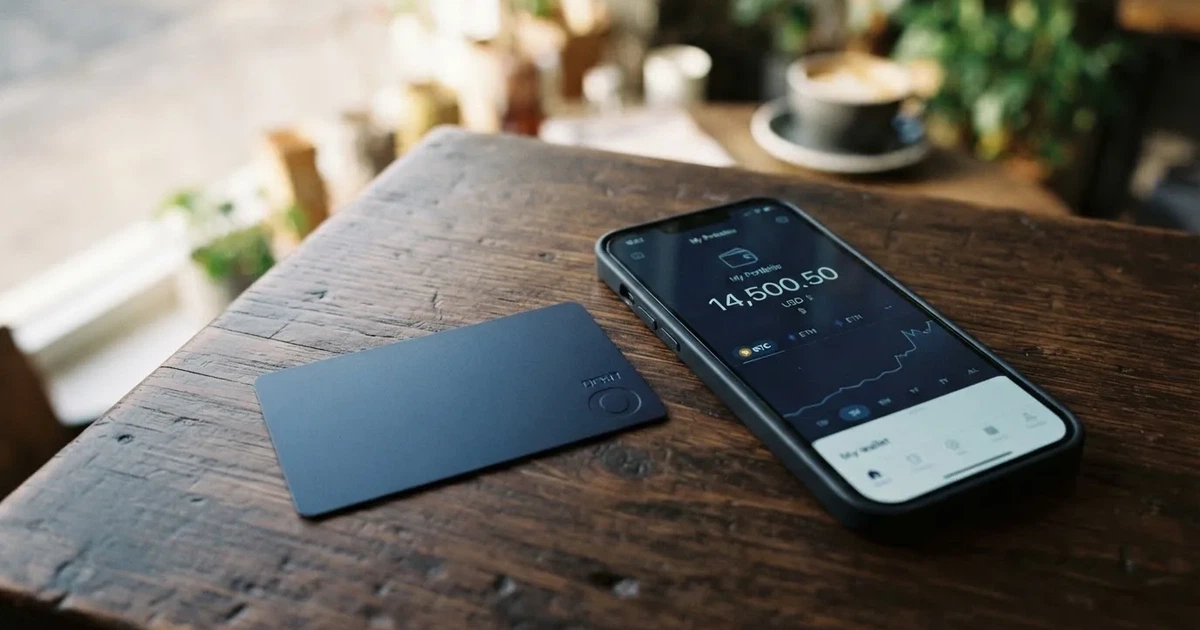
My score for KeyOne is 6.8 out of 10. It is a competent, low-cost way to hold and spend a small crypto balance, and for residents of Georgia, Serbia or Kazakhstan who want a card without a monthly fee it does a real job. It is not a good fit if you need a physical card, a large monthly volume, or a banking relationship with someone who answers the phone.
The conditions described here are current as of October 28, 2026.
Verdict: 6.8 out of 10
KeyOne suits people who want a crypto-linked payment card with no subscription and no interest in the finer points of card programmes. It does not suit people who need a plastic card in the post, an ATM, or a monthly spend of tens of thousands in a single currency.
| Criterion | Mark | Why |
|---|---|---|
| Who can get it | 7 / 10 | Cards for residents of 70 listed countries: Europe, Asia, UAE, Africa, Latin America, Australia |
| Cost | 8 / 10 | Free plan at EUR 0: issuance and monthly service free; payments in balance currency 0%, conversion up to 1%; crypto top-up 0.8% plus network fee |
| Top-up options | 7 / 10 | USDC and USDT, network not named; also SEPA, ACH and top-up from Visa/Mastercard; crypto withdrawal on the Base network only |
| Reliability and complaints | 7 / 10 | The card is issued by Wirex (Visa); KeyOne Solution Ltd is the technology interface, not a bank; no complaints found, no App Store rating yet |
| Everyday use | 4 / 10 | Virtual Visa only, Apple Pay available, Google Pay not disclosed; ATM not disclosed |
| Total | 6.8 / 10 | Cheap to hold and honest about being a prepaid card, limited in the places you can actually use it |
The weakest line is everyday use, and it drags the total down more than anything else. A card you can only hold on your phone, with no disclosed ATM story and no disclosed Google Pay support, is a narrower tool than the marketing implies. The cost side is genuinely good — nothing about the Free plan charges you for existing.
Will they give you the card?
Yes, if you live in one of 70 listed countries and can pass an identity check. No, if you live anywhere else.
Eligibility here is based on residence, not citizenship. The card is offered to residents of 70 countries: Europe including Georgia, Moldova, Ukraine, Serbia and Azerbaijan; Asia including Kazakhstan, Uzbekistan, Japan and Thailand; the UAE and Bahrain; Nigeria, Ghana, Kenya, South Africa and Uganda; Mexico, Brazil and Argentina; and Australia. Russia and Belarus are not on that list. For any country not listed, the site’s own wording is that you cannot apply for a KeyOne card yet. There is no excluded-country list published, and no statement about Russian or Belarusian citizens as such — the rule as published is about where you live.
That distinction matters if your situation is unusual. Someone with one nationality living and documenting their address in a supported country is in a different position from someone with a supported nationality living in an unsupported one. I would not read the list as a judgement about either.
What the identity check involves
You submit a government-issued ID. Accepted documents are a passport, ID card, driving licence or residence permit, with the exact types varying by the country your ID comes from. Your name and date of birth must appear on the document and match your application, the photo must match your selfie, and the validity date must be visible and in the future. Proof of address may be requested after the ID check, and card eligibility then depends on the residence that document shows. Additional checks may be required in some cases. You must be 18 or over.
Processing time is not stated — the site says it may vary, and that support can check the status for you. There are no defined verification tiers; the process is one sequence rather than a ladder.
How to get it
The sequence is short and entirely in-app:
- Check that your country of residence is on the supported list.
- Submit your ID document plus a selfie.
- Provide proof of address if you are asked for it.
- The card is issued in the app.
What you get at the end is a virtual Visa card only. No physical card is mentioned anywhere in the card’s own materials, and none is offered. Once approved, the card number, expiry date and CVV appear in the app.
The card balance currency is EUR — fees are quoted in euros and the card’s own wording is “payments in balance currency”. You are not choosing the currency at this stage.
What arrives after approval
Card number, expiry and CVV in the app. That is the entire physical-world footprint of this card, which is why I go looking for the ATM question later and come back empty-handed.
Fees and what a payment really costs
The Free plan costs nothing to hold: no issuance fee, no monthly service fee. Premium costs EUR 149 for 12 months, paid in one payment from the balance, valid 12 months from purchase, non-refundable except where the law requires it. Renewing early adds another 12 months. Extra cards cost EUR 10 each and exist on Premium only.

| Fee or limit | Free | Premium |
|---|---|---|
| Card issuance | Free | Free |
| Monthly fee | Free | Free |
| Payments in balance currency | 0% | 0% |
| Currency conversion | Up to 1% | Up to 1% |
| Crypto top-up (USDC/USDT) | 0.8% + network fee | 0.33% |
| SEPA / ACH top-up | 0.8% | 0.3% |
| Top-up from Visa/Mastercard | About 4.5% | About 4.5% |
| In-app exchange | 0.3% on first EUR 1,000/month, then 1.25% | 0.3% on first EUR 2,000/month, then 1.25% |
| Extra cards | Not available | EUR 10 each, 3 virtual cards included |
| Card spend per card per month | EUR 20,000 | EUR 30,000 |
| Single transaction | EUR 20,000 | EUR 30,000 |
| SEPA in/out | EUR 20,000 per month | EUR 20,000 per month |
| ATM | Not stated | Not stated |
Two things stand out. First, the 4.5% fee for topping up from another Visa or Mastercard is punishing — an order of magnitude above the crypto route — and it makes that option close to irrelevant except in small amounts or emergencies. Second, the in-app exchange rate drops to 1.25% past the monthly allowance, which is above the conversion fee and quietly the most expensive number in the table if you swap currency regularly.
Also worth knowing: individual limits may be lower than the published ones because of partner compliance checks, and the ATM position is simply not stated. Minimum top-up amounts are not stated either.
Three everyday payments
Coffee in a euro country, balance in EUR. You pay 0%. The cardholder agreement (section 5) says payments in the balance currency carry no fee. This is the cleanest case the card has.
A subscription billed in USD from your EUR balance. You pay a conversion fee of up to 1%. The agreement sets that ceiling, not a fixed rate, so what you actually pay sits somewhere under it depending on the conversion.
Anything bought on an ATM. The card does not say what happens here. Since there is no physical card, ATM use would run through a virtual card in a wallet or through Apple Pay at a terminal, and the card does not publish ATM terms either way. I would treat ATM withdrawal as unsupported rather than as merely undocumented.
A note on refunds
Refunds from merchants are credited back to your KeyOne balance, and they may arrive in a different currency from the original charge (section 7). So a USD refund on a EUR card does not neatly undo the original cost.
How to Top up the card
Four routes, and they are not equally good.
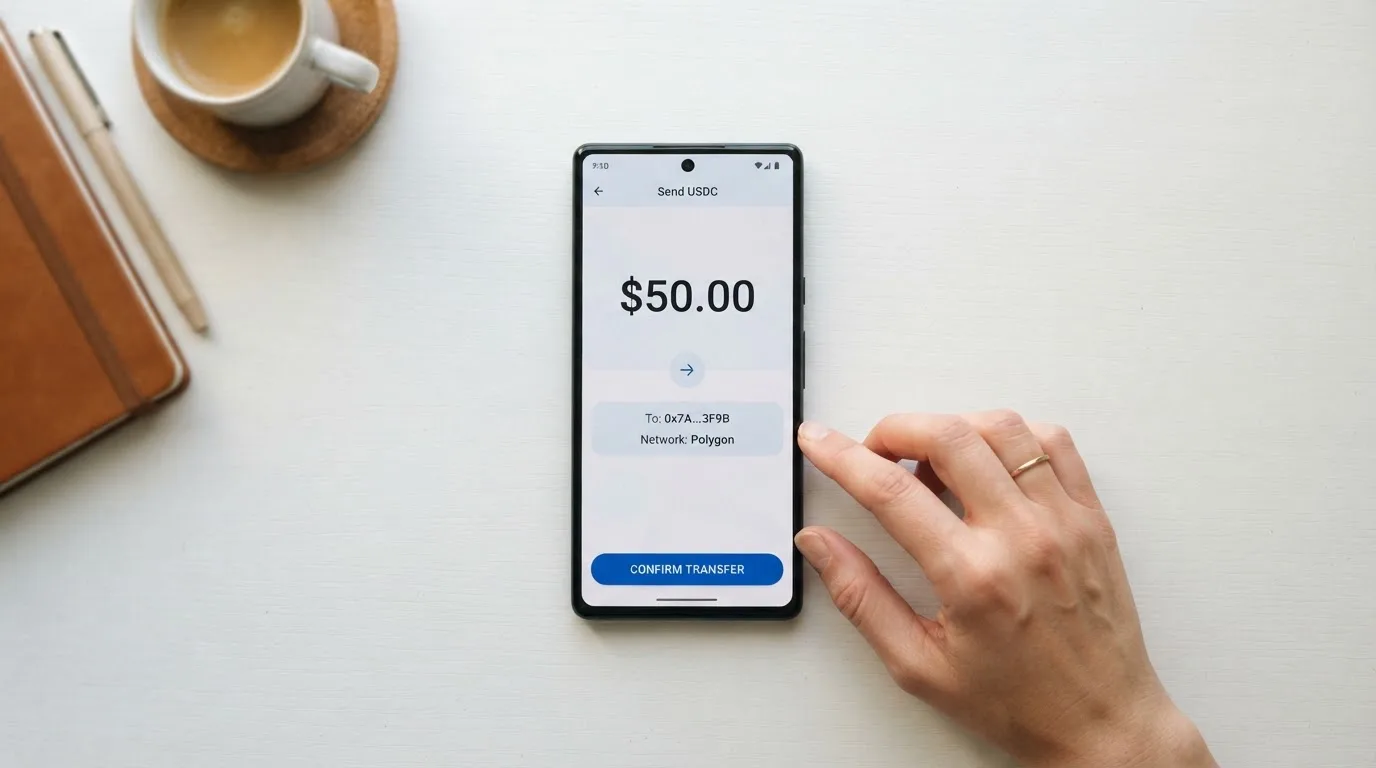
Crypto (USDC or USDT). This is the card’s natural route: 0.8% plus the network fee on Free, 0.33% on Premium. The network is not specified, which matters more than it sounds — see below.
SEPA and ACH bank transfers. 0.8% on Free, 0.3% on Premium. SEPA is available for many EU countries and the UK; Faster Payments in GBP and ACH in USD are for the UK only. The SEPA in/out limit is EUR 20,000 per month. Minimum top-up amounts are not stated.
Visa or Mastercard top-up. About 4.5%, which is expensive enough that I would only reach for it when the other three are unavailable.
Crypto withdrawal. Outbound crypto withdrawal works on the Base network only, with no KeyOne fee on top. Bank transfers out (SEPA or ACH) may carry a partner fee, which is shown before you confirm.
The network question, taken seriously
Topping up with USDC or USDT without a stated network is the one operational trap in this card. A stablecoin sent on a network the provider does not support, or to an address belonging to a different network, can be lost or need manual support recovery with no guarantee — blockchain transfers cannot be reversed. USDC exists natively on many chains, including Ethereum, Solana, Base, Polygon PoS, Avalanche, Arbitrum and Stellar; USDT has been issued on Ethereum, Tron, Solana, Polygon, Avalanche and others. So there are several wrong answers available for one right one, and the card does not tell you which it wants.
Two further cautions about stablecoins in general: they can lose their peg — TerraUSD collapsed in May 2022, and USDC briefly lost its peg in March 2023 during the US banking crisis — and Tether says it disables tokens in wallets on the OFAC sanctions list and freezes funds tied to illicit activity, so they are not censorship-proof.
Closing and deleting
You can close the card in the app at any time without affecting the balance. Account deletion is requested in the app under Profile > Support or by email; you withdraw remaining balances first, and the card and accounts are closed with Wirex. Deletion is stated to happen within 30 days. KYC and transaction records are kept for 5 years. The terms also say you may stop using the services and withdraw funds at any time, which is the sentence to read carefully if you are considering leaving a balance parked.
Paying with it every day
Apple Pay is supported — the card’s own wording is that you add it in one tap. Google Pay is not mentioned at all, which I read as undisclosed rather than unsupported, but I would not plan around it.
In the app, you approve or decline 3-D Secure payments yourself, you can block a compromised card, and the issuer may suspend or close a card for fraud or for a transaction from an unsupported country. The self-custody side works this way: private keys are created and stored on your own device through an embedded wallet provider, KeyOne cannot move your crypto without your signature, and losing the device or the PIN can mean permanent loss of funds. The card itself is tokenised in Apple Pay rather than stored as a card number, which is the safer arrangement.
No cashback is mentioned anywhere in the card’s materials. That is a notable omission for a card that positions itself around crypto, and it makes the comparison in the next section less favourable to KeyOne than it might otherwise be.
Restrictions do apply: the card says some countries, merchant categories and transactions are restricted, but does not publish the list. In this category that usually shows up as blocked gambling (MCC 7995), and prepaid or foreign BINs can also be declined because a merchant can look up the issuing institution and country from the first six or eight digits of the card number. If a decline happens, a declined authorisation can leave a hold on your funds for several days, typically up to seven.
The apps
iOS: “KeyOne: Crypto Card & Wallet”, iPhone with iOS 17 or later, version 1.0.10, in English, Russian and Serbian. The Irish App Store listing shows no rating — it “has not received enough ratings” as of 20 October 2026. The Android listing is com.keyonesolution.keyone, whose rating I could not retrieve. There is also a web app at app.keyonepay.com.
An unrated app is not a red flag by itself; most new financial apps start that way. It does mean you have no read on how other users experience support or payments.
What can go wrong
Nobody is a bank here. KeyOne Solution Ltd is incorporated in Saint Christopher and Nevis (company number C 63589) and states plainly that it is not a bank. It provides the technology interface. The card is issued by Wirex under its own regulatory permissions — Wirex became a Visa principal member in Europe in December 2020. No licences are named by KeyOne itself, and the governing law of the terms is Saint Christopher and Nevis. Because you are dealing with a programme manager and an e-money-style issuer rather than a bank, crypto balances are not covered by any deposit guarantee or investor compensation scheme.
Nobody has complained, and nobody has reviewed. Two searches on 20 October 2026 found no Trustpilot or Reddit page about KeyOne itself, and no user reports or news. That is genuinely ambiguous evidence. A brand this new can be clean because nobody has used it long enough to break it. Combined with the absent App Store rating, the honest reading is “too early to tell”, not “reliable”.
Disputes have no clock attached. Section 7 of the cardholder agreement says that if a transaction is not recognised or is wrong, you contact support, which helps file a dispute with the issuer. No time frames are given and the word chargeback is not used. The terms set no refund timeframes either. Blockchain transactions are irreversible. In the EU and the UK, prepaid-card coverage varies and should not be assumed rather than presumed.
The partner can change. Visa does not issue crypto cards to consumers itself; it licenses issuers and can suspend a programme. That is not hypothetical: Visa terminated its global agreements with FTX on 13 November 2022, and the FTX US debit card was wound down. WaveCrest, a Visa issuer that supplied crypto card brands, was suspended by Visa in Europe in 2018, closing all its Visa programmes. Closures follow a pattern — notice, then spending and loading stop, then you are asked to withdraw. That is the pattern to watch for here.
Software risk sits with you. Self-custody means phishing and clipboard-hijacking malware that swaps copied addresses are your problem, not the card’s. A seed phrase is typically 12 to 24 words in an unencrypted form, and anyone who obtains it can restore the wallet and spend the funds.
Tax is on you. I am not giving tax advice here, only flagging the mechanism. The IRS treats digital assets as property, so exchanging them for goods, services or dollars generally produces a taxable gain or loss, measured at fair market value on the date of each transaction — which means each card payment funded from crypto can be a separate disposal. Your own jurisdiction will have its own rules and your own thresholds.
Support hours are not published. The fastest channel is a Telegram support bot, @keyone_supportbot; there is email and an X account for status. The card says it usually responds within a few hours and always within 24 — but it does not state working hours, and the website language selector shows English only even though the iOS app lists English, Russian and Serbian. If you need help in Serbian, your odds are better in the app than on the site.
Both the Cardholder Agreement and the Terms were last updated on 12 October 2026.
What to take instead
Three alternatives came up in my comparison. None is clearly better; each trades away something KeyOne does well, and the score gap between them is narrow.
| KeyOne | Bitrefill | UPay | Kemy | |
|---|---|---|---|---|
| Score | 6.8 / 10 | 6.8 / 10 | 6.1 / 10 | 6.0 / 10 |
| Card | Virtual Visa only, EUR | Virtual and physical Visa, EUR implied | Virtual and physical, personal and business | Unlimited virtual Visa, one physical Mastercard |
| Free? | Free plan at EUR 0, no monthly fee | Page says card is free through the app; amounts not stated | Not stated | Virtual $15 issuance (3 years), $2/month |
| Cashback | Not stated | 2% total, uncapped: 1% per crypto deposit, 1% per purchase | Not stated | Not mentioned |
| Funding | USDC/USDT, SEPA, ACH, Visa/Mastercard | BTC, Lightning, ETH, USDC, USDT, Solana, Base, Polygon, SEPA | BTC, ETH, USDT, USDC | USDT, USDC, BTC, ETH, SOL, fiat rails |
| Notable catch | No physical card, no ATM detail | Inactivity fee after 12 months without spending or cash-out (amount not stated) | Network not named; ID documents must come from your country of residence | Physical card $250 plus $10/month |
Bitrefill scores the same 6.8 and is the one alternative with a real cashback offer — 2% total with no cap, split as 1% on each crypto deposit and 1% on each purchase, though the payout currency is not stated on the page. It offers a physical card as well as virtual, and accepts a wider range of coins. What gives me pause is the wording around eligibility: country list not stated, access “subject to eligibility criteria”, and “further eligibility requirements, established and verified by our partners, shall apply”. There is also an inactivity fee after 12 months without spending or cash-out, with the amount not stated. Its SEPA pay-in fee is a flat 1.99%, and it charges a deposit spread on crypto-to-euro conversion with the percentage not stated.
UPay comes in at 6.1. It has virtual and physical options in personal and business flavours, payments convert to USD, EUR, AED and others, and it claims support in 180+ countries. But almost every number I would want is missing: no fees stated, no cost stated, no network named for the coins. It says it does not serve residents of certain countries, with the list able to change. Its KYC partner accepts only ID documents issued by the same country as yours — that rules out the traveller with a valid passport and no local ID. No cashback on the card page.
Kemy at 6.0 is the one with the most transparent price list, and the most intimidating one. The virtual card is $15 to issue, valid three years, at $2 a month. The physical Mastercard is $250 with DHL Express included, one per user, at $10 a month. Transaction fees on virtual are 3.5% plus $1, with $0.80 for a failed transaction. It accepts USDC and USDT “on the main networks” plus BTC, ETH and SOL. The pricing page does not separate consumer from business, and there is an internal conflict in the deposit fee — shown as 8% in the summary but 5% in the section — which is exactly the sort of thing that makes me want to read the contract rather than the page.
If you want me to rank them for a specific situation: KeyOne or Bitrefill if cost is your priority, Bitrefill if cashback is, Kemy if you need a physical card and can stomach the monthly figure, UPay only if the country-and-ID requirement happens to fit you exactly.
Who I would recommend it to
Recommend KeyOne if you live in a supported country, mostly spend in EUR or another single currency, hold a modest balance, and want a card that costs nothing to keep. It is a good fit for residents of Georgia, Serbia or Kazakhstan in particular who want a free card tied to a crypto balance.
Be more cautious if you spend in many currencies, swap often, or push more than EUR 20,000 a month through a single card. The exchange cliff at 1.25% past the monthly allowance is where the economics get worse than the headline “free card” suggests.
Skip it if you need a physical card, need cash from ATMs, need Google Pay, need a banking relationship with someone who picks up the phone, or want any deposit-guarantee protection on your balance.
The honest summary is that this is a well-priced prepaid card wrapped around a self-custody wallet, run by a technology company in Saint Christopher and Nevis on top of a Wirex Visa programme. That combination is cheap, transparent about fees and technically modern. It is also young, unrated, and thin exactly where you would want depth: the places you can use it, and the moments you need help.
Frequently asked questions
What is KeyOne card?
KeyOne is a virtual Visa card you hold inside an app and fund yourself — from USDC or USDT, a SEPA or ACH bank transfer, or another Visa or Mastercard. It spends a balance you have loaded, much like a prepaid card, rather than drawing on a bank account. The card is issued by Wirex; KeyOne Solution Ltd provides the technology interface and states that it is not a bank.
How does the KeyOne card work?
You top up the balance, then pay with it in stores, online or through Apple Pay. Payments in your balance currency carry no fee; spending in another currency adds a conversion fee of up to 1%. Because it behaves like a prepaid card drawing on a stored balance, it cannot overdraw. The app also holds a self-custody crypto wallet whose private keys live on your own device.
Is KeyOne a bank?
No. KeyOne Solution Ltd, incorporated in Saint Christopher and Nevis, says explicitly that it is not a bank, and the card is issued by Wirex under Wirex’s own regulatory permissions. That distinction has consequences: crypto balances are not covered by a deposit guarantee scheme or investor compensation, and a bank’s usual dispute and refund protections do not automatically apply.
Who owns KeyOne?
KeyOne Solution Ltd is the company behind the app, registered in Saint Christopher and Nevis under company number C 63589. It provides the technology interface and is not the issuer. Wirex, a Visa principal member in Europe since December 2020, issues the KeyOne Visa card under its own regulatory permissions.
Can I get a KeyOne card in my country?
Cards are for residents of 70 listed countries, covering Europe, Asia, the UAE and Bahrain, several African countries, parts of Latin America and Australia. Eligibility follows residence, not citizenship. Russia and Belarus are not listed, and for any country not on the list the site’s own answer is that you cannot apply yet.
Is the KeyOne card free?
The Free plan costs EUR 0 — no issuance fee and no monthly service fee — with one virtual card and EUR 20,000 monthly spend per card. Premium is EUR 149 for 12 months and cuts the crypto top-up fee from 0.8% to 0.33% and raises the spend limit to EUR 30,000. The catch is that the card is free to hold, not free to use with: conversion tops out at 1%.
How do I top up the KeyOne card?
Four ways: USDC or USDT crypto at 0.8% plus the network fee, SEPA or ACH at 0.8% on Free, and about 4.5% from another Visa or Mastercard — expensive enough to avoid. Which network to use for stablecoins is not stated, so confirm the supported chain before sending anything, since blockchain transfers cannot be reversed.
Can I use the KeyOne card with Apple Pay?
Apple Pay is supported and the card says you can add it in one tap. Google Pay is not mentioned anywhere in the card’s materials, so treat it as undisclosed rather than confirmed. The card is virtual only — no physical card is offered — and ATM terms are not stated either.
Is the KeyOne card safe?
There is no track record to judge it on: no Trustpilot or Reddit page about KeyOne was found in two searches on 20 October 2026, and the Irish App Store listing has too few ratings to show a score. The good parts are real — self-custody keys on your device, 3-D Secure approval in the app, instant card blocking. The gap is that losing your device or PIN can mean permanent loss of crypto.
How do I withdraw money or close my KeyOne account?
Crypto withdrawal works on the Base network only, with no KeyOne fee; SEPA and ACH withdrawals may carry a partner fee shown before you confirm. You can close the card in the app without touching the balance. To delete the account, request it in the app or by email and withdraw remaining balances first — deletion completes within 30 days, though records are kept for 5 years.
Virtual cards – cryptocardchooser.com
Content created by the «cryptocardchooser.com» team