
A dollar card with XPL cashback, and a lot of what-ifs around it
 Available in US
Plasma One is a Visa card paid for out of a crypto balance. The Lite tier costs nothing and pays 2% cashback in XPL; the paid tiers pay more and, on the top one, cover the currency conversion fee. On paper that is a good deal for anyone who wants to spend dollars without a traditional bank account. My score for it is 7.1 out of 10. The number is not lower because the product is bad — it is lower because an unusual number of the things you would want to know before you rely on it are simply not published.
Conditions are current as of October 28, 2026.
Verdict: 7.1 / 10, best for dollar-account users who want cashback in XPL
I gave it 7.1 out of 10. Here is the breakdown, criterion by criterion, with the mark each one earned.
| Criterion | Mark | Why |
|---|---|---|
| Who can get it | 7 / 10 | Eligibility turns on where you live, and the restricted list in the Terms appendix is long: Belarus, India, Israel, China, Russia, Turkey, Ukraine and Vietnam are named there, alongside Cuba, Iran and North Korea. The list says it is not exhaustive. |
| Cost | 8 / 10 | Lite with a card costs 0 dollars and the card states it “does not charge any additional fees”. FX outside USD is up to 1%, cross-border 0%. Core and Platinum are the paid part, either a fee or a lock of XPL. |
| Top-up options | 7 / 10 | Add local currency, get dollars; third-party sources list USDT, USDC and USDG on specific networks, plus USD, EUR, GBP, MXN, BRL and COP accounts and withdrawal to a bank or a wallet. |
| Reliability and complaints | 6 / 10 | The issuer is Rain, a Visa participant, services run through Bridge, and Plasma states it is not a bank. Collateral on the card can be liquidated after non-payment. Trustpilot shows 3.4–3.5 out of 5 from two reviews, one complaining that terms changed. |
| Everyday use | 7 / 10 | Virtual and physical Visa, Apple Pay and Google Pay. Third-party sources say the physical card is a Platinum feature and say nothing useful about cash machines. |
The score is not a ranking against every card on the market. It is a judgement about this card against what a reader in the position described above could reasonably expect from it.
Who it suits, plainly:
- You already hold dollars or dollar-pegged stablecoins and want a Visa number that spends them.
- You are comfortable with a card account that is backed by collateral you can lose.
- You live in a country where the service is actually offered, and you checked the restricted list rather than assuming.
- You want cashback in XPL and are willing to accept that the rate depends on which tier you are in and can change.
Who it does not suit:
- You need a bank account, a sort code or a cheque, or anything that only a regulated deposit institution gives you.
- You are in a restricted jurisdiction, or hold only an identity document from one, and you were hoping “crypto” would sidestep the rules. It does not.
- You want to know exactly what a foreign-currency payment costs before you make it, because the public pages do not give you a full fee schedule.
- You are the kind of user who needs the physical card in the post as the main way to pay, because delivery is not described on the public pages.
- You cannot accept that your balance may sit outside any deposit guarantee.
There is one more group I want to name because it is easy to skip past: people who already have a working card and are only here for the cashback. If that is you, the free Lite tier is the only version of this card that asks nothing of you, and my advice is to try that one first rather than paying to unlock a tier.
Will they give you the card?
Mostly yes if you are in a supported country, and the country list itself is not published. That is the first thing you will notice: the Terms of Service Appendix I gives you a list of places you cannot be, but not a list of places you can. The card’s own wording is that “Geographic, regulatory, and other eligibility limits apply, and are subject to change”. That is honest, and it is also not much to plan around.
The restricted list in the appendix names Afghanistan, Belarus, Bosnia and Herzegovina, Central African Republic, China (Mainland), DR Congo, Guinea, Guinea-Bissau, Haiti, India, Iraq, Israel, Libya, Mali, Myanmar, Nepal, Nicaragua, Russia, Somalia, South Sudan, Sudan, Syria, Turkey, Ukraine, Venezuela, Vietnam, Yemen and Zimbabwe, plus Cuba, Iran and North Korea. The Terms describe the trigger as being “located in or ordinarily resident in” one of them, so both your address and where you habitually live are in scope. The Ukraine entry carries a carve-out for Crimea, Donetsk, Luhansk, Kherson and Zaporizhzhia, which reads as those regions being treated as restricted.
Two details worth holding on to. The list says it is not exhaustive, which means a country absent from it is not automatically fine. And the International Card Terms ask you to attest that you are not a US citizen — citizenship is checked separately from residence, which is normal in this industry and not something to plan around.
How the service is structured follows from residence: US residents, EEA residents and everyone else are served by different Bridge entities. Different entity means different contract, different support route, potentially different terms.
On third-party descriptions, I would be careful. Unofficial write-ups disagree with each other and with the Terms. One says 188 countries with seven restricted; another lists only the United States; another says 150+ countries excluding the US; one restricts it to 31 US states. Unofficial sources also claim Belarus, China, India, Turkey, Vietnam and Nigeria may still qualify with proof of residence elsewhere, and that access is invite-only in places. None of that is confirmed by the card, and where it contradicts the official Terms I go with the Terms.
How to get it
The card’s pitch is speed: “Get a card you can add to your wallet in minutes.” What you actually have to do is complete identity verification. The card does not publish the documents it wants, the verification levels, how long review takes, or why a rejection happens. It says only that you must be 18 or over, that you may hold one Card Account per person, and that you cannot be under US, UK or EU sanctions.
That is the honest version of what signing up involves, and it is thinner than you would like. What you should do next is simple: before you start, find the current list of restricted countries in the Terms appendix and check where you actually live, not where your documents are from. Then expect the standard verification dance, and expect to be told only if something goes wrong rather than being told in advance.
On the card itself: virtual and physical, Visa, “issued by Rain, a Visa Principal Member”, accepted in 180+ countries, with a USD account — “Add local currency. Get dollars”.
What the card does not tell you, and what that costs you in planning:
- Physical card delivery. No delivery countries, no time, no cost, no replacement fee. The Terms do say cards are activated through the Plasma One app and that replacement cards may carry a new number.
- Verification detail. Unofficial sources describe legal name, date of birth, government ID, residence, address, a liveness video, proof of address in some countries, automated checks usually up to 5 minutes with human review on request. Plausible, and not confirmed by the card.
- Whether a physical card even comes with your tier. Unofficial sources say the physical card is a Platinum-only feature and that the Core physical card is not confirmed live. The card’s own pages do not settle it.
That last point is the one I would resolve before paying anything. The Terms’ promise that a replacement card may have a new number is also worth noting early: it means you may need to update subscriptions and stored cards after a replacement.
What it really costs: the Fees, the tiers and the gap in between
Here is the honest version of the pricing, and it is not entirely published. The card states that “Plasma One does not charge any additional fees”, and that partner fees are shown in the app before you confirm. It lists three tiers — Lite, Core, Platinum — with fee levels of standard, reduced, and none added. It does not publish the tier prices.

| Fee or limit | What the card says |
|---|---|
| Lite card cost | $0 |
| Monthly fee | not stated |
| Core and Platinum | fee levels reduced and none added; prices not stated; unlocked by subscription or XPL lock |
| Conversion, non-USD | foreign exchange up to 1% |
| Cross-border | 0% |
| Purchase APR | 0% |
| Platinum FX fee | covered by the tier |
| ATM fee | not stated |
| ATM Rewards | withdrawals earn no Rewards; Spending Credit cannot be applied to ATM withdrawals |
| Spending limits | set by Plasma based on collateral, changeable, reducible to $0 at any time, no dollar maximums stated |
| Cash-like transactions | may be restricted |
Now the three tiers as described:
- Lite — $0 card cost, 2% base cashback, one free virtual card, standard support.
- Core — 3% base and 5% AI cashback, ChatGPT Go, reduced fees, priority support, up to two free virtual cards. Unlocked by an annual USD subscription or a 12-month XPL lock.
- Platinum — 4% base and 10% AI cashback, up to $600/year flight cashback, no added fees with the FX fee covered, VIP support, up to three free virtual cards. Unlocked by an XPL lock only.
The Core and Platinum prices are in the Help Center, not on the public pages, and unofficial figures for them differ: one source gives Core at $199/year or a 20,000 XPL lock for 12 months and Platinum at a 100,000 XPL lock for 12 months, with a launch rate rising to 150,000 XPL; another gives a $0–$120/year range or an XPL lock. Take none of those as the price. What is worth knowing is the shape of the deal: two of the three tiers are paid for, and the top one is paid for in XPL with a lock you cannot break early — the card states locked XPL cannot be unlocked before the term and that the account cannot be closed while a lock is active.
Three everyday payments, and which fees apply:
- A coffee in your own country, in local currency. The non-USD foreign exchange fee of up to 1% can apply, plus a partner fee shown in the app before you confirm. On Lite, an unofficial source puts the Plasma markup at 1%.
- An online subscription in dollars. 0% APR on purchases, cross-border 0%, no conversion line — this is the case the card is genuinely good at.
- Anything in a currency you do not hold. Unofficial sources put the Visa network FX at about 1% on top of the tier markup, and one puts a non-USD spend fee near 2%. Two sources, two numbers, neither confirmed by the card — which is why the in-app preview matters.
How to Top up the card
The official description is one line: add local currency, receive dollars. You can withdraw to a bank or a wallet through in-app off-ramps where available, and USDT is mentioned for transfers. Networks are not stated.
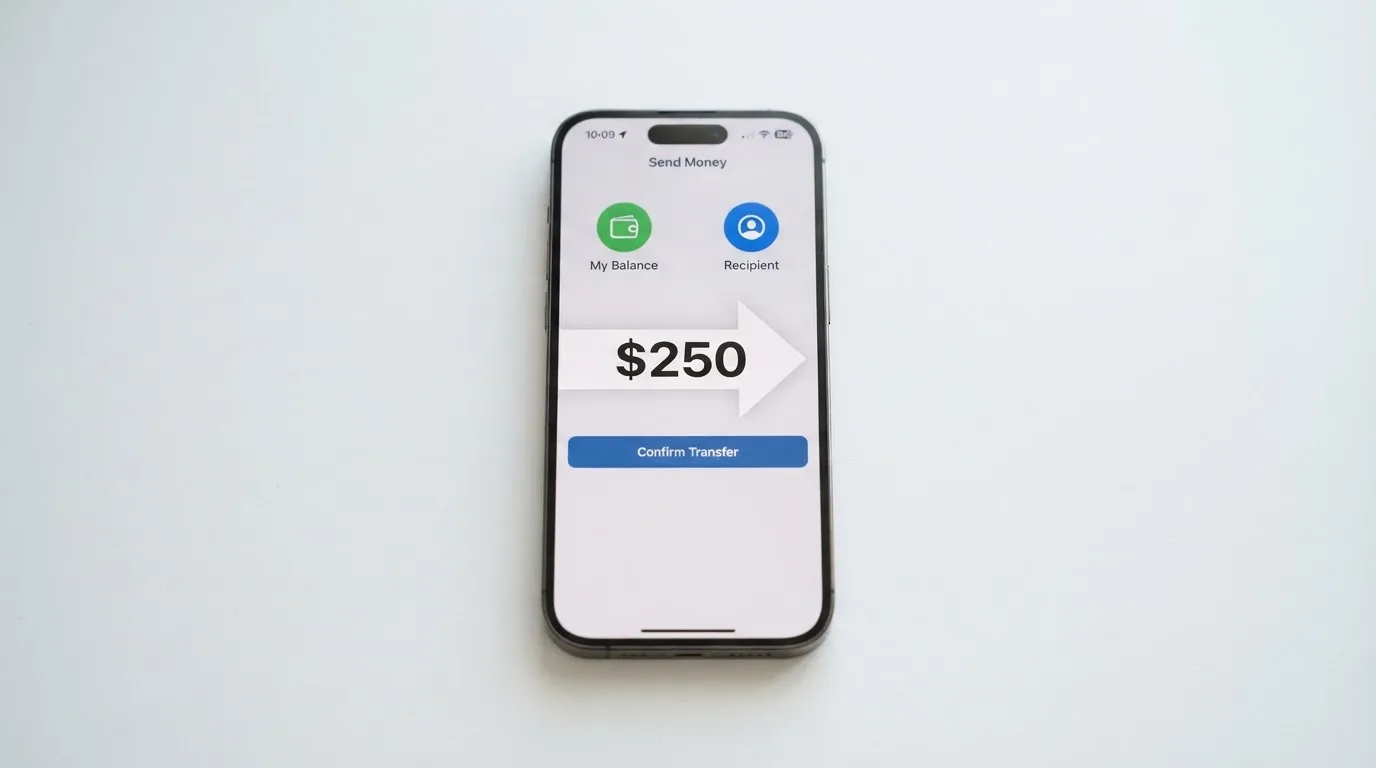
Official pages do not publish top-up fees or minimums. The card says it charges no additional fees and that partner fees on some FX and bank-withdrawal transactions appear in the app before you confirm. Cash Out “may carry processing fees and minimums”, with amounts unspecified.
What unofficial sources add, which you should treat as unconfirmed: deposits in USDT, USDC and USDG on listed networks, usually landing within five minutes; fiat virtual accounts in USD, EUR, GBP, MXN, BRL and COP converted to USDT; and a restriction that New York residents cannot use the fiat rails. Another source says USDT and USDG deposits are free, USDC free up to $30,000 per transaction, with USD ACH on-ramp fees of $1.00 / $0.50 / $0.50 by tier, wire $15 / $15 / $10, and USD ACH off-ramp at 0.75% / 0.35% / 0.10% plus an ACH fee.
The honest summary for a first-time user: adding local currency and receiving dollars is the documented path and the one to plan around; stablecoin deposits and the fee numbers above are plausible and not confirmed. Where a transfer is involved, the network matters more than the amount — sending on a network the provider does not support can be lost or need manual recovery with no guarantee, and crypto transfers cannot be reversed.
Paying with it every day
Apple Pay on iPhone and Google Pay on Android, with availability depending on region. Blocked merchant categories are not stated, which is a real gap rather than a technicality — you do not find out which categories are closed until you try them.
The virtual card is the one you will actually use day to day, and the one reviews mention favourably. Cashback is in XPL: 2% base on Lite, 3% base and 5% AI on Core, 4% base, 10% AI and up to $600/year flight cashback on Platinum. The card says rates vary by tier and may change.
The app is on iOS and Android. Store ratings and the number of ratings are not stated on the site, and I could not find them either, so I cannot tell you whether the app is well regarded.
Disputes are handled by a team that helps with unauthorised charges and issues a replacement card, with one hard deadline: a disputed charge must be reported within 60 days after it posts to your statement. Miss that and the help is worth much less.
A few things to expect from the card category generally, since they bite crypto cards more than ordinary ones: a card number starts with a 6 or 8 digit issuer identification number, and merchants can look it up and apply extra scrutiny when the issuer country differs from your billing address, which is why a card issued in one country can look foreign. Some shops decline prepaid or foreign-issued numbers for that reason. Address verification is mainly a US, Canada and UK thing and is generally unavailable for foreign-issued cards, which can cause declines. Declined authorisations can leave a hold on funds for up to 7 days. And in tokenised mobile payments the card number is replaced by a device-specific number with a one-time code per payment, so a decline in Apple Pay is not always a decline of the card.
What can go wrong
Start with the one that is genuinely unusual about this card. It is a collateral-backed account, and the card states that collateral can be liquidated after non-payment. That is a different failure mode from a normal bank card, where a missed payment is a debt you negotiate. Here, what you have put in is what you can lose.
Also worth being clear about:
- Plasma is not a bank. It describes itself as a financial technology company and says it is not a regulated financial institution or a bank. Account services are powered by Bridge; the card is issued by Rain, a Visa Principal Member.
- Your stablecoin balance is not a bank deposit. The card says stablecoin balances are not bank deposits and are not covered by FSCS or FDIC. Payment institutions must safeguard customer funds, but safeguarded is not the same as guaranteed.
- Self-custody, in the card’s reading. The FAQ says you hold custody and Plasma does not. That removes one risk and adds another: key loss, phishing, and malware that swaps a copied address are now entirely your problem.
- Limits can go to zero. Spending limits are set by Plasma based on collateral and can be changed or reduced to $0 at any time, with no dollar maximums published, and cash-like transactions may be restricted.
- Terms can move. The Trustpilot picture is thin — 3.4 to 3.5 out of 5 from only two reviews, the company not having invited reviews — and the critical one says the terms and the arbitration body changed after the reviewer flagged problems, and that advertised Platinum benefits are not in the currently published tier. A second review from July 2026 praises the cashback, low fees and virtual card but notes there was no physical card yet and access was a private beta with an access key. No official incidents were found and no Reddit threads, but two reviews is not a reputation.
- Terms have already moved once recently. Effective 26 February 2026, with the issuer named as Third National in the defined terms and Rain in a footnote. The Android Core promotion of six months free ended 21 July 2026. A Platinum lock was set at a launch rate for the first 30 days and then moved into the Help Center.
- A card programme can simply close. Visa terminated its global agreements with FTX on 13 November 2022 and the FTX US debit card was wound down. WaveCrest, a Visa issuer that supplied crypto card brands, was suspended by Visa in Europe in 2018, closing all WaveCrest-issued Visa programmes. Closures typically mean a notice period, then spending and loading stop, then you are asked to withdraw. On closure, the card says the issuer may suspend or cancel at any time, that withdrawing collateral does not end outstanding obligations, and that Spending Credit is not cash and is forfeited if the account closes.
- Taxes are on you. Digital assets are property in the US IRS’s view, so spending them produces a taxable gain or loss measured in local currency at the value on the date of each payment. That is information, not advice — talk to someone qualified about your own position.
What to take instead
I score the same category, so you can see how they sit beside each other.
| Alternative | Score | Card | Cost | Fees |
|---|---|---|---|---|
| Plasma One | 7.1 / 10 | Visa, virtual and physical | Lite $0; Core and Platinum paid or XPL-locked | Non-USD FX up to 1%, cross-border 0%; tier prices not stated |
| MetaMask | 7.1 / 10 | Mastercard, virtual instant, metal $199/year | Virtual free, metal $199/year | “Minimal fee for each transaction” — amount not stated; no foreign transaction fee |
| KAST | 6.1 / 10 | Visa, virtual and physical, up to 10 cards | Standard $0; Premium 1,000 USD/year; Private 10,000 USD/year | Stablecoin top-up 0%, USD spend 0%, non-USD FX 0.5%–1.75%; declined payment 0.50 USD |
| Zeal | 6.1 / 10 | Visa, virtual, Apple Pay | not stated | No additional FX fee; Visa wholesale rate |
A few things to weigh if one of these fits you better:
- MetaMask if you want a card that spends directly from a connected wallet on Linea, Base, Monad or Solana with tokens including mUSD, wETH, EURe, GBPe, USDC and USDT, and you would rather have no foreign transaction fee than a tier ladder. Sign-up is open in 45 listed countries and territories, others waitlist; US and UK sign-ups are temporarily closed. Cashback is 1% on Virtual, and 3% up to the first $10,000 spent then 1% on Metal.
- KAST if you want published numbers. Standard is 0 USD a year with 1.5% cashback on the first 2,000 USD a month; Premium is 1,000 USD a year with 2% on the first 10,000; Private is 10,000 USD a year with 3% on the first 40,000. Non-USD FX is 0.5% to 1.75% depending on where you live and which programme you are on. But the country list is not published, ID document nationality matters as well as residence, a Standard physical card costs 0 USD plus 40 USD delivery, and there is a 1 USD a month inactivity fee after 12 months.
- Zeal if you want no FX markup on your side at all — it converts at the Visa wholesale rate — and cashback paid in GNO, up to 4%, with the GNO held in the card Safe to qualify. Spend is live in the EU, UK, Brazil, Colombia, Mexico, Japan, Singapore, Philippines, Indonesia and Thailand. But no fee schedule is published at all and there is no physical card described.
One structural point that applies to all of them. A card is a payment service regulated under e-money and payments law, while MiCA in the EU covers the crypto side — custody, exchange, transfer — so a crypto card usually depends on two licences. MiCA took legal effect in June 2023; its stablecoin rules applied from 30 June 2024 and the rest, including crypto-asset service provider rules, from 30 December 2024; under Article 48 e-money tokens may be issued only by a credit institution or an electronic money institution. The grandfathering period runs only until 1 July 2026 or a MiCA authorisation, whichever comes first, and ESMA keeps an interim register of authorised providers and white papers you can check. Where a card provider sits on that register matters more than any cashback rate.
Who I would recommend it to
I would recommend Plasma One to someone who already lives in a supported country, already holds dollars or dollar-pegged stablecoins, has no workable ordinary card, and is looking at the free Lite tier as an experiment rather than a plan. That person gets a Visa number in a wallet, 2% cashback in XPL, no monthly fee, and cross-border at 0% — for nothing.
I would not recommend it to someone whose income is in a currency they cannot easily convert, because the FX path is where the unpublished fees live. Nor to anyone in or habitually resident in a restricted jurisdiction, or holding only an identity document from one — the Terms are explicit, and a virtual-only product does not change that. Nor to anyone building a business around predictable margins under 1% spreads, because there is no published schedule to predict against. And not to anyone who needs the physical card as their primary way to pay, because delivery is undescribed and the physical card may be a Platinum-only feature.
Between those poles sits a real decision: if the Lite tier does everything you need, never pay for Core or Platinum until it does not. And read the Terms appendix before anything else — it is the only place the eligibility rules are actually written down, and it may change.
Frequently asked questions
What is the Plasma One card?
Plasma One is a Visa payment card that spends a balance you hold in crypto or dollars rather than a bank account. It is issued by Rain, a Visa Principal Member, with account services powered by Bridge, and comes as a virtual card, a physical card, or both. You add local currency and receive dollars, or deposit stablecoins, then spend that balance. Cashback is paid in XPL, the token of the Plasma network. The company describes itself as a financial technology company and states it is not a bank.
How does the Plasma One card work?
You hold a balance, and the card draws on it like a prepaid card rather than borrowing from a linked current account. Add local currency and you get dollars; deposits in USDT, USDC and USDG are also reported, though unofficial. Spending the balance converts it and loads it as fiat value. Purchases carry 0% APR and cross-border payments 0%, while non-USD foreign exchange is up to 1%. Spending limits are set by the company based on collateral and can be reduced to $0 at any time.
Is Plasma One a bank?
No, and the card says so itself. Plasma describes itself as a financial technology company and not a regulated financial institution or bank. The card is issued by Rain, and account services are powered by Bridge, with US, EEA and other residents served by different Bridge entities. That means your balance is not a bank deposit: the card states stablecoin balances are not covered by FSCS or FDIC. You are exposed to the company and the issuer, not just to the network.
Who owns Plasma One?
Plasma owns the product and the app; it is not the card issuer. The card is issued by Rain, described as a Visa Principal Member, and Bridge provides the account services behind it. In the defined terms effective 26 February 2026 the issuer is named as Third National, with Rain appearing in a footnote. None of these companies is a bank, and the card is collateral-backed, which means the balance behind it can be liquidated after non-payment.
Can I get the Plasma One card in my country?
It depends entirely on where you live, and the supported list is not published. The Terms of Service Appendix I names restricted jurisdictions including Belarus, India, Israel, China (Mainland), Russia, Turkey, Ukraine and Vietnam, plus Cuba, Iran and North Korea, and warns the list is not exhaustive. The trigger is being “located in or ordinarily resident in” one of them. Official pages say only that geographic and regulatory eligibility limits apply and are subject to change, so check the appendix against where you actually live before you start.
Does the Plasma One card require KYC?
Yes. The card requires you to complete identity verification, be 18 or over, hold one Card Account per person, and not be under US, UK or EU sanctions. The documents required, the verification levels, how long review takes and the reasons for rejection are not stated on the public pages. Unofficial sources describe legal name, date of birth, government ID, address, a liveness video and sometimes proof of address, with automated checks usually up to 5 minutes. If due diligence cannot be completed, accounts are commonly frozen or closed pending documents.
Is the Plasma One card free?
The Lite tier is: the card cost is $0 and the card states it “does not charge any additional fees”. Core and Platinum are the paid tiers, unlocked by an annual USD subscription or a 12-month XPL lock, with Platinum reachable only by an XPL lock. Those tier prices sit in the Help Center rather than on the public pages, and unofficial figures disagree, from $199/year for Core to a range of $0–$120/year elsewhere. Locked XPL cannot be unlocked early, and the account cannot be closed while a lock is active.
What are the Plasma One fees?
The card publishes two clearly: foreign exchange on non-USD spending is up to 1%, and cross-border is 0%, with 0% APR on purchases and the Visa FX fee covered on Platinum. Partner fees for some FX and bank-withdrawal transactions are shown in the app before you confirm, which is where to check before a large transfer. Not stated: tier prices, ATM fees, monthly fees and cash-machine allowances. Unofficial figures put the Plasma markup at 1% Lite, 0.5% Core and 0% Platinum, with a Visa network FX of about 1% possible on top.
How do I top up and withdraw from the Plasma One card?
The documented path is simple: add local currency in the app and receive dollars, then spend that balance. Withdrawals go to a bank or a wallet through in-app off-ramps where available, and the rails depend on your region. Top-up fees and minimums are not stated, and Cash Out “may carry processing fees and minimums” of unspecified size. Unofficial sources list USDT, USDC and USDG deposits on specific networks plus USD, EUR, GBP, MXN, BRL and COP accounts. Check the network carefully — transfers are irreversible.
Is the Plasma One card safe?
It depends what you mean by safe. The card names PCI DSS v4.0.1 Level 1 as a service provider, offers instant card freeze and account lock in the app, and lists 24/7 support with a support level that rises by tier. The FAQ says you hold custody of your assets. Against that: the balance is not a deposit guarantee, collateral can be liquidated after non-payment, limits can drop to $0, terms have changed before, and two Trustpilot reviews from an uninvited pool average 3.4–3.5 out of 5.
Wallet cards – cryptocardchooser.com
Content created by the «cryptocardchooser.com» team