
A crypto card from the MultiversX ecosystem, strong on everyday use and quiet on the details
 Available in US
The xPortal card is a payment card attached to a crypto wallet rather than to a bank account. You hold crypto in the wallet, you top the card up, and the card spends a euro balance like an ordinary Mastercard Debit. On paper it is built for people who want to pay daily from crypto without juggling exchanges — most of all residents of the European Economic Area who already hold EGLD, the MultiversX token, or one of the other listed coins. My score for it is 6.4 out of 10.
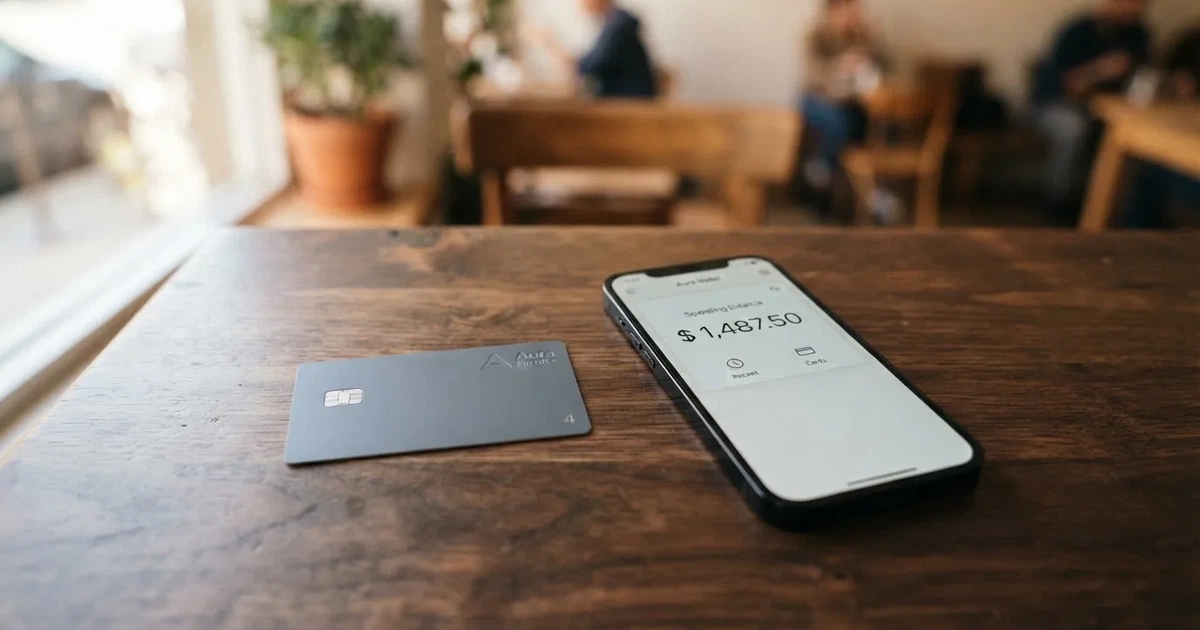
Here is the honest shape of that number. The card is excellent where it is strongest — ordinary spending, mobile wallets, cash machine access — and thin everywhere it should reassure you. Fees are partly published and partly blank. The country list is not on the card’s own pages. The verification process is described only in help-centre titles. None of that is a scandal; it is the difference between a card that has published its machinery and one that has not, and it means you should read this page as a map of what is known, not as a guarantee.
Conditions are current as of October 28, 2026.
Score card
| Criterion | Mark | Why |
|---|---|---|
| Who can get it | 5 / 10 | Countries are not named on official pages; unofficial sources say 29 EEA states, with Canada, Iran, North Korea, Switzerland, the UK and the US restricted |
| Cost | 6 / 10 | Issuance free; delivery EUR 5.99 (Romania) or EUR 9.99 (international); crypto purchase 1.49%; currency fee up to a maximum 2.5% |
| Top-up options | 6 / 10 | BTC, ETH, EGLD, POL, BNB, SOL, DOGE, BERA, SUI; networks and stablecoins not named; also top-up by debit or credit card |
| Reliability and complaints | 7 / 10 | Operator xPortal Equity A.G.; unofficial sources name issuer Capital Financial Services S.A. (Twispay), licence IEME-RO-0001; no complaints found; App Store 4.8 of 5 from 1.8K ratings |
| Everyday use | 9 / 10 | Virtual cards and a physical Mastercard Debit, Apple Wallet and Google Wallet, cash machine withdrawals up to EUR 500 a month |
| Total | 6.4 / 10 | A card that spends well, and asks you to fill in gaps yourself |
Read the low marks as caution, not rejection. The 5 for eligibility is the one I would most want fixed by the company, because an unstated country list is the kind of thing that ends with a refused application and no explanation. The 6s are not complaints about cost; they are marks for how much of the cost is actually visible before you sign up. The 7 for reliability is a decent mark given that nobody has written a bad review, but “no complaints” is weak evidence — a young card simply has not been tested by enough time.
Will they give you the card?
Short answer: probably, if you are in the European Economic Area, and probably not if you are not — but the card’s own public pages never actually say so. Eligibility and the country list are not stated on the card page or in the terms. The terms only say access “may not be available to you … in certain regions”, which is the standard way of telling you a door exists without telling you which side of it you are on. The delivery pricing gives the game away slightly: it is quoted for “RO” and “INT”, Romania and international.
Unofficial sources, not confirmed by the card, put availability at 29 EEA countries and name Canada, Iran, North Korea, Switzerland, the UK and the US as restricted. The same third-party page contradicts itself about Germany, which is a good illustration of why I treat it as a hint rather than an answer. If you are outside the EEA, ask support before you start: the fastest route is the in-app chat or the email the help centre publishes for verification problems, [email protected].
How to get it
The application itself is straightforward, but almost nothing about who qualifies is on the page. Verification requirements are not stated on the card page or in the terms — not the levels, not how long processing takes, not the reasons an application can be refused. What the help centre does reveal is that a check exists and has edges to it: there is a cluster of articles under the title “Source of funds check”, and a separate article asking why you have to provide your tax identification number. Both tell you the question is coming before you finish.
Unofficial sources, not confirmed by the card, describe full identity verification before issuance, with ID verification and proof of address. Treat that as the likely path rather than a promise. If you cannot complete verification, the published route is the in-app chat or [email protected].
What you get is a choice of cards:
- Virtual cards, which come branded with xPortal, MultiversX or Sui
- A physical card, described as a Mastercard Debit
- Card currency appears to be the euro, implied by the page graphic rather than stated in words
- Three virtual cards free at first; the fees document charges EUR 3 per virtual card after that
- The first physical card is EUR 9,99 in the fees document, plus delivery — the two official pages disagree on the delivery figure, see the next section
Fees: what it really costs
The card is free to issue and, on the published schedule, card payments themselves are free. What you pay depends on when you move money, what you pay with, and which side of the euro line you are on. Here is what the documents actually contain — and where they fall silent.

| Item | What is published |
|---|---|
| Issuing the account | Free |
| First three virtual cards | Free; EUR 3 per virtual card after that |
| First physical card | EUR 9,99 (fees document) |
| Delivery | EUR 5.99 Romania, EUR 9.99 international (card page); EUR 5.99 Romania, EUR 12.99 international (fees document) |
| Monthly or annual fee | Not stated |
| Card payments | Free |
| Crypto purchase via xMoney | 1.49% |
| Foreign exchange fee | Maximum 2.5% on the exchange rate, depending on transaction type, merchant type, geography or campaigns |
| Cash withdrawal | Free up to EUR 200 a month; above EUR 200, 2% plus EUR 1 per withdrawal |
| Balance check at a cash machine | EUR 1 in Romania, EUR 2 outside |
| High-risk merchants (for example gambling) | Maximum 3%, minimum EUR 1 |
| Unjustified chargeback | EUR 20 |
| Cash machine limits | Maximum EUR 500 a day, EUR 2,500 a month |
| Adding fiat to the account | Free; minimum top-up EUR 10 |
Two of those delivery figures are both official and both different — EUR 9.99 international on the card page, EUR 12.99 international in the fees PDF. Assume the higher one until the card tells you otherwise. And note the gap in the middle of the table: a free allowance for foreign exchange and cash machine withdrawals is shown as a dash on the card page, and the monthly or annual fee is simply not stated.
Three ordinary payments, walked through.
The 4 euro coffee at a shop in Berlin. You pay in euros from a euro balance, card payments are free, so nothing is deducted on top of the price. If your balance is loaded with crypto bought through xMoney, the 1.49% crypto purchase fee was already charged when you bought — the coffee itself costs you the price and nothing more. This is the case the card is built for.
A 40 euro online purchase from a merchant priced in dollars. The card is a Mastercard Debit spending a euro balance, so the conversion goes through the foreign exchange fee — up to a maximum 2.5% of the exchange rate, with the actual figure varying by transaction type, merchant type, geography or campaigns. On 40 euro that is up to about 1 euro. The rate you actually get is behind a help-centre article titled “What foreign exchange rate will I get?”, so it is documented but not promised.
A 30 euro withdrawal at a cash machine. You get the first EUR 200 of withdrawals in a month free; above that, 2% plus EUR 1 per withdrawal. On your first 30 euro, nothing. On a 300 euro withdrawal in the same month, the excess 100 euro costs 2% plus EUR 1. If you use a cash machine only to check your balance, that is EUR 1 inside Romania and EUR 2 everywhere else.
One more that catches people out: paying a high-risk merchant such as a gambling site costs up to 3% with a minimum of EUR 1, charged on top of the payment.
How to top it up
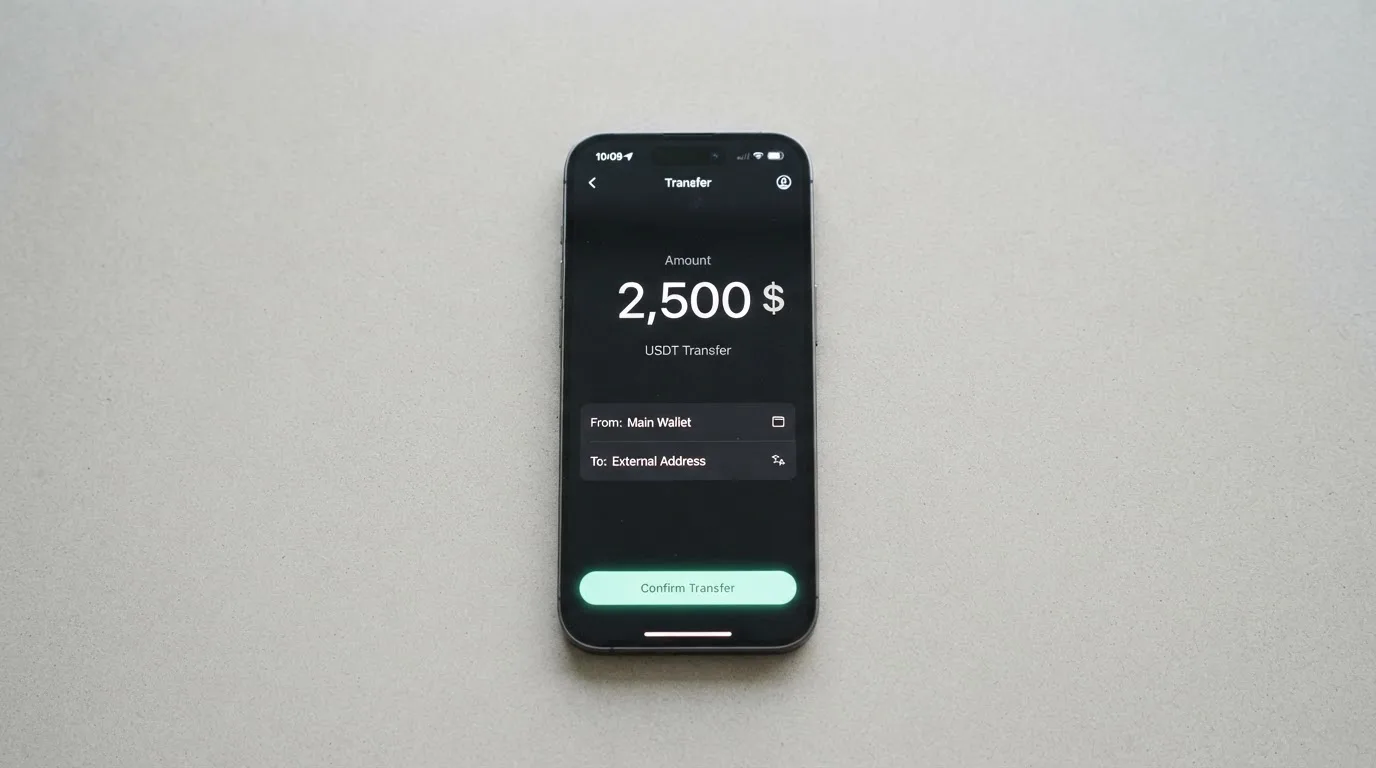
You fund the card from inside the same wallet, and the coin list is short and specific: BTC, ETH, EGLD, POL, BNB, SOL, DOGE, BERA and SUI. Which networks those coins travel on is not stated. That omission is more consequential than it looks — send a token on the wrong chain and the deposit can be lost, because blockchain transfers cannot be reversed and a deposit on an unsupported network needs manual support recovery with no guarantee attached. Work out the supported network before you send anything, not after.
You can also top up by card. Adding fiat such as EUR is free, with a minimum top-up of EUR 10. If you buy crypto through xMoney inside the app, that carries a 1.49% fee. Nobody is stated to pay the on-chain network fee for your deposit — network fees are charged by the blockchain to the sender, not by the card company.
Here is where the two official documents disagree in a way that matters for planning:
| Limit | Card page | Fees document (Standard Mint Account) |
|---|---|---|
| Daily top-up | EUR 2,500 | EUR 5,000 |
| Monthly top-up | EUR 10,000 | EUR 25,000 |
| Daily spending | EUR 5,000 | “No limit” |
| Cash machine | EUR 500 per month | EUR 500 per day, EUR 2,500 per month |
I have left both numbers in rather than picking one. If you plan to move more than EUR 2,500 in a day, the ceiling you can rely on is the lower figure until the card confirms the higher one. The fees document also states that its schedule covers the Standard Mint Account, which is a hint that other account levels may carry different limits — and that nothing on the card page describes how limits change by verification tier.
Withdrawing is the area I know least about, and it is worth being blunt: how you get money back out, whether there is a withdrawal fee, and what happens to a balance on closure are all not stated. The help centre has an article on cancelling your debit card, a collection called “xPortal Card Balance”, and a page on locked or closed accounts — titles only, answers not published. Read them before you need them.
Paying with it every day
This is where the card earns its best mark, and it is not close. Daily use is where a crypto card either feels like a payment method or feels like a demonstration.
- Apple Wallet and Google Wallet are both supported, with the Apple Pay and Google Pay logos shown on the page, so the card lives on your phone and pays by face or fingerprint
- You get virtual cards for online use and a physical Mastercard Debit for everything else
- Spending and limits are shown in euros
- Cash back is paid in $EGLD or $UTK depending on whether you stake
That last point is where the card’s own pages contradict themselves, and I would rather flag it than smooth it over. A comparison table on the page says “Up to 0,5%” while elsewhere the same page says “Up to 5% cashback”. Cash back also depends on staking, and the tier definitions are not stated — “Tier 2” appears only inside an image. The help centre names a “Diamond Touch” upgrade and a “Plan & Benefits” collection, again titles only. Unofficial sources, not confirmed by the card, say only the entry tier is live with cash back up to 0.5%, and that the 5% figure belongs to higher tiers that have not launched. That reading fits the two figures on the page neatly, so I lean towards it — but it remains unconfirmed.
Which merchant categories are blocked is not stated either. For background, gambling has its own four-digit merchant category code, and issuers block such categories by policy rather than law, with a different list per issuer. If gambling or similar purchases matter to you, ask.
The app is well rated on the platform I could read: App Store 4.8 out of 5 from 1.8K ratings on 20 October 2026, on iPhone, iPod touch and iOS 15.1 or later, plus Apple Vision, in 30 languages including Russian. The card page also lists Google Play and Huawei AppGallery, and shows an App Store figure of 4.9 as its own number; the Google Play rating was not read.
Customer support is the usual set: in-app chat through Intercom, an email for verification problems, and a 24/7 phone line for a lost or stolen card, +40212026944. Unofficial reviews note slow support response times as a recurring complaint — worth weighing if the card ever holds money you cannot easily replace.
What can go wrong
Start with the one that is not really a surprise: the card is not a bank. Nobody states an issuer or BIN sponsor or a licence on the card’s public pages, and the terms name xPortal Equity A.G. as operator, with xPortal Labs in the site footer. Unofficial sources, not confirmed by the card, name Capital Financial Services S.A. (Twispay) as issuer, an electronic money institution licensed by the National Bank of Romania under IEME-RO-0001, and the card as developed by MultiversX. If that matters to you, verify it yourself before loading funds.
That distinction is not pedantic. An electronic money institution can issue cards and wallets but cannot lend, and it must safeguard customer funds in segregated accounts or insure them — which is not the same as a bank deposit and may sit outside any deposit guarantee scheme. A crypto card often rests on two licences: one for the payment side, one for the crypto side.
Then the mechanics you cannot verify from the public pages:
- Verification processing time, verification levels, and refusal reasons are all not stated. Two official pages give different daily spending figures, so the rules are not settled in one place.
- Custody of crypto is not stated — whether your coins sit with the provider or in a wallet you control. That single unknown decides who absorbs a hack, an insolvency or a key compromise, and you should not fund the card in volume until you know.
- A declined payment can leave a hold on funds for days, typically up to seven. This bites when the merchant releases the hold quickly and the card does not.
- Blockchain transfers are one-way. A deposit on an unsupported network is gone into manual recovery territory, and stablecoins are not censorship-proof: Tether says it disables tokens in wallets on the OFAC sanctions list and has frozen funds tied to illicit activity. Set expectations low here.
- High-risk merchant payments cost up to 3%, minimum EUR 1.
- An unjustified chargeback costs EUR 20. That is the price of disputing something without grounds, which is different from the cost of a real dispute — but the help-centre articles on cancelling a transaction, recognising a transaction, and duplicates are titles only, so the process itself is not published. One of those articles also says a transaction cannot be cancelled once initiated.
- A token with no gas behind it cannot move: on Ethereum, fees are paid only in ETH, so a wallet holding USDT and no ETH cannot send.
On freezing and theft, the card does better. The app offers freeze and unfreeze per card, plus terminate or replace from card settings, and a lost or stolen line open 24/7. The help centre carries articles on whether your money is safe and how the issuer keeps money secure, again with titles only. Note that freezing a card does nothing to crypto already sent to a wrong address.
On taxes, one factual note rather than advice: the IRS treats digital assets as property, so exchanging them for goods, services or dollars generally produces a taxable gain or loss, measured in local currency at the value on the date of the transaction. Each card payment funded from crypto may therefore be a separate disposal. Your own jurisdiction may work differently — this is not advice, just the shape of the problem.
Finally, the track record. No Trustpilot page was found for the card and no Reddit or news reports surfaced; unofficial reviews mention room for improvement in verification and in seed-phrase visibility. And the only dated official item I could find is the fees and limits page for the Standard Mint Account, effective 02 July 2024, with an earlier version still around. No licence or issuer events are stated officially. Treat “no complaints” as a young card rather than a proven one.
What to take instead
None of these is a like-for-like replacement; they are different bets on the same problem. Here is how they compare on what is actually published.
| xPortal | MetaMask | KAST | Zeal | |
|---|---|---|---|---|
| Score here | 6.4 | 7.1 | 6.1 | 6.1 |
| Card | Virtual plus physical Mastercard Debit | Virtual instantly, Metal by pre-order, Mastercard | Virtual and physical, Visa Platinum / Infinite | Virtual Visa card, Apple Pay |
| Annual cost | No fee stated; physical card EUR 9,99 plus delivery | Virtual free; Metal $199/year | Standard $0, Premium $1,000, Private $10,000 | Not stated |
| Who it suits | EEA residents spending EGLD and other coins | Users who want their own wallet to be the source of funds | Stablecoin holders wanting many card types and no FX fee in USD | Stablecoin holders who want Visa, not Mastercard |
| Coverage | 29 EEA countries, unofficial | 45 listed countries; US and UK sign-ups temporarily closed | Residence list checked at KYC, not published | Spending in 150+ countries; programme live in EU, UK, Brazil, Colombia, Mexico, Japan, Singapore, Philippines, Indonesia, Thailand |
MetaMask scores highest here, 7.1. It spends directly from a wallet you connect — the non-custodial model, so your funds stay yours until the moment of payment and you carry the responsibility for keys. Virtual card free with no annual or maintenance fee; the Metal card is $199 a year. Cash back is paid in mUSD: 1% on Virtual, and on Metal a headline 3% limited to the first $10,000 spent, then 1%. Networks are Linea, Base, Monad and Solana, so not the coin list you would expect from an EGLD holder.
KAST, 6.1, is the transparent-fee option: stablecoin top-up 0%, card spend in USD 0%, Apple and Google Pay 0%, with a non-USD foreign exchange fee of 0.5% to 1.75% depending on where you live, where you spend and which card programme. It also charges nothing for declined payments caused by an insufficient balance beyond a 0.50 USD fee. The cost is membership: Standard is free, Premium $1,000 a year, Private $10,000. Its eligibility is checked at KYC against a list that is not published, and holding an ID from a restricted region can disqualify you even when you live in a supported country.
Zeal, 6.1, is for the Visa side of the shop. Zeal adds no foreign exchange fee of its own and converts at the Visa wholesale rate, though Gnosis Pay fees such as cash machine charges can still apply. It pays up to 4% cash back in GNO on Gnosis Chain, but you must hold GNO in the card Safe to qualify, and the App Store also advertises up to 5% variable APY on euro and dollar balances. Its fee schedule is not published anywhere I could find.
The honest comparison: if your pain is a rejected application or a card your bank will not give you, all four are the same shape of solution and KAST is the clearest on paper. If your pain is self-custody, MetaMask is the different model. If your coins are EGLD, none of the three alternatives lists it.
Who I would recommend it to
I would recommend the xPortal card to someone in the EEA who already holds EGLD or another coin on that list, spends most of their money in euros, is comfortable topping up from crypto inside an app rather than from a bank account, and wants a physical card and a mobile wallet that behave normally at the till. For that person this is a genuinely good card, and the 9 out of 10 for everyday use is not charity — mobile wallet support, virtual and physical cards, free euro spending and EUR 500 a month at cash machines is a solid everyday kit.
I would not recommend it to you as a first crypto card if any of these apply:
- You are outside the EEA, or hold citizenship of a restricted country, and cannot get a clear answer about eligibility before you start
- You need to move large sums and the two official limits — EUR 2,500 a day against EUR 5,000, EUR 10,000 a month against EUR 25,000 — are not enough for your plan
- You care about exactly what happens to your coins, and the custody arrangement is not published
- You want a monthly or annual figure to budget from and the card does not publish one
- You plan to take the 5% cash back at face value, when the same page also says 0.5% and unofficial sources say only the entry tier is live
- You are gambling on a card that charges up to 3% for that category, minimum EUR 1
What I would do, in order, before loading anything meaningful: confirm in the chat that your country is served; read the fees PDF for the Standard Mint Account, which is the most specific official document here; ask how long verification takes and what the refusal reasons are; and ask what happens to the balance if you close the card. None of those questions is unreasonable, and the answers you get will tell you more than any review, including this one.
Frequently asked questions
What is the xPortal card?
The xPortal card is a payment card attached to a crypto wallet rather than a bank account. You top it up from crypto held in that wallet, or from a debit or credit card, and it then spends a euro balance. You can get virtual cards branded with xPortal, MultiversX or Sui, and a physical Mastercard Debit for everyday use. Cash back, where it applies, is paid in $EGLD or $UTK.
Is xPortal a bank?
No — and it is worth being clear about this. The card’s terms name xPortal Equity A.G. as the operator, and xPortal Labs in the site footer. No issuer, BIN sponsor or licence appears on the card’s public pages. Unofficial sources, not confirmed by the card, name Capital Financial Services S.A. (Twispay) as issuer under electronic money licence IEME-RO-0001. An e-money institution is not a bank and cannot lend.
Who owns xPortal?
The company behind it is xPortal Labs, with xPortal Equity A.G. named in the terms as the operator of xPortal. The card is part of the MultiversX ecosystem, which is also why EGLD is the coin most associated with it. The relationship with the card issuer is only described in unofficial sources.
Which countries is the xPortal card available in?
The card’s own pages do not state the country list — the terms only say access may not be available in certain regions. Unofficial sources, not confirmed by the card, say 29 EEA countries with Canada, Iran, North Korea, Switzerland, the UK and the US restricted, though that same page is inconsistent about Germany. Ask support in the app chat before you apply.
Does the xPortal card require KYC?
Identity verification requirements are not stated on the card page or in the terms, but the help centre’s article titles make clear that checks exist, including a “Source of funds check” and a tax identification number question. Unofficial sources describe ID verification and proof of address before issuance. If you get stuck, the help centre points to in-app chat and [email protected].
How much does the xPortal card cost to open?
Opening and maintaining the account is free, and the first three virtual cards are free. The first physical card is EUR 9,99 in the fees document, plus delivery — quoted as EUR 5.99 in Romania and EUR 9.99 internationally on the card page, but EUR 12.99 internationally in the fees document. A monthly or annual fee is not stated. Budget for the higher delivery figure.
What are the fees when I spend or convert?
Card payments are free, but converting between currencies costs up to a maximum 2.5% of the exchange rate, varying by transaction type, merchant type, geography or campaigns. Buying crypto through xMoney costs 1.49%. Cash machine withdrawals are free up to EUR 200 a month, then 2% plus EUR 1 per withdrawal. Payments to high-risk merchants such as gambling cost up to 3%, minimum EUR 1.
How do I top up the xPortal card?
You can send BTC, ETH, EGLD, POL, BNB, SOL, DOGE, BERA or SUI from your wallet, or top up by debit or credit card, or add fiat such as EUR for free with a EUR 10 minimum. Supported networks are not stated anywhere on the card’s pages, so check before sending — transfers are irreversible and a deposit on the wrong chain can be lost. Official limits differ between pages: EUR 2,500 daily and EUR 10,000 monthly on the card page, EUR 5,000 and EUR 25,000 in the fees document.
How do I add the xPortal card to Apple Wallet?
Apple Wallet and Google Wallet are both supported, with the Apple Pay and Google Pay logos shown on the card page, so the card can be tokenised into your phone’s wallet and pay by face or fingerprint. This is part of the strongest area for the card. Note that a declined authorisation can leave a hold on your funds for days, typically up to seven, even when the shop releases the payment quickly.
Is the xPortal card safe to use?
Reasonable, with caveats you should accept rather than look away from. The app offers per-card freeze and unfreeze, plus terminate or replace, and there is a 24/7 lost or stolen line, +40212026944. But custody of crypto is not stated, no complaints were found in searches — which for a young card is weak reassurance — and unofficial reviews mention slow support response times. Verify the issuer’s licence yourself before loading funds you would miss.
Wallet cards – cryptocardchooser.com
Content created by the «cryptocardchooser.com» team