
KuCard, the EEA-only Visa debit from the KuCoin exchange, examined section by section
 Available in US
KuCard is a Visa debit card that draws on a crypto balance held inside the KuCoin platform. It is issued by Wallester AS, an Estonian electronic money institution, and sold to people who already have a KuCoin account. The product is narrow by design: the card exists in one version, virtual or physical, and it is only available to citizens and residents of the European Economic Area plus Iceland, Liechtenstein and Norway, with Malta carved out. The default spending currency is USDT, and the card converts to euros at payment, so the everyday experience feels closer to a prepaid euro card than to a typical bank-issued debit card.
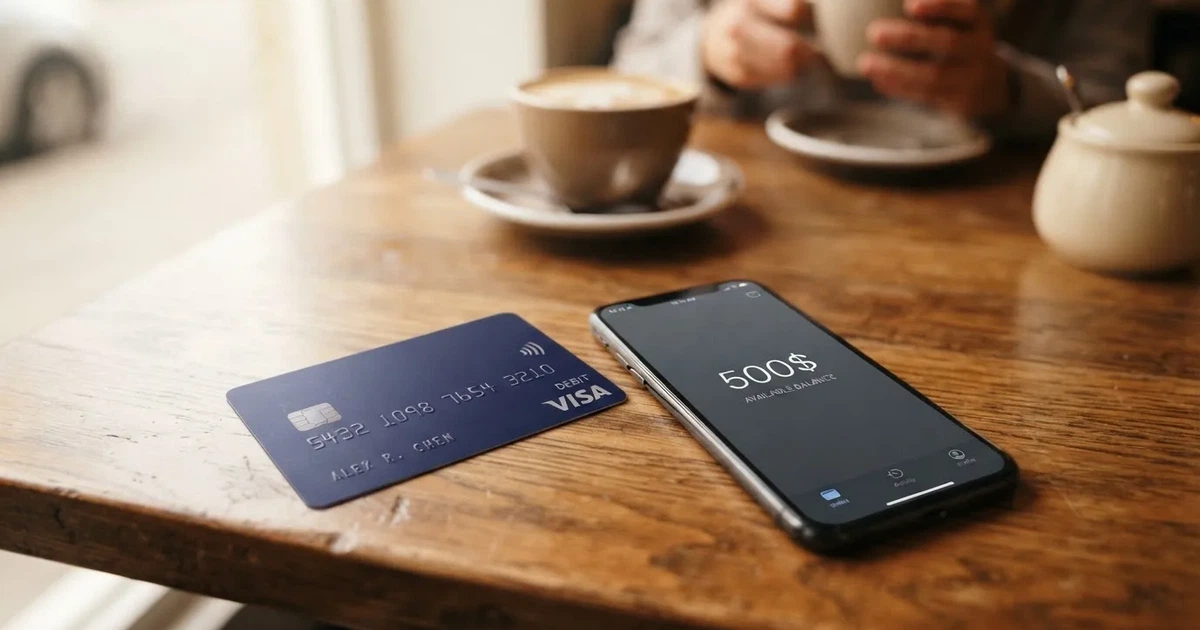
The conditions described below are current as of October 28, 2026.
Verdict
KuCard scores 6.0 out of 10. That is a middling result that reflects a product that does a few things well and several things only adequately. The issuer is regulated in Estonia and the card is a real Visa, so the rails underneath it are sound. The problem is everything around the edges: eligibility is narrow, top-up details are vague, and the rest of the KuCoin experience is not the place to go if you value predictable customer service.
| Criterion | Mark | Why it scored as it did |
|---|---|---|
| Who can get it | 5/10 | EEA citizens and residents only, Malta excluded, EEA-issued ID required |
| Cost | 6/10 | First virtual card free, then €9.90–€9.99 per card, physical €9.90 the first; 2% non-euro fee, €2 European ATM fee |
| Top-up options | 4/10 | Funded from crypto on KuCard, USDT by default, supported coins and networks not listed |
| Reliability and complaints | 7/10 | Issuer Wallester AS supervised by the Estonian FSA, almost no card-specific complaints, but the wider KuCoin exchange has a poor Trustpilot profile |
| Everyday use | 8/10 | Visa debit, virtual usable at once, physical Chip&Pin, Apple Pay and Google Pay reportedly supported |
The card suits one reader well: an EU resident who already uses the KuCoin exchange and wants a simple way to spend a USDT balance at a Visa terminal without first cashing out to a bank. It suits almost everyone else poorly. If you are outside the EEA, if you do not want to open a KuCoin account, or if you want a card with clear fees, clear limits and a rewards programme you can read about on the issuer’s own site, KuCard is not the first card to consider.
Who will give you the card
The eligibility rule is set out in KuCoin’s terms, and it is stricter than for most European crypto cards. You need to be a citizen or resident of the European Economic Area, and you also need an identity document issued by an EEA state. The permitted jurisdictions are the EU member states plus Iceland, Liechtenstein and Norway. A separate help page adds that the card is not available in Malta, even though Malta is in the EEA, so Malta sits as a one-country exception that the terms themselves do not spell out. The same document requires that you are at least 18 years old and that your address is verified. Citizenship and residence are both checked: it is not enough to live in Germany with a UK passport, for example, and it is not enough to hold a German ID if you actually live in the UK. If you fall outside that rule, the application will not progress, no matter how much crypto you hold on the platform.
The rule matters most for people who are used to crypto cards that market themselves globally. Several competitors either list many non-European countries or rely on the European Economic Area in name but not in practice. KuCard is the European version of KuCoin: it lives behind the same EEA wall that the exchange’s regulated entity lives behind, and the card sits inside that wall rather than stretching out to a wider audience.
How to get it
The signup path is the standard KuCoin EU flow, and it only works if you already have, or are willing to open, a KuCoin EU account. The steps run in this order. First, open a KuCoin EU account. Second, complete full KYC, which means uploading a supported EEA-issued identity document, having your address verified and confirming you are at least 18. Third, apply for the card on the platform, choosing virtual, physical or both.
The card itself is a Visa debit, available as a virtual card that is usable at once and a physical Chip&Pin card. The virtual card is unusual: it expires at the end of the month in which it is issued and must be reapplied to keep using it. That is not a defect so much as a deliberate design: the virtual card is treated as a short-lived token rather than a long-lived payment instrument. The physical card is posted to the address you have on file and is then activated in the KuCoin app or website. You can hold up to five cards on the same account.
The list of reasons the application can be rejected reads like a checklist of onboarding issues. Invalid phone number, incorrect name or date of birth on the application, an invalid 3-D Secure password, an insufficient balance to pay the card fee, or a hit from the risk control system. The terms do not say how long the review takes, so it is worth assuming the worst and treating KuCard as a same-week delivery rather than a same-day one. Standard delivery time and cost are not stated; express delivery is a flat €30 per card. If a card needs to be replaced, the fee is €9.90.
Fees: what it really costs
The cost picture is the most opaque part of KuCard’s offer, because the terms refer to a fee schedule that is partly hard to find and partly ambiguous as written. The clearest numbers come from the fee schedule page itself, which is what is summarised below.
| Fee or limit | Value |
|---|---|
| First virtual card | Free |
| Further virtual card | €9.90 (fee schedule) or €9.99 (older support article) |
| Physical card | €9.90 for the first, ambiguous around €19.90 in the same source |
| Card replacement | €9.90 |
| Card cancellation | Free |
| Express card delivery | €30 per card |
| Euro transactions | Free |
| Non-euro transactions | 2% of the transaction total |
| Declined payment (insufficient funds) | Free |
| Overdraft | Unavailable |
| ATM within Europe | €2 per withdrawal |
| ATM outside Europe | 2% of the transaction total plus €2 |
| ATM operator fees | May apply on top |
| Daily and monthly spending limits | Not stated |
| Fiat top-up fee row | Not in the fee schedule |
| Crypto-to-euro rate | Set by KuCoin |
Two everyday payments help to make the numbers concrete. First, a €40 lunch in Berlin paid with the card: the merchant is paid in euros, the conversion from USDT to euros happens inside KuCoin, and the merchant side costs you nothing. The fee you actually pay is the spread between the USDT/euro market rate and the rate KuCoin applies, which is not published as a single number, plus any on-chain cost of moving USDT into the KuCard account in the first place. Second, the same €40 paid in Prague, but the merchant prices in Czech koruna: this falls under the non-euro rule, so 2% of the transaction total, or about €0.80, is added on top. Withdraw €100 from an ATM in Spain and the cost is the flat €2 European ATM fee plus whatever the ATM operator charges; withdraw the same amount in Switzerland and the cost is 2% of €100, which is €2, plus the €2 flat fee.
The fee schedule also warns that “local fees, third-party fees, network fees, a conversion spread, and IOF fees may apply”, which is the part of the document that does most of the work. In practice this means the listed numbers are the floor, not the ceiling, and the conversion spread is the variable you should ask about first if you want a sense of what a real card payment will cost.
Top up: how to fund the card
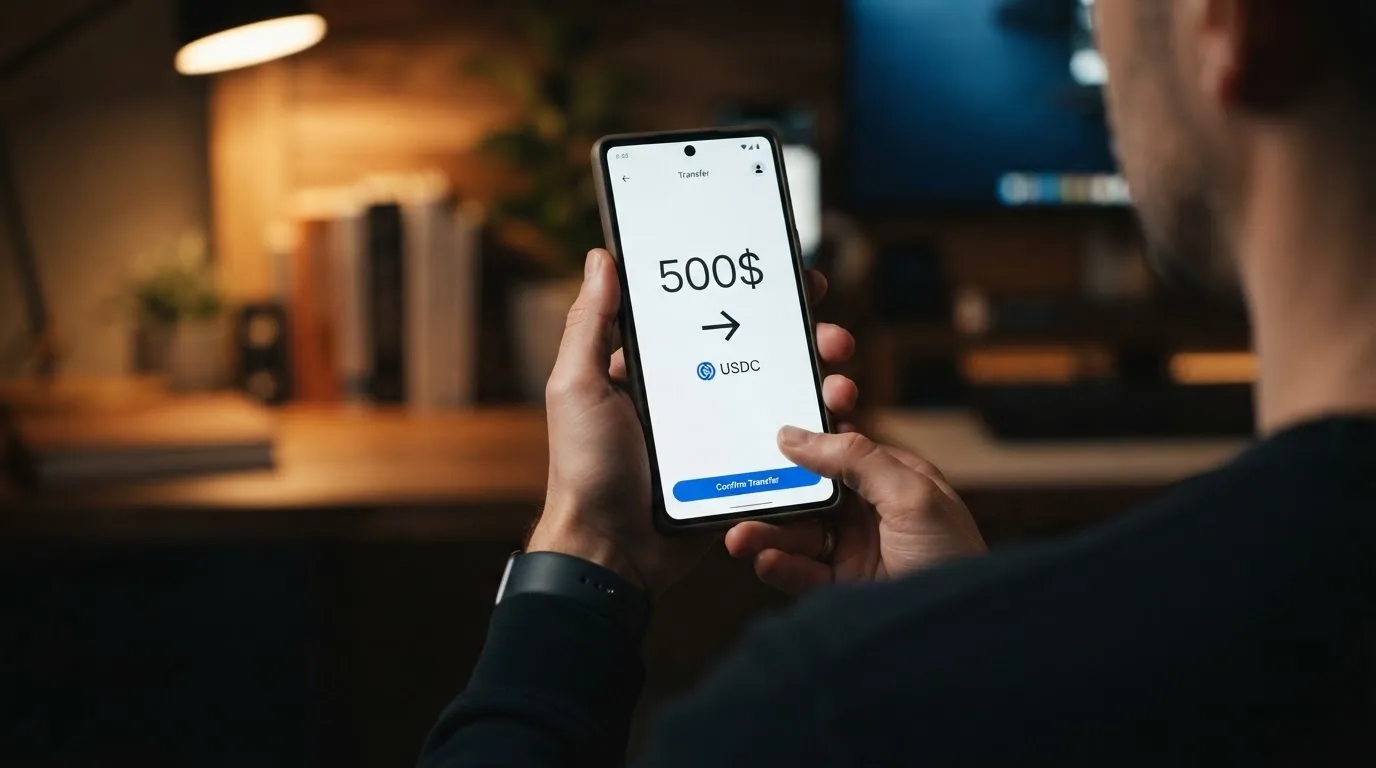
The top-up model is the heart of how a crypto card works, and on KuCard it is also the area with the least detail. The primary source of funds is supported cryptocurrency held in your KuCard account on the KuCoin platform. The default spending currency is USDT; that is the coin the card is denominated in before conversion to euros at payment. Beyond USDT, the terms refer to “supported cryptocurrency” but do not list the coins or the networks, which means a reader who holds BTC, ETH or USDC has no way to tell from the public documentation whether those coins can be used to top up directly, or whether they must first be swapped to USDT inside KuCoin.
A few related points follow from the same set of facts. There is no separate top-up fee row in the fee schedule, so the act of moving crypto into the KuCard account does not carry a published fee. The conversion from crypto to euros at payment uses a rate “solely determined by” KuCoin (Terms 10.2), which is the same point raised in the fees section: the spread is the real cost. Network fees for the on-chain transfer are paid to the blockchain, not to KuCoin, and which party ultimately pays them is not stated; the practical effect is that you either hold a small amount of the native token of the relevant network or the transfer does not go through. Fiat top-up, the minimum top-up and the precise list of supported coins and networks are all not stated.
Moving the card balance back out is also thin on detail. The terms do not explain how to withdraw the card balance to crypto or to a bank. Cancellations are free, refunds are always paid in fiat, and a card that has never been activated may be closed after three months with no refund of service charges. A card may be terminated after four consecutive months of being closed or blocked, or after six months of non-use. What happens to the balance on closure is not stated.
Paying with it every day
The everyday experience is built on the Visa network, which is the more reassuring half of the offer. The card works at any Visa-accepting terminal and on any online merchant that is not prohibited by law. Apple Pay and Google Pay are not mentioned in the issuer’s own documentation, but independent sources state that both are supported; treat that as unofficial until KuCard’s own pages confirm it. The terms do not publish a list of merchant categories that are blocked, which is unusual: many crypto cards publish a blocklist that includes gambling (MCC 7995), and KuCard’s silence on this point means you should assume that some categories will be declined at the terminal rather than rely on a published list to plan around.
The app is the operational centre. The card is activated in the KuCoin app or on the KuCoin EU website, and the app is where you freeze, replace and check the card. App Store and Google Play ratings of the app were not read for this review. If a transaction turns out to be unauthorised, you must report it within 60 days of the date of the transaction or it is treated as correct under the terms (Terms 14.3). Refunds are paid in fiat and are valued at the euro amount at the time of the original transaction (Terms 11.2); how long a refund takes to clear is not stated, and the fees on the original transaction are non-refundable.
Rewards are the most confusing part of the everyday picture. The terms mention only that KuCard “may offer different benefits or rewards” from time to time, without rates. An unofficial rewards programme has been reported by a third-party tracker, with monthly tiers of 1% to 8% of eligible spend paid in USDC, monthly caps, and points that become available after 15 days and expire after 90 days. The same source reports a €2 monthly inactivity fee on a virtual card after 90 days without a transaction. Neither figure is on KuCard’s own pages and should be treated as unconfirmed.
What can go wrong
The headline risk is counterparty risk on the wider KuCoin platform. The card itself is issued by Wallester AS, an Estonian company registered as 11812882, a Visa principal member, supervised by the Estonian Financial Supervision Authority. That part is clean. The platform behind the card is operated by KuCoin, with UAB EURLITA in Lithuania handling the virtual currency exchange and deposit activity. The card balance is held inside KuCoin, which in practice means the funds sit with a custodian rather than in your own wallet; the terms do not use the word “custodial”, but that is what the arrangement is.
The complaint picture is mixed and worth reading carefully. Card-specific complaints are almost nonexistent: no Reddit threads, no formal incident and only one card-related review on the kucoin.com Trustpilot profile, from July 2026, in which a user reports about $120 stuck after a card on file expired and KuCoin asking for an old-bank PDF statement. The wider KuCoin profile tells a different story. The exchange-level page had 1,597 reviews at the time of writing, with 78% one-star reviews and a TrustScore that was unavailable because of a breach of Trustpilot’s guidelines. The recurring themes are withdrawal and account restrictions in late summer and early autumn 2026, dormancy fees, repeated ID demands to log back in, P2P disputes and deposits not credited. None of this is a card failure, but it is the customer-service environment the card sits inside.
The security features KuCard does publish are standard. Lost or stolen cards can be frozen immediately on the platform. Strong authentication, in the form of two independent elements, is required, although 2FA is not specifically named. Unauthorised-use liability is capped at €50 unless fraud or gross negligence is involved. There is no mention of insurance on the card balance, and there is no separation of the card balance from the exchange balance, so an event that affects KuCoin’s main wallet affects the KuCard account with it. Help is available through the KuCoin EU Help Center and a “Submit a Ticket” form; some articles are mirrored in Russian. Whether live chat, a Telegram channel and out-of-hours support exist is not stated.
A separate regulatory note: the fee schedule page is shown as last updated 29 September 2026, and no licence loss or fine involving Wallester or the KuCoin EU programme has been reported. The KuCard fee schedule is current to that date.
What to take instead
Three alternatives cover most of the cases where KuCard is not a fit. They are summarised here in terms of who they suit and where they sit on the same axes as KuCard, with the score alongside.
Bybit Card scores 6.0 out of 10 and is the most direct geographic alternative if you are outside the EEA. Bybit explicitly says the card is not meant for European Economic Area customers and that all EEA participation is prohibited, so this is a non-starter if you are an EU resident, but a strong option if you are in Argentina, Kazakhstan (AIFC), Georgia, Australia, Mexico, Brazil, Peru or the Asia Pacific region as Bybit defines it. The card mixes prepaid Mastercard and Visa products, with USD, ARS, MXN, BRL or PEN as the card fiat depending on country. Issuance is free in most regions, with replacement fees ranging from none to 29.99 USD. Crypto conversion is 0.5% in Argentina and 0.9% elsewhere on top of the One-Click Sell rate, and FX fees are layered on top of that. The rewards programme is generous, with monthly tiers from 2% (Base) to 10% (Infinite) for crypto-funded spending only, since 5 October 2026, with a 10% welcome cashback up to 110 USDT.
Coinbase Card scores 6.4 out of 10 and is the cleaner US-only alternative. It is available in all US states except Hawaii, with onboarding under the USA PATRIOT Act identity rules. It is a Visa prepaid debit that spends cash or crypto, with all crypto converted to US dollars at payment. There are no spending fees and no annual fees; a spread applies on the crypto conversion, and that is the cost. The rewards are a rotating set of crypto picks chosen by the user, with variable rates shown in the app, US Card users only.
OKX scores 6.2 out of 10 and is the most direct EEA competitor if you want a euro card on a regulated exchange. It launched in the EU plus Norway on 28 January 2026, with Iceland and Liechtenstein excluded in practice despite the explainer’s wider EEA wording. It is a Mastercard euro-denominated virtual debit card linked to OKX Pay, with no card fee, no transaction fee, and a conversion spread of 0.1% per the May 2026 explainer, against the 0.4% stated in the launch press release. Funding is from USDC or USDG in OKX Pay, and other coins must be converted first. Cashback is paid only on USDG purchases, ranging from 2% to 5% in the standard table and up to 10% for VIP4+, with a 30-day launch promo of up to 20% for VIPs and 15% for regular users.
A short summary of the trade-offs, useful when comparing:
| Card | Regions | Network and form | Card fee | FX or conversion | Rewards |
|---|---|---|---|---|---|
| KuCard | EEA excluding Malta | Visa virtual and physical | First virtual free, then €9.90+ | 2% non-euro | Unpublished officially; unofficial USDC tiers up to 8% |
| Bybit Card | Argentina, AIFC, Georgia, Australia, Mexico, Brazil, Peru, Asia Pacific | Mastercard and Visa, virtual and physical | Free in most regions | 0.5%–0.9% conversion, FX 1%–7% | 2%–10% for crypto-funded only |
| Coinbase Card | United States except Hawaii | Visa prepaid, virtual and physical | None | Spread at conversion | Variable, rotating |
| OKX | EU plus Norway (Iceland and Liechtenstein excluded in practice) | Mastercard virtual | None | 0.1% spread | 2%–5%, USDG only |
Who I would recommend it to
The audience for KuCard is narrow, and that is the main point of the review. If you already hold USDT on KuCoin, live in the EEA outside Malta, and want to spend that balance at a Visa terminal without first cashing out to a bank account, KuCard is one of the simpler ways to do it. The card is a real Visa, the issuer is regulated in Estonia, and the conversion is at payment rather than at a moment you have to watch.
If you are outside the EEA, you cannot get the card, so the question does not arise. If you are inside the EEA but do not already use KuCoin, opening an account for the card alone is harder to justify, because the rest of the KuCoin experience is the place where most of the negative reviews of the wider brand sit. If you want a euro card with clearer fees and a published rewards programme, OKX is the closer fit. If you are in the United States, Coinbase Card is the obvious choice. If you are in Latin America, the Asia Pacific or the CIS and you already use Bybit, the Bybit Card is the more rewarding option, with the same general model.
Before signing up, it is worth checking three things in this order. First, the fee schedule and the conversion spread on the day you plan to fund the card, because the published numbers are a floor. Second, the supported coins and networks, which KuCard does not list publicly; without that, you cannot tell in advance whether your existing balance is directly usable. Third, the customer-service path for your country, because the wider KuCoin complaint profile is poor and the card inherits that environment even if it does not cause it.
Frequently asked questions
What is KuCard?
KuCard is a Visa debit card issued by Wallester AS in Estonia and sold through the KuCoin platform, designed to let users spend a cryptocurrency balance at Visa-accepting merchants. The default spending currency is USDT, converted to euros at payment, and the card exists in virtual and physical forms.
How does KuCard work?
You hold a crypto balance in your KuCard account on KuCoin, and the card debits that balance at the point of sale. The conversion from USDT to euros is performed by KuCoin, and the card is a prepaid-style product that cannot overdraw.
Is KuCard a bank?
No. The issuer, Wallester AS, is an electronic money institution licensed in Estonia, not a bank. The card balance is held inside the KuCoin platform rather than at a bank, and funds are not covered by a deposit guarantee scheme.
Who owns KuCard?
The card programme is owned by Wallester AS, an Estonian electronic money institution and Visa principal member. The platform through which the card is sold and operated is KuCoin, with UAB EURLITA in Lithuania handling the virtual currency exchange and deposit activity.
Is KuCard available in my country?
Only if you are a citizen or resident of the European Economic Area, plus Iceland, Liechtenstein and Norway, and you have an EEA-issued identity document. The card is not available in Malta, and citizenship and residence are both checked at application.
How do I get a KuCard?
Open a KuCoin EU account, complete full KYC with a supported EEA-issued ID, verify your address and confirm you are at least 18, then apply for the card on the platform. The virtual card is issued immediately and expires at month end; the physical card is posted to the address on file and activated in the app.
Does KuCard require KYC?
Yes, and only at the full level. The single KYC tier requires an EEA-issued ID or passport, a verified address, age 18 or above, and a valid phone number; the application can be rejected for an invalid 3DS password, a name or date-of-birth mismatch, insufficient balance for the card fee, or a risk-control hit.
How do I top up KuCard?
The primary source of funds is supported cryptocurrency in your KuCard account, with USDT as the default spending currency. The list of supported coins and networks is not published, fiat top-up is not described in the fee schedule, and the on-chain network fee for the transfer is paid to the blockchain, not to KuCard.
Can I add KuCard to Apple Pay or Google Pay?
This is not stated in KuCard’s own documentation. Independent sources state that both wallets are supported, but treat that as unofficial until KuCard’s own pages confirm it; KuCard’s own pages do not address tokenised wallet support at the time of writing.
Is KuCard safe?
The issuer is regulated in Estonia and the card is a real Visa, but the balance is held inside the KuCoin platform rather than in your own wallet, and the card inherits the customer-service record of that platform. The published complaint record for KuCard specifically is thin, while the wider KuCoin exchange profile on Trustpilot is poor.
Exchange cards – cryptocardchooser.com
Content created by the «cryptocardchooser.com» team