
The Bitunix card is cheap to hold and narrow to use: virtual only, USDT only, no cash machines
 Available in US
The Bitunix card is a Visa card number that spends a stablecoin balance. That is the whole idea, and it works on the terms the exchange sets: your USDT is converted to US dollars at one to one, loaded onto a card account, and the Visa number spends that balance online and in stores. There is no annual fee, no monthly fee and no crypto conversion fee, which makes it look unusually cheap next to most cards in this category.
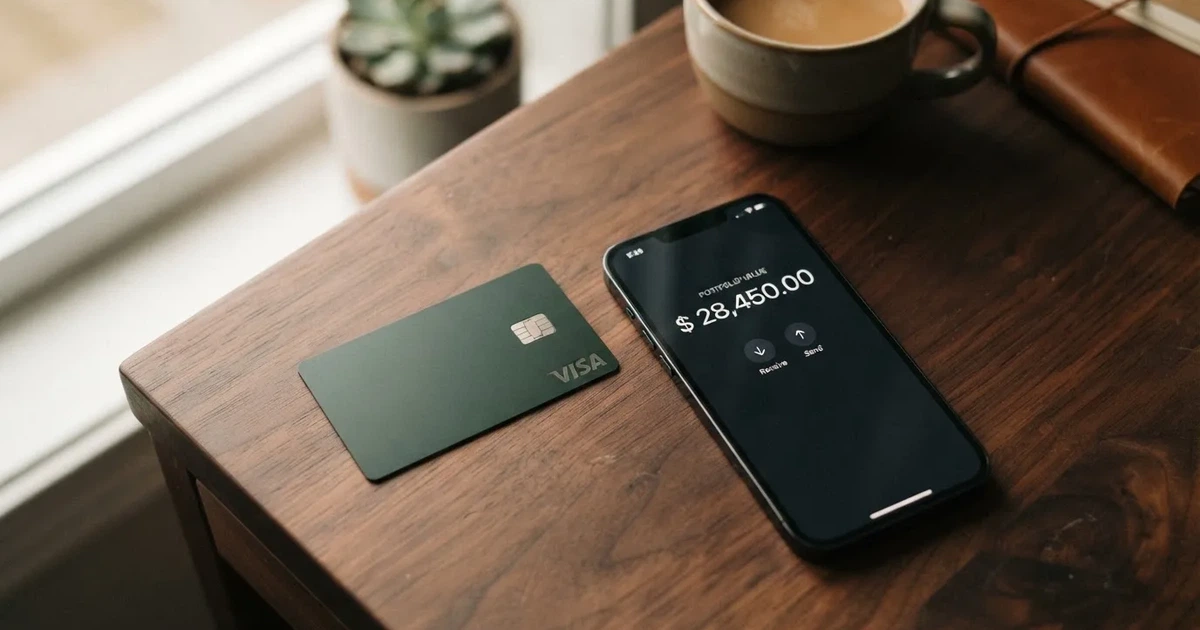
Then you hit the edges. The card is virtual only today, the physical version is described as “Phase Two” and cannot yet be applied for, cash machines are not supported in the initial version, USDT is the only cryptocurrency it accepts, and money can only arrive from inside your own Bitunix account. It is a card for someone who already holds USDT on the exchange and wants to pay for things online. It is not a card for someone who wants a bank replacement, and it is not a card for someone who wants to walk up to a cash machine.
My score is 5.3 out of 10. In the sections below I explain where that number comes from, which parts of the card are well built, which are thin, and where you personally would be better served by something else.
The conditions described on this page are current as of October 28, 2026.
Verdict: who this card is actually for
The Bitunix card does one thing cheaply and several things not at all. If you are a Bitunix exchange user who holds USDT and spends it online — subscriptions, software, travel bookings, merchant invoices — the card is a genuinely useful second skin for that balance, and the headline costs are better than most rivals. If you need a physical card in your wallet, cash from an ATM, a card that works in countries your exchange does not serve, or a way to move money between exchanges, this is the wrong instrument and no fee saving will change that.
The score breaks down like this. Every mark below is my own reading of the card’s published terms, help pages and fee tables, and the reasons are mine to defend.
| Criterion | Mark | Why |
|---|---|---|
| Who can get it | 7 / 10 | A restricted-jurisdictions list names 80 countries and regions, but it is explicitly not exhaustive and reads as “may include” |
| Cost | 6 / 10 | Issuance, monthly and annual fees are 0; conversion is 0; the costs are the 1.5% FX markup, a 0.5% cross-border fee and a USD 1 inactivity charge after 12 months |
| Top-up options | 3 / 10 | Only USDT moved from Spot, Futures or Earn inside the exchange — no external bank transfers, no direct blockchain deposits |
| Reliability and complaints | 4 / 10 | The issuer and its licences are not named on the pages I read, and the exchange’s own Trustpilot profile shows freezes, withdrawal delays and a note about regulatory attention |
| Everyday use | 5 / 10 | Virtual Visa only; Apple Pay, Google Pay and other wallets are there, but no cash machines in the first version |
| Total | 5.3 / 10 | A good balance-spending card for a narrow audience, not a general-purpose one |
Two numbers deserve emphasis before anything else. The 3 out of 10 for top-ups is the structural weakness, and no amount of good will elsewhere compensates for it. The 7 out of 10 for eligibility is higher than it looks: the list of restricted places is long and specific, but the card’s own pages leave open whether it means anyone living there or only citizens of those places — and that ambiguity, rather than the list itself, is what costs the point.
Will they give you the card?
Yes for most of the world, no for a defined and slightly confusing set of places.
The help centre has a page called “Restricted Jurisdictions”. It is not exhaustive — the card’s own wording is that the list “may include” — and among the 80 countries and regions it names are the Russian Federation, Belarus, the United States, Canada, France, Turkey, Ukraine, Singapore, Hong Kong, China, India, the UAE, Cyprus, Serbia, Armenia, Kyrgyzstan, Tajikistan, Brazil and Israel. The list was last updated on 8 October 2026, which is recent enough to be worth reading as current.
The rule that matters is residence, not citizenship. That is the sensible design: the card is tied to where you live because that is what the address verification, the tax position and the issuing arrangement all follow. But read the sentence carefully, because “restricted” in a help-centre heading often means two different things. It can mean the exchange will not onboard you, or it can mean the exchange onboards you but the card programme will not issue to you. On this card’s pages I could not find a sentence that separates those two cases, and the two produce completely different experiences.
If you are in one of the 80 named places, the honest answer is that you need to test it rather than assume. If you are not, you are very unlikely to hit a wall.
How to get it
The path is short, and it is the ordinary exchange path with a card application bolted onto the end.
- Sign up for a Bitunix account.
- Complete identity verification, including your residential address.
- Apply for the card.
- The virtual card is ready once the application is approved.
What you will be asked for in documents, and what minimum age applies, is not stated on the card’s public pages. Neither is how long approval takes, nor what the specific rejection reasons are. The help centre does have a page titled “Bitunix KYC Level Benefits”, which implies tiers of verification exist at exchange level, but the card-specific level you need is not described.
The card itself is a Visa, and at launch it is virtual only. The physical card is “planned for a future phase”, described as “Phase Two”, with an application that is not yet available. When it does arrive, the card’s own estimate is 7 to 20 business days, and the fee depends on where it is delivered. Issuing a virtual card and replacing one is free, and closing the card is free as well.
One design decision deserves a note because it will surprise people: USDT converts to USD at one to one on the card, so your card balance is denominated in US dollars. You are not holding a token balance and hoping. The card holds dollars that came from your tokens, at the exchange’s own conversion.
Fees: what it really costs
The headline fees are genuinely good. The charges that actually matter are the ones you pay per transaction, and they are not zero — they are just modest, and they arrive at predictable moments.
| Fee or limit | What the card states |
|---|---|
| Issuance | 0 |
| Monthly fee | 0 |
| Annual fee | 0 |
| Crypto conversion fee | 0; USDT converts to USD at 1:1 |
| Network fees | Apply for USD and non-USD transactions; percentages not given on the page |
| FX markup | 1.5% over the Visa rate |
| Cross-border fee | 0.5% on USD spending |
| Small-amount service fee | USD 0.3 per transaction for settlements under USD 10; first 3 per month waived |
| Inactivity fee | USD 1 per month after 12 months |
| WeChat Pay and Alipay | Their own 3% fee over 200 CNY |
| Card replacement | 0 |
| Card cancellation | 0 |
| Dispute filing | Free; USD 50 only if it becomes a formal Visa chargeback |
| ATM | Not supported in the initial version; planned for the physical card at 2% over USD 100 a month, first USD 100 waived, limits USD 1,500 daily and USD 15,000 monthly |
| Transaction limit | USD 10,000 |
| Daily limit | USD 10,000 |
| Monthly limit | USD 50,000 |
| Card type | One type listed, “Green Card”, with the same limits for all |
| Cashback by VIP level | VIP 1: 1%; VIP 2–3: 2%; VIP 4–5: 4%; VIP 6–7: 6%; VIP 8: 8% |
Let me run three everyday payments through that table, because the shape of the fees matters more than their size.
A USD 40 subscription billed in the US currency. If you are paying a merchant that bills in dollars, you pay the 0.5% cross-border fee — 20 cents — and nothing else. No conversion fee, because you are not converting; the balance is already dollars. If you are paying a merchant that bills in euros, the Visa exchange rate applies plus the 1.5% markup. On a USD 40 payment that is roughly USD 0.60. Neither is painful. Both are real, and on a card that boasts a zero conversion fee they are the number to hold in your head.
A USD 6 coffee. The small-amount fee of USD 0.3 applies, because the settlement is under USD 10 — unless it is one of the first three such transactions in the month, which are waived. So your first three sub-USD-10 payments each month are clean, and everything after that carries a third of a dollar. On a large purchase you would never notice; on a stack of small ones it is the difference between a fee-free card and a card with a toll.
A WeChat Pay or Alipay payment over 200 CNY. Here the card passes on a 3% fee charged by those wallets themselves, over the threshold, on top of everything else. This is the one place where the cost of a purchase is not the card’s fault and cannot be avoided by holding a different balance. If you pay this way regularly, work out the annual total before committing.
The inactivity fee is the quiet one. After 12 months it costs USD 1 a month, and USD 1 is small enough to be free at the scale of a subscription and large enough to matter if you keep a card you barely touch. On an annual basis, keep the card alive with one small payment a year.
There is one more thing the fee page does not finish: network fees apply to USD and non-USD transactions, and the percentages on that page are blank. Ask support what they are before you assume a payment is free.
How to top it up
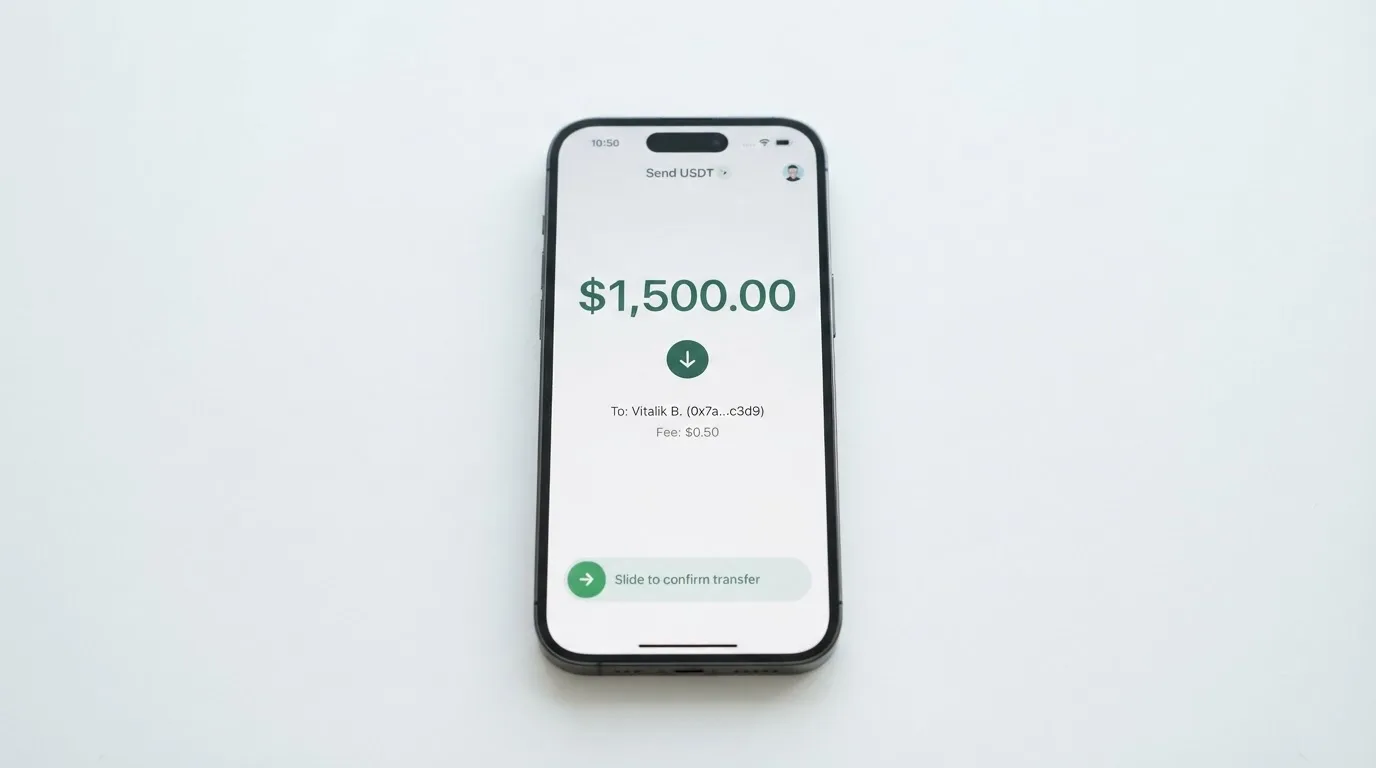
This is where the card becomes what it is, and it is worth being blunt about it. Topping up is a transfer inside the exchange, not a deposit into a card.
You move USDT from your Spot account, your Futures account or your Earn account into the Card Account. Payments then draw down the Card Account balance. The conversion fee on that move is 0 and USDT converts to USD at one to one, so nothing is lost in the transfer.
What is not supported matters more than what is. External bank transfers to the card account are not supported. Direct blockchain deposits to the card account are not supported. The card’s networks are therefore not applicable at all — there is no network to get wrong, and no address to mistype, which is genuinely one of the safer things about this design. The minimum top-up is not stated.
So the practical answer to “how do I put money on this card” is: you need money on Bitunix first. If your USDT is on another exchange or in your own wallet, you have to bring it to Bitunix through that exchange’s own deposit process, and every risk that process carries is a risk you take before the card ever sees the money.
Getting money back off the card is thinner still. The only movements the card documents are cashback and referral rewards: you can transfer your cashback from the Card Account to your Spot account and then withdraw it. Withdrawing the general card balance is not described anywhere I could find. Closing the card is free and can be done at any time in Card Management, and a positive balance is returned under applicable law and internal procedures — which may require identity verification and may be held for a reasonable period to cover chargebacks.
Paying with it every day
Spend-wise it behaves like a normal Visa: online and in stores, converted to the merchant’s currency at the rate at the time of the transaction. What you can spend it with is unusually broad. Apple Pay, Google Pay, WeChat Pay, Alipay, PayPal, LINE Pay, GrabPay and Samsung Pay are all listed, each subject to platform terms and regional restrictions.
That wallet list is what makes a virtual card tolerable in daily life. You are not typing a card number into a browser; you are tapping a phone, and the tokenised number in your device’s Secure Element never exposes the real one. You can lock the card in one place and it stops working everywhere. Up to 15 third-party wallets can be attached to a single card.
The cashback is tiered by your exchange VIP level — 1% at VIP 1, 2% at VIP 2–3, 4% at VIP 4–5, 6% at VIP 6–7, 8% at VIP 8 — and it arrives in USDT in the Card Account after settlement. It offsets the FX and cross-border fees, so at a realistic tier it roughly neutralises the 1.5% and 0.5% costs and, at the top tier, does considerably better. But there are carve-outs: refunds, chargebacks, cash-like transactions and certain merchant category codes are excluded, and the card does not publish which merchant codes those are. Gambling is the obvious example of what gets blocked, and blocks of that kind are the issuer’s policy rather than any law.
One unofficial figure, and I want to keep it separate. A company press release distributed through Chainwire on 16 July 2026 claimed up to 8% cashback on eligible spending, capped at 1,000 USDT a month, and a balance yield of up to 11.6% a year depending on the asset and conditions. Those numbers come from the company’s own publicity, not from the card’s published terms, and the card’s own help page leaves the cashback percentage and the yield figure blank. Read them as marketing, not as terms.
There is no separate card app. The card lives inside the Bitunix app, which also carries the exchange, and I did not read the store ratings. Freezing and unfreezing, limit changes and everything else happen in Card Management.
When something goes wrong, the process is the standard one, and worth reading before you need it. Filing a dispute is free; the USD 50 charge applies only if it escalates into a formal Visa chargeback. Investigations take several weeks and, in some cases, up to 90 days. Unauthorised transactions must be reported within 14 days of the transaction or its posting date. Merchant refunds usually take 5 to 14 business days. Contact the merchant first. And chargeback rights are not guaranteed — cash-like transactions may be ineligible.
What can go wrong
Three things, and none of them is a fee.
The issuer is not named. The card terms name the company as Blue Rock Management Pte. Ltd., and refer to the bank as “the Issuer” without naming it. No licences are stated on the pages I read. That is a normal amount of opacity for a card in this category, but it means you cannot easily check who stands behind your balance, under which licence, and in which jurisdiction.
The money is not a bank deposit. The terms are explicit: no entity assumes custody of fiat funds on behalf of users, and card funds are not bank deposits and are not deposit-insured. If the programme manager or the issuer fails, your balance is an unsecured claim, not a guaranteed one. This is standard across crypto cards and it is the single most important thing to understand before you keep meaningful sums on one.
The exchange has a visible complaint record. On Trustpilot, the Bitunix exchange — not the card, which has almost no card-specific reviews — reads around 3.7 out of 5 from 819 reviews, with 546 in the last 12 months, and the Trustpilot profile states the company “has received regulatory attention”. Reported themes in October 2026 include accounts frozen pending extra verification, one report of about USD 440 held for three months, liquidation disputes and withdrawal delays. Those are exchange-level complaints, not card complaints, and I am not claiming the card causes them. But your card balance sits inside that same company, so the exchange’s reliability is your card’s reliability.
Two smaller notes. The restricted-jurisdictions list was updated 8 October 2026 and the card agreement shows a last-updated line of 22 July 2026 while its text refers to 11 March 2026 — check which version you are actually reading. And the declared card launch was 16 July 2026, which makes this a young product, and young products change terms.
Practically, the exposure is straightforward. Freeze the card the moment you stop using it. Keep limits low enough that a fraud loss would not ruin your week — they are adjustable in Card Management. Turn on 2FA, and note that the card alerts you by email for transactions of USD 200 or more, which will not catch a small one.
What to take instead
I looked at three other cards in this category. Each solves a different part of the problem Bitunix does not.
| Card | Score | Strongest point | Where it is worse |
|---|---|---|---|
| Bitunix | 5.3 / 10 | Zero issuance, monthly, annual and conversion fees | Virtual only, USDT only, no external top-ups |
| Bybit Card | 6.0 / 10 | Virtual issuance is free in all regions, and a physical card exists in most | Card is not offered to European Economic Area customers at all |
| Coinbase Card | 6.4 / 10 | Zero spending fees, no annual fees, funds from a bank link or salary | US only, all states except Hawaii |
| OKX | 6.2 / 10 | No card fee, no transaction fee, no FX fee, 0.1% conversion spread | Euro only, Mastercard, virtual, and cashback only on USDG purchases |
Bybit Card is the closest thing to a direct comparison. Its virtual card issuance is free in all regions, physical cards exist across much of its footprint, and it funds from the Funding Account and Easy Earn balance, selling crypto only when the fiat runs out. Its weakness is structural and geographic: the cards page states plainly that the product is not meant for European Economic Area customers and that all European Economic Area participation is strictly prohibited. Its costs are heavier too — a 0.9% crypto conversion fee in most regions, 2% on top of the network FX rate, 2% in Kazakhstan for purchases made outside it, and a striking 7% in Argentina, where VAT and provincial taxes stack on top. And since 5 October 2026 only crypto-funded transactions earn points or cashback; fiat-funded spending earns nothing at all.
Coinbase Card has the cleanest fee story of the four — zero spending fees and no annual fees — and can be funded from a linked bank account or from part of a paycheck, which no crypto card in this group can otherwise do. It is a Visa prepaid debit card available in every US state except Hawaii, converting crypto to US dollars for both purchases and ATM withdrawals. That is the answer for a US reader who wants a working ATM card rather than a spending surface. Everything outside the US is out of scope.
OKX is the quiet option. Launched in the EU plus Norway on 28 January 2026, it is a Mastercard, euro-denominated, virtual debit card tied to OKX Pay, issued through an unnamed European licensed payment provider. No card fee, no transaction fee, no OKX FX fee, and a conversion spread the explainer puts at 0.1% as of May 2026, though the launch release said 0.4%. It holds USDC or USDG and declines a payment if the balance is short. Its catch is narrow: cashback only on USDG purchases, with USDC earning none.
If you are in the EEA and want something that works today with an actual euro balance, OKX currently does that better. If you are in the US and want an ATM, Coinbase does. If you are already holding USDT on Bitunix and spend online, this card is fine and you should stay where you are.
Who I would recommend it to
I would recommend the Bitunix card to exactly one kind of person: someone who already keeps USDT on the Bitunix exchange and spends that balance online for things they buy anyway — hosting, software, subscriptions, invoices — and who is comfortable with the balance being virtual, dollar-denominated and held inside a trading platform.
For that person the math is good. No issuance, no monthly fee, no conversion fee, tiered cashback that at the middle tiers roughly cancels the FX and cross-border charges, and a wallet list broad enough that you rarely touch the card number itself.
I would not recommend it if you need cash, a physical card, more than one cryptocurrency, more than one exchange, a European Economic Area banking relationship, or any assurance that a named, licensed institution stands behind your balance. And I would want you to read the trustpilot record for the exchange — not the card, the exchange — before you leave more on the platform than you would leave on a normal exchange.
The card is young, launched in July 2026, and its own pages leave gaps a reviewer cannot fill: the issuer unnamed, the licences unstated, the blank fee percentages, the blank cashback figure. That is why it lands where it does rather than higher. Check the terms again when you apply, because a product this new will have changed by then.
Frequently asked questions
What is the Bitunix card?
It is a Visa card, virtual only at launch, that spends a stablecoin balance held inside the Bitunix exchange. You move USDT from your Spot, Futures or Earn account into the Card Account, it converts to US dollars at one to one, and the Visa number spends that balance online and in stores. There is no separate card app — the card lives in the Bitunix app.
How does the Bitunix card work in daily life?
You top up from your own Bitunix balances, then pay as you would with any Visa: converted to the merchant’s currency at the rate at the time of the transaction. You can add it to Apple Pay, Google Pay, PayPal, WeChat Pay, Alipay, LINE Pay, GrabPay and Samsung Pay. Limits are USD 10,000 per transaction, per day, and USD 50,000 a month, adjustable in Card Management.
Is Bitunix a bank?
No. The card terms name the company as Blue Rock Management Pte. Ltd. and refer to the bank as “the Issuer” without naming it, and no licences are stated. The terms also say no entity assumes custody of fiat funds for users, and that card funds are not bank deposits and are not deposit-insured. Treat it as a platform balance, not a bank account.
Who can get the card, and who is excluded?
A restricted-jurisdictions page lists 80 countries and regions, including the Russian Federation, Belarus, the United States, Canada, France, Turkey, Ukraine, Singapore, Hong Kong, China, India, the UAE and Brazil among others. The list is explicitly not exhaustive, and the rule is by residence rather than citizenship.
Does getting it require KYC, and what do I need?
Yes. Identity verification including a confirmed residential address is required before you apply. The sequence is sign up, complete verification, apply, and the virtual card is ready on approval. The exact document list, minimum age, card-specific verification level and processing time are not stated on the public pages, so expect to supply more than a name.
What does it cost to hold and use?
Issuance, monthly, annual and crypto conversion fees are all 0. Real costs are the 1.5% markup over the Visa exchange rate, a 0.5% cross-border fee on dollar spending, a USD 0.3 small-amount fee under USD 10 with the first three a month waived, a 3% wallet fee on WeChat Pay and Alipay over 200 CNY, and USD 1 a month once the card has been inactive for 12 months.
Can I top it up from another exchange or wallet?
Not directly. Funding comes only from your Bitunix Spot, Futures or Earn accounts. External bank transfers and direct blockchain deposits to the card account are not supported, which also means there is no card network to choose wrongly. To get USDT here from elsewhere you must first bring it onto the exchange by that exchange’s own process.
Can I withdraw my balance back to my exchange?
Only the documented movement is cashback and referral rewards, which you can transfer from the Card Account to your Spot account and then withdraw. Withdrawing the general card balance is not described. You can close the card free at any time in Card Management, and a positive balance is returned under applicable law and internal procedures, possibly after identity verification.
Is the Bitunix card safe to use, and what if I lose it?
Freeze and unfreeze instantly in Card Management or the app, adjust limits, and turn on 2FA. Transactions of USD 200 or more trigger an email alert, so set a limit low enough that a smaller fraud would still be survivable. Report unauthorised transactions within 14 days of the transaction or posting date; disputes are free unless they escalate to a formal Visa chargeback, and investigations can take up to 90 days.
Is the Bitunix card worth it compared with other crypto cards?
If you already hold USDT on Bitunix and spend it online, yes — the zero fees and tiered cashback make it better value than most. If you need a physical card, an ATM, several cryptocurrencies or external funding, look at Bybit for reach, Coinbase for a US card with cash machines, or OKX for a euro balance in the EU.
Exchange cards – cryptocardchooser.com
Content created by the «cryptocardchooser.com» team