
A Visa card on a crypto balance, with a 6.7 out of 10 and one real reason to hesitate
 Available in US
The ether.fi card is a Visa — virtual and plastic — that spends a crypto balance you already hold, and pays part of your spending back in ETHFI. On paper that is a good deal for someone who has money in crypto, has no ordinary bank card, and wants to use it in a shop. On paper only: the day-to-day mechanics are sensible, the cashback ladder is real, and the app is well rated. Against that, the issuer is not named on the public pages, the November 2025 suspension of cards is still the loudest thing in the reviews, and the fee table is thinner than the marketing.
I scored it 6.7 out of 10. That is not a rejection. It is a card for a specific person, and I will try to be precise about who.
The conditions described here are current as of October 28, 2026.
Verdict: 6.7 / 10, and the person it is actually built for
The score breaks into six parts, and the shape of the number matters more than the number itself. Everyday use scores highest. Reliability and complaints scores lowest, by a wide margin. Nothing in between is broken.
| Criterion | Mark | Why |
|---|---|---|
| Who can get it | 7 / 10 | Issued in a named list of jurisdictions — Austria, Australia, Brazil, Canada, Germany, Hong Kong, Japan, Singapore, Switzerland, UAE, the UK and others, plus 31 US states |
| Cost | 7 / 10 | Core tier: one free virtual card, plastic card free but with a paid delivery, 0.5% FX; unofficial figures add 1% FX outside USD and EUR and 2% at ATMs |
| Top-up options | 7 / 10 | Any supported token can be deposited into the Safe, from several networks; the coin and network list is not disclosed publicly |
| Reliability and complaints | 4 / 10 | Issuer not named officially; Trustpilot around 3.3 across 47 reviews; cards were suspended in November 2025 after fraudulent transactions, with complaints about freezes |
| Everyday use | 9 / 10 | Virtual and plastic Visa, Apple Wallet and Google Pay, ATMs up to $5,000 per withdrawal |
| Total | 6.7 / 10 |
Who this suits: residents of the listed countries who hold ETH or other supported tokens, want cashback paid in a token rather than cash, and either cannot get a normal bank card or prefer not to use one for crypto-adjacent money. The cashback ladder is genuinely the best-shaped thing here — 3% on your first $2,000 a month on Core is well above what most crypto cards offer.
Who it does not suit: anyone who needs a card they can rely on next Tuesday. If your income arrives on a bank account, or you need the card to work without a pending compliance review hanging over it, the complaints section below is not a rounding error in the score. It is most of the gap between 9 and 4.
And one more group to rule out: if you spend mostly in currencies other than USD or EUR, or you use ATMs often, the fee assumptions get thinner. I go through that in the costs section.
Will they give you the card?
Here is the first hard filter, and it is worth checking before you deposit anything: ether.fi issues only in listed jurisdictions. The list is based on residence, and the card’s own wording is that it is issued “subject to KYC and compliance”. Andorra, Argentina, Australia, Austria, Brazil, Canada, Cyprus, Czech Republic, France, Germany, Hong Kong, Hungary, Italy, Japan, Mexico, Poland, Portugal, Singapore, Spain, Switzerland, UAE and the UK are on it, alongside 31 US states. Belgium and Ireland are eligible without physical delivery.
The card states it plainly: “If your jurisdiction is not listed, you will not be able to apply.” There is no appeal, no waiting list, no exception for people who have a residence permit somewhere else.
Two things the public pages do not say. Citizenship rules are not stated — the list is about jurisdiction, not nationality, and I have no basis to tell you what happens to, say, a citizen of a sanctioned country living legally in Germany. That gap is worth an email to support before you commit money. And the age requirement is not stated either, which matters if you are under 18 and hoping.
ATM withdrawals are blocked in North Korea, Iran and Myanmar. If you travel to those countries, the card is dead in the ATM even if it works everywhere else.
Here is the general principle behind residence-based eligibility, since it explains why the list looks the way it does. Nationality is recorded and screened separately from residence, because sanctions screening and issuer risk policy are often applied to citizenship and country of birth as well as to the address. So being in a listed country is necessary but not obviously sufficient, and that is exactly the sort of thing that produces the “approved then refused” complaints further down.
How to get it
The sequence is short and, unusually, it starts with money rather than paperwork.
- Deposit tokens into your Safe.
- Complete KYC — the card’s wording is “Verify your identity via KYC”.
- Order a virtual or physical card in the app.
Note the order. Step one comes before identity verification, which is the reason for the next paragraph.
There is one KYC flow, with no tiers or levels. You give a phone number for an OTP, an identity document (passport, national ID or driver’s licence), a selfie liveness check, and your address. In some cases the flow also includes a questionnaire from the card issuer, and in some cases a proof of address — that document must be no older than 3 months, and phone bill screenshots are not accepted. Most reviewers report being through it within 48 hours, and the 48-hour figure is a review-site observation, not a commitment from ether.fi.
What is not stated: which documents are accepted in which country, the minimum age, and the official list of rejection reasons. What people do report as causes of delay are mundane — an expired or cropped ID, screenshots instead of photographs, information that does not match between fields, an address that does not match the document. Fixable, but not obvious in advance.
The card itself is a Visa. You can hold a virtual card and a physical one. The card currency is not stated; USD and EUR purchases are both referenced in the rules.
On delivery: the Physical Cards article does not state delivery countries, delivery time or delivery price. On Core, a shipping fee applies and the amount is not disclosed; on Luxe+, shipping is included. Three restrictions are stated and they are the kind that ruin a first attempt — PO boxes are not allowed, the address must be in Latin characters only, and shipping details cannot be changed after you order. If your address is wrong, you order again.
Fees: what it really costs
Costs are where this card gets fuzzy fastest, so read the table and then read the paragraphs after it. Two of the rows are not stated by ether.fi at all, and one comes from third-party sites rather than the card.
| Fee or limit | What it says |
|---|---|
| Virtual card | One free virtual card on Core; the first virtual card costs $10 in regional-pricing countries (Argentina, Angola, Bangladesh, Bolivia, Colombia, Ecuador, Indonesia, Malaysia, Mexico, Nigeria, Peru, Philippines, South Africa, Thailand) |
| Physical card | Free on Core, but a shipping fee applies and the amount is not stated. Luxe+ includes shipping. Monthly and annual fee not stated; physical card fee not stated |
| FX fee, Core | 0.5% on top of the base rate |
| FX fee, Luxe | 0.25% on top of the base rate |
| FX fee, Pinnacle and VIP | None |
| EUR purchases | 0% FX under a separate article |
| Crypto conversion fee | Not stated |
| ATM fee | Not stated in the article describing ATM limits. Unofficial: 2% with a $250/day cap |
| Daily and monthly limits | You set your own daily and monthly caps in the Cash tab; changes take effect after a security delay. Overall tier limits not stated |
| Weekly per-card limits by merchant category | $500 for crypto purchases, gambling, FX and prepaid loading; $1,000 for money transfers, stock brokers and dating; $3,000 for pharmacies, licensed online casinos (MCC 7800-7802) and funding crypto accounts; $30,000 per transaction for advertising |
The third-party figures — 1% FX outside USD and EUR, and 2% at ATMs — come from aggregator sites, not from ether.fi’s own pages. Treat them as a reasonable expectation rather than a published price.
Now three everyday payments, walked through, because abstract fee tables hide which numbers actually matter.
Coffee in a euro-zone café. You spend EUR. There is a separate article giving EUR purchases 0% FX on Core, so the 0.5% tier fee does not apply here, and the EUR cashback ladder is lower than the dollar one — Core’s 3% runs to $10,000 a month on the dollar ladder, but the euro side has its own smaller bands. If you also needed to convert crypto into fiat at the moment of payment, the conversion fee is the row marked not stated, which means this is the number to ask support about.
A subscription billed in dollars while you mostly hold euros. Now the 0.5% applies on Core, on top of whatever the merchant’s own base rate is. This is the payment that quietly costs the most, because it recurs. On Luxe it is 0.25%; on Pinnacle and VIP there is no FX fee at all, which is a real argument for a paid tier if you live outside the dollar zone.
Withdrawing cash in a currency that is neither. Here the published 0.5% and the unofficial 1% collide, and the unofficial ATM percentage sits on top. My honest reading: assume the worse of the two figures until ether.fi tells you otherwise in writing, and assume the $250/day ATM cap exists even though it is not in the official article.
One more structural thing about the balance: your crypto sits as tokens in the Safe, and the card spends from that. A multi-currency card balance is not stated — so there is no evidence you can hold EUR and USD side by side inside the card itself.
What the tiers actually change
Tiers are where the fee table and the cashback ladder meet, so it is worth seeing them together rather than one at a time.
| Core | Luxe | Pinnacle | VIP | |
|---|---|---|---|---|
| Price | Free | $199/year or earned by monthly points | $999/year or points | Not stated |
| Cashback | 3% on first $2,000/month | 3% on first $10,000 | 3% on first $50,000 | 4% on first $50,000 |
| Virtual cards | 1 free | 2 free | 10 free | Unlimited |
| Physical card | Free, shipping fee applies | Free metal card, shipping included | Free, express shipping | Free Gold metal card |
| Free ATM withdrawals | Not stated | Not stated | Up to 10/month | Not stated |
| Balance protection | Up to $10K | Up to $50K | Up to $100K | Up to $500K |
Luxe also carries category cashback of 10% up to $10 a month. The protection column is the Cash Protection Program, and it is not insurance — I come back to that in the risks section.
Top up: how the money gets in
Topping up is where ether.fi is most genuinely different from a prepaid card, and also where a beginner can lose money quietly.
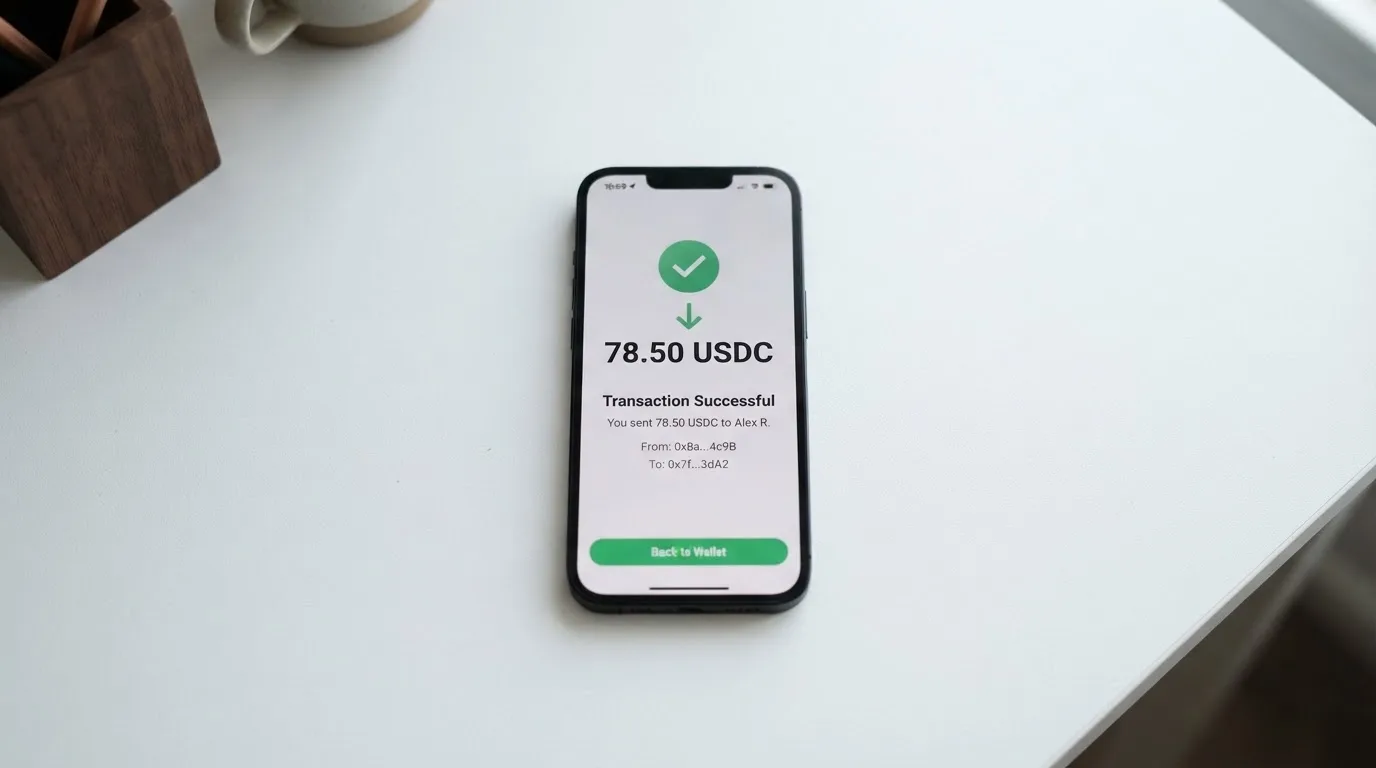
You deposit any supported token into your own Safe. In Credit mode that deposit acts as collateral; in Direct Pay mode the card spends the balance. The list of coins and networks is not stated on the card’s pages — it lives in two help articles, “Supported assets and networks for your Vault with Cash” and “USDC and USDT deposit networks and addresses”. If you are depositing USDC or USDT, those two articles are where the network choice is decided, and it is the single most consequential page you will read.
There is a requirement that catches people out: a $10 crypto deposit must be made before KYC can complete, in all regions. If verification fails, that deposit can be withdrawn. That is the reason step one of the application is a deposit rather than a form.
Deposits are accepted from multiple chains. The deposit and network fee amounts are not stated, and those fees are charged by the blockchain, not by ether.fi — so what you pay depends on the chain you pick and how busy it is.
Fiat top-up by bank transfer exists as a separate feature with its own country list; the fees for it were not part of what the card’s pages state.
Why the network matters so much: blockchain transfers are irreversible. A deposit sent on a network the provider does not support, or to an address belonging to a different network, can be lost or need manual support recovery with no guarantee. And a stablecoin balance is not enough on its own — on Ethereum, gas is paid in ETH, so a wallet holding USDT with no ETH cannot send it at all. Tron prices its transactions through bandwidth and energy instead. If this is your first transfer, do a small one and confirm it arrived before moving anything else.
Withdrawing your vault balance is a separate procedure: you request it with a token, amount and recipient address, and it executes once the required Safe owners sign. Cross-chain withdrawals have their own article. Fees are not stated.
One last thing you may need someday, so file it away: deleting the account requires a $0 balance, no active borrows and no pending card transactions, then a 14-day waiting period. The balance has to be emptied first — what happens to anything left is not stated.
Paying with it every day
This is the part that works, and it works well. Everyday use is the strongest category in the score.
Apple Wallet and Google Pay. Both supported, added using the card details from the app. Mechanically this is the same tokenisation any bank card uses: the number is replaced by a device-specific number stored in the phone’s secure hardware, never on the provider’s servers, with a fresh one-time code for each payment. That part is ordinary and unremarkable.
Virtual card first. If you are nervous about a plastic card, the virtual one activates in the app and costs nothing on Core. It is the right first move for anyone whose main concern is control.
ATM. Available, up to $5,000 per withdrawal, five withdrawals and $25,000 per rolling 24 hours across Core, Luxe, Pinnacle and VIP. A separate help article gives different numbers — $1,000 per ATM withdrawal, five per 24 hours. The two figures conflict; assume the lower one for planning. Pinnacle and VIP get free ATM withdrawals up to 10 a month. The fee is not stated officially.
Cashback in ETHFI. Paid in the token, locked for 7 days, then claimable. The ladder runs 3% on your first $2,000 a month on Core, then 1% to $3,000, then 0.5%. Luxe pays 3% to $10,000, Pinnacle 3% to $50,000, VIP 4% to $50,000. Business pays 1%. Excluded: ATM withdrawals, cash advances, peer-to-peer transfers and gambling merchant categories. No payout cap is stated. Read the lock as part of the reward, not beside it — the money is not yours for a week.
Merchant categories are where the app feels fussy. Cashback-excluded or limited categories include 6011, 6012, 6211, 6513, 6532 and 7995 — that last one is gambling. Gambling is capped at $500 weekly, not fully blocked. Weekly per-card limits by category run from $500 to $30,000 as in the fee table above. If you are heading for a casino, know this before you try.
The app. The iOS app is called “ether.fi: Crypto Card & Spend” and needs iOS 16.0 or later. It sat at 4.9 across 141 ratings in the US storefront when I read it, with 140 US ratings. The Google Play listing was not found or not read, so I cannot tell you what Android users experience — a real gap, given how many of the listed jurisdictions are Android-majority markets.
Disputes and chargebacks. Filed through in-app chat with support. For an unauthorised transaction: delete the card and contact support, and it goes into Visa’s fraud process. For a merchant problem — non-delivery, duplicates, subscriptions — it goes through Visa’s dispute process, and the card’s guidance is to contact the merchant first. Disputes may take up to 90 days. No dispute fee is mentioned. Refunds come from the merchant, with timing covered separately.
Ninety days is worth internalising before you argue. If a merchant owes you money, you are in a queue measured in months, and the merchant is the first stop, not the last.
What can go wrong
Start with the worst of it, because it is the reason this card scores 6.7 and not 8.
The suspension. In November 2025, PANews reported that ether.fi cards were suspended after fraudulent transactions, with the CEO promising refunds. That is not a hypothetical; it is the most recent material event in the card’s history. A later search in 2026 found no confirmed licence loss and no confirmed issuer change, but blogs disagree about who the issuer even is — one says Rain, another says Third National under a Visa licence. Both are unofficial and the card’s own pages do not name a legal entity or issuer.
The complaints. Trustpilot sits around 3.3 out of 5 across 47 reviews, with a reading of 3.5 on the same 47 at a different moment. Four themes repeat. First, KYC limbo — weeks to months stuck in address verification. Second, denial after approval, with “suspected fraud” given and no specific reason, in undated 2025–2026 reviews. Third, compliance freezes with slow automated support, per a secondary aggregator. Fourth, lost deposited funds during card activation, in 2025.
That third theme is the one to think hardest about. Anyone who cannot get an ordinary bank card is, by definition, in a situation where a frozen account has no obvious fallback. The population this card serves has fewer alternative rails than the average reader.
Self-custody cuts both ways. The design here is genuinely better than custodial: a Safe vault where withdrawals need owner signatures, passkey sign-in, email OTP, a PIN, instant card freeze in the app, and spend limits you set yourself. But the trade is stated plainly — you carry sole responsibility for key loss, phishing, and clipboard malware that swaps a copied address. Crypto transfers are typically irreversible, and a stolen key has no built-in recovery because the network cannot freeze or return funds.
The protection programme is not insurance. The Cash Protection Program reimburses unauthorised smart-contract asset movement. Caps: Core $10,000, Luxe $50,000, Pinnacle and Business $200,000, VIP $500,000, with total programme capacity of $5 million and a $100 claim fee, refunded if approved. It excludes compromised keys, credentials and devices — which is to say, it excludes the most likely way you would actually lose money. Treat the number as a ceiling on a narrow category of incident, not as reassurance.
Things outside your control. Your card is a payment instrument issued under a network licence, and the network can stop a programme — that is not theoretical in this category. A closed programme typically means a notice period, then spending and loading stop, then you are asked to withdraw. Deposit a small amount first, keep no balance you would miss.
Merchant-side friction. A declined authorisation can leave a hold on your funds for several days, typically up to 7. Some shops decline prepaid or foreign card numbers because the issuing country is visible in the card’s first digits, and that is exactly what a card issued in one country and used in another looks like. Address verification checks, which compare the numeric parts of the billing address, are mainly offered in the US, Canada and UK and are generally unavailable for foreign-issued cards — so a decline at a US merchant for a foreign card can be structural, not your mistake.
Tax. Not advice, just the mechanic you should know. Digital assets are treated as property, so exchanging them for goods or dollars generally produces a taxable gain or loss, measured in your local currency at the value on the transaction date. Every card payment funded from crypto may be a separate disposal. Keep records.
Support. Live chat in-app and on the web, plus email. Pinnacle gets a dedicated account-manager team, VIP gets executive support — which is another way of saying Core has neither.
What to take instead
Three alternatives, on their own terms. Scores are mine on the same 6.7 scale for ether.fi.
| ether.fi | Nexo | Xplace | Exa | |
|---|---|---|---|---|
| Score | 6.7 / 10 | 6.3 / 10 | 7.7 / 10 | 6.2 / 10 |
| Who it is for | Residents of listed jurisdictions, including 31 US states, wanting ETHFI cashback | Residents and citizens of selected European countries, including the EEA and the UK | Not stated by country; “services are not available in all jurisdictions” | Card issued in 45 countries and 31 US states, with 18 countries explicitly ineligible |
| Network and card | Visa, virtual and physical | Virtual and physical, issued by DiPocket UAB; Mastercard trademark notice on page, network not stated explicitly | Visa, virtual instant, physical (Silver live; Gold/Platinum coming soon, delivery 7–14 business days) | Virtual Visa Signature; physical card article exists, answer not read |
| Standing costs | No monthly or annual fee stated; $10 first virtual card in some regional-pricing countries; paid tiers from $199/year | No monthly, annual or inactivity fee; physical card needs $5,000 balance and Gold tier | Basic free; Silver $99/y, Gold $249/y, Platinum $999/y; no borrowing origination fee | Marketed as free, no amounts on the page |
| FX | Core 0.5%, Luxe 0.25%, Pinnacle and VIP none; 0% on EUR purchases | 0.2% weekdays and 0.7% weekends in EEA/UK/CH; 2% and 2.5% rest of world | 0% on Platinum; other tiers not stated | Not stated |
| Funding | Any supported token to the Safe, multiple networks, list not stated | Over 100 digital assets; Debit Mode uses stablecoins, crypto and FiatX | BTC (cbBTC), ETH (wETH), SOL, JitoSOL, USDC, USDT, xStocks on Solana | Collateral in the self-custody app; specific coins and networks not stated |
| Cashback | 3% to $2,000/month on Core, paid in ETHFI locked 7 days | Credit Mode only, needs over $5,000 held; NEXO or BTC, by tier from 0.5%/0.1% to 2%/0.5% | Credit mode by tier, 0.5% to 2%, paid in USDC at settlement | None stated; “earn while you spend” refers to yield on assets |
Read that table as three different bets. Xplace is the highest-scoring of the four at 7.7, largely because its cashback ladder in Credit mode is clean, paid in USDC at settlement with no lock, and its fee story is simple — Basic free, Platinum at 0% FX. Its weakness is that the country list is not stated anywhere I could find, which for someone whose first question is “will they give me this?” is a real gap.
Nexo is the most bank-like structure — spending from a custodial account, 0.2% weekday FX in the EEA — but its cashback is conditional in a way that bites: Credit Mode only, and the account must hold more than $5,000 in digital assets. A separate caution, not official: Cointelegraph reported a 2025-era Bulgarian police raid on Nexo’s Sofia office over alleged Russia-sanctions and AML violations, with no official Nexo statement on Russians found.
Exa is the widest on paper — 45 countries plus 31 US states — and the most explicit about who is excluded: 18 ineligible countries including Belarus, China, India, Iran, Israel, Turkey, Ukraine, Vietnam and Russia, with the plain statement that Russian residents cannot be issued a card, and spending blocked in Cuba, Iran, North Korea, Russia, Syria, Ukraine and Venezuela. No cashback is stated, and its fees sit in help articles I did not read.
My honest summary: if you want cashback and self-custody, Xplace’s structure is cleaner. If you want the widest country coverage with explicit rules, Exa is more legible. If you want the credit-card-like experience with a custodial balance, Nexo is the one built like a bank. None of them fixes the underlying category problem, which is worth naming before you compare anything.
The part that is the same everywhere
Every one of these cards is a prepaid instrument in practice. The card network — Visa or Mastercard — routes the messages and sets the rules. The issuer is a licensed bank or e-money institution that actually holds the programme. The crypto brand is often only a programme manager and a marketing front end. That last point is the thing to internalise: you are dealing with two regulators, not one.
In the EU, MiCA has applied in stages since it took legal effect in June 2023, with stablecoin rules from 30 June 2024 and the rest from 30 December 2024. Its grandfathering period runs to 1 July 2026 or until a provider gets or is refused authorisation, whichever comes first. ESMA keeps an interim register of authorised crypto-asset service providers — you can check a provider there. The card itself is a separate permission under e-money and payment-services law, which is why a crypto card often rests on two licences. And electronic money institutions must safeguard customer funds in dedicated accounts or insure them, but those funds are not bank deposits and may not carry deposit guarantee.
Programme closures are normal in this category. In November 2022 Visa said it had “terminated our global agreements with FTX”. In 2018 Visa suspended WaveCrest in Europe, closing all WaveCrest-issued programmes. Closures typically mean a notice period, then loading and spending stop, then you withdraw. Plan for that from day one.
Who I would recommend it to
I would recommend this card to someone in a listed jurisdiction who already holds ETH or another supported token, already understands that a Safe vault and a seed phrase are their own responsibility, and wants 3% back in a token on the first $2,000 of monthly spending. For that person, the value proposition is real and the tiers give a clear upgrade path if the volume justifies it.
I would not recommend it as a primary card to anyone whose access to money depends on it being available, and I would think twice if you are a reader who has been frozen, declined or refused by mainstream finance before — because that reader will find this category’s complaint themes uncomfortably familiar.
Before you deposit, four things, in this order. Read the supported-networks article for the token you actually hold, because an unsupported network is unrecoverable. Ask support what the conversion fee is and what the ATM fee is, because both are unstated and both recur. Check whether your country is on the list — and if you are a citizen of a country that is not, ask in writing before transferring anything. And decide in advance how much balance you are willing to have sitting in the card when you have never met the support team.
The card is not badly built. The gap between 6.7 and a higher number is almost entirely about who stands behind it and how they behaved in a hard month, and that is not something a feature list fixes.
Frequently asked questions
What is the ether.fi card?
The ether.fi card is a Visa you can hold virtually or in plastic that spends a crypto balance you already hold, and pays part of your spending back in ETHFI. You deposit tokens into your own Safe vault, verify your identity, then order a card in the app. It is a Visa-branded payment instrument, not a bank account, and ether.fi’s public pages do not name a legal entity or card issuer.
How does the ether.fi card work in practice?
You deposit any supported token into your Safe, and the card spends from that balance — as collateral in Credit mode, or directly in Direct Pay mode. Cashback arrives in ETHFI, locked for seven days before you can claim it. Spending limits are weekly per merchant category, from $500 for crypto and gambling up to $3,000 for pharmacies and $30,000 for advertising, plus daily and monthly caps you set yourself.
Who can get the ether.fi card?
It is issued only in listed jurisdictions, based on residence: Andorra, Argentina, Australia, Austria, Brazil, Canada, Cyprus, Czech Republic, France, Germany, Hong Kong, Hungary, Italy, Japan, Mexico, Poland, Portugal, Singapore, Spain, Switzerland, UAE, the UK, plus 31 US states. The card states that if your jurisdiction is not listed, you cannot apply. Citizenship rules and the minimum age are not stated on the public pages.
Does the ether.fi card require KYC?
Yes. Verification means a phone OTP, an identity document, a selfie liveness check and your address, with a proof-of-address document in some cases that must be under three months old. There is one flow with no tiers. A $10 crypto deposit is required before KYC can complete, in all regions, and it can be withdrawn if verification fails.
Is the ether.fi card free?
Partly. Core members normally get one free virtual card, though the first costs $10 in regional-pricing countries including Argentina, Mexico, Nigeria, South Africa and Thailand. The physical card is free on Core but a shipping fee applies and the amount is not stated. No monthly or annual fee is stated. Luxe costs $199 a year or points, Pinnacle $999 a year or points, and the VIP price is not stated.
What fees should I expect when I spend?
Core charges 0.5% FX on top of the base rate, Luxe 0.25%, and Pinnacle and VIP charge none. EUR purchases have a separate article giving 0% FX, though with a lower cashback ladder. The crypto conversion fee is not stated, and third-party sites report 1% FX outside USD and EUR and 2% at ATMs — unofficial figures, not published by ether.fi. Check with support before you rely on any of them.
How do I top up the card?
You deposit any supported token into your Safe, and deposits are accepted from multiple chains. The coin and network list is not stated on the main pages; it lives in help articles on supported assets and networks and on USDC and USDT deposit addresses. Network fees are charged by the blockchain, not ether.fi. Transfers are irreversible, so a deposit on an unsupported network can be lost — send a small test first.
Can I add it to Apple Wallet?
Yes, Apple Wallet and Google Pay are both supported, added using the card details from the app. Mechanically this is the standard tokenisation a bank card uses: the card number is replaced by a device-specific number held in the phone’s secure hardware, with a fresh one-time code per payment. Cashback-excluded and limited merchant categories still apply, so paying in a wallet does not sidestep the category rules.
Is the ether.fi card safe?
It is built better than a custodial card: a self-custody-style Safe where withdrawals need owner signatures, passkey sign-in, instant card freeze in the app and spend limits you control. But you own the key risks, transfers are irreversible, and the Cash Protection Program is not insurance — it excludes compromised keys and devices and has a $5 million total programme capacity. Trustpilot sits near 3.3 out of 5 across 47 reviews, and cards were suspended in November 2025 after fraudulent transactions.
How do I withdraw money and close the account?
Vault withdrawals are requested with a token, amount and recipient address, and execute once the required Safe owners sign; cross-chain withdrawals follow a separate process. Fees are not stated on the pages I read. Closing the account needs a $0 balance, no active borrows and no pending card transactions, then a 14-day waiting period — so the balance has to be emptied first, and what happens to anything left is not stated.
Credit and cashback cards – cryptocardchooser.com
Content created by the «cryptocardchooser.com» team