
A generous euro card with a licence you have to look for
 Available in US
Rebind is a Paris-built app that gives you a euro balance, a free Visa to spend it with, and interest on the euros while they sit there — “up to 5%” on euro balances and “up to 8%” on dollar ones. On the surface that is one of the more generous combinations in crypto cards: no account fee, no transfer fee, no foreign exchange fee, no minimums. The catch is not in the pricing. It is in the layers underneath, several of which the card’s own pages leave unnamed. My score is 5.8 out of 10 — a card I would describe as promising on paper and quiet about structure.

I am reviewing Rebind as a reviewer, not as a user. I have not opened an account or moved money through it. What follows comes from what the card publishes, what third parties say about it, and the general shape of this category of product, checked on 20 October 2026.
The conditions described here are current as of October 28, 2026.
Verdict: 5.8 out of 10
Rebind scores 5.8 out of 10. That is a middling number for a product whose fee schedule is one of the most generous I have seen published — and the gap between the two is the whole story. What Rebind does well is cost: the card says there are no account fees, no transfer fees, no foreign exchange fees and no minimums. What it does less well is tell you things. Who issues the card is not named. Which countries are on the list is not fully published. What happens to your euros if the company has a bad quarter is explained in a guide, but the mechanism sits behind a partner.
| Criterion | Mark | Why |
|---|---|---|
| Who can get it | 5 / 10 | Works in 40+ countries inside and outside the eurozone, but the full list is not disclosed; unofficial sources say EU, EEA and UK only |
| Cost | 8 / 10 | No account fees, no transfer or FX fees, no minimums; asset buying and selling carries a “small fee” with no amount stated; unofficial reports of a 1.5% markup outside EUR and GBP |
| Top-up options | 4 / 10 | Officially an IBAN only, with crypto deposits not disclosed; unofficial sources say ETH and USDC on Gnosis Pay infrastructure |
| Reliability and complaints | 5 / 10 | Rebind SAS holds no banking licence, euros come from Monerium as an EU EMI, the card issuer is unnamed, no deposit insurance; unofficial complaints about cashback tied to GNO and withdrawal delays |
| Everyday use | 6 / 10 | A free Visa; unofficial sources say virtual and physical, ATM free, Apple Pay and Google Pay not supported |
Total: 5.8 / 10.
Who this suits, in one line: a euro saver who wants their money to earn something while it waits and does not mind holding a balance with a non-bank company that explains itself in short paragraphs. Who it does not suit: anyone who needs the card to be reliably accepted everywhere, needs to pay in their local currency outside the euro area without surprises, or treats “my money is insured” as a requirement rather than a preference.
The yield is the pitch, and the yield is real in the sense that the card says it pays it. But it is variable, it is not guaranteed, and third-party descriptions of how it is generated point to DeFi protocols — which is a polite way of saying that part of your return comes from somewhere other than Rebind’s own balance sheet, with its own timing and its own risks. The savings are described as available at any time with no lock-ups, which is the right design; the open question is what “available at any time” means in practice if an underlying withdrawal stalls.
Will they give you the card?
Yes, in 40+ countries — but only Rebind knows exactly which ones, and that is the first thing to ask about.
Rebind says it works in 40+ countries, inside and outside the eurozone. The full list sits on a linked guides page. That page was not read for this review, so the honest position is that the list exists and its contents are not reproduced here. A third-party aggregator, unverified and not confirmed by Rebind, narrows the answer considerably: EU, EEA and UK. Those two statements are not the same, and if you are outside Europe that difference decides whether this card is available to you at all.
This matters more than it might look. Card availability is not one decision but several, made by different companies. Rebind can accept you as a customer. An e-money institution in the EU can hold your euro balance. A card issuer somewhere else can put a Visa number in your wallet. Any one of them can say no to your country. This is why a card can advertise 40+ countries and still be unusable in the one you live in — and it is why “works in 40+ countries” without a list is not yet an answer to “can I get this”.
| Question | What is published | Status |
|---|---|---|
| Countries served | 40+ countries, inside and outside the eurozone, full list on a guides page | Stated, list not published in what was read |
| Rest of the world | EU, EEA and UK | Unofficial, third-party, not confirmed by Rebind |
| Residence proof required | Not stated | — |
| Citizenship rule | Not stated | — |
| Age requirement | Not stated | — |
One more thing the card does not say out loud: it is not a bank. Rebind SAS is a technology company built in Paris with no banking licence, and it says so itself. Your euro balance is e-money issued by Monerium, an EU-licensed electronic money institution, not a bank deposit. That distinction is the single most important fact on this page, and I will come back to it.
How to get it
In five minutes, according to Rebind. What you will be asked for is not stated, which is the part worth planning around.
The published account-opening claim is thin and quotable: “Free to open. Only takes 5 min.” The steps are the obvious ones — sign up in the app, get the card in the app. Beyond that, the public pages say nothing about what identity documents are required, whether proof of address is needed, or what the age limit is. All of that is marked as not stated rather than as absent.
A third-party source, unofficial and not confirmed by the card, fills in a plausible picture for 2026: email, phone number and an ID document, with no proof of address and no selfie required. Treat that as a reasonable expectation, not a promise. Identity checks are set by the e-money institution and the card issuer as much as by Rebind, and any of them can raise the bar.
| Item | What the card says | Status |
|---|---|---|
| Opening time | “Only takes 5 min” | Stated |
| Account fee to open | “Free to open” | Stated |
| Documents needed | Not stated | — |
| Proof of address | Not stated | — |
| Email, phone, ID | Required | Unofficial, third-party |
| Selfie | Not required | Unofficial, third-party |
| Age limit | Not stated | — |
| Delivery time and cost | Not stated | — |
| KYC levels on the page | Not stated; the page says “takes 5 min” | — |
What the card is, physically, is also only partly described. Officially: a free Visa, account currency EUR, spend euros globally, pay in any currency. Whether that is a virtual card, a plastic one, or both is not stated in the card’s own material. Unofficial sources describe both a virtual and a physical Visa. If you are waiting on a piece of plastic with your name on it, ask before you sign up, because delivery is not covered by anything published.
Fees: what it really costs
Rebind’s published pricing is the best part of this card, and it is also where the gaps matter most, because “no fees” and “no cost” are different sentences.
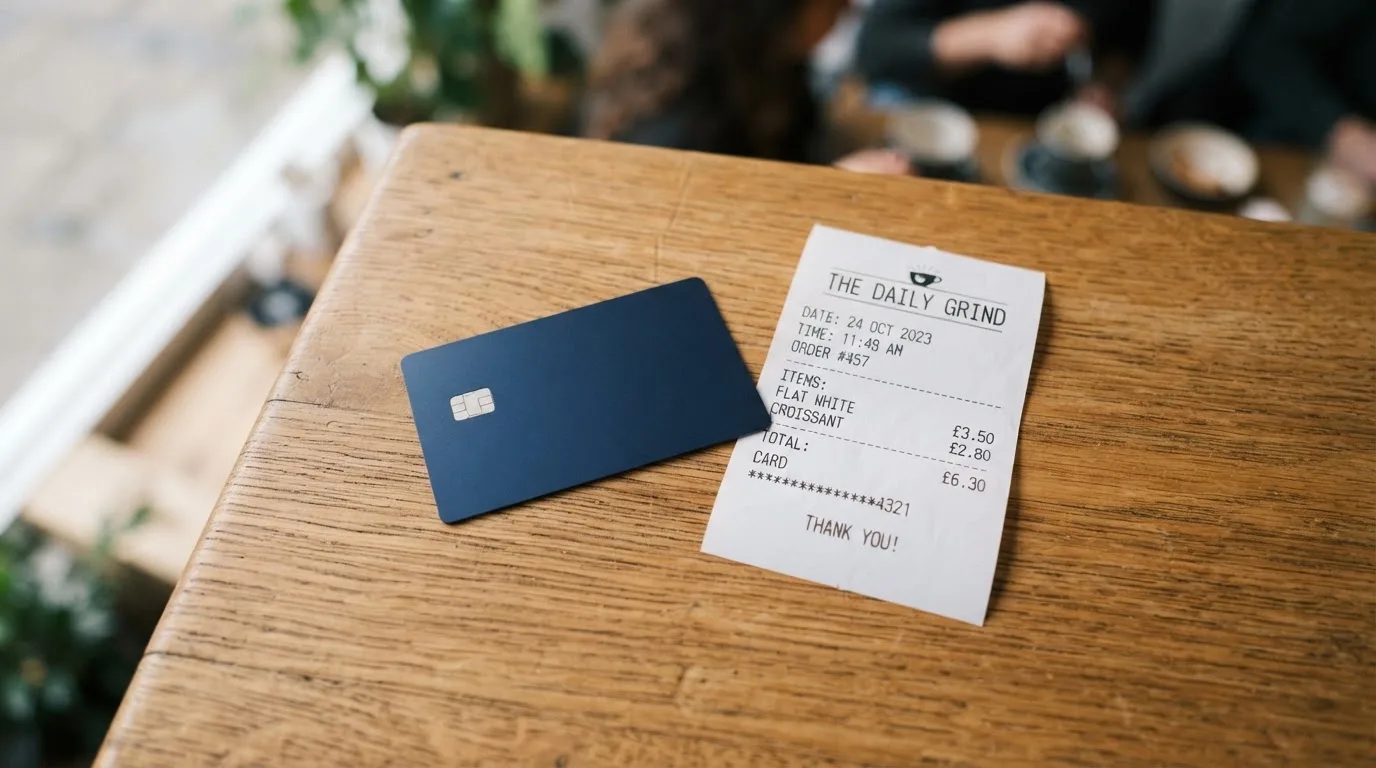
What is stated: no account fees. No transfer fees. No foreign exchange fees. No minimums. Buying or selling assets carries “a small fee” — the amount is not stated. The conversion spread is not stated either, which matters: a spread is not a fee, but it is money you pay, and if the card’s foreign exchange fee is genuinely zero, the spread is where the cost of changing currency would have to live. The card’s savings rate — up to 5% on euros, up to 8% on dollars — is variable and comes from third-party DeFi protocols, not from Rebind’s own margin.
ATM fees are not stated. Unofficial sources list ATM withdrawal as free. Daily, monthly and ATM limits are not stated; unofficial sources say no limits are listed for any of them. “Not listed” is not the same as “none exist”, and this is exactly the kind of thing that matters on a card you might use to get cash abroad.
| Fee or limit | Amount | Source |
|---|---|---|
| Account fee | None (“No account fees”) | Stated |
| Card cost | Free Visa card | Stated |
| Tiers and per-tier pricing | No tiers stated | Stated |
| Transfer fees | None | Stated |
| Foreign exchange fees | None | Stated |
| Minimums | None | Stated |
| Buying / selling assets | “a small fee”, amount not stated | Stated |
| Conversion spread | Not stated | — |
| ATM fee | Free | Unofficial, third-party |
| Daily / monthly / ATM limits | No limits listed | Unofficial, third-party; absence not confirmed |
Three everyday payments, and what applies:
A coffee in your own city. On the published schedule this costs nothing beyond the price of the coffee. No account fee, no transfer fee, no minimum to have met. If your card works at the terminal, you pay the coffee’s price.
A subscription billed in dollars. The card says “no foreign exchange fees” and that you can “pay in any currency”. The exchange rate you actually get is not published, and the conversion spread is not stated. This is the payment to watch: not because a fee is promised, but because a rate that is not published cannot be checked in advance.
A weekend in a country outside the euro area, with 200 euro spent and 60 euro drawn from an ATM. The official pages are silent on both the ATM fee and the limits. The unofficial position is a free ATM and no listed limits, which would make this the cheapest kind of trip a crypto card can offer — and exactly the scenario where “not stated” on the card’s own site is most annoying.
There is a fourth cost, unofficial, and it is the one I would actually plan around: a reported markup of 1.5% on spending outside EUR and GBP. If it is accurate, it does not contradict “no foreign exchange fees” — a markup is a rate, not a fee — but it would make non-euro, non-pound spending the most expensive thing this card does. If you live outside the euro area and outside the UK, that is not a rounding error, it is the number that decides the card.
Top up: IBAN officially, crypto in practice
Officially: an IBAN, with “instant transfers 24/7 at no cost” and savings accruing “from 1€”. Unofficially: crypto, and this is where the interesting part lives.
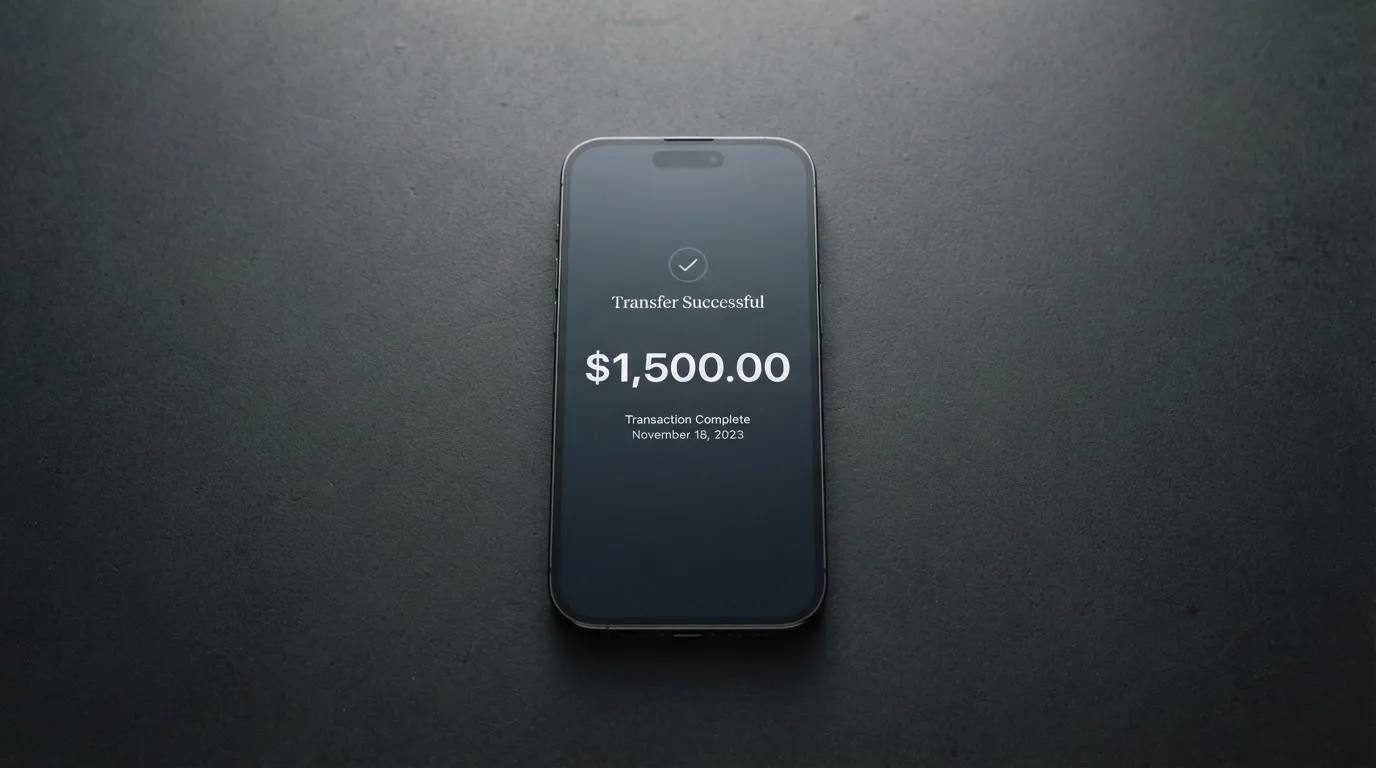
The published top-up story is a bank transfer. Instant, 24/7, at no cost, from a euro. That is genuinely useful and it is the part you can rely on. The minimum is stated as 1 euro, which is unusually low.
The crypto story is not published. What the card’s pages do not say is which coins, which networks, or whether crypto deposits are supported at all in the official description. A third-party aggregator, unofficial and not confirmed by Rebind, says the supported coins are ETH and USDC, and that the product is built on Gnosis Pay infrastructure. If that is right, you are depositing onto a specific chain — and that turns the ordinary warnings about transfers into live concerns. Send a token on a network the provider does not support, or to an address belonging to a different network, and the money can be gone; blockchain transfers are irreversible and there is no built-in recovery.
| Top-up route | Details | Source |
|---|---|---|
| IBAN transfer | Instant, 24/7, no cost, savings from 1€ | Stated |
| Transfer fees | None | Stated |
| Minimums | None; savings from 1€ | Stated |
| Crypto deposit options | Not stated officially | — |
| Supported coins | ETH and USDC | Unofficial, third-party |
| Network | Gnosis Pay infrastructure | Unofficial, third-party |
On withdrawals: the savings are described as available at any time with no lock-ups, which is the right answer and a genuine mark against the design. What is not explained anywhere I read is how you actually get the money out, how long it takes, or what it costs. That is an unusually large silence for a product whose main feature is that your balance earns interest.
Paying with it every day
A free Visa that spends your euros worldwide, with interest accruing while the balance sits. The gaps here are about how the card behaves in your hand.
Rewards, in the official telling, are the yield: up to 5% on euros, “paid every second”, variable and not guaranteed, with no lock-ups. Card cashback is not stated. Third-party sources disagree with each other, which is worth noting: an aggregator summary lists no cashback at all, while user reviews on the same aggregator mention cashback and a 5.6% yield. The same aggregator scores Rebind 8.3 out of 10 on its English page and 6.2 on its Russian, French and Chinese pages — the same product, four languages, three different impressions. That inconsistency is itself a small finding: user sentiment about this card is unsettled, and the sources are not reliable enough to settle it for you.
What the wallet situation looks like is the part most likely to annoy you daily. Apple Pay and Google Pay are not supported, according to unofficial sources. One App Store reviewer says the virtual card can only be added to a wallet by manual card entry — typing the number in by hand. That is not a catastrophe, but it is the difference between tapping and typing, every time, at every terminal that takes contactless.
| Everyday feature | What is published | Status |
|---|---|---|
| Card network and type | Free Visa; virtual and physical | Physical/virtual not stated by Rebind; both formats unofficial |
| Yield | Up to 5% on euros, “paid every second”, variable, not guaranteed, no lock-ups | Stated |
| Yield on dollars | Up to 8% | Stated |
| Card cashback | Not stated | — |
| ATM | Free | Unofficial, third-party |
| Apple Pay / Google Pay | Not supported | Unofficial, third-party |
| Wallet workaround | Virtual card added by manual card entry | Unofficial, one App Store reviewer |
| App | App Store and Google Play; ratings not checked | Stated |
| Blocked merchant categories | Not mentioned | — |
| Disputes and chargebacks | Not stated | — |
Two absences I would want answered before this card became my everyday one, and neither is mentioned in the pages I read: which merchant categories are blocked, and what happens when a payment is disputed. Both are normal questions about any card. Both are ones you would be asking a support agent rather than a webpage.
One practical note on card payments generally, since it bites crypto cards more often than bank ones: a card number starts with an issuer identification number, and any shop can look up which institution and which country issued it. A shop may apply extra scrutiny when the issuer’s country differs from the address you typed at checkout. That is a large part of why cards issued in one country can look “foreign” in another, and it is a reason to keep your billing address accurate.
What can go wrong
The serious risk on this card is not a bad coffee; it is not knowing who holds your euros.
Rebind is not a bank, and says so. Rebind SAS is a technology company built in Paris without a banking licence. Your euro balance is e-money issued by Monerium, an EU-licensed electronic money institution — real, regulated, and not the same as a deposit. EU rules require e-money institutions to safeguard customer funds by segregating them in dedicated accounts or insuring them. But safeguarded is not the same as insured: e-money is not a bank deposit, and Rebind states it is not covered by the French deposit guarantee scheme or any equivalent. If you are holding a few hundred euros, this may be a cost of convenience you accept. If you are holding savings, it is the first thing to weigh.
The card issuer is not named. Rebind says the card comes through “our licensed, MiCA-compliant card-issuing partner”. The page carries logos for Stripe, Visa, Privy and Gnosis Pay without saying which of them issues the card. That is a material gap: the issuer is the party that decides whether your payment goes through, whether a dispute is resolved in your favour, and how long a fraudulent transaction takes to unwind.
The complaints picture is thin and one-sided. No complaints appear on the pages I read, and no Trustpilot page for Rebind was found. The negative reports come from a third-party aggregator’s user summaries, unverified and without dates: cashback that depended on holding GNO tokens with weekly caps, a 15% performance fee on yield, a reported 1.5% markup on non-EUR/GBP spending, multi-day delays when withdrawing from yield contracts, no deposit insurance, and availability limited to EU/EEA/UK. I cannot verify any of these and the dates are not given, so treat them as things to ask about rather than established facts. What they collectively describe is a card whose headline rewards may be conditional in ways the marketing does not spell out.
Crypto deposits carry the usual irreversible-transfer risk. If the unofficial ETH and USDC support is real, a transfer on the wrong network or to a mismatched address can be lost. Stablecoins can also lose their peg — TerraUSD collapsed in May 2022, and USDC briefly lost its peg in March 2023 during the US banking crisis — and stablecoins are not censorship-proof, since issuers have frozen tokens tied to illicit activity.
Declines and holds bite crypto cards more than bank cards. Some merchants decline prepaid or foreign-issued cards because of what the issuer lookup reveals. Address verification, which compares parts of the billing address you type against issuer records, is mainly a US, Canadian and UK mechanism and is generally unavailable for foreign-issued cards — a common cause of declines. A declined authorisation can also leave a hold on your money for several days.
Programmes do get closed. In November 2022 Visa said it had terminated its global agreements with FTX, and the FTX US debit card programme was wound down by its issuer. Visa suspended WaveCrest in Europe in 2018, closing all WaveCrest-issued Visa programmes. Closures follow a pattern: a notice period, then spending and loading stop, then users are asked to withdraw remaining balances. This is a risk specific to the sector, and it is why “who is the issuer” is not a pedantic question.
| Risk | What is known | Source |
|---|---|---|
| Licence status | Rebind SAS: technology company, no banking licence | Stated by Rebind |
| Euro balance | E-money issued by Monerium, EU-licensed EMI | Stated |
| Deposit insurance | Not covered by FGDR or equivalent | Stated |
| Asset custody | Rebind says it does not custody: stablecoin assets are owned and custodied by the user | Stated |
| Card issuer | “Licensed, MiCA-compliant card-issuing partner”, unnamed | Stated as unnamed |
| Security features | Passkey and biometric protection mentioned in a protection guide, not detailed | Stated |
| Freeze and spending limits | Not stated | — |
| Cashback tied to GNO, weekly caps | Reported | Unofficial aggregator summary |
| 15% performance fee on yield | Reported | Unofficial aggregator summary |
| 1.5% markup outside EUR/GBP | Reported | Unofficial aggregator summary |
| Multi-day yield withdrawal delays | Reported | Unofficial aggregator summary |
| Official complaints | None found; no Trustpilot page found | Absence of evidence |
Two things worth keeping in proportion. Rebind’s own guidance says stablecoin assets are owned and custodied by you — the self-custody model, where the network cannot freeze or reverse a transfer but you carry the full risk of key loss and phishing. And its protection guide mentions passkey and biometric protection, though without detail. Neither settles the question of who pays you back if something goes wrong on the fiat side.
What to take instead
Three alternatives came up, and all three score higher than Rebind. That is worth taking seriously rather than treating the list as filler.
MetaMask — 7.1 out of 10. Sign-up is open in 45 listed countries and territories, with other regions on a waitlist; proof of residency is required, and US and UK sign-ups are temporarily closed per the FAQ. The card is a Mastercard — a virtual card issued instantly, with a metal one you can pre-order in the app after approval; one card per user, issued by Monovate with Crypto Life as card provider. The virtual card is free with no annual or maintenance fee; metal is $199 a year. Fees are a “minimal fee for each transaction” with the amount not stated on the pages read, no additional MetaMask fees, no foreign transaction fee, and the Mastercard rate applied. It spends directly from your connected wallet across Linea, Base, Monad and Solana, with mUSD, wETH, EURe, GBPe, USDC and USDT named. Cashback is paid in mUSD into the Money Account: 1% on Virtual, a 3% headline on Metal limited by footnote to the first $10,000 spent, plus a $FLY bonus multiplier via a dining app. The trade-off is the network list and the US/UK closure.
KAST — 6.1 out of 10. The most transparent country rules in this group and the most expensive at the top. Residence-based eligibility is shown at KYC — if your country is not listed, KAST is not available there — and the rules go further than most: if you live in a supported country but hold only an ID from a restricted region you may still fail KYC, dual citizens with an ID from a supported country may pass, only the account holder’s own ID is accepted, and a VPN does not bypass any of it. You can create an account in an unsupported country but KYC stays locked. Cards are virtual and physical, up to ten per user, from Visa Platinum through Visa Infinite metal and gold plated, with designs for Pengu, Solana and Bitcoin; the balance is USD, with stablecoin deposits converted 1:1 at 0% spread. Membership is annual and upfront: Standard 0 USD, Premium 1,000 USD, Private 10,000 USD. Fees: stablecoin top-up 0%, USD card spend 0%, transaction fee 0%, Apple and Google Pay 0%; non-USD FX 0.5%–1.75% depending on where you live, where you spend and which programme, plus 0.10 USD on non-USD transactions under 25 USD and 0.50 USD on a declined transaction for insufficient balance. Cashback in USD: 1.5% on the first 2,000 USD a month at Standard, 2% on the first 10,000 at Premium, 3% on the first 40,000 at Private, with KAST Points adding +1% and +2% on eligible spend at the higher tiers.
Zeal — 6.1 out of 10. The closest thing to Rebind’s idea, with none of Rebind’s published pricing. You can spend in 150+ countries, and the card programme is live in the EU, UK, Brazil, Colombia, Mexico, Japan, Singapore, the Philippines, Indonesia and Thailand. It is a Visa, virtual for online use and addable to Apple Pay; physical is not stated. Accounts run in EUR, USD and GBP, with balances held in a card Safe on Gnosis Chain and Celo per the Gnosis Pay docs. Zeal charges no additional FX fee and converts at the Visa wholesale rate, though Gnosis Pay fees such as ATM may still apply. Cashback is up to 4%, paid in GNO, and GNO must be held in the card Safe to qualify — which is the same structural caveat as Rebind’s reported GNO-linked cashback, arrived at independently. The App Store also advertises up to 5% variable APY on EUR and USD balances. Crucially, no fee schedule is published on the site or the App Store.
| Rebind | MetaMask | KAST | Zeal | |
|---|---|---|---|---|
| Score | 5.8 / 10 | 7.1 / 10 | 6.1 / 10 | 6.1 / 10 |
| Network | Visa | Mastercard | Visa | Visa |
| Availability | 40+ countries, list not published | 45 listed countries, others waitlisted | Residence-based, shown at KYC | 150+ countries; programme live in 10 named markets |
| Account cost | Free | Virtual free; metal $199/year | 0 / 1,000 / 10,000 USD by tier | Not stated |
| FX fee | None stated | None, Mastercard rate | 0.5%–1.75% non-USD | None, Visa wholesale rate |
| Top-up | IBAN; crypto unofficial | From connected wallet, 4 networks | Stablecoins, no bank account needed | Card Safe balances |
| Yield or cashback | Up to 5% EUR, up to 8% USD, variable | 1% or 3% cashback in mUSD | 1.5% / 2% / 3% cashback by tier | Up to 4% cashback in GNO; up to 5% variable APY |
The pattern across all four: everyone offers cashback or yield, and three of the four make it conditional on holding something. Rebind’s reported version is GNO; Zeal’s published version is GNO; KAST’s is tiered on spend volume. Read the condition, not the headline percentage.
Who I would recommend it to
To the euro saver who already decided that e-money is acceptable and wants the balance to do something while it waits. The combination of a free Visa, no FX fee, no minimum and a variable yield paid continuously is genuinely good on paper, and the fact that the savings have no lock-up is the right instinct. If your money is in euros, your spending is mostly in euros or in dollars, and you can live without Apple Pay, Rebind is at least worth an afternoon of reading.
Not to anyone who needs the card to work without exceptions. Apple Pay and Google Pay are not supported, per unofficial sources; limits are not published; ATM terms are not published; and if you pay outside the euro area and the UK, a reported 1.5% markup would apply.
And not to anyone for whom the missing issuer name is disqualifying. Rebind is not a bank, says so, and its euros are e-money without deposit-guarantee cover. If you are holding serious savings, or if you want to be able to name the institution that owes you money and is regulated to hold it, this card does not give you that. The unnamed “licensed, MiCA-compliant card-issuing partner” is a sentence I would want expanded before I moved a meaningful sum.
Before you sign up, my list is short. Which countries are actually on the list. Who issues the card. What the conversion rate and spread are, and whether the 1.5% markup is real. Whether crypto deposits are officially supported, and on which network. And whether the yield is paid to you directly or arrives after a contract exit.
Frequently asked questions
What is Rebind?
Rebind is a Paris-built financial app offering a euro balance, a free Visa to spend it, and a variable yield on euros — up to 5% — and on dollars, up to 8%. It is a technology company without a banking licence; the euro balance is e-money issued by Monerium, an EU-licensed electronic money institution. It says it works in 40+ countries inside and outside the eurozone, but does not publish the full list.
Is Rebind a bank?
No, and it says so itself. Rebind SAS is a technology company without a banking licence. Your euros are e-money, not a bank deposit, so they are safeguarded under e-money rules but are not covered by the French deposit guarantee scheme or an equivalent. The card comes from an unnamed licensed, MiCA-compliant issuing partner.
How do I get the Rebind card?
Rebind says opening is free and “only takes 5 min”, with the process being sign up in the app and get the card in the app. What documents you need is not stated on the pages I read. Unofficial third-party sources describe email, phone and an ID document, with no proof of address and no selfie — reasonable to expect, not promised.
Does Rebind require KYC?
Some identity verification is certain, since an EU e-money institution cannot onboard anyone without customer due diligence covering identity, address, date of birth, nationality, a sanctions check and politically-exposed-person screening. Rebind does not publish what it asks for. That is what the official description amounts to, and what the published “5 min” line leaves out.
Is the Rebind card free?
The card and the account are described as free: no account fees, no transfer fees, no foreign exchange fees, no minimums. Two costs are not quantified: a “small fee” on buying or selling assets, and an unstated conversion spread. Unofficial reports add a 1.5% markup on spending outside EUR and GBP, which would make the card far from free in practice.
Can I top up Rebind with crypto?
Officially, the page describes an IBAN with instant 24/7 transfers at no cost and savings from 1 euro; crypto deposits are not stated. Third-party sources say ETH and USDC are supported on Gnosis Pay infrastructure. If that is right, pick the network carefully: transfers on the wrong chain, or to an address on another network, are irreversible and may be unrecoverable.
Can I add the Rebind card to Apple Wallet?
Probably not in the normal way. Unofficial sources say Apple Pay and Google Pay are not supported, and one App Store reviewer says the virtual card can only be added to a mobile wallet by typing the card number in manually. None of this is confirmed by Rebind, so if tap-to-pay is essential to you, ask first.
Where can I use the Rebind card?
The card says euros can be spent globally and in any currency, and unofficial sources list ATM withdrawals as free. Limits — daily, monthly and per ATM — are not published. Some merchants decline prepaid or foreign-issued cards, and some online checkouts decline them when address verification cannot run, which is common for foreign-issued cards.
Is the Rebind card safe?
Structurally safer than a custodial card, since Rebind says it does not custody assets and stablecoins are owned by you, with passkey and biometric protection mentioned in its guidance. But it is not a bank: no deposit insurance, no banking licence, an unnamed card issuer, and unofficial complaints about GNO-linked cashback, a 15% performance fee on yield and multi-day withdrawal delays. I would not treat it as a place for savings you cannot afford to think about.
Is the Rebind card worth it?
Worth it if you hold euros, want them to earn something with no lock-up, and do not need mobile wallets or guaranteed local-currency spending abroad. Probably not worth it if the unnamed issuer and absent deposit insurance are deal-breakers, or if you mostly spend in a currency other than EUR or GBP. My mark is 5.8 out of 10 — the fee schedule is excellent and the disclosure is thin.
Wallet cards – cryptocardchooser.com
Content created by the «cryptocardchooser.com» team